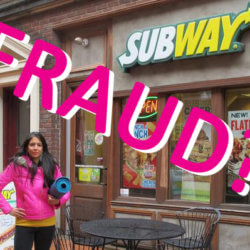
Subway’s phase out of meat raised with antibiotics smart, kowtowing to activists not always wise

The GLP aggregated and excerpted this blog/article to reflect the diversity of news, opinion and analysis.

Subway, the sandwich chain, announced recently that it will no longer use meat from farms that use antibiotics as a growth enhancer. The announcement preempts several critics, such as the NRDC and Vani Hari (the self-described “Food Babe’), which were preparing a petition to demand the food chain make these changes.

From a science standpoint, Subway deserves a hat tip. There is sufficient evidence that using these drugs as growth enhancers for livestock contribute to the overall problem of antibiotic resistance.

However, it has become abundantly clear to us here at the American Council that anyone can persuade Subway to do their bidding. All that’s needed is a petition and a Facebook group.

Sure, this time food chain officials caved to pressure on a legitimate issue, which was backed by sound scientific concerns. But that hasn’t always been the case. Last year, the company bowed to pressure from Ms. Hari to remove azodicarbonamide from its bread, largely on the grounds, believe it not, that she couldn’t pronounce the chemical.

I can only imagine what absurd demand this fast food enterprise will kowtow to next. How about banning onions? They contain the hard-to-pronounce chemicals such as S-propylmercapto-cysteine?

Hyperbole aside, companies do need to make sure their products are safe, but those safety concerns must be grounded in legitimate science. The company’s decision to move away from antibiotic-raised livestock is a no doubt a good one. But when companies needlessly ban safe chemicals or farming practices — alongside banning dangerous ones — they equate the dangerous with the safe in the eye of the public and cause confusion.

Read full, original post: By Submitting Again, Subway’s Antibiotic Phaseout Good and Bad

Related Articles

Infographic: Global regulatory and health research agencies on whether glyphosate causes cancer

Infographic: Global regulatory and health research agencies on whether glyphosate causes cancer

Does glyphosate—the world's most heavily-used herbicide—pose serious harm to humans? Is it carcinogenic? Those issues are of both legal and ...

Most Popular

ChatGPT-Image-Mar-10-2026-01_39_01-PM
Viewpoint—“Miracle molecule” debunked: Why acemannan supplements don’t work
Screenshot-2026-10-12-at-10.44.38-AM
Widely condemned as unethical, hepatitis B vaccine study funded by RFK Jr’s CDC gets a final greenlight
Open-Menthol-Cigarette-Pack
How the tobacco industry conspired with conservative activists to kill the Biden administration’s proposed ban on menthol cigarettes 
Caution-Taped-Fresh-Produce-Aisle
Should we be afraid of our food?
Profile and Vaccination Portraits
Convinced COVID shots cause widespread harm, Kennedy plans federal initiative to incentivize doctors to report alleged injuries
Screenshot-2026-10-12-at-12.18.57-PM
5 deaths, 1,000 reported cases: These horrific numbers underestimate the consequences of the anti-vax movement
Cross and Syringe Standoff
Viewpoint: Hijacking Jesus: How anti-vaccine fanatics are exploiting religious exemptions and killing children
Screenshot-2026-10-11-at-10.24.21-AM
Viewpoint: RFK Jr.’s new CDC head Erica Schwartz greenlights hepatitis B vaccine study critics call “unethical and designed to cast doubts on its safety”
Screenshot 2026-10-12 at 12.25
Tearful onions? CRISPR has a solution for that
Screenshot-2026-10-05-at-11.57.44-AM
Scaremongering or legitimate safety concerns? The political dogfight over America’s food safety system
Personalized-Cancer-mRNA-Vaccine-Vial
Personalized mRNA vaccines are poised to revolutionize cancer treatments. Here are the barriers.
Screenshot-2026-09-22-at-10.54.12-AM
‘They misunderstand science’: Research attempting to tie autism to changes in the gut microbiome comes under fire
glp menu logo outlined

Get news on human & agricultural genetics and biotechnology delivered to your inbox.