Why does cancer affect men and women differently?

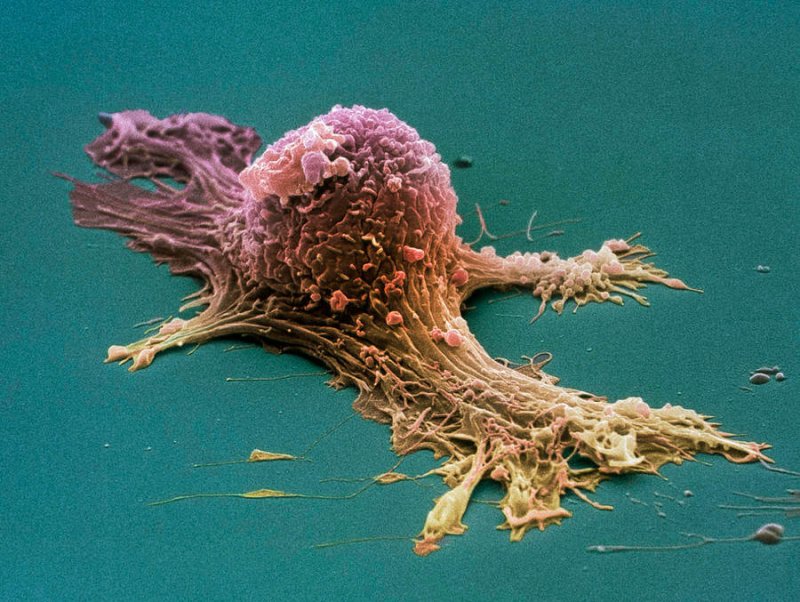
ovarian cancer cell sem steve gschmeissner

The GLP aggregated and excerpted this blog/article to reflect the diversity of news, opinion and analysis.

Researchers are shedding new light on why cancer is often a different disease for men than it is for women.

A new study suggests that for many cancers, important differences in the genetics of tumors in men as compared with women may affect the development and aggressiveness of the disease or how it responds to treatment. Researchers said the findings could eventually affect drug development and lead to strategies for preventing and treating cancer that take a patient’s sex into account.

Gender differences in cancer have long been apparent. It is well established, for instance, that men are more likely to get cancer and to die of it, trends generally attributed in part to such factors as lifestyle and sex hormones. But what happens at the molecular level to affect the trajectory of the disease in men versus women is only beginning to be understood.

“The gender effect in terms of molecular analysis is largely ignored in the field,” says Han Liang, associate professor of bioinformatics and computational biology at University of Texas MD Anderson Cancer Center. “Doctors should know if there’s a therapy that is more likely to work for males or females.”

Read full, original post: Men and Women’s Genes Help Explain Why Cancer Affects Them Differently

Related Articles

Infographic: Global regulatory and health research agencies on whether glyphosate causes cancer

Infographic: Global regulatory and health research agencies on whether glyphosate causes cancer

Does glyphosate—the world's most heavily-used herbicide—pose serious harm to humans? Is it carcinogenic? Those issues are of both legal and ...

Most Popular

ChatGPT-Image-Mar-10-2026-01_39_01-PM
Viewpoint—“Miracle molecule” debunked: Why acemannan supplements don’t work
ChatGPT-Image-Sep-10-2026-10_36_07-AM
Viewpoint: Even lousy scientific articles can shield authors when they hype dubious health claims and products
sorghum farmers in kenya FARMERS TREND
Here are all the ways CRISPR gene editing is transforming Africa’s staple crops—and there’s a lot more innovation to come
Screenshot-2026-10-01-at-11.21.27-AM
Vaccine hesitancy, like malaria, surges globally, topping 35% in some countries
ChatGPT-Image-Sep-30-2026-01_11_07-PM
How U.S. teamed with Russia to block global human AI weapons oversight
ChatGPT-Image-Sep-21-2026-03_15_09-PM
Viewpoint: Chipotle-inspired lesson: 10,000 sick customers suggest that processed foods can be safer than fresh ones
ChatGPT-Image-Sep-30-2026-01_25_34-PM
Blood tests for Alzheimer’s? The latest grifter, social media scam.
ChatGPT-Image-Sep-30-2026-01_38_36-PM
Viewpoint: Died “with measles” vs. died “from measles”: RFK, Jr.’s dangerously subversive word games
Screenshot-2026-09-28-at-1.16.38-PM
Defying public perceptions, U.S. cancer deaths plunged 35% since 1991
ChatGPT-Image-Sep-29-2026-12_16_42-PM
Social media influencers are driving food misinformation across Europe
generated-1790707585414
Facts & Fallacies podcast: America's health care system is broken. A doctor explains how to fix it
glp menu logo outlined

Get news on human & agricultural genetics and biotechnology delivered to your inbox.