Researchers have intentionally genetically modified a common beetle to develop a third functional eye, right in the middle of its forehead. It builds on previous research in which they caused a beetle to grow a third eye accidentally. Both studies were led by Indiana University postdoctoral researcher Eduardo Zattara.
…
In the original research, the team switched off a gene that is involved in the development of the heads of dung beetles, which caused quite drastic changes to the structure of their heads. The beetles lost their horns – and developed a compound eye in the middle of their heads.
…
The work of Zattara’s team, by comparison, was much simpler. They set out to intentionally grow a third eye in two types of scarab beetle, Onthophagini and Oniticellini, by wiping out just a single gene, the same head development gene from their earlier research. The third eyes the beetles developed actually resulted from fused pairs of eyes.
…
The research could help understand how organs develop and become part of a body – which knowledge, in turn, could prove useful in the development of artificial lab-grown organs, for both research and medical purposes.
The team’s paper has been published in the journal PNAS.
[A]nother gene therapy is on the cusp of approval, this time to treat a form of hereditary blindness. If given the tick by the FDA, this therapy could pave the way for a whole host of treatments for genetically-based vision problems. The gene therapy focuses on a rare inherited retinal disease called Leber congenital amaurosis (LCA), which is caused by a mutation in one of 19 particular genes.
…
The final FDA approval decision is hoped to come by January 2018, and back in October an advisory panel unanimously endorsed the efficacy of the treatment. The FDA doesn’t have to follow the advice of this expert panel, but it traditionally does. While this particular therapy is not a complete cure, and it is targeted at a rare genetic disease, many hope it is the first in a new wave of gene therapies directed at a wide variety of occular diseases.
…
If this therapy is ultimately approved it will certainly be a landmark for modern gene therapy. Unlike the prior cancer therapy approved in August, which concentrates on genetically modifying immune cells, this treatment will be the first to replace, or essentially fix, specific missing and mutated genes that directly cause disease.
[Editor’s note: Karin Christiansen is head of research at the Centre for Health Technology at the Faculty of Health, VIA University College in Denmark.]
Genome editing has been largely applied to animals and plants, but it now includes people. Who will decide what the technology will be used for and how far we should take it?
…
[I]n 2016, The Danish Council on Ethics released a report entitled ‘Opinion on genetic modification of future people.’ That same year, the Nuffield Council on Bioethics in the UK released a similar review: ‘Genome editing: an ethical review.” And this year, the American National Academy of Science and the National Academy of Medicine followed suit with their report entitled ‘Human genome editing—science, ethics and governance.’
…
The US report is criticised for not taking a firm position on anything other than the ‘usual’ ethical questions concerning the distinction between treatment and enhancements and between normal functioning and disease.
…
Some critics worry about a possible future scenario, where the sick and the vulnerable are no longer guaranteed a minimum degree of medical and societal care and support from the state – and where only the genetically ‘fittest’ have a chance of ‘survival’ in our market-driven society. This is why we need to have the discussion now to decide what type of society we want for ourselves and for our children.
[Editor’s note: Monika Mühlböck is a professor at the Department of Economic Sociology at the University of Vienna. Jale Tosun is professor of Political Science at the Department of Political Science at Heidelberg University.]
Due to the fact that member states are completely divided over this sensitive issue, GMOs have always been authorised by the executive (the Commission) without the support of the legislative (the Council). This poses a serious threat to democratic accountability.
…
As the figure below shows, voting behaviour on GMO authorisation requests varies greatly between member states but also within member states over time.
When testing which factors affect voting behaviour on GMOs, we observe a significant effect with respect to national public opinion. Ministers representing publics that are more concerned about the use of GMOs are less likely to vote in favour of authorisation requests. Furthermore, Council votes on GMOs are affected by the ideological background of ministers.
…
Although ministers have been shown to be responsive to national constituencies when voting on GMOs, the outcome of the entire process – i.e. the authorisation being granted by the Commission – is not democratically legitimised, as it is not based on the necessary level of approval, but simply on the absence of the necessary level of opposition.
[Editor’s note: Read the full study (behind paywall)]
The bacteria inhabiting your gut and skin might determine your innocence of a crime. Or, it might falsely accuse you of foul play.
Questioning what the human microbiome is and does is a raging trend, with possible applications from the etiology of diseases from Crohn’s to multiple sclerosis. Now, forensic science has entered the microbiome fray.
A number of researchers have argued that our microbiomes are so unique that they could be used to identify criminals, tracking DNA in bacteria left behind, much like DNA sequencing and typing and fingerprints are used for other forensics applications. However, a number of experts are skeptical that microbiome DNA analysis is unique enough to separate a criminal from thousands of other people. Even the analysis of DNA itself in a forensics lab may not be as reliable as originally believed.
Our specific ‘microbiome cloud’
Scientists have found that testing the microbiome of the gut or skin showed that microbiomes are quite specific. And, it turns out that on everything we touch, even if we sit down fully clothed, we leave behind a residue of bacteria from our microbiome. Some researchers have even described a “microbiome cloud” that surrounds us when we walk by, leaving behind a unique trace.
Testing an area of bacterial DNA called the 16S rDNA region (so named because it’s a gene that expresses support structures of the ribosome measured as 16S) has shown a good deal of variation in bacteria in the microbiome. This 16S region is very specific to each bacterium and within a species changes very slowly, making it valuable to determining if enough variation exists in us to convict (or exonerate).
The first study to link the microbiome and crime was published in 2010 and showed that bacteria left behind on computer keyboards could accurately identify the keyboard (and bacteria’s) owners, out of 270 people.
An Australian team analyzed scalp and pubic hairs of 42 volunteers, looking for variations in the 16s bacterial DNA region. They found that, even though human scalp hair has very little or no DNA, and wasn’t as helpful in this study, pubic hair instead showed a great deal of microbiome DNA variation. In particular, Lactobacillus populations in pubic hair were able to differentiated members of this admittedly small population.
More than a few skeptics
Not everyone is on board, however. Elizabeth Bent, a researcher at the University of Guelph, Ontario, warned that changes in diet can produce sudden and dramatic changes in microbiota composition, at least in the gut. In a comment to a news article in Science, she wrote:
Other studies have shown effects of sleep patterns, exercise, illness, and antibiotics/medication on gut microbiota. To put someone in jail or on death row because of a flawed analysis is serious- A 16S analysis is definitely not adequate for differentiating individual strains of bacteria.
16S rDNA does have its limitations—it shows variation among bacteria, not so much among people. And it’s still not clear whether studying bacterial DNA variations could scale up; that is, provide enough accurate information to differentiate among thousands or billions of people.
There are also problems with analysis of DNA itself. Greg Hampikian, a biologist and criminal justice specialist at Boise State University, found a number of biases among forensics experts, even though they were all looking at the same crime scene DNA evidence. Therefore, based purely on DNA results, they should have arrived at the same conclusions. They didn’t. Hampikian wrote that “the majority of ‘context free’ experts disagreed with the laboratory’s pre-trial conclusions, suggesting that the extraneous context of the criminal case may have influenced the interpretation of the DNA evidence, thereby showing a biasing effect of contextual information in DNA mixture interpretation.”
Another group, called the Microbiome Quality Control project, has tasked itself with comparing all studies on microbiomes, and looking for variations in methodologies (and results) that could improve the ability of the microbiome to make better predictions, perhaps even ones that could stand up in court.
Andrew Porterfield is a writer and editor, and has worked with numerous academic institutions, companies and non-profits in the life sciences. BIO. Follow him on Twitter @AMPorterfield.
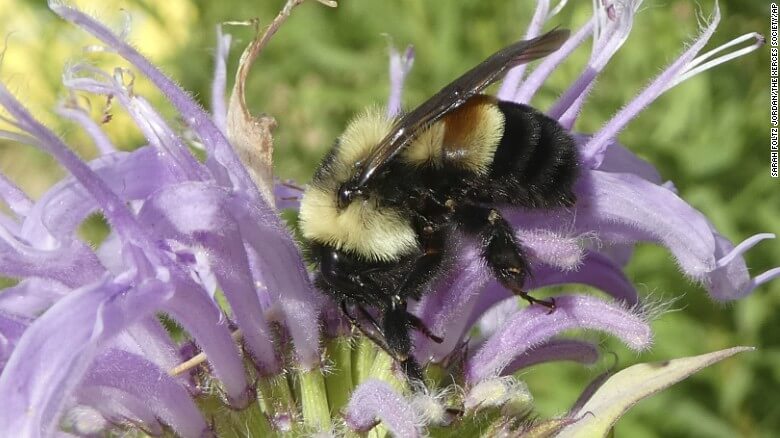
When a Cornell-led team of scientists analyzed two dozen environmental factors to understand bumblebee population declines and range contractions, they expected to find stressors like changes in land use, geography or insecticides.
Instead, they found a shocker: fungicides, commonly thought to have no impact.
“Insecticides work; they kill insects. Fungicides have been largely overlooked because they are not targeted for insects, but fungicides may not be quite as benign – toward bumblebees – as we once thought. This surprised us,” said Scott McArt, assistant professor of entomology and the lead author on a new study published Nov. 15 in the journal Proceedings of the Royal Society B.
While science has studied insecticides, such as neonicotinoids, that attack bugs’ central nervous systems, this new work shows how fungicides – particularly chlorothalonil, a general-use fungicide often found in bumblebee and honeybee hives – may negatively affect bee health, said McArt….
[T]he scientists discovered what they call “landscape-scale” connections between fungicide usage, pathogen prevalence and declines of endangered United States bumblebees.
…
As farms use both insecticides and fungicides, the scientists worry about synergy. “While most fungicides are relatively nontoxic to bees, many are known to interact synergistically with insecticides, greatly increasing their toxicity to the bees,” McArt said.
[Editor’s note: Read the full study (behind paywall)]
Supermarket tomatoes have a sorry reputation for looking great but tasting…well, you know…like cardboard. It’s a shame, as tomatoes are very nutritious and a better-tasting tomato would encourage people, especially children, to eat them. Short of buying only heirloom tomatoes, which is not practical for everyone, what is the future of the tomato?
A tomato’s taste is heavily influenced by its genes. Conventional breeding has not been able to strike a good balance between taste and productivity, but that’s not the end of the story. Research efforts in genetic modification could bring back flavor in tomatoes, and a research study shows that these efforts are paying off: consumers in a taste test preferred genetically engineered tomatoes over conventional and even organic heirloom tomatoes.
How the supermarket tomato lost its flavor
The demise of the tomato’s flavor started about seventy years ago when growers noticed that some tomatoes turned red from green uniformly when they ripened. Back then, most tomatoes had shoulders—a raised area near the depression where the tomato attaches to the stem—that turned red slower than the rest of the tomato. The green shoulders made it difficult for farmers to tell when the tomato was ready to harvest, and shoppers did not like the look of them either.
Shoulders can still be found in heirloom tomatoes. Image via Flickr Creative Commons user visualdensity.Supermarket tomatoes have no shoulders and are perfectly red. Image via Flickr Creative Commons user Mr. TinDC
So when the uniformly colored tomatoes randomly appeared, tomato breeders realized the potential. The effect that caused the green shoulders to disappear was due to a random genetic mutation, which was dubbed the “uniform ripening” trait. Farmers began selecting seeds from the uniformly red tomatoes and crossing them with other uniformly red tomatoes to create the visually perfect commercial tomatoes that we have today.
Because of the rudimentary understanding of genetics at that time, neither farmers nor researchers knew that the “uniform ripening” trait came with a trade off; it also disabled a gene in a tomato that regulates chlorophyll. Ann Powell, a plant scientist at the University of California, Davis, and her research group reported in a 2012 Science article that the chlorophyll concentrated in the green shoulders also increased the level of flavor-creating sugars for tomatoes. When the tomatoes’ green shoulders were bred out, so were the chlorophyll and extra sugars—and the tomato’s flavor. And this mutation was ubiquitous; when Powell and her colleagues examined 25 commercial tomato varieties from all over the world, they found the uniform ripening flavor reducing mutation in all of them.
“The mutation they describe in their paper is in literally 100 percent of modern breeds sold in grocery stores today,” said Harry Klee, a molecular geneticist at the University of Florida, who studies the chemistry and genetics of flavor in fruits and vegetables. “It’s a really good illustration of some of the problems with modern breeding of tomatoes.”
Tomato breeders didn’t stop at eliminating the green shoulders. As they continued to breed for more productive tomatoes and more rugged tomatoes that could withstand rough handling and long-distance shipping, the tomato breeders compromised the tomato’s flavor.
How biotchnology can help put the tomato’s flavor back
Genetics could play a big role in restoring tomato flavor, and some scientists have already found success. For example, by using a combination of modern genetic engineering methods and traditional breeding. Klee’s aims to introduce flavor-producing traits in a supermarket tomato without compromising the productive, robust traits that commercial growers love
After correlating people’s preferences with levels of sugars and particular flavor compounds in tomatoes, Klee has a pretty good idea of what the genetic makeup of an ideal commercial tomato should look like.
“I figure that with approximately five key genes we could very significantly improve flavor,” he said. Klee and his research team have already located three genes that control the production of key flavor compounds in tomatoes.
Purple tomato rich in anthocyanins contrasted with regular tomatoes. Image via John Innes Centre
Other researchers are are targeting different genes to solve the flavor conundrum. The purple tomato, genetically engineered to produce anthocyanins, a group of antioxidants also found in blueberries, is further along in development. Researchers led by Cathie Martin, a plant biologist at the John Innes Centre in Norwich, UK, inserted a gene from a snapdragon flower that enables the tomato to produce anthocyanins. Anthocyanins were found to slow down the ripening process of the tomatoes, which enables them to develop full flavor while enjoying a longer shelf life.
“Our research has identified a new target for breeders to produce tomato varieties that are fuller in flavor, and so more appealing to consumers, and more valuable commercially due to increased shelf life,” has said Martin.
There are other attempts to introduce genes into tomatoes that enable them to produce flavor-enhancing compounds, such as a tomato genetically engineered to produce geraniol, a rose-smelling compound found in fruits and flowers, and a tomato genetically engineered to produce more flavonoids, another group of antioxidants, which also provide nutritional benefits. These two examples have undergone blind taste tests with untrained consumers, and in both cases, the consumers preferred the genetically engineered tomatoes over the conventional ones.
Resistance to GE tomatoes
But for all biotechnology has to offer, public anti-GMO sentiments, particularly in Europe, make it difficult for researchers to commercialize their tomatoes. Martin had to move his purple tomato research facility from the United Kingdom to Leamington, Canada, because of regulatory hurdles and public fear of GMOs in Europe.
“I can’t stress enough how enlightened the Canadian regulatory process towards these types of [genetically modified] foods is—it has truly been fantastic,” she said. “There is a fear of the unknown in the U.K. I think people here viewed genetically modified food as a new technology that wasn’t controlled enough to be able to say for certain that there were no risks associated with it.”
Because of the public resistance to GE, Klee plans on avoiding biotechnology altogether when he eventually produces a commercial version of his flavor-enhanced commercial, even though he is using genetically engineered tomatoes to test and confirm his findings. The reason: to avoid potential consumer backlash and the estimated $15 million needed to obtain regulatory approval for a genetically engineered tomato. Emily Willingham commented in Forbes:
Scientists can use modern techniques to ID exactly what to change in a tomato to make it sweeter and do it. But because of widespread misinformation, fearmongering, and politics, they cannot use these faster, modern approaches to actually produce the tomato. Instead, the modern techniques can serve only as a roadmap to confirm that a tomato produced by conventional means–i.e., more “naturally”–is exactly the same as the tomato they could develop and obtain with the modern techniques.
Researchers like Klee and Martin could succeed in producing a flavorful, commercial tomato but with current anti-GMO sentiments, it might be a long time before the fruits of their labor reach grocery stores.
XiaoZhi Lim is a freelance journalist and former GLP editor and writer.
South Australia is set to extend its controversial ban on the growing of genetically-modified crops until 2025 after a bill put forward by the Greens passed the Upper House by a single vote.
The current ban will expire on September 1 in 2019 and was due to be debated later next year, but the Greens surprised the State Parliament with its motion to extend it for another 6 years.
…
[Greens leader Mark Parnell] said the Government backed his bill last night in the Upper House and he hopes that will continue when the bill goes to the Lower House where the Government holds a slim majority.
South Australia’s shadow minister for agriculture, David Ridgeway, said the Government tried to amend the motion to extend the ban until 2028, but it failed.
…
The Liberal Party opposition has not committed to removing the ban either, but has promised to review the ban if elected in next year’s state election.
[Editor’s note: Robin Mesnage was a coauthor of the retracted study led by anti-GMO activist scientist Gilles-Eric Séralini (GLP profile here) that claimed GMOs and glyphosate cause tumors in rats. Michael Antoniou defended the retracted paper, calling glyphosate and GMOs “toxic products,” and has claimed that glyphosate can cause “organ damage” at very low doses.]
The safety profile of the herbicide glyphosate and its commercial formulations is controversial.
Reviews have been published by individuals who are consultants and employees of companies commercializing glyphosate-based herbicides in support of glyphosate’s reapproval by regulatory agencies. These authors conclude that glyphosate is safe at levels below regulatory permissible limits.
In contrast, reviews conducted by academic scientists independent of industry report toxic effects below regulatory limits, as well as shortcomings of the current regulatory evaluation of risks associated with glyphosate exposures.
Two authors in particular [Anthony Samsel and Stephanie Seneff] have published a series of commentaries proposing that long-term exposure to glyphosate is responsible for many chronic diseases (including cancers, diabetes, neuropathies, obesity, asthma, infections, osteoporosis, infertility and birth defects).
…
We found that these authors inappropriately employ a deductive reasoning approach based on syllogism. We found that their conclusions are not supported by the available scientific evidence. Thus the mechanisms and vast range of conditions proposed to result from glyphosate toxicity presented by Samsel and Seneff in their commentaries are at best unsubstantiated theories, speculations or simply incorrect.
Clustered regularly interspaced short palindromic repeats (CRISPR), the last site-specific endonuclease to be developed, is an RNA- guided endonuclease, easy to engineer and direct to a given target site.
This technology has been successfully applied to rabbits, swine, goats, sheep and cattle, situating genome editing in livestock species at an attainable distance, thereby empowering scientist to develop a myriad of applications.
Genetically modified livestock animals can be used as biomodels to study human or livestock physiology and disease, as bioreactors to produce complex proteins, or as organ donors for transplantation.
Specifically on livestock production, genome editing in farm animals may serve to improve productive genetic traits, to improve various animal products, to confer resistance to diseases or to minimize the environmental impact on farming.
…
However, these benefits depend on the approval of GMA- [genetically modified animal] derived products for human consumption, a goal that depends mostly on people′s opinion, bedeviled in many cases by prejudices against the term “transgenic.” A good start would be to explain in layman words the differences between transgenic and non- transgenic genome editions.
The GLP aggregated and excerpted this article to reflect the diversity of news, opinion and analysis. Read full, original post: CRISPR is knocking on barn door
In 2013, scientists discovered a new way to precisely edit genes — technology called Crispr…
One of the more intriguing ideas came from Kevin M. Esvelt and his colleagues at Harvard University: Crispr, they suggested, could be used to save endangered wildlife from extinction by implanting a fertility-reducing gene in invasive animals — a so-called gene drive.
…
They created a detailed mathematical model describing what happens following the release of Crispr-altered organisms. And they discovered an unacceptable risk: Altered genes might spread to places where the species isn’t invasive at all, but a well-established part of the ecosystem.
…
The National Academy of Sciences released a report on gene drives in 2016. While experts recognized a number of potential risks, they endorsed more research — possibly including “highly controlled field trials.”
…
The model revealed that a gene drive would be remarkably aggressive. It would take relatively few engineered organisms to spread a new gene through much of a population. “It only takes a handful,” said Dr. Esvelt.
That aggressiveness might be good for eradicating an invasive weasel that couldn’t be stopped by poison baits or hunting. But if a few engineered weasels managed to escape the local environment — or were intentionally taken somewhere else — they could easily spread the gene drive throughout the weasel’s native habitat.
That may well mean that experiments in the real world are just too risky right now.
So there’s a certain irony in the organic farmers who, because of the existence of the organic program, make bigger margins on their products, calling out other farmers who meet the standard and want the same certification as greedy.
…
In the case of hydroponics, there’s a pretty good case that using less water, fewer pesticides, and growing more food on less land is in the organic spirit. But, if the standard becomes too elastic, the consumer will lose confidence and will stop being willing to pay the premium. At that point, the program loses its reason for being.
…
If more incentives for sustainable farming techniques—improving soil health, protecting the environment, treating farm workers with dignity, tending to livestock humanely, etc.—can be woven into government policy, everybody wins. Establishing certifications that consumers are willing to pay a premium for is one way to do that.
If this very public fight has an upside, perhaps it’s that organic customers can come to terms with the idea that farmers have to make money.
The GLP aggregated and excerpted this article to reflect the diversity of news, opinion and analysis. Read full, original post: Organic Food Fight!
Nigeria’s National Biosafety Management Agency (NBMA) says it has, in conjunction with the Customs Service, ordered that the genetically modified (GM) maize consignment illegally imported into Nigeria be sent back.
News Agency of Nigeria (NAN) reports that the Nigeria Customs Service recently impounded 90 tonnes of GM maize, valued at about 10 million dollars, which was illegally imported into the country through the Apapa seaport in Lagos.
The GM maize was reportedly imported from Argentina.
Rufus Egbegba, the Director-General of NBMA, said this in a news conference on Tuesday [Nov. 14] in Abuja that in view of the information and facts on ground, the agency ordered the repatriation of the maize consignment with immediate effect.
He said the agency was informed of the importation of a large maize consignment in October.
…
“Representatives of the company were invited to provide more information on the GM status of their import, after which the NBMA proceeded to obtain samples and conduct laboratory tests to ascertain the GM status of the imported maize.
“The results of the analysis and the tests by an independent laboratory of six samples showed categorically that the maize imports were actually genetically modified maize.’’
Monsanto Co and U.S. farm groups sued California on Wednesday [Nov. 15] to stop the state from requiring cancer warnings on products containing the widely used weed killer glyphosate, which the company sells to farmers to apply to its genetically engineered crops.
The government of the most populous U.S. state added glyphosate, the main ingredient in Monsanto’s herbicide Roundup, to its list of cancer-causing chemicals in July and will require that products containing glyphosate carry warnings by July 2018.
California acted after the World Health Organization’s International Agency for Research on Cancer (IARC) concluded in 2015 that glyphosate was “probably carcinogenic”.
Reuters reported in June that an influential scientist was aware of new AHS research data while he was chairing a panel of experts reviewing evidence on glyphosate for IARC in 2015. He did not tell the panel about it because the data had not been published, and IARC’s review did not take it into account.
Scientists for the first time have tried editing a gene inside the body in a bold attempt to permanently change a person’s DNA to cure a disease.
The experiment was done Monday in California on 44-year-old Brian Madeux. Through an IV, he received billions of copies of a corrective gene and a genetic tool to cut his DNA in a precise spot.
…
Signs of whether it’s working may come in a month; tests will show for sure in three months.
…
This time, the gene tinkering is happening in a precise way inside the body. It’s like sending a mini surgeon along to place the new gene in exactly the right location.
…
Fewer than 10,000 people worldwide have these metabolic diseases, partly because many die very young. Those with Madeux’s condition, Hunter syndrome , lack a gene that makes an enzyme that breaks down certain carbohydrates. These build up in cells and cause havoc throughout the body.
…
Weekly IV doses of the missing enzyme can ease some symptoms, but cost $100,000 to $400,000 a year and don’t prevent brain damage.
…
A gene-editing tool called CRISPR has gotten a lot of recent attention, but this study used a different one called zinc finger nucleases.
The battle between sports cheats and testers is poised to enter a whole new arena. The World Anti-Doping Agency has extended its 2003 ban on “gene doping” to include all forms of gene editing – but it is not clear the agency has the means to enforce this ban.
WADA already bans the use of genetically modified cells and gene therapy if they have “the potential to enhance sport performance”. From 2018, the list will also include “gene editing agents designed to alter genome sequences and/or the transcriptional or epigenetic regulation of gene expression”.
…
Gene editing should be even harder to detect than conventional gene therapies like this. Gene editing should make it possible to make tiny alterations to DNA in existing genes, or to just temporarily boost or switch off the activity of particular genes. What’s more, these tweaks can be restricted to specific tissues such as muscle, meaning the changes may not show up in blood tests.
In theory, the “biological passports” introduced by WADA in 2009 should reveal any unexpected changes in an athlete’s body, even if gene doping itself cannot be detected. But any would-be cheats smart enough to resort to gene editing may be able to find ways round this.
Scientists from Wageningen University & Research have found natural genetic variation for photosynthesis in plants and are unravelling it to the DNA level. As a result it should be possible to breed crops that use photosynthesis more effectively in the future, increasing their yield and enabling them to capture more CO2 from the air in the soil. This represents a major step on the long road to solving global food challenges and realising the Paris climate agreement.
…
[A] team of scientists has shown that thale cress (a common model plant) has various genes involved in the adaptation to changes in the amount of light to which plants are exposed.
…
The discovery shows that it is possible to improve photosynthesis based on natural genetic variation, something which was doubted until now. In the long term, breeding on improved photosynthesis could make crops produce more yield with the same amount of soil, water and nutrients. This brings the concept of ‘more’ (yield) ‘with less’ (soil, water and nutrients) one step closer.
The initialism stands for “genetically modified organism,” but it’s a term lacking scientific precision. Moreover, it’s hard to find an organism in any way connected to humans that hasn’t been genetically modified, says Alison Van Eenennaam, a geneticist at UC-Davis who specializes in animal biotechnology. “I might argue that a great Dane or a Corgi are ‘genetically modified’ relative to their ancestor, the wolf,” she tells Mental Floss. “‘GMO’ is not a very useful term. Modified for what and why is really the more important question.”
…
These days, when people say “GMO,” they tend to mean one particular modification method that scientists refer to as transgenesis. As Van Eenennaam explains, transgenesis is “a plant-breeding method whereby useful genetic variation is moved from one species to another using the methods of modern molecular biology, also known as genetic engineering.”
Transgenic crops and animals have been modified with the addition of one or more genes from another living organism, using either a “gene gun,” Agrobacteria—a genus of naturally occurring bacteria that insert DNA into plants—or electricity, in a process called electroporation.
The GLP aggregated and excerpted this article to reflect the diversity of news, opinion and analysis. Read full, original post: What Is a GMO?
A billion dollar banana industry at risk of a deadly disease could be saved by a scientific breakthrough from a Queensland university.
The Queensland University of Technology has genetically modified Cavendish bananas using a wild gene, resulting in strongly resistant and Panama (TR4) disease-free plants across a three-year trial.
Trial leader professor James Dale says it’s a major step towards protecting the $US12 billion ($A17 billion) Cavendish global export business.
“TR4 can remain in the soil for more than 40 years and there is no effective chemical control for it. It is a huge problem,” Prof Dale said.
“It has devastated Cavendish plantations in many parts of the world and it is spreading rapidly across Asia.
The GLP aggregated and excerpted this article to reflect the diversity of news, opinion and analysis. Read full, original post: Qld uni grows Panama disease-free banana