Mars conundrum: How do we explore without contaminating the Red Planet?

mars

There may be no bigger question than whether we are alone in our solar system. As our spacecraft find new clues about the presence of liquid water now or in the past on Mars, the possibility of some kind of life there looks more likely. On Earth, water means life, and that’s why the exploration of Mars is guided by the idea of following the water.

But the search for life on Mars is paired with plenty of strong warnings about how we must sterilize our spacecraft to avoid contaminating our neighbor planet. How will we know what’s native Martian if we unintentionally seed the place with Earth organisms? A popular analogy points out that Europeans unknowingly brought smallpox to the New World, and they took home syphilis. Similarly, it is argued, our robotic explorations could contaminate Mars with terrestrial microorganisms.

As an astrobiologist who researches the environments of early Mars, I suggest these arguments are misleading. The current danger of contamination via unmanned robots is actually quite low. But contamination will become unavoidable once astronauts get thereNASA, other agencies and the private sector hope to send human missions to Mars by the 2030s.

x
Microbiologists frequently collect swab samples from the floor of clean rooms during spacecraft assembly. NASA/JPL-Caltech, CC BY

Space agencies have long prioritized preventing contamination over our hunt for life on Mars. Now is the time to reassess and update this strategy – before human beings get there and inevitably introduce Earth organisms despite our best efforts.

What planetary protection protocols do

Arguments calling for extra caution have permeated Mars exploration strategies and led to the creation of specific guiding policies, known as planetary protection protocols.

Strict cleaning procedures are required on our spacecraft before they’re allowed to sample regions on Mars which could be a habitat for microorganisms, either native to Mars or brought there from Earth. These areas are labeled by the planetary protection offices as “Special Regions.”

The worry is that, otherwise, terrestrial invaders could jeopardize potential Mars life. They also could confound future researchers trying to distinguish between any indigenous Martian life forms and life that arrived as contamination from Earth via today’s spacecraft.
Dr. Carl Sagan poses with a model of the Viking lander in Death Valley, California. NASA, CC BY

The sad consequence of these policies is that the multi-billion-dollar Mars spacecraft programs run by space agencies in the West have not proactively looked for life on the planet since the late 1970s.

That’s when NASA’s Viking landers made the only attempt ever to find life on Mars (or on any planet outside Earth, for that matter). They carried out specific biological experiments looking for evidence of microbial life. Since then, that incipient biological exploration has shifted to less ambitious geological surveys that try to demonstrate only that Mars was “habitable” in the past, meaning it had conditions that could likely support life.

Even worse, if a dedicated life-seeking spacecraft ever does get to Mars, planetary protection policies will allow it to search for life everywhere on the Martian surface, except in the very places we suspect life may exist: the Special Regions. The concern is that exploration could contaminate them with terrestrial microorganisms.

Can Earth life make it on Mars?

Consider again the Europeans who first journeyed to the New World and back. Yes, smallpox and syphilis traveled with them, between human populations, living inside warm bodies in temperate latitudes. But that situation is irrelevant to Mars exploration. Any analogy addressing possible biological exchange between Earth and Mars must consider the absolute contrast in the planets’ environments.

A more accurate analogy would be bringing 12 Asian tropical parrots to the Venezuelan rainforest. In 10 years we may very likely have an invasion of Asian parrots in South America. But if we bring the same 12 Asian parrots to Antarctica, in 10 hours we’ll have 12 dead parrots.

The conversationWe’d assume that any indigenous life on Mars should be much better adapted to Martian stresses than Earth life is, and therefore would outcompete any possible terrestrial newcomers. Microorganisms on Earth have evolved to thrive in challenging environments like salt crusts in the Atacama desert or hydrothermal vents on the deep ocean floor. In the same way, we can imagine any potential Martian biosphere would have experienced enormous evolutionary pressure during billions of years to become expert in inhabiting Mars’ today environments. The microorganisms hitchhiking on our spacecraft wouldn’t stand much of a chance against super-specialized Martians in their own territory.

So if Earth life cannot survive and, most importantly, reproduce on Mars, concerns going forward about our spacecraft contaminating Mars with terrestrial organisms are unwarranted. This would be the parrots-in-Antarctica scenario.

On the other hand, perhaps Earth microorganisms can, in fact, survive and create active microbial ecosystems on present-day Mars – the parrots-in-South America scenario. We can then presume that terrestrial microorganisms are already there, carried by any one of the dozens of spacecraft sent from Earth in the last decades, or by the natural exchange of rocks pulled out from one planet by a meteoritic impact and transported to the other.

In this case, protection protocols are overly cautious since contamination is already a fact.

Technological reasons the protocols don’t make sense

Another argument to soften planetary protection protocols hinges on the fact that current sterilization methods don’t actually “sterilize” our spacecraft, a feat engineers still don’t know how to accomplish definitively.

The cleaning procedures we use on our robots rely on pretty much the same stresses prevailing on the Martian surface: oxidizing chemicals and radiation. They end up killing only those microorganisms with no chance of surviving on Mars anyway. So current cleaning protocols are essentially conducting an artificial selection experiment, with the result that we carry to Mars only the most hardy microorganisms. This should put into question the whole cleaning procedure.

Bacterial species Tersicoccus phoenicis is found in only two places: clean rooms in Florida and South America where spacecraft are assembled for launch.NASA/JPL-Caltech, CC BY

Further, technology has advanced enough that distinguishing between Earthlings and Martians is no longer a problem. If Martian life is biochemically similar to Earth life, we could sequence genomes of any organisms located. If they don’t match anything we know is on Earth, we can surmise it’s native to Mars. Then we could add Mars’ creatures to the tree of DNA-based life we already know, probably somewhere on its lower branches. And if it is different, we would be able to identify such differences based on its building blocks.

Mars explorers have yet another technique to help differentiate between Earth and Mars life. The microbes we know persist in clean spacecraft assembly rooms provide an excellent control with which to monitor potential contamination. Any microorganism found in a Martian sample identical or highly similar to those present in the clean rooms would very likely indicate contamination – not indigenous life on Mars.

The window is closing

On top of all these reasons, it’s pointless to split hairs about current planetary protection guidelines as applied to today’s unmanned robots since human explorers are on the horizon. People would inevitably bring microbial hitchhikers with them, because we cannot sterilize humans. Contamination risks between robotic and manned missions are simply not comparable.

Whether the microbes that fly with humans will be able to last on Mars is a separate question – though their survival is probably assured if they stay within a spacesuit or a human habitat engineered to preserve life. But no matter what, they’ll definitely be introduced to the Martian environment. Continuing to delay the astrobiological exploration of Mars now because we don’t want to contaminate the planet with microorganisms hiding in our spacecrafts isn’t logical considering astronauts (and their microbial stowaways) may arrive within two or three decades.

Prior to landing humans on Mars or bringing samples back to Earth, it makes sense to determine whether there is indigenous Martian life. What might robots or astronauts encounter there – and import to Earth? More knowledge now will increase the safety of Earth’s biosphere. After all, we still don’t know if returning samples could endanger humanity and the terrestrial biosphere. Perhaps reverse contamination should be our big concern.

The main goal of Mars exploration should be to try to find life on Mars and address the question of whether it is a separate genesis or shares a common ancestor with life on Earth. In the end, if Mars is lifeless, maybe we are alone in the universe; but if there is or was life on Mars, then there’s a zoo out there.

Alberto Fairén is a Research Scientist at Centro de Astrobiología, Spain, and Visiting Scientist in Astronomy at Cornell University. Alberto Fairén’s research focuses in the fields of Planetary Sciences and Astrobiology, with particular emphasis in the understanding of the early Mars environments.

A version of this article was originally published on the Conversation’s website as Worries about spreading Earth microbes shouldn’t slow search for life on Mars and has been republished here with permission.

CRISPR at home: Is it really that easy to hack DNA?

Screen Shot at AM

I am not a DIY scientist, much less a professional scientist. You won’t find me swabbing my cheek cells for DNA or tinkering with yeast in a lab on the weekend. But I wondered: Is CRISPR so easy that even amateurs like me can make meaningful contributions to science?

I ordered my kit for $130 from the crowd-funding site Indiegogo as part of a campaign created by Bay Area biohacker Josiah Zayner.

The goal: modify the E. coli so that it can grow on an antibiotic called streptomycin, which normally kills bacteria. With materials and instructions from the kit, I will introduce CRISPR into the bacteria cells, and use it to rewrite a tiny part of their DNA, creating genetically altered cells that happily thrive on streptomycin.

I had no problem conducting the experiment—CRISPR is easy, I concluded. I basically just measured, scraped and stirred a bunch of ingredients, occasionally cooling them or heating them up.

Is CRISPR so easy to use that we need to worry about biohackers—either accidentally or intentionally—creating dangerous pathogens? [Professor Dana] Carroll and others think that the danger of putting CRISPR in the hands of the average person is relatively low.

The GLP aggregated and excerpted this blog/article to reflect the diversity of news, opinion, and analysis. Read full, original postMail-Order CRISPR Kits Allow Absolutely Anyone to Hack DNA

Food fears: How anti-science myths—like ‘clean eating’ and GMO health risks—make eaters anxious

what is clean eating and recipes to get you started

We talk about food in the negative: What we shouldn’t eat, what we’ll regret later, what’s evil, dangerously tempting, unhealthy.

The effects are more insidious than any overindulgent amount of “bad food” can ever be. By fretting about food, we turn occasions for comfort and joy into sources of fear and anxiety. And when we avoid certain foods, we usually compensate by consuming too much of others.

[Editor’s note: Aaron Carroll is a professor of pediatrics at Indiana University School of Medicine. He is the author of “The Bad Food Bible: How and Why to Eat Sinfully,” from which this essay was adapted.]

All of this happens under the guise of science. But a closer look at the research behind our food fears shows that many of our most demonized foods are actually fine for us. Taken to extremes, of course, dietary choices can be harmful — but that logic cuts both ways.

Too often, we fail to think critically about scientific evidence. Genetically modified organisms are perhaps the best example of this.

G.M.O.s are, in theory, one of our best bets for feeding the planet’s growing population. When a 2015 Pew poll asked Americans whether they thought it was generally safe or unsafe to eat modified foods, almost 60 percent said it was unsafe. The same poll asked scientists from the American Association for the Advancement of Science the same question. Only 11 percent of them thought G.M.O.s were unsafe.

Image credit: Trainer Academy

The GLP aggregated and excerpted this article to reflect the diversity of news, opinion and analysis. Read full, original post: Relax, You Don’t Need to ‘Eat Clean’

Immortal dictators: Is there a downside to life-extending technologies?

Screen Shot at AM e

Suppose there was a country ruled by an evil dictator. Further, suppose the entire world was plagued by a terrible disease affecting 100% of the population. The disease isn’t infectious, but it is congenital. It progresses extremely slowly over the course of several decades, but it eventually ends up severely impairing one’s quality of life, and it is always fatal; it’ll take its own sweet time to kill a patient, but it always will, and it isn’t going to be fun.

If it was suggested that a cure for this disease should not be developed so that we could be sure the aforementioned dictator will eventually pass away, would you agree? Would your answer change if you lived in that country?

The moral of the story is always the same. Can a disruptive technology have negative consequences? Yes, it can. However, we must keep a cool head and analyze available data to establish the likelihood of any side effects, weigh their magnitude against that of the expected benefits, and conversely, assess and compare the pros and cons of not developing the technology. Equally importantly, we must keep in mind that since no one is a clairvoyant, we’ll figure it out as we go, like we’ve always done.

The GLP aggregated and excerpted this blog/article to reflect the diversity of news, opinion, and analysis. Read full, original post: Why Eradicating Age-related Diseases is Unlikely to Create Immortal Dictators

Viewpoint: After Christopher Wild departure, next IARC chief must fix ‘beleaguered’ agency

iarc hq

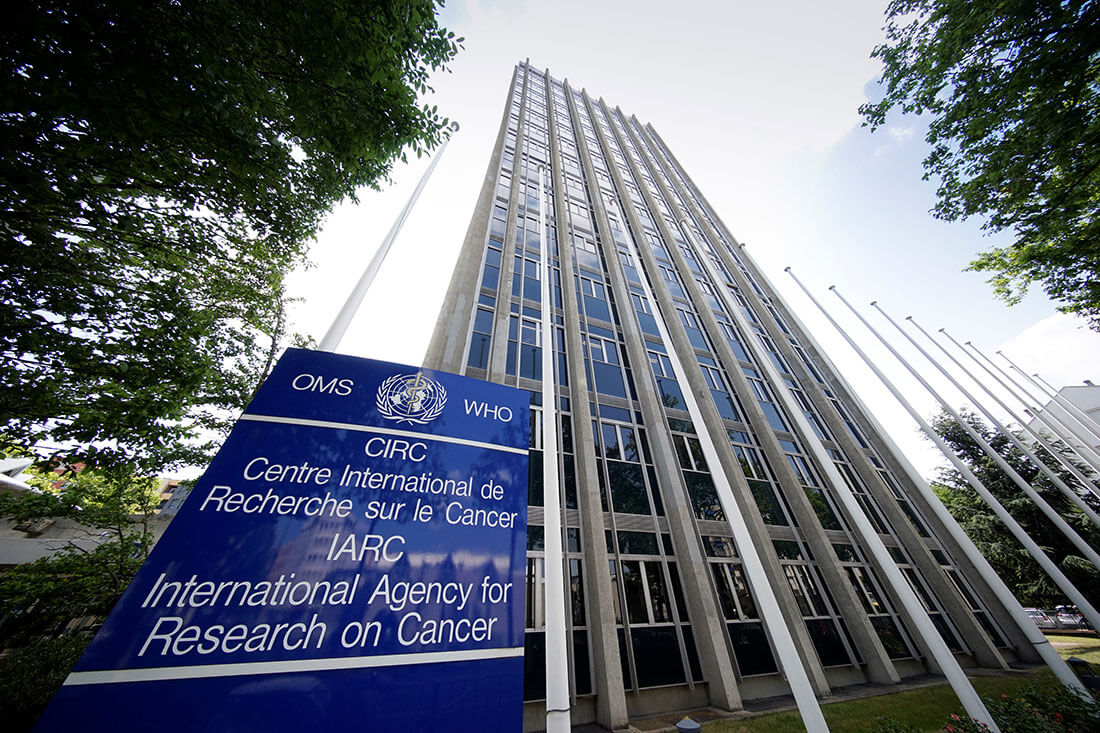
As the WHO begins its search for a new International Agency for Research on Cancer (IARC) Director as Christopher Wild suddenly cut his second term short, it would be a good opportunity to use this period to reflect on the value of the agency and how to repair the crisis that has stricken it. As the US Congress prepares for hearings into many of IARC’s recent scandals (and may remove a significant amount of funding), this period of restructuring should be looked upon as an opportunity.

Here is my wishlist of what and how to save this beleaguered scientific agency.

End IARC’s monograph programme

In reality, hazard-based studies are rather useless. It is merely a screening exercise already done by the scientific community at large. What we saw with IARC’s glyphosate monograph was a pure possibilist abuse of scientific data. By showing that it was not impossible for glyphosate to cause cancer, the monograph fueled activist campaigns that spread fear of  minuscule trace amounts in bread, wine and cereal being a significant public health threat. IARC did nothing to prevent this irresponsible alarmism and in fact, it’s two glyphosate monograph advocates, Kurt Straif and Kathryn Guyton, played up the influence of Monsanto and raised doubts on the scientific quality of other agencies.

Shutting down the IARC monograph programme would make it easy to fire both Straif and Guyton. Their biased, political antics have disgraced IARC and undermined the reputation of regulatory science.

These hazard-based studies do not add anything to the scientific process given that other scientific agencies will still have to do risk assessments where exposure and benefits need to be brought into the equation. One option would be for IARC to conduct risk assessments but this would be redundant. National or regional governments are the ultimate risk managers, bringing potential health risks into the context of economic, social and cultural realities. If, for example, an IARC monograph, as a risk assessment, were to conclude that mobile phones were public health risks, national agencies would still need to consider the impact of banning mobile technologies within the context of a larger risk assessment. Not every culture is as precaution-happy as EU bureaucrats assume. The IARC monographs add nothing valuable to this process that the scientific community isn’t already doing, or would still need to do.

Wild
Christopher Wild

The only thing IARC monographs do, in the context of an activist-driven exploitation of social media, is create uncertainty about public health and opportunity for shady actors and fear-mongers. These monographs are often exploited by predatory law firms who victim trawl on late-night American TV and use the scientific illiteracy of regulators, judges and juries to run lucrative class action lawsuits in the US. This was not only made evident with how science was exploited for greed and vengeance in the Portier Papers, but also with how other questionable IARC monographs (on talc, industrial solvents, welding fumes …) have become the go-to place for slime-ball law firms looking for a “scientific basis” to fleece corporations.

Seeing how the actors in IARC were stoking an anti-industry bias, and how many IARC working group members enjoyed lucrative careers as “litigation consultants”, it is hard to imagine they were not aware of this misuse of IARC hazard-based monographs.

Retract Monograph 112 on glyphosate

The scandals that have erupted from the poor science, cherry-picking of studies, editing out of documents and statements in the final draft, motivation of certain self-interested working group participants, the regrettable undermining of public trust in national and international scientific regulatory bodies and the exploitation of the conclusions by activist campaigners and predatory law firms can only lead to one conclusion: retract this disastrous monograph.

Return to a responsible scientific communication strategy

Under Christopher Wild’s stewardship, IARC communicated more like an activist campaign organisation than a professional UN agency dedicated to scientific excellence. In recent years, the IARC communication team used its news page to provoke and attack other agencies like EFSA or the BfR, news outlets and other scientists who disagreed with them.

iarc logoThey were seen to be taking sides in political debates, polarising scientific disputes and undermining trust in public risk management. They subcontracted scientists like Christopher Portier or anti-industry journalists like Stéphane Foucart to fight their battles against EFSA.

But why did IARC need to attack other agencies (or scientists, or news organisations like Reuters, twice) in such a public manner? Couldn’t they have simply said that EFSA was doing a risk assessment while we are doing hazard assessments. Why did IARC’s top management have to imply that EFSA and the BfR were not transparent or influenced by Monsanto? A responsible research agency would rise above the mudslinging and concentrate on the science, not bring everyone down into the mud. For Christ’s sake, when the Risk-Monger, with all of his foul language and name-calling, even started occupying a higher moral ground than IARC, then it is time to seriously rethink the agency’s reputation strategy.

IARC needs to return its communications department to science-based activities. The agency should be taking a leadership position on innovations in cancer research, prevention and detection and abandon its corporate PR approach of promoting itself or its activist campaign approach of attacking its detractors. This is Communications 101 that any professor teaches his or her first-year students.

Create a culture of engagement with all cancer researchers

Christopher Wild promoted an anti-industry bias within IARC. I couldn’t help but notice during their 50th anniversary celebrations last year, not a single researcher from industry was among the 2,000 scientists invited to celebrate the occasion. See List of Participants. Given how industry researchers are leading many of the fights against cancer, given how global pharmaceutical companies are integrated in the health-care systems and given costs and challenges of developing new forms of cancer treatments, this black-listing of a significant research population is an inexplicable madness that should never have been tolerated.

There has to be more interaction between the academic communities and the pharmaceutical companies as technologies and economies converge. As populations age and cancer survival rates continue to improve, more coordination of all actors in the cancer research community is imperative. That Wild and his monograph team drove a wedge between these research communities and fostered further anti-industry animosity is regrettable, not only for IARC’s reputation, but also for the very progress in cancer research his mandate was intended to promote.

iarc classIndustry recruits the best scientific minds, often before they complete their studies. The investments and commitments made by global pharmaceutical companies to eradicate major diseases, the means to coordinate molecules with machines at industrial scale, the means to develop data and combine chemistries … why on earth have these industry researchers been kicked out into the cold???

There needs to be more engagement with industry researchers, more coordination with technologies, more development on medical devices and more cooperation at the pure research level – not vilification of industry from the UN adding further fuel to the denormalisation narrative. With Margaret Chan gone from the WHO and now with Chris Wild’s sudden departure from IARC, I would wish that this industry witch-hunt were to cease.

Farewell

In the last months of Christopher Wild’s leadership at IARC, I would hope to reserve some kind words for how he could use his position to effect change and return IARC to a scientific path. He should come to the US Congressional hearings on the IARC scandal with humility and listen to the member state who contributes the most to his agency’s costs. He should stop fighting others and start building bridges.

In this period, Wild has an opportunity to cut out the dead wood within his agency that have contributed not only to the deterioration of public trust in regulatory science but also to his own downfall. These six remaining months in the cold air of Lyon will be the chance to prepare the green shoots of revival for his successor.

If he merely plans to rake up more weeds and use this time to defend his personal reputation, I have a very effective herbicide to deal with such situations.

David Zarukthe Risk-Mongerhas been an EU risk and science communications specialist since 2000, active in EU policy events from REACH and SCALE to the Pesticides Directive. Follow him on twitter @zaruk

This article was originally published on The Risk-Monger as My Wishlist for the New Head of IARC and has been republished here with permission.



Video: Dissecting claim that Canadian professor is a ‘Monsanto sock puppet’

Screen Shot at PM e

The Canadian Broadcasting Corporation recently brought forth allegations that professor Peter Phillips of the University of Saskatchewan is a Monsanto “sock puppet.”

How do they know?

Because of emails obtained through a Freedom of Information Act request.

Jonathan Jarry investigates.

The GLP aggregated and excerpted this article to reflect the diversity of news, opinion and analysis. Read full, original post: Vlog 21: Monsanto and the University of Saskatchewan

Bacteria-armed mosquitos approved for US release in fight against Zika, dengue and yellow fever

mosquito

The US Environmental Protection Agency (EPA) has approved the use of a common bacterium to kill wild mosquitoes that transmit viruses such as dengue, yellow fever and Zika…

[T]he agency told biotechnology start-up MosquitoMate that it could release the bacterium Wolbachia pipientis into the environment as a tool against the Asian tiger mosquito (Aedes albopictus). Lab-reared mosquitoes will deliver the bacterium to wild mosquito populations.

The decision — which the EPA has not formally announced — allows the company, which is based in Lexington, Kentucky, to release the bacteria-infected mosquitoes in 20 US states and Washington DC.

“It’s a non-chemical way of dealing with mosquitoes, so from that perspective, you’d think it would have a lot of appeal,” says David O’Brochta, an entomologist at the University of Maryland in Rockville.“I’m glad to see it pushed forward, as I think it could be potentially really important.”

The company will have to start small. Suppressing the mosquito population of an entire city is likely to require the weekly production of millions of these mosquitoes. To reach that level, [the] company must find a way to efficiently separate male mosquitoes from females. The company’s technicians now separate them both by hand and mechanically, [said Stephen Dobson, an entomologist at the University of Kentucky in Lexington and MosquitoMate’s founder.]

The GLP aggregated and excerpted this blog/article to reflect the diversity of news, opinion, and analysis. Read full, original post: US government approves ‘killer’ mosquitoes to fight disease

How the ‘Dunning-Kruger’ effect explains public’s anti-GMO views

Screen Shot at PM e
[A] new study from Carnegie Mellon University has provided key information on what factors influence public acceptance of GMOs and other scientific issues.

Unlike all the other categories, public opinion on GMOs was not influenced by education level, political leanings or religious beliefs. The pattern suggests that teaching people the science won’t make them accept the safety of GM crops any more than they already do.

So if acceptance of GMOs isn’t based on science, what is it based on?

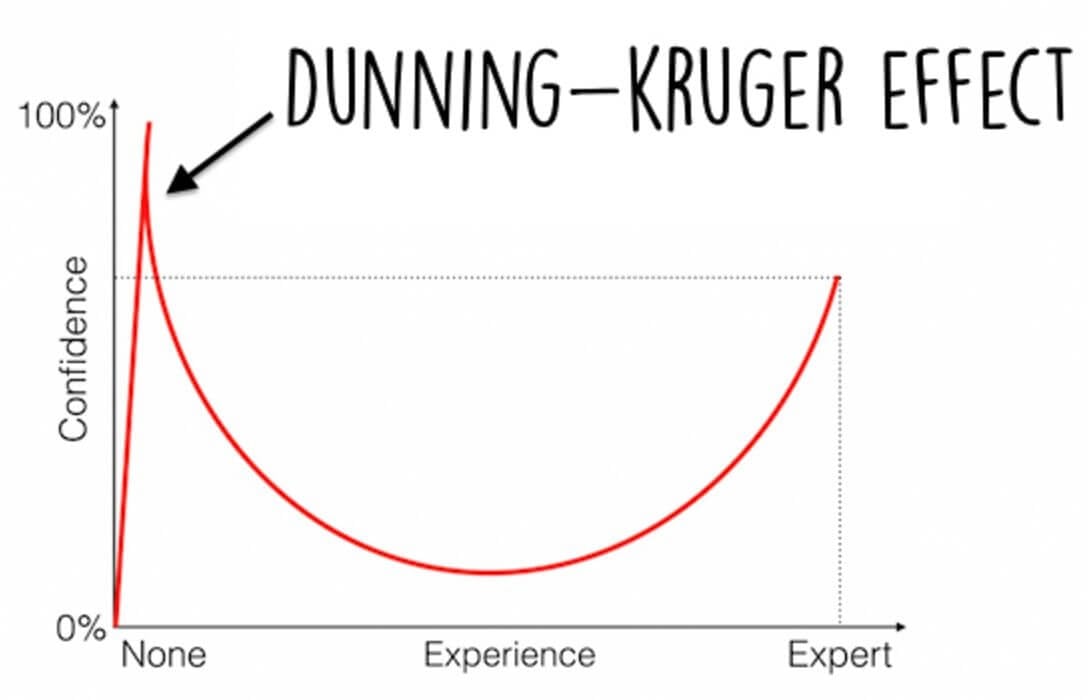
One of the authors on the paper, Caitlin Drummond, believes this trend may be occurring because of what’s called the “Dunning-Kruger” effect. This is when an abundance of data and information creates an unfounded feeling of expertise. In other words, people tend to think they know a lot more about science than they do.

“Perceived knowledge may not be related to actual knowledge,” write the authors of the paper. Instead, they assert that the public is using their assumed scientific knowledge to defend positions that are motivated by nonscientific concerns.

[Editor’s note: Read the full study (behind paywall)]

dunning kruger effect x e

The GLP aggregated and excerpted this article to reflect the diversity of news, opinion and analysis. Read full, original post: People Still Distrust GMOs, And Teaching Them The Science Won’t Help

Gene therapy creates boy’s replacement skin from his stem cells

stemcells

A 7-year-old boy whose outer skin layer was nearly gone due to a genetic disease has had it replaced, using his own genetically-modified stem cells, report researchers from Germany, Austria, and Italy in Nature.

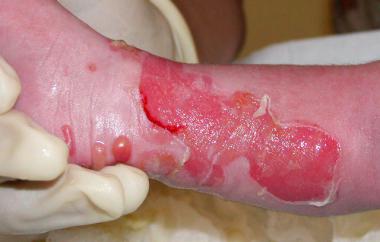
He has junctional epidermolysis bullosa (JEB). The thin tissue layer separating the epidermis from the dermis below is extremely fragile, causing blistering, peeling, and fraying of the skin, leaving wounds that can be deadly and raising the risk of skin cancer. The researchers replaced the boy’s shattered skin with grafts to his limbs and then the back of his body, followed by closing some of the gaps. In essence, they engineered and knit him a new epidermis – with a lot of help from the boy’s own capacity to heal.

Skin layers separate

JEB arises from mutations in any of several genes that encode proteins that hold the epidermis to the dermis. The boy’s mutation is in the gene LAMB3, one of three that instruct epidermis cells to make laminin-332, a protein that links the layers. About 40 percent of patients with JEB don’t reach their teens. In the US, fewer than one in a million people has JEB.

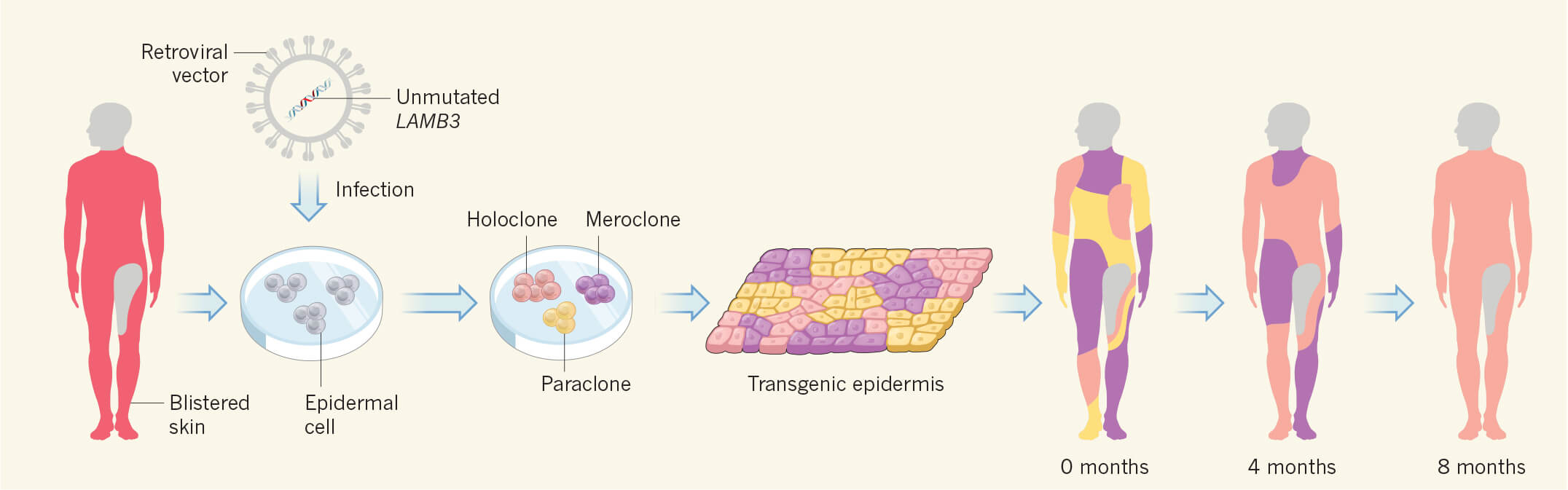
Healthy epidermis turns over every month, thanks to stem cells. In 2006, Michele De Luca, MD, from the Center for Regenerative Medicine at the University of Modena and Reggio Emilia in Italy and colleagues reported in Nature Medicine on introducing working copies of LAMB3 aboard retroviruses into skin stem cells sampled from a man with JEB, fashioning grafts patched onto nine small areas of his legs. The grafts took within eight days, and a second patient did well too. But the fix wasn’t extensive enough to make life noticeably easier.

skin
Newborn with epidermolysis bullosa simplex. (Credit: Medscape)

The new work takes a giant step forward, to “demonstrate life-saving regeneration of virtually the entire epidermis” of the boy, according to the report. The researchers again used retroviruses to introduce healthy LAMB3 genes into stem cells sampled from the limited parts of the boy’s epidermis still clinging to the layers below. Three of the researchers discussed their work in a press conference yesterday.

The procedure

The boy was admitted to the burn unit of Children’s Hospital at Ruhr University in Bochum, Germany, in June 2015. He’d had the blisters of JEB since birth, but they’d gotten much worse from bacterial infections. Soon after he arrived, about 60 percent of his epidermis fell off.

“The first few days we just tried to keep him alive,” recalled Tobias Hirsch, MD, from the burn center. That meant meticulously changing dressings, giving antibiotics, tube feeding, and trying synthetic skin and grafts of the father’s skin. Nothing helped. “After two months we thought he would die, so we changed to palliative care. But his parents asked us to try anything.” That’s when they sought the genetically modified stem cell grafts that De Luca’s team was pioneering, telling the parents that the boy might not survive.

They began with a 1½-inch square patch of healthy-looking skin from the boy’s groin area, grew cell cultures, then added the retroviruses bearing the working copies of the gene. Three types of patches formed. Those harboring stem cells are called holoclones, those with specialized cells are paraclones, and patches with partly specialized cells are termed meroclones. Nevertheless, only the holoclones persisted.

“We transferred the grafts beginning in October 2015. Within five weeks, the cells had covered about 80 percent of the boy’s body,” explained De Luca. Individual grafts, one-cell-thick and 1.2 to 3.2 square feet in area, were gently applied to prepared “wound beds,” where the natural bacterial residents had been removed and thread-like fibrin protein laid down, which prevents shrinkage before dissolving. No stitching or sticking required.

Like paint spreading over a canvas, the “epidermal islands” covered most of the boy’s body. After the limbs and back, the doctors filled in recalcitrant areas on the thighs, throat, right hand, and shoulders in a third procedure. And the new skin held up to touch that would formerly have triggered blistering.


Blanpain proofs
(Credit: Nature News and Views)

Success

The doctors expected the worst, but the grafts quickly took and the boy was well enough to leave the hospital in February 2016, returning quickly to a near-normal life of school and sports. Then the stem cells in his new epidermis spawned hairs and sweat glands, as such cells normally would. This isn’t the case for a full-thickness burn, which destroys much more of the skin. And the boy didn’t need to apply ointment daily as burn patients must.

Two years after the procedure, some 20 cell divisions later, “all biological and clinical measures were fine, stable, robust, and the skin functionality is quite good,” De Luca said. Only some stem cells remain, apparently enough to keep the skin going. The boy’s immune system hasn’t rejected the cells, which are genetically identical to the rest of him, nor did the normal genes insert in ways that could cause cancer.

“His skin is smooth. Bruises heal as in a normal kid, in 12 to 14 days. He still has some blisters in non-transplanted areas, in about 2 to 3 percent of his body where we didn’t transplant,” said Tobias Rothoeft, MD, also of University Children’s Hospital. Only a few bits of skin, on his left armpit, upper shoulders, buttocks, and right thigh, remain fragile.

Biopsies taken at four,eight, and 21 months after the procedure continued to show the doctored stem cells doing their jobs, although “we can’t take too many biopsies because he’s a patient, not a mouse,” De Luca said.

The treatment might be deemed too extreme for many patients and was done on this patient to save his life, but introduced in stages could make life much easier for people with this form of JEB, the researchers write. They envision banks of GM stem cells begun at birth, providing a ready store of replacement skin.

The now 9-year-old’s customized stem cells are indeed stored in the lab, ready in case he needs a patch someday. “That’s a fantastic option for me as a surgeon because I can get as many stem cells as needed to cover all open areas,” Hirsch said.

The family would probably agree that the results are indeed fantastic.

Ricki Lewis has a PhD in genetics and is a genetics counselor, science writer and author of Human Genetics: The Basics. Follow her at her website or Twitter @rickilewis.

‘Science Moms’ documentary counters anti-GMO, anti-vaccine misinformation

science moms cover

In an era of fear-based marketing targeted to parents, one group of moms hopes to launch a movement of science-minded parents to push back. The crowdfunded Science Moms documentary, which aims to shift the parenting narrative from the fear and hype so common today to using the broad weight of evidence, when available, in raising children, is available for download via the Science Moms website.

Fully funded by donations from supporters, Science Moms follows five moms as they discuss some of the most fraught issues in parenting today, including GMOs, vaccines, homeopathy, and the notion that natural is better than synthetic. With two young kids of her own, filmmaker Natalie Newell, a former Montessori educator, was inspired to make the documentary after encountering an open letter from the moms to anti-GMO celebrity moms, asking them to weigh genetic engineering with facts rather than common myths.

“As an educator by profession, I encountered way too much evidence-scarce, frightening misinformation about GMOs, vaccines, homeopathy, food, chemicals, the list goes on and on,” says filmmaker Natalie Newell in a press release.

The GLP aggregated and excerpted this article to reflect the diversity of news, opinion and analysis. Read full, original post: Science Moms Documentary Aims To Shift Parenting Narrative From Fear To Facts

Artificial intelligence fears could lead to over-regulation

value alignment hands x
[A]s we begin to realise [artificial intelligence] opportunities, the potential risks increase: that AI will proliferate, uncontrolled and unregulated, in the hands of a few increasingly powerful technology firms, at the expense of jobs, equality and privacy. Already, mistakes over the sharing of patient records between DeepMind and the Royal Free Hospital in London have raised public concerns about technology firms being involved in digital healthcare.

Private companies will continue to use AI, unregulated, to improve the targeting of products. But in the public sector where there could be life-changing benefits, over-regulation will mean the opportunities will be lost. That is not to say that AI should be allowed to spread uncontrolled in the NHS. But it does emphasise why it’s so important to get this right. AI can only be introduced successfully in the NHS if the public, patients and healthcare professionals have confidence in the system, including clear oversight and accountability.

While there is a risk that a GM-style backlash could prevent the appropriate application of AI in healthcare, we should not give up hope. As the Information Commissioner has recently emphasised, it does not need to be a choice between privacy or innovation.

The GLP aggregated and excerpted this blog/article to reflect the diversity of news, opinion, and analysis. Read full, original post: Why we can’t leave AI in the hands of Big Tech

Warm thoughts? Treating depression with whole body hyperthermia

heat

[Editor’s note: David Haggerty is a neuroscience graduate student at the Indiana University School of Medicine.]

A collaborative effort, led by psychiatrist Clemens Janssen at University of Wisconsin–Madison, piloted the first ever double blind clinical trial to try and show that hyperthermia can relieve symptoms of major depressive disorder better than SRRIs can – and that it can do so without any of the dreadful side effects like extreme weight gain, panic attacks, suicide attempts, insomnia, or sexual dysfunction that can accompany those drugs.

To induce whole-body hyperthermia, the 16 participants laid down in a device that covered and isolated their bodies from the neck down. Inside the chamber, infrared lights aimed at their chest and legs heated their body to 38.5°C (101.3°F).

The group that received whole-body hyperthermia had an average decrease of 6.53 points in the Hamilton Depression Rating Scale one week after treatment compared to the control group. At six weeks, the average comparative decrease was 4.27. The effect size, a measure that shows how well the treatment worked, was 1.66 after six weeks. For reference, the best anti-depressant medications usually show a decrease of three to four points on the Hamilton Depression Rating Scale, and their effect size is usually about 0.35. This suggests that hyperthermia treatments could be four times as effective as the average drug.

It’s exciting to see how simple and safe some of the solutions to our biggest problems can be.

The GLP aggregated and excerpted this blog/article to reflect the diversity of news, opinion, and analysis. Read full, original post: Could raising our body temperature treat depression?

EU farmers union: Glyphosate herbicide renewal dispute ‘undermines’ Europe’s scientific credibility

E pt Hooded sprayer

EU farmers’ union Copa-Cogeca has rejected the Commission’s revised proposal for a five year re-authorisation of glyphosate, claiming that such a proposal would “undermine” credibility in the EU institutions. Instead, they suggest a full 15-year re-approval.

Copa and Cogeca Secretary-General Pekka Pesonen insists that assessments by the European Food Safety Authority (EFSA) and the European Chemicals Agency (ECHA) gave the green light for the weedkiller’s re-authorisation.

Screen Shot at AM
Copa-Cogeca Secretary-General Pekka Pesone

“There should be no question but to re-authorise its use for the full 15 years. Important decisions like this should not be based on emotion or politics. If it’s not renewed for the full term, all credibility in the EU institutions and decision-makers will be lost,” Pesonen warned.

Food safety agencies in 28 member states agree with EFSA and ECHA assessments, EU sources claim. Based on these assessments, the Commission is pushing for the re-authorisation of glyphosate and, in an effort to reach the largest possible majority, it proposed a five year re-approval.

The GLP aggregated and excerpted this article to reflect the diversity of news, opinion and analysis. Read full, original post: European farmers say glyphosate deadlock shows mistrust in EU bodies

Targeting RNA with CRISPR could reverse half of known pathogenic point mutations

rna slide

The scope of CRISPR-based research has […] expanded because of the introduction of two new concepts. First, researchers began to manipulate RNA rather than DNA. In addition, small-scale DNA alterations became feasible and are slowly replacing the massive scope of changes that requires disrupting the entire DNA double helix structure.

RNA serves as the intermediate communicator between DNA and proteins. If DNA is analogous to a library full of books, RNA would be the person in charge of recording a second copy of the contents in the books to share with others. As a consequence, although CRISPR generally results in a permanent change in the editing target, any similar manipulations that use RNA would only yield short-term changes.

David Liu, currently a chemistry professor at Harvard University and an author of the Science study, explained why [the G-C to A-T] mutation is so harmful. “This class of mutation, changing G-C to A-T, accounts for about half of the 32,000 known pathogenic point mutations in humans,” Liu said to The Washington Post.

A problem associated with DNA editing is that it would be difficult to alter permanent changes. The RNA tool, in this regard, is useful because of its ability to edit a single base and potentially revert point mutations.

The GLP aggregated and excerpted this blog/article to reflect the diversity of news, opinion, and analysis. Read full, original post: Study shows CRISPR can reverse mutations

Could Alzheimer’s originate outside the brain?

alzheimers

We associate Alzheimer’s with physical deterioration in the brain, but new research shows the nerve damage responsible for Alzheimer’s onset might actually originate outside the brain, as a cascade of breakdowns that begin elsewhere in the body. The findings could open a whole new pathway for research into the devastating degenerative neurological condition.

The brains of Alzheimer’s patients exhibit an excess of a protein called amyloid-beta, which coalesces into “plaques” that disrupt neurological function. Until now, scientists have generally believed that deposits of amyloid-beta found in the brain originate in the brain. But the protein can be synthesized in peripheral tissues anywhere in the body.

[S]cientists surgically joined healthy mice to mice that had been genetically modified with high concentrations of amyloid-beta. Then they monitored the mice’s brains for signs of the Alzheimer’s disease-associated plaques. After a year, the healthy mice developed the same telling neurological symptoms as the genetically modified mice.

[S]ince the cell walls separating our blood vessels from our brain’s gray matter become weaker as we get older, the amyloid-beta in our bodies could cross over into our brains, making them a catalyst for dementia.

[Editor’s note: Read the full study (behind paywall)]

The GLP aggregated and excerpted this blog/article to reflect the diversity of news, opinion, and analysis. Read full, original post: Alzheimer’s Disease Might Start in Our Bodies, Not Just Our Brains

Mars missions: What would long-term space travel do to the brain?

o

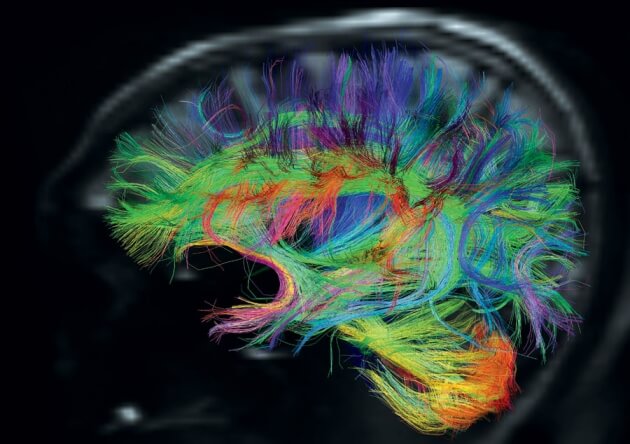
In a NASA-funded study published on [November 1], Dr. Donna Roberts of the Medical University of South Carolina and her colleagues therefore compared before- and after-mission MRIs of 34 astronauts, 18 who spent months on the International Space Station (average voyage: 165 days) and 16 who had shorter jaunts (14 days, on average, on the space shuttle). Both groups were roughly the same age and had comparable flight experience. Among the findings: Without gravity to pull the brain toward its owner’s feet, it shifts toward the top of the skull.

The brain’s upward shift can increase pressure on the optic disk, the point on the optic nerve where it leaves the retina and enters the brain, leading to swelling and, according to previous research on hundreds of U.S. astronauts, damaging vision, sometimes permanently. Three of the Space Station astronauts in Roberts’s study had swelling of the optic disk, and all three of them had narrowing of the central sulcus.

Although disturbances in the flow of [cerebrospinal fluid] have been linked to Alzheimer’s disease, multiple sclerosis, and other brain disorders, it’s not clear if that’s cause or effect. But since a mission to Mars would cause about two years worth of brain squashing, it would be useful to know.

The GLP aggregated and excerpted this blog/article to reflect the diversity of news, opinion, and analysis. Read full, original post: Squashed in space: Study identifies changes in astronauts’ brains

Video: Exploring the possibilities offered by CRISPR gene editing

Screen Shot at AM

The CRISPR-Cas9 system has revolutionised gene-editing, but cutting DNA isn’t all it can do. From turning gene expression on and off to fluorescently tagging particular sequences, this animation explores some of the exciting possibilities of CRISPR.

The GLP aggregated and excerpted this blog/article to reflect the diversity of news, opinion, and analysis. See full, original post: CRISPR: Gene editing and beyond

Brain studies weakened by lack of diversity in participants

brain
[S]ocial sciences [tend] to focus on people from WEIRD societies—that is, Western, educated, industrialized, rich, and democratic. The results of such studies are often taken to represent humanity at large, even though their participants are drawn from a “particularly thin and rather unusual slice” of it.

Kaja LeWinn, from the University of California, San Francisco, demonstrated this by reanalyzing data from a large study that scanned 1,162 children ages 3 to 18 to see how their brain changed as they grew up. The kids came from disproportionately wealthy and well-educated families, so LeWinn adjusted the data to see what it would look like if they had been more representative of the U.S. population.

When LeWinn weighted her data for factors such as sex, ethnicity, and wealth, the results looked very different from the original set. The brain as a whole developed faster than previously thought, and some parts matured earlier relative to others. Natalie Brito, from New York University, says that this study “clearly shows how our interpretation of brain development changes based off who is being represented within the sample.”

Brain-scanning studies are getting bigger, and researchers are making more of an effort to recruit samples that are at least representative of the local community—if not America as a whole.

The GLP aggregated and excerpted this blog/article to reflect the diversity of news, opinion, and analysis. Read full, original post: How a Focus on Rich Educated People Skews Brain Studies 

USDA scraps overhaul of GMO and gene edited crop regulations that biotech advocates viewed as ‘unscientific’

CRISPR superplants e

The US Department of Agriculture (USDA) announced yesterday that it is withdrawing a proposed rule to revise the agency’s regulations of genetically engineered crops. The rule was proposed by the outgoing Obama administration in January.

It would have been a major change from the agency’s “regulate first/analyze later” approach to one that would have required identifying a potential risk before regulating a crop. However, many scientists and biotech advocates thought the proposal didn’t go far enough in easing restrictions, and worried the change could hinder research and development of crops modified with new breeding techniques, such as CRISPR.

“Good riddance,” declared Wayne Parrott, a professor at the University of Georgia’s Center for Applied Genetic Technologies. “It was well-intentioned, but lacked important details. It maintained an unscientific basis for regulation, and could have made the system even more dysfunctional than it already is.”

The move comes after a comment period in which stakeholders provided the USDA’s Animal and Plant Health Inspection Service (APHIS) with feedback on the proposed rule change. Stakeholders included representatives from the agricultural biotechnology industry, farmers, scientists, organic industry representatives, food safety and environmental activist groups, federal agencies and private citizens.

“Many commenters objected to the scope of the proposed rule,” according to the USDA. “Some thought that our criteria for designating GE [genetically engineered] organisms as regulated organisms were too expansive, potentially resulting in our regulating a wider range of GE organisms than necessary and thereby increasing, rather than reducing, the regulatory burden for the biotechnology industry.”

Other commenters expressed concerns that the proposed rule exempted too many crops from a safety assessment and would increase the risk of the unintended presence of genetically engineered crops in organic and other non-GE crops

“My thinking is that if a rule is criticized by both sides on the same points, it has probably struck a good balance,” said Jennifer Kuzma, a professor at North Carolina State University’s School of Public and International Affairs. She sees the Trump administration’s anti-regulation philosophy at work, and GE crop developers as the likely beneficiary of the withdrawal.

“I think the real reason [for the withdrawal] is that the new proposed rule would have brought more gene-edited crops under its authority,” stated Kuzma. “And this new administration isn’t too fond of regulations in general.”

The January proposal by the USDA, coupled with a proposed overhaul by the Food and Drug Administration for GE animals, would have represented the first substantial revision to the regulation of genetically engineered organisms in 30 years.

For now, the April 2016 ruling by the USDA not to regulate gene-edited plants means that these crops will continue to be treated similarly to crops created via conventional breeding practices. This contrasts with the more onerous regulations that transgenic “GMO” plants are subject to.

The fate of the FDA’s proposed changes to the regulation of GE animals is still up in the air, but Kuzma thinks it’s likely the Trump administration will scrap that as well.

Alison Van Eenennaam, an animal geneticist at the University of California-Davis, advocates for a “product-based” regulatory framework, as opposed to the “process-based” scheme that’s been used for GE crops for over 20 years.

“It’s time to refocus regulatory oversight of new varieties of plants and animals around their risk/benefit profiles posed by any novel trait(s) they carry, irrespective of the breeding technique used to produce those traits,” she explained.

“I’m pleased to see APHIS doing the right thing,” said Val Giddings, a senior fellow at the Information Technology and Innovation Foundation, a nonpartisan think tank. “The real praise will be due, however, when they come forward with a proposal that actually matches the degree of regulatory oversight with the level of risk involved, and propose risk management measures that align with data and experience.”

Secretary of Agriculture Sonny Perdue says the USDA will go back to the drawing board with the hope that it can come up with a solution that satisfies everyone.

“We need to take a fresh look, explore policy alternatives, and continue the dialogue with all interested stakeholders.”

Paul McDivitt is a science and environmental writer based in St. Paul, Minnesota. He has a Master’s in environmental journalism from the University of Colorado. Follow him on Twitter @PaulMcDivitt