Viewpoint: ‘Gattaca’ reminds us that gene editing has dark possibilities

yBYmjAKALazmQ vN OokOv s nh

[Editor’s note: Osagie Obasogie is a professor of bioethics at the University of California-Berkeley.]

Set in the not-too-distant future, the film [Gattaca] tells the story of a young man born through natural conception (and with all its mundanity) trying to make it in a world where genetically screening embryos for better bodies, sharper minds and enhanced talents has become the norm.

Revisiting Gattaca at this time is important precisely because it coincides with the emergence of new genetic technologies that are making a then-futuristic vision put forth two decades ago more a matter of science than fiction.

Technological developments like gene editing, if safe and accessible for existing patients, can make remarkable contributions to improving human health. But altering the genes of not-yet-existing people is not so much medicine as human experimentation with “better breeding.” As science moves forward in these treacherous times, we must be mindful of our ideological surroundings to ensure the most vulnerable are not targets once again.

White supremacy under the guise of public health, technological progress or human betterment is nothing new. Thus, the very fields of science and medicine that let down so many during past eugenic eras must now step up to make sure these political fantasies do not taint their endeavors once again.

The GLP aggregated and excerpted this blog/article to reflect the diversity of news, opinion, and analysis. Read full, original post: Revisiting “Gattaca” in the Era of Trump

Video: Exploring the possibilities offered by CRISPR gene editing

Screen Shot at AM

The CRISPR-Cas9 system has revolutionised gene-editing, but cutting DNA isn’t all it can do. From turning gene expression on and off to fluorescently tagging particular sequences, this animation explores some of the exciting possibilities of CRISPR.

The GLP aggregated and excerpted this blog/article to reflect the diversity of news, opinion, and analysis. See full, original post: CRISPR: Gene editing and beyond

Mars missions: What would long-term space travel do to the brain?

o

In a NASA-funded study published on [November 1], Dr. Donna Roberts of the Medical University of South Carolina and her colleagues therefore compared before- and after-mission MRIs of 34 astronauts, 18 who spent months on the International Space Station (average voyage: 165 days) and 16 who had shorter jaunts (14 days, on average, on the space shuttle). Both groups were roughly the same age and had comparable flight experience. Among the findings: Without gravity to pull the brain toward its owner’s feet, it shifts toward the top of the skull.

The brain’s upward shift can increase pressure on the optic disk, the point on the optic nerve where it leaves the retina and enters the brain, leading to swelling and, according to previous research on hundreds of U.S. astronauts, damaging vision, sometimes permanently. Three of the Space Station astronauts in Roberts’s study had swelling of the optic disk, and all three of them had narrowing of the central sulcus.

Although disturbances in the flow of [cerebrospinal fluid] have been linked to Alzheimer’s disease, multiple sclerosis, and other brain disorders, it’s not clear if that’s cause or effect. But since a mission to Mars would cause about two years worth of brain squashing, it would be useful to know.

The GLP aggregated and excerpted this blog/article to reflect the diversity of news, opinion, and analysis. Read full, original post: Squashed in space: Study identifies changes in astronauts’ brains

Brain studies weakened by lack of diversity in participants

brain
[S]ocial sciences [tend] to focus on people from WEIRD societies—that is, Western, educated, industrialized, rich, and democratic. The results of such studies are often taken to represent humanity at large, even though their participants are drawn from a “particularly thin and rather unusual slice” of it.

Kaja LeWinn, from the University of California, San Francisco, demonstrated this by reanalyzing data from a large study that scanned 1,162 children ages 3 to 18 to see how their brain changed as they grew up. The kids came from disproportionately wealthy and well-educated families, so LeWinn adjusted the data to see what it would look like if they had been more representative of the U.S. population.

When LeWinn weighted her data for factors such as sex, ethnicity, and wealth, the results looked very different from the original set. The brain as a whole developed faster than previously thought, and some parts matured earlier relative to others. Natalie Brito, from New York University, says that this study “clearly shows how our interpretation of brain development changes based off who is being represented within the sample.”

Brain-scanning studies are getting bigger, and researchers are making more of an effort to recruit samples that are at least representative of the local community—if not America as a whole.

The GLP aggregated and excerpted this blog/article to reflect the diversity of news, opinion, and analysis. Read full, original post: How a Focus on Rich Educated People Skews Brain Studies 

Will herbicide drift damage push non-GMO farmers to buy dicamba-resistant seeds?

maxresdefault

About 4 percent of all soybean crops planted in the United States have been damaged by a weed killer this year, the New York Times has reported.

Starting this year, farmers began using the herbicide on genetically modified soybean crops, which are not harmed by it, but the weed killer has been drifting off and landing on non-modified soybean crops.

“I think it [dicamba] is an inherently volatile product,” University of Missouri weed scientist Kevin Bradley told Mother Jones in August.

Pesticide manufacturers are confident that they will solve the problem in the next year, but EPA officials are warning that the approval for use of the herbicide could be jeopardy if the steps the company takes don’t significantly reduce the scope of the problem by next growing season. Cynthia Palmer, who is a member of an EPA pesticide advisory committee told the New York Times“it seems like farmers have no choice but to buy dicamba-resistant seeds from Monsanto.”

The GLP aggregated and excerpted this article to reflect the diversity of news, opinion and analysis. Read full, original post: Monsanto Created a Huge Problem. Now That Problem Might Be Driving Sales.

Sequenced potato genomes could speed development of disease-resistant varieties

Screen Shot at PM

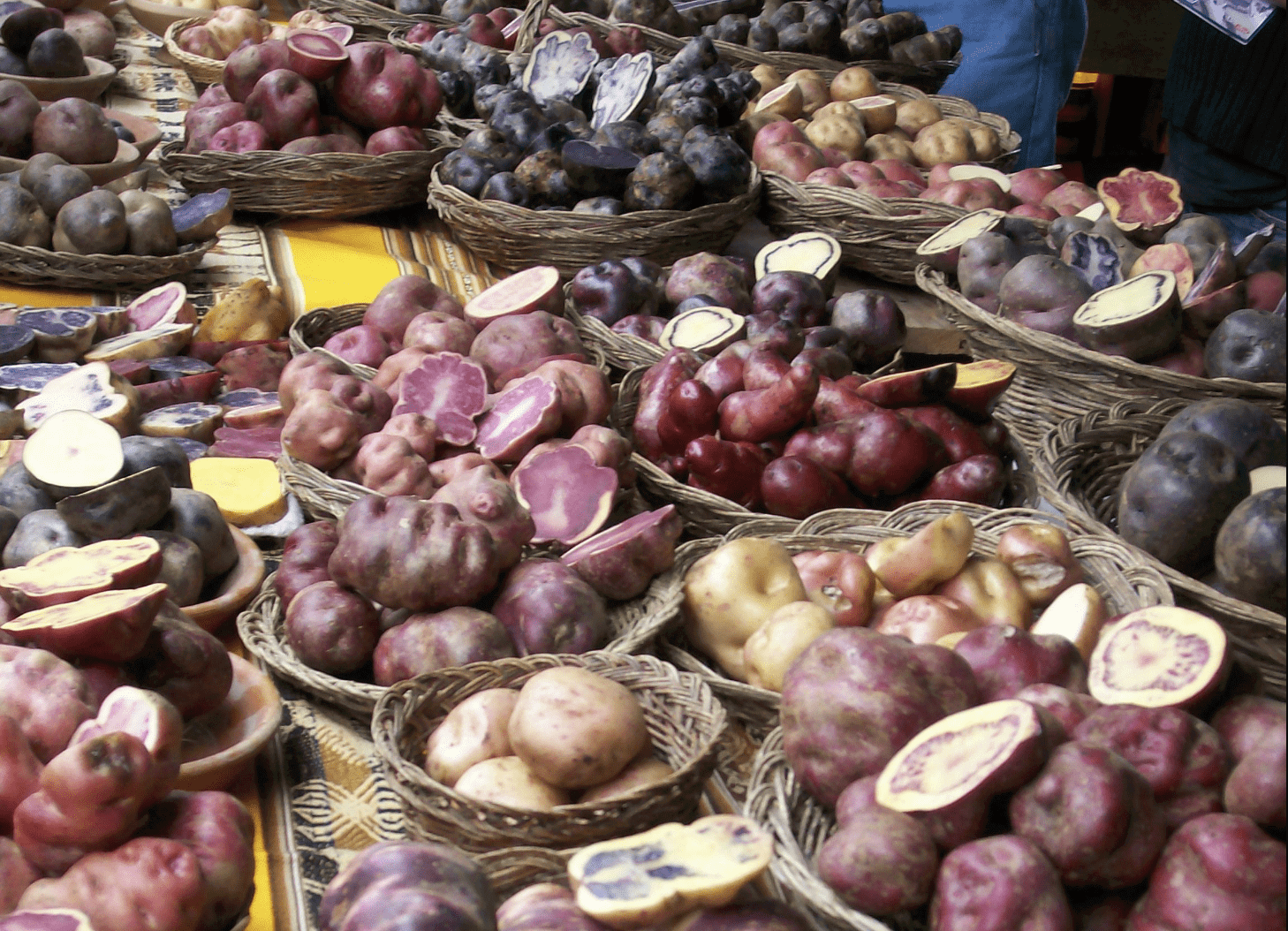
Examining the ancestors of the modern, North American cultivated potato has revealed a set of common genes and important genetic pathways that have helped spuds adapt over thousands of years.

The modern spuds found in today’s kitchens are genetically complex tetraploid potatoes, having four times the regular number of chromosomes. Potatoes’ complex genome harbors an estimated 39,000 genes. (In comparison, the human genome comprises roughly 20,000 genes.)

From the large gene pool, the researchers identified 2,622 genes that drove the crop’s early improvement when first domesticated. The study appears in the current issue of Proceedings of the National Academy of Sciences.

Studying the gene diversity spectrum, from its wild past to its cultivated present, can provide an essential source of untapped adaptive potential, [said Robin Buell, Michigan State University Foundation Professor of Plant Biology and senior author of the paper].

“We’ll be able to identify and study historic introgressions and hybridization events as well as find genes targeted during domestication that control variance for agricultural traits,” she said. “Many of these help focus on adapting to different climates, fending off different pathogens or improving yield, keys that we hope to better understand to improve future breeding efforts.”

[Editor’s note: Read the full study]

The GLP aggregated and excerpted this article to reflect the diversity of news, opinion and analysis. Read full, original post: Examing potatoes’ past could improve spuds of the future

Combatants prepping for next skirmish in battle over CRISPR patents

crispr

The long-running battle over US patents for CRISPR–Cas9 gene editing continues. On 25 October, the Broad Institute of Cambridge, Massachusetts, filed a fresh set of arguments with the US government to defend a key patent. That action helps to set the stage for a second round of oral arguments in the unusually vitriolic case, which observers expect to take place in early 2018.

At stake are intellectual-property rights to the use of CRISPR–Cas9 gene-editing tools in eukaryotes, organisms such as plants and animals. This would include applications of the technique to treat human genetic diseases — an approach that has recently entered cancer clinical trials in China, and is potentially the most lucrative application of gene editing.

[T]he University of California team argued that its patent — which explicitly describes the use of CRISPR–Cas9 gene editing only in non-eukaryotes such as bacteria — rendered applications in eukaryotic cells “obvious” and therefore unpatentable. The Broad countered that the University of California’s invention needed significant and non-obvious tweaks before it could be used in eukaryotes.

If that decision — which will be discussed during oral arguments in mid-January — becomes final, it will push the Broad’s patent date to a time after the institute’s team published its findings in a scientific article1. And that would invalidate the patent application altogether.

The GLP aggregated and excerpted this blog/article to reflect the diversity of news, opinion, and analysis. Read full, original post: Bitter CRISPR patent war intensifies

Genetic engineering ‘fastest method’ to save Florida citrus industry from greening disease

dsc

[Editor’s note: Manjul Dutt is a research assistant scientist and Jude Grosser is a research professor, both at the University of Florida Institute of Food and Agricultural Sciences Citrus Research and Education Center.]

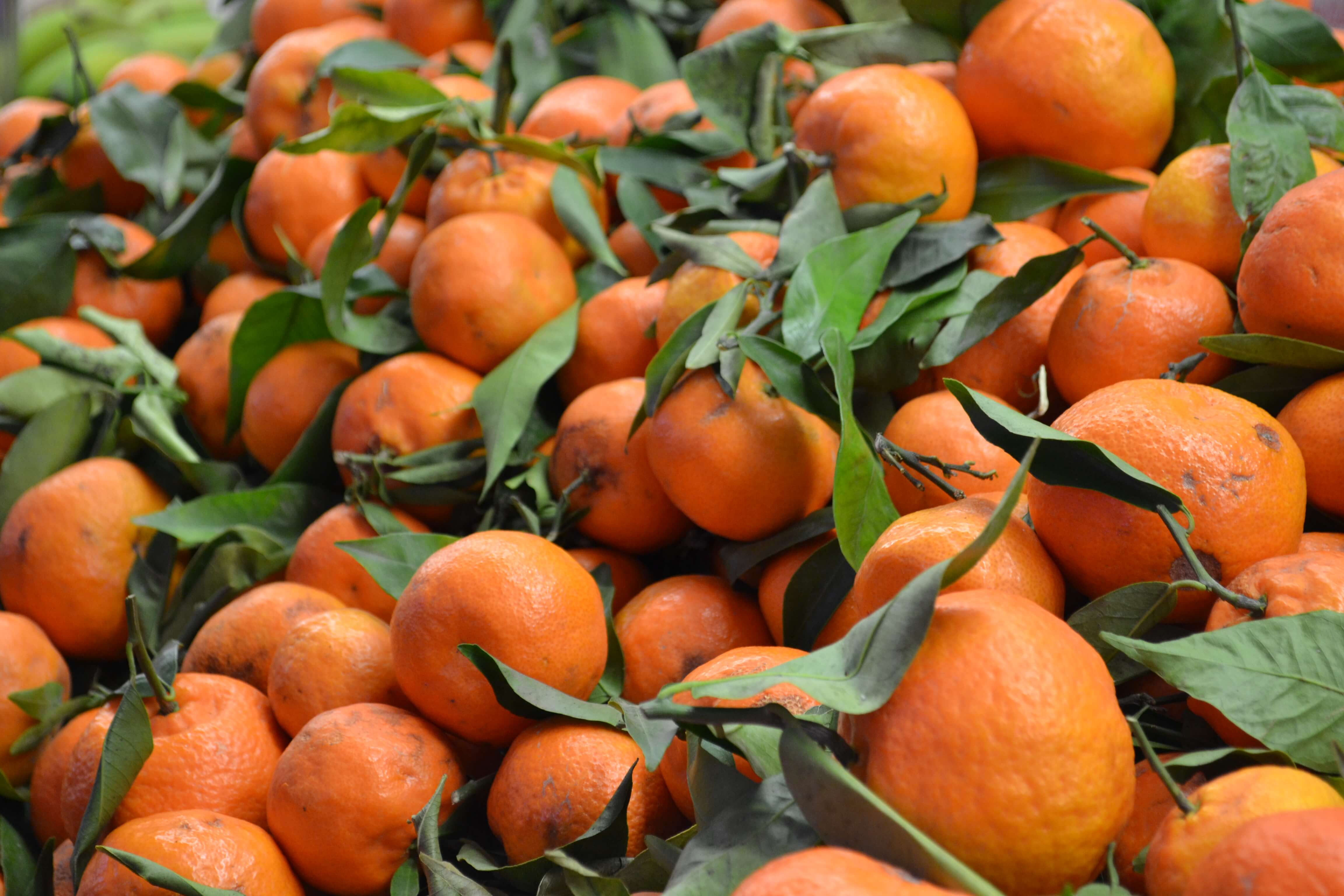
Huanglongbing (HLB) [also known as citrus greening disease] threatens the survival of the Florida citrus industry. Both conventional cultivars and genetically engineered cultivars that can grow in the presence of HLB have been developed at the University of Florida’s Citrus Research and Education Center (CREC) in Lake Alfred. Among the two citrus improvement techniques, engineering citrus remains the fastest method for the improvement of an existing commercial cultivar and has been a key component in CREC’s overall citrus improvement strategy.

Currently, a population of engineered sweet orange trees expressing the Arabidopsis NPR1 gene is being monitored for resistance to HLB. Several transgenic lines have been observed to provide durable resistance against HLB. Several lines have remained HLB-negative for over five years, although they have been planted at a site with >95 percent HLB infection.

In citrus, there is a potential to create an HLB-tolerant plant using [CRISPR/Cas9].

Current results give hope that research is well on its way to winning the fight against HLB.

The GLP aggregated and excerpted this article to reflect the diversity of news, opinion and analysis. Read full, original post: Progress on Engineering HLB-Tolerant/Resistant Citrus

USDA scraps overhaul of GMO and gene edited crop regulations that biotech advocates viewed as ‘unscientific’

CRISPR superplants e

The US Department of Agriculture (USDA) announced yesterday that it is withdrawing a proposed rule to revise the agency’s regulations of genetically engineered crops. The rule was proposed by the outgoing Obama administration in January.

It would have been a major change from the agency’s “regulate first/analyze later” approach to one that would have required identifying a potential risk before regulating a crop. However, many scientists and biotech advocates thought the proposal didn’t go far enough in easing restrictions, and worried the change could hinder research and development of crops modified with new breeding techniques, such as CRISPR.

“Good riddance,” declared Wayne Parrott, a professor at the University of Georgia’s Center for Applied Genetic Technologies. “It was well-intentioned, but lacked important details. It maintained an unscientific basis for regulation, and could have made the system even more dysfunctional than it already is.”

The move comes after a comment period in which stakeholders provided the USDA’s Animal and Plant Health Inspection Service (APHIS) with feedback on the proposed rule change. Stakeholders included representatives from the agricultural biotechnology industry, farmers, scientists, organic industry representatives, food safety and environmental activist groups, federal agencies and private citizens.

“Many commenters objected to the scope of the proposed rule,” according to the USDA. “Some thought that our criteria for designating GE [genetically engineered] organisms as regulated organisms were too expansive, potentially resulting in our regulating a wider range of GE organisms than necessary and thereby increasing, rather than reducing, the regulatory burden for the biotechnology industry.”

Other commenters expressed concerns that the proposed rule exempted too many crops from a safety assessment and would increase the risk of the unintended presence of genetically engineered crops in organic and other non-GE crops

“My thinking is that if a rule is criticized by both sides on the same points, it has probably struck a good balance,” said Jennifer Kuzma, a professor at North Carolina State University’s School of Public and International Affairs. She sees the Trump administration’s anti-regulation philosophy at work, and GE crop developers as the likely beneficiary of the withdrawal.

“I think the real reason [for the withdrawal] is that the new proposed rule would have brought more gene-edited crops under its authority,” stated Kuzma. “And this new administration isn’t too fond of regulations in general.”

The January proposal by the USDA, coupled with a proposed overhaul by the Food and Drug Administration for GE animals, would have represented the first substantial revision to the regulation of genetically engineered organisms in 30 years.

For now, the April 2016 ruling by the USDA not to regulate gene-edited plants means that these crops will continue to be treated similarly to crops created via conventional breeding practices. This contrasts with the more onerous regulations that transgenic “GMO” plants are subject to.

The fate of the FDA’s proposed changes to the regulation of GE animals is still up in the air, but Kuzma thinks it’s likely the Trump administration will scrap that as well.

Alison Van Eenennaam, an animal geneticist at the University of California-Davis, advocates for a “product-based” regulatory framework, as opposed to the “process-based” scheme that’s been used for GE crops for over 20 years.

“It’s time to refocus regulatory oversight of new varieties of plants and animals around their risk/benefit profiles posed by any novel trait(s) they carry, irrespective of the breeding technique used to produce those traits,” she explained.

“I’m pleased to see APHIS doing the right thing,” said Val Giddings, a senior fellow at the Information Technology and Innovation Foundation, a nonpartisan think tank. “The real praise will be due, however, when they come forward with a proposal that actually matches the degree of regulatory oversight with the level of risk involved, and propose risk management measures that align with data and experience.”

Secretary of Agriculture Sonny Perdue says the USDA will go back to the drawing board with the hope that it can come up with a solution that satisfies everyone.

“We need to take a fresh look, explore policy alternatives, and continue the dialogue with all interested stakeholders.”

Paul McDivitt is a science and environmental writer based in St. Paul, Minnesota. He has a Master’s in environmental journalism from the University of Colorado. Follow him on Twitter @PaulMcDivitt

New Zealand farmers group drops lawsuit, paving way for local GMO bans

rtr qom

Federated Farmers has dropped a legal battle against rulings allowing regional councils to decide whether genetically modified organisms (GMOs) can be banned in their areas.

But the farmers lobby stands by its position that GMO technology should not be regulated by councils, but by government.

The move signals the end of a long-running legal challenge against Northland councils and groups that oppose the use of GMOs.

Federated Farmers earlier this year went to the Court of Appeal, after its appeals to the Environment Court and High Court were dismissed.

Federated Farmers had contested local government had no role in legislating about GMOs and that the Hazardous Substances and New Organisms Act (HSNO), not the Resource Management Act (RMA), was the overarching legislation that governs how GMOs were used in New Zealand.

Federated Farmers confirmed it was withdrawing its appeal, just weeks before a scheduled hearing, after concluding recent amendments to the RMA would likely have “materially reduced” the prospects of winning it.

Those amendments had effectively blocked the Minister for the Environment from being able to permit GMO crops in regions that had elected to remain GMO-free or impose controls on the use of GMOs.

The GLP aggregated and excerpted this article to reflect the diversity of news, opinion and analysis. Read full, original post: Federated Farmers drop Northland GMO appeal

Two of a kind? Twins offer unique glimpse into human development

twins

Identical twins have been a source of mystery and fascination for many years. It’s easy to understand why: Two people born at the same time who look and act alike can conjure up all sorts of wild stories. In some cultures, twins have almost a mystical status.

Most people assume identical twins are basically clones of each other — carbon copies made by nature. That’s not quite the case. While they’re more alike than almost any pairs of people out there, there’s still a great deal of difference between them. This seems unbelievable to most of us. After all, we’ve all heard stories about separated identical twins who are alike down to the way they hold a glass and seem to have been made exactly alike from the beginning of their lives.

Twins are a valuable source of study for the genetic world even to this day. But they’ve also revealed that the genetic makeup of a person is even more complicated than Mendel could have dreamed of with his peas. While twins have been studied as long as they’ve existed, they’re still revealing more things about genetics to this day. Let’s look at some of them.

twinsFirst, let’s consider that twins come in two types – identical and fraternal. Fraternal twins also are called dizygotic, coming from two separate eggs. Identical twins are also called monozygotic, coming from one egg that splits in two. Other types of twins, like “half-identical twins” (when an egg splits before conception and the halves are fertilized by different sperm) have been speculated to exist, but haven’t been proven yet.

Fraternal twins are no more similar than any other pair of siblings —  at best they will show fifty percent genetic similarity. Identical twins, by contrast, share a large portion of genes. Anything that is fixed at conception will be the same in all monozygotic twins.  (There is one exception: sexual phenotypes.  Due to a rare extra chromosome in the egg or the loss of chromosome after the split, there are a few examples of monozygotic twins of opposite sexes.  In some cases one twin will be male, the other a female with the single X condition Turner’s syndrome. In other cases the fertilized egg has an extra X chromosome, making it XXY, that goes to make a XX girl and XY boy)  They will have the same hair color, eye color and blood type.  They will always be the best match for each other in organ transplants. When grown, their height will be similar and they often share personality traits.

Monozygotic is used in medicine more often than “identical” because it’s more accurate. When 66 pairs of identical twins were analyzed for single nucleotide polymorphisms, two differences were found in the 33 million present. That’s not a lot, but it means identical twins are not merely clones.

The genetic similarity is enough that twin studies are considered to be among the more valuable genetic tools in the world. Cohort studies done between fraternal and identical twins are used to determine the genetic nature of a trait or characteristic. If the environment after birth is the main cause of the trait, fraternal twins and identical twins will share the same instance of those traits. If there is a genetic factor, the identical twins will be more likely to share the trait. Fifty percent of identical twins will both develop schizophrenia as opposed to fifteen percent in fraternal twins.  Identical twins have a 76 percent chance of both being autistic; only 18-34 percent of fraternal twins will share the diagnosis. (Nearly all identical twins, even those who do not share a diagnosis, will show similar patterns in the way they look at the faces of others, which indicates they both start with the same genetic base.)  Ecstacy use, something not typically thought to be inherited, has a 74 percent similarity in identical twins.  Forty-one percent of identical twins who hoard or display hoarding behaviors will have a twin similarly affected. Still, that’s not a 100 percent concordance.  Another factor clearly is in play.

So why will one twin get autism and one not? The answer lies in epigenetics.

Epigenetics is the study of the level of activity of genes. A genome can be turned off or on at different times of life. In some cases the environment will turn on a genome while a different one would allow it to remain inert. Environment does not always mean “parental influence,” despite its representation in popular culture. It’s a broad term referring to anything that influences an organism, from embryo to fetus to infant and beyond. Once the egg splits, the monozygotic twins will have their own environment. Most will share a placenta but have separate amniotic sacs. Even sharing a placenta can cause environmental differences: one twin may get more nourishment through the placenta, and conditions like Twin to Twin Transfusion Syndrome (TTTS) can result in drastically different environments while still sharing the womb.

kelly
Astronauts Mark Kelly and Scott Kelly. | NBC

Genetic development doesn’t stop after birth and is influenced by the post-uterine environment as well. Studies of monozygotic twins raised apart after birth show the greatest amount of epigenetic variation, but even in twins raised together the differences exist and increase with age. Three-year-old twins show less variation than twins of 70. That’s a clear indication that the environment around the twin is still shaping their genetic makeup long after birth. Studies of identical twins that differ in birth weight show more variance in brain structure and epigenetic difference than the ones with similar weights, indicating that the prenatal environment has a significant effect on genes. This genetic variance even extends to stem cells — induced pluripotent stem cells taken from identical twins will still show significant differences. Those differences are usually near methylation sites, indicating some difference in environment is responsible for them.

What do some of the most recent twin studies show about these differences? Let’s take a look at one of the most unusual twin studies in progress now – the Kelly twins. Astronaut Scott Kelly was sent into space for a year. His twin brother Mark has spent 54 days in space in the past. Two astronauts, with nearly identical genes (as close as a person can get) but a drastically different environment – it’s almost tailor-made for a study. The study is actually several studies rolled into one. The tests are not all related to genetics, but the ones that are study the effect of space on the genetic component of aging, a whole epigenetic genome profile before and after the trip, and a study on DNA and RNA methylation before, during, and after space travel.  The results of the tests are still being analyzed, but initial testing showed that after Scott’s extended trip in space, they each had 200,000 different RNA molecules among them.  Scott’s telomeres (the ends of chromosomes that prevent them from deterioration and fusing with other chromosomes) increased in length while he was in space.  Some of the changes to Scott’s DNA from space travel seem to have reversed themselves, like the telomeres.  Whether others will is unknown. The full data from the study will be released in 2018.

Annie Keller is a freelance medical writer in Columbus, Ohio.

100 billion neurons make up our brain—how does it all work?

iStock LARGE

[Editor’s note: Sara Linker and Tracy Bedrosian are postdoctoral research fellows in the Laboratory of Genetics at the Salk Institute for Biological Studies, where Fred Gage is a professor.]

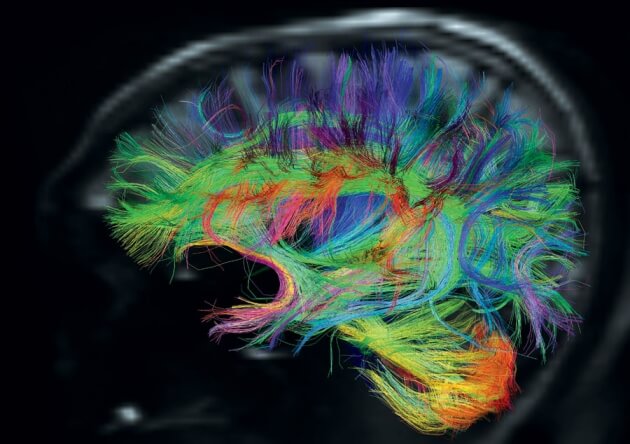
For years, neurons in the brain were assumed to all carry the same genome, with differences in cell type stemming from epigenetic, transcriptional, and posttranscriptional differences in how that genome was expressed. But in the past decade, researchers have recognized an incredible amount of genomic diversity, in addition to other types of cellular variation that can affect function. Indeed, the human brain contains approximately 100 billion neurons, and we now know that there may be almost as many unique cell types.

This genetic, molecular, and morphological diversity of the brain leads to functional variation that is likely necessary for the higher-order cognitive processes that are unique to humans. Such mosaicism may have a dark side, however. Although neuronal diversification is normal, it is possible that there is an optimal extent of diversity for brain function and that anything outside those bounds—too low or too high—may be pathological.

If neurons diversify and become too specialized to a given role, they may lose the plasticity required to change and function normally within a larger circuit. As researchers continue to probe the enormous complexity of the brain at the single-cell level, they will likely begin to uncover the answers to these questions—as well as those we haven’t even thought to ask yet.

The GLP aggregated and excerpted this blog/article to reflect the diversity of news, opinion, and analysis. Read full, original post: Advancing Techniques Reveal the Brain’s Impressive Diversity

GMO canola high in omega-3 oils up for regulatory approval in Australia

Screen Shot at AM

The first genetically modified canola with health benefits is being scrutinised by [Australia’s] Office of the Gene Technology Regulator.

The OGTR has called for submissions about a GM canola that has been modified to increase the level of omega-3 oil in the seed. Omega-3 oils are found in fish oil.

The application says Nuseed, a subsidiary of Nufarm, is seeking approval for the commercial cultivation of the canola for use in human and animal feed.

The oil would be used in animal or aquaculture feed, food additives, nutraceuticals and pharmaceuticals.

The canola line was developed by Nuseed and CSIRO.

CSIRO agriculture and food director John Manners told The Weekly Times trad­itionally canola didn’t have very high levels of omega-3 oils.

He said the main source of omega-3 in the human diet was through eating fish.

“It’s not actually the fish that make the omega-3, it’s the algae they consume,” Dr Manners said.

He said omega oils were incorporated into farmed fish by either feeding them wild catch fish or providing omega-3-enriched oils into the aquaculture pens.

Dr Manners said this was not very sustainable so “so we decided we would try to make canola which would have very high levels of omega-3 oil using GM technology”.

The GLP aggregated and excerpted this article to reflect the diversity of news, opinion and analysis. Read full, original post: Gene technology regulator examines Omega-3 genetically modified canola

Fate of Neanderthals may have been sealed when early humans started migrating

scisource bd custom a f ebec c aac b d d f s c

What killed off the Neanderthals? It’s a big debate, and now a study says that no matter what the answer, they were doomed anyway. Our close evolutionary cousins enjoyed a long run in Europe and Asia, but they disappeared about 40,000 years ago after modern humans showed up from Africa. The search for an explanation has produced many theories including climate change, epidemics, or inability to compete with the modern humans, who may have had some mental or cultural edge.

Neither [Neanderthals nor Homo sapiens] was assumed to have any inherent advantage, but there was one crucial difference: Unlike the Neanderthals, the modern humans were supplemented by reinforcements coming in from Africa. It wasn’t a huge wave, but rather “a tiny, tiny trickle of small bands,” [researcher Oren] Kolodny said. Still, that was enough to tip the balance against the Neanderthals. They generally went extinct when the simulation was run more than a million times under a variety of assumptions.

Experts in human origins said the paper could help scientists pin down the various factors that led to the Neanderthals’ demise. It fits in with other recent attempts to explain the extinction without assuming behavioral differences between Neanderthals and our ancestors.

[Editor’s note: Read the full study]

The GLP aggregated and excerpted this blog/article to reflect the diversity of news, opinion, and analysis. Read full, original post: Slow flow of human immigration may have doomed Neanderthals

Viewpoint: Will Europe botch regulation of gene editing as it has GMOs?

Hans Christian Andersen’s celebrated tale has served as an admirable metaphor for deception since its publication in 1837. It tells the tale of an Emperor who unknowingly parades naked before his subjects in a new suit of imaginary clothes sold to him by two swindlers. The truth is only revealed after a small child cries out, “But he has nothing on.” The recent EU high-level conference on “Modern Biotechnologies in Agriculture – Paving the way for responsible innovation”, highlighted that 180 years on from Andersen’s classic tale, deception remains rampant.

EU Commissioner for Health and Food Safety, Vytenis Andriukaitis called the meeting to discuss whether new breeding techniques (NBTs) should be classified as conventional, and accordingly be left out from those regulations that are in force for genetically modified (GM) plants. We are talking about recently developed methods that enable controlled and precise gene-editing and have been already used to give plants desired properties, similarly to those encountered throughout evolution.

Hannes Kollist University of Tartu
Hannes Kollist, professor of molecular plant biology at the University of Tartu

There is a major difference between NBTs and GM methods. Many of these techniques do not introduce foreign DNA and often the resulting organisms have just a single nucleotide change to their DNA sequence: something that readily happens every time a DNA strand is naturally replicated.

New gene editing technologies are already revolutionizing every field in life sciences, from plant breeding to human medicine. Obviously, these technologies will be effectively used in plant breeding and benefit in finding ways to boost nutritious plant growth while helping to minimize pesticide use, thus perfectly assisting organic farming objectives.

But instead of discussing the conference’s agenda, roughly 300 respected experts gathered and spent an entire day discussing unproven risks and the need for labelling organisms where NBTs are applied.

One of the priorities of the Estonian Presidency of the European Union is the development of an open and innovative economy. And I was proud to listen to the welcome speech given by Estonia’s rural affairs minister Tarmo Tamm, where he clearly stated that in addition to conventional breeding, the EU needs research-based solutions that have the potential to speed up breeding in a sustainable manner.

It would not be wise nor would it keep anyone more safe if these new technologies are brushed off as ‘dangerous’ without any real consideration.

Nevertheless, we spent the day in Brussels discussing scientifically unproven myths and legends concerning GM plants and NBTs. “There is no monopoly for being green”, Andriukaitis said to a Greenpeace representative at the meeting. I fully agree, I am ‘green’ as well, whenever possible I eat local unprocessed food, I am a hobby shepherd, and I am convinced that biodiversity is something we should be concerned about, as it’s vital to mankind’s sustainable development.

However, concerning the campaign against NBTs there is no doubt that this is one of the biggest public lies currently circulating and I simply do not understand how it is possible that despite all the facts 300 experts gathered in Brussels and no one dared to say that the Emperor was actually naked.

We should consider whether we want Europe to become a History Theme Park show-casing a “Museum of Agriculture” or whether we should aim to increase Europe’s competitiveness and be part of the next green revolution, possibly triggered by new innovative plant breeding techniques that will be a key component of sustainable development.

The EU and its institutions are perhaps the best possible platform that can be used to achieve this.

Hannes Kollist is a professor of Molecular Plant Biology and leads the Plant Signal Research Group at University of Tartu, Estonia. Follow him on Twitter @HannesKollist

This article was originally published on The Parliament as “The Emperor’s new clothes” and has been republished here with permission from the author. 

Viewpoint: Challenges to glyphosate, neonic safety shows science under attack from ‘viral misinformation’

w

The news of scientific prejudice [in the decision by IARC stating that glyphosate was a likely carcinogen, on top of the body of evidence showing the herbicide is safe, should have ended the political rancor over glyphosate in Europe.

It didn’t.

A few days after the Reuters story the European Parliament voted, 355 to 204, to ban the use of glyphosate by 2022.

Thanks to wondrous platforms like Twitter and Facebook it’s now possible to say “glyphosate probably causes cancer” fifty million times in a month.

In response to such viral misinformation, Canada’s ag leaders usually respond with: we need to talk more about the science of agriculture.

One problem. That does little to nothing.

Another familiar response is that Europe is different. That sort of anti-pesticide campaign and political interference can’t happen here.

Not true.

Most entomologists and bee experts say neonicotinoids, a class of insecticides, play a small role in bee colony losses in Canada. The analogy I’ve heard is it’s like a boat with 20 holes in the bottom, with neonics representing one hole.

Patch that hole and you still have 19 holes.

The GLP aggregated and excerpted this article to reflect the diversity of news, opinion and analysis. Read full, original post: Repetition can often make it true — and forget about the science

Natural insecticide created with spider venom and genetically modified yeast

sendbinarynews

Scientists have noticed the powerful punch some spider venoms pack, and have started looking to them for inspiration for all kinds of applications. Glenn King, a molecular biologist now at the University of Queensland in Brisbane, Australia, thinks they could change the agricultural industry. In 2005, he founded a biotech company called Vestaron, now based in Michigan, to use spider venom as the basis for better pesticides.

Vestaron focuses on developing natural insecticides from spider venom, either by recreating them in a lab or making them through genetically modified yeast. It’s also working on genetically modifying crops so that the plants produce their own insect-killing chemicals. Vestron has received approval from the US Environmental Protection Agency to roll two of their Australian funnel spider venom-based products out in the beginning of 2018, to farmers growing ornamental flowers and vegetables, like tomatoes and cucumbers, in greenhouses.

Researchers at Vestaron broke down the peptides in Australian blue mountain funnel spider venom and isolated the ones that caused paralysis in insects, but not humans or other animals. They then isolated the genes in the spider that make these peptides and inserted them into yeast. The resulting genetically engineered yeast can mass-produce the insecticide components through fermentation, the same process that makes alcohol.

The GLP aggregated and excerpted this article to reflect the diversity of news, opinion and analysis. Read full, original post: A new wave of environmentally friendly pesticides will come from spider venom

14 corn genes identified that could boost vitamin E levels

kukurydza gmo kompresja e

New research has identified genes that control vitamin E content in maize grain, a finding that could lead to improving the nutritional profile of this staple crop.

Cornell scientists and colleagues from other institutions combined different types of genetic association analyses to identify 14 genes across the genome that were involved in the synthesis of vitamin E. Six were newly discovered to encode proteins that contribute to a class of antioxidant compounds called tocochromanols, collectively known as vitamin E. Along with antioxidant properties, tocochromanols have been associated with good heart health in humans, and proper functioning in plants.

“We have established a near-complete foundation for the genetic improvement of vitamin E in grain of maize and other major cereals,” said Michael Gore, associate professor of plant breeding and genetics and a co-corresponding author of the study published Oct. 2 in the journal The Plant Cell.

“There has been talk, among breeders working to increase provitamin A in maize, that we could increase vitamin E at the same time,” said Christine Diepenbrock, a graduate student in Gore’s lab, and the paper’s first author.

The GLP aggregated and excerpted this article to reflect the diversity of news, opinion and analysis. Read full, original post: Vitamin E genes identified in maize may help biofortify crops

Closing gap between rich and poor farmers: CRISPR gene editing targets disease, pests and climate

HarvestChoice Photo

Gene editing technology could revolutionize the way scientists breed high-yielding drought, disease and pest resistant, quality plant seeds, greatly reducing the time it currently takes to develop new varieties, said a panel of expert scientists at the Borlaug Dialogue conference in Des Moines, Iowa.

Using CRISPR-Cas9 to select or suppress desired traits in a genome is almost as simple as editing a Microsoft Word document on a computer, said Feng Zhang, the originator of the technology who is a core member of the Broad Institute of MIT and Harvard.

CIMMYT [International Maize and Wheat Improvement Center] scientists aim to use the breakthrough technology to help smallholder farmers in the developing world address food security, nutrition shortcomings and economic threats to their livelihoods caused by climate change, pests and disease. Additionally, they see the potential to reduce the use of pesticides, and to boost nutrition through bio-fortification of crops.

“We want sustainable agriculture that provides food and nutrition security for all, while enabling biodiversity conservation,” [said Kevin Pixley, who leads the Seeds of Discovery project and the Genetic Resources Program at CIMMYT]. “CRISPR-Cas9 is an affordable technology that can help us close the technology gap between the resource rich and resource poor farmers of the world.”

The GLP aggregated and excerpted this article to reflect the diversity of news, opinion and analysis. Read full, original post: Smallholder farmers to gain from targeted CRISPR-Cas9 crop breeding