A genetically-modified (GM) potato designed to resist a devastating plant disease has worked “brilliantly” during the first year of field trials, according to Norwich scientists.
Late blight is a global problem that can wipe out whole fields of potato crops unless multiple treatments of chemical fungicides are used to combat the infection and ensure a good harvest.
The field trial conducted by The Sainsbury Laboratory (TSL) on the Norwich Research Park involves incorporating three blight-resistant genes from a wild potato relative into the popular commercial variety Maris Piper.
After the first year of the field trial, scientists observed a marked improvement in late blight resistance, with a stark difference in health between the resistant and non-resistant plants.
Prof Jonathan Jones, who is leading the project, said the initial results offered hope that there could be a way of controlling late blight without the need for chemical fungicide sprays.
…
Alongside resistance to blight, next year’s field trials of modified Maris Piper potatoes will also carry traits to improve tuber quality. Two genes will be switched off in the plant, a process known as “silencing”.
[S]cientists from the University of Wisconsin-Madison and the Morgridge Institute for Research participated in an international think tank this month on the intersection of genome editing technology and national security. The Oct. 11-13 conference, based in Hanover, Germany, assembled a global group of bioethics and government experts to address security questions on gene editing as they relate to human health, agriculture and the potential to genetically alter species.
…
The ability to quickly and precisely edit genomes, through new technologies such as CRISPR Cas9, is only a few years old but the technology is moving at remarkable speeds with applications arising in human therapeutics.
…
Pilar Ossorio, Morgridge bioethicist in residence and UW-Madison law professor, notes that while human clinical trials are highly regulated, other potential genome editing applications are less so. One area of particular concern are gene drives, a genetic editing technique that could spread genetic modifications within a species.
…
Assessing the real threats will be difficult with a technology this young, but its relative ease of use and the scope of applications will make it more challenging, Ossorio says. “Gene editing is unprecedented in that it gives us the capability to make hundreds of genetic changes at the same time, and the process can be done in people, other animals and in plants.”
[Tristan] Roberts is about to inject himself with an experimental gene therapy for HIV, a DIY prototype treatment designed by three biohacker friends. The treatment had never been tested in humans.
…
He would inject himself with an gene called N6 intended to spur his body to produce an antibody that would fight HIV, which research from the National Institutes of Health last fall had identified as extremely good at neutralizing the vast majority of HIV strains in the lab, thus theoretically stopping it from infecting human cells and destroying the body’s immune system. The antibody was found to be produced naturally by a patient who was HIV positive, but developed an immunity to it. A vaccine using a different antibody to fight HIV is currently in Phase II clinical trials. But while researchers were hopeful N6 might lead to a highly effective HIV vaccine, there has been no human clinical trials of such a vaccine to date.
…
In the US, the Food and Drug Administration does not typically choose to intervene when individuals carry out experiments on themselves, though it does usually strongly discourage such self-experimentation.
Scientists … have sequenced the genomes of two important pumpkin species, Cucurbita maxima and Cucurbita moschata.
The finished genomes appear in the October issue of Molecular Plant, which highlights the work on its cover.
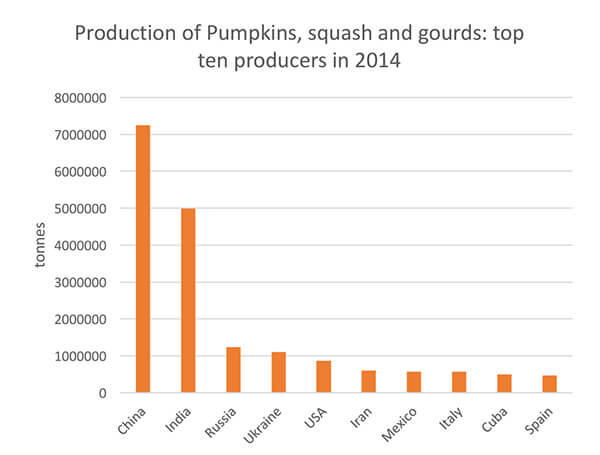
“Pumpkins are used as a staple food in many developing countries and are cultivated all over the world for their culinary and ornamental uses,” said Zhangjun Fei, associate professor at [Boyce Thompson Institute], Cornell adjunct associate professor of plant pathology and a senior author of the paper. Over two-thirds of the world’s pumpkins, squash and gourds are produced in Asia alone.
The researchers sequenced the two different pumpkin species to better understand their contrasting desirable traits: Cucurbita moschata is known for its resistance to disease and other stresses, such as extreme temperatures, while C. maxima is better known for its fruit quality and nutrition.
…
Once deciphered, the genome sequences are an important resource for further scientific research and breeding of Cucurbita crops. By analyzing the genomes, researchers will be able to identify many genes associated with the pumpkin’s desirable traits, and better understand the genetics behind the extreme phenotypes of the ‘Shintosa’ hybrid.
That’s how Greg Jaffe described his work as director of biotechnology for the Center for Science in the Public Interest (CSPI), speaking at the North Carolina Biotechnology Center’s seventh annual Biotech Roundtable.
Unlike most speakers at the event, Jaffe said the U.S. government’s decision not to regulate some products created by gene editing is questionable.
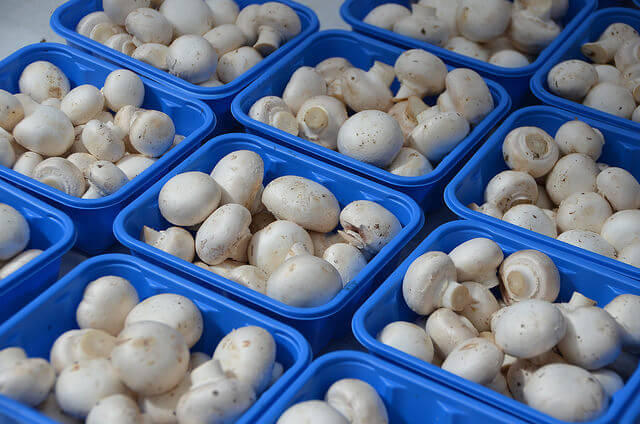
The government’s current position is that gene edited crops such as the non-browning CRISPR mushroom, with no genetic material inserted into the plant’s genome, does not need to be regulated.
But, Jaffe pointed out, “They (the government) didn’t say it was safe. They said they didn’t have the authority to regulate it. It wasn’t a science-based decision.”
…
If the gene-edited plant is “novel enough to patent, is there a contradiction in calling it natural?” Jaffe asked. “Regulation is not necessarily a dirty word. It can take many forms. Maybe it just requires notification of a gene change.” Oversight should be “science- and risk-based,” he said.
“Is there potential risk? That’s a better discussion than if the product fits some existing legal structure. Not all gene editing is the same.”
35 years ago, the world entered an important new era in pharmaceutical development with the approval by the FDA of human insulin synthesized in genetically engineered bacteria–the world’s first recombinant DNA drug product. As the medical reviewer of the product and the head of the review team, I had a front-row seat.
The saga is remarkable in several ways, not least of which is that although both the drugmakers and regulators were exploring unknown territory, the development of the drug and its regulatory review progressed smoothly and rapidly.
Insulin in crude form was first produced in 1922 by Canadian researchers Frederick Banting and Charles Best, which lifted the death sentence that had previously been imposed on diabetics. By the end of that year drug company Eli Lilly and Company had devised a method for much higher purification. Over the next half century or so, the purified insulins obtained from pig or cow pancreases, which differ slightly in chemical composition from human insulin, were constantly improved in purity and formulated in ways that refined their performance.
Early insulin production.
During the early 1970′s, as the supply of animal pancreases declined and the prevalence of insulin-requiring diabetes grew, there were widespread fears of possible future shortages of insulin. Fortuitously, around the same time, a new and powerful tool – recombinant DNA technology, also known as “genetic engineering,” or “gene-splicing” – became available and offered the promise of unlimited amounts of insulin that was identical to the molecule produced by humans.
The seminal molecular genetic engineering experiment was reported in a 1973 research article by academic scientists Stanley Cohen, Herbert Boyer and their collaborators. They isolated a ringlet of DNA called a “plasmid” from a bacterium, used certain enzymes to splice a gene from another bacterium into that plasmid, and then introduced the resulting “recombinant,” or chimeric, DNA into E. coli bacteria.
When these now “recombinant” bacteria reproduced, the plasmids containing the foreign DNA were likewise propagated and produced amplified amounts of the functional recombinant DNA. And because DNA contains the genetic code that directs the synthesis of proteins, this new methodology promised the ability to direct genetically modified bacteria (or other cells) to synthesize desired proteins in large amounts.
Lilly immediately saw the promise of this technology for the production of unlimited quantities of human insulin in bacteria. After obtaining from startup Genentech, Inc. the recombinant E. coli bacteria that contained the genetic blueprint for and that synthesized human insulin, they developed processes for the large-scale cultivation of the organism (in huge fermenters similar to those that make wine or beer) and for the purification and formulation of the insulin.
Insulins had long been Lilly’s flagship product, and the company’s expertise was evident in the purification, laboratory testing and clinical trials of human insulin. The company’s scientists painstakingly verified that their product was extremely pure and identical to pancreatic human insulin (which differs slightly in chemical composition from beef and pork insulin).
Lilly began clinical trials of its human insulin in July 1980. The product performed superbly. There were no systematic problems with treating “naive” patients (who had never before received injections of insulin) or those switched from animal to human insulin. A small number of patients who had had adverse reactions of some kind to the animal insulins tolerated the human insulin well.
The dossier that provided evidence of safety and efficacy was submitted in May 1982 to the FDA, where I was the medical reviewer and head of the evaluation team. Over many years the FDA had had prodigious experience with insulins and also with drugs derived from various microorganisms, so it was decided that no fundamentally new regulatory paradigms were necessary to evaluate the recombinant human insulin.
In other words, recombinant DNA techniques were viewed as an extension, or refinement, of long-used and familiar methods for making drugs. That proved to be an historic, precedent-setting decision.
Based on an exhaustive review of Lilly’s data, obtained from pre-clinical testing in animals and clinical trials in thousands of diabetics, FDA granted marketing approval for human insulin in October 1982. The review and approval took only five months when the agency’s average approval time for new drugs was 30.5 months. In retrospect, that rapid approval was particularly remarkable for a drug that was produced with a revolutionary new technology, and that after approval would be available in pharmacies nationwide to millions of American diabetics. When the approval had been officially signed off, I phoned Lilly’s head of regulatory affairs to deliver the news. There was a long silence on the other end – while he waited for the other shoe to drop. No drug, let alone one made with a new technology, had ever been approved that quickly.
An article on the front page of the New York Times at the time of the approval contained my prediction that the speedy approval was a major step forward in the “scientific and commercial viability” of’ recombinant DNA technology. “We have now come of age,” I was quoted as saying, and potential investors and entrepreneurs agreed: Seeing that biopharmaceuticals would compete with other medicines on a level playing field, the “biotechnology industry” was on the fast track. This kicked off an era that within a couple of decades would see recombinant DNA-derived drugs and those made with another biotechnology – monoclonal antibody technology – dominate drug development. Sales are in the hundreds of billions of dollars annually, and recombinant DNA- and monoclonal antibody-derived drugs dominate the top ten sales leaders in the pharmaceutical sector.
The rapid human insulin approval was not the beginning of a trend toward regulatory enlightenment, however. Even with a toolbox of improved technologies available to both the FDA and industry, bringing a new drug to market on average now takes 10-12 years and costs over $2.5 billion. Regulators are highly risk-averse, few new drugs are approved without convening extramural advisory committees, and decisions are sometimes hijacked by political forces outside the FDA.
Government regulation hasn’t aged as gracefully as recombinant DNA technology itself.
Henry Miller, a physician and molecular biologist, is the Robert Wesson Fellow in Scientific Philosophy and Public Policy at Stanford University’s Hoover Institution. He was the founding director of the Office of Biotechnology at the FDA. Please follow him on Twitter at @henryimiller.
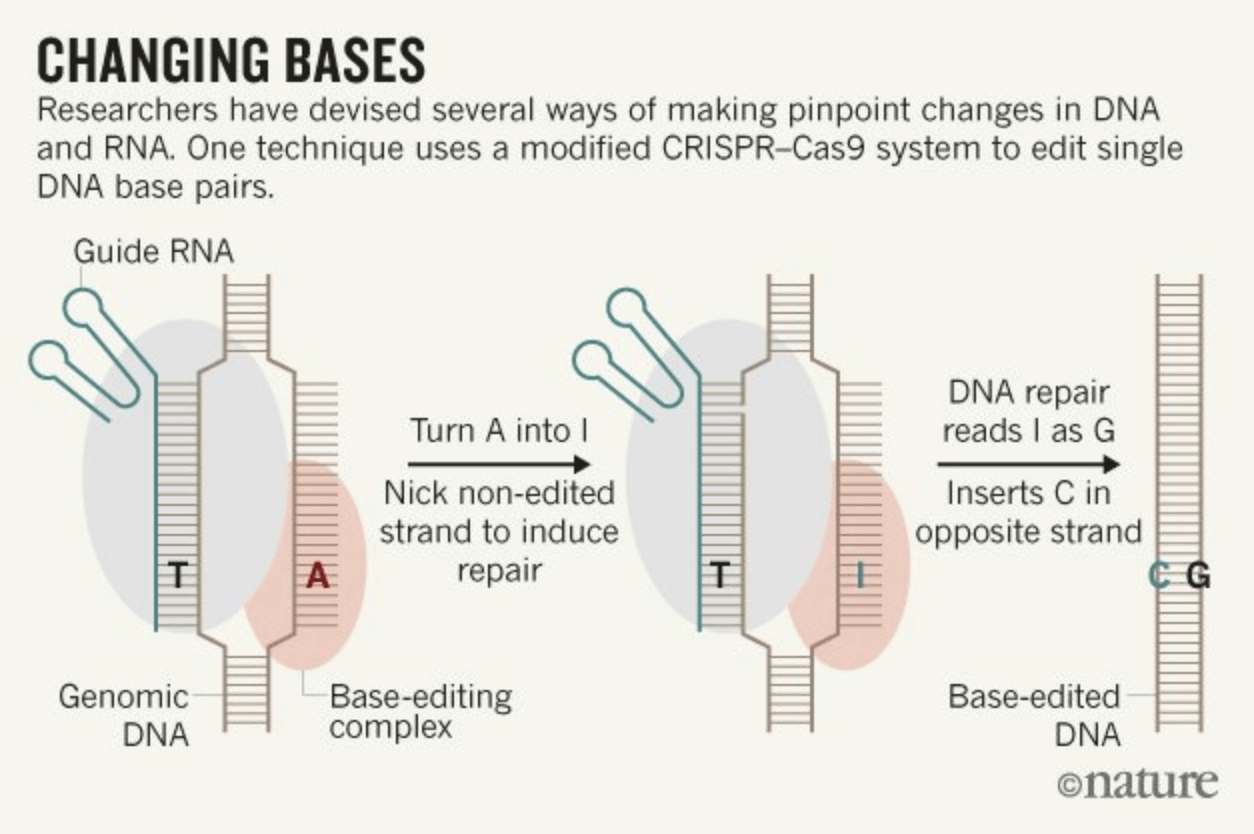
You’ve probably heard of the molecular scalpel CRISPR-Cas9, which can edit or delete whole genes. Now, scientists have developed a more precise version of the DNA-editing tool that can repair even smaller segments of a person’s genome. In two studies published [Oct 25], one in Nature and another in Science, researchers from the Broad Institute of MIT and Harvard describe a new way to edit DNA and RNA, called base editing.
…
The human genome contains six billion DNA letters, or chemical bases known as A, C, G and T. … Base editing, which uses a modified version of CRISPR, is able to change a single one of these letters at a time without making breaks to DNA’s structure.
…
Ross Wilson, of the Innovative Genomics Institute at the University of California, Berkeley, says base editing may eventually be a better way to treat some diseases. He says a single base pair is like a word in a paragraph of text. With conventional CRISPR technology, you would have to replace the whole paragraph.
“It’s a lot of DNA to move around,” he says. With base editing, you could just change the single word.
When Neandertals mated with modern humans, they shared more than an intimate moment and their own DNA. They also gave back thousands of ancient African gene variants that Eurasians had lost when their ancestors swept out of Africa in small bands, perhaps 60,000 to 80,000 years ago. Restored to their lineage, this diversity may have been a genetic gift to Eurasian ancestors as they spread around the world. Today, however, some of these African variants are a burden: They seem to boost the risk of becoming addicted to nicotine and having wider waistlines.
…
[The] team found the ancient African variants when they scrutinized the genomes of more than 20,000 people in the 1000 Genomes Project and Vanderbilt’s BioVU data bank of electronic health records. They soon noticed a strange pattern: Stretches of chromosomes inherited from Neandertals also carried ancient alleles, or mutations, found in all the Africans they studied, including the Yoruba, Esan, and Mende peoples. The researchers found 47,261 of these single-base changes across the genomes of Europeans and 56,497 in Asians, [lead researcher Tony] Capra says. In Eurasians these alleles are only found next to Neandertal genes, suggesting all this DNA was inherited at the same time, when the ancestors of today’s Eurasians mated with Neandertals roughly 50,000 years ago.
Boldly going where no genetically modified apple has gone before, Arctic apples from Okanagan Specialty Fruits will ship to about 400 Midwest retail stores in late October.
The Arctic golden delicious apples are designed to be non-browning.
…
Neal Carter [founder and president, Okanagan Specialty Fruits, Summerland, British Columbia] said the price point for the Arctic sliced apples will be competitive with other suppliers.
“We are not trying to differentiate ourselves by price,” he said. “We are trying to differentiate ourself by quality, great taste and preservative free,” he said.
…
[Jennifer Armen, business development and marketing for Okanagan] did not say what retailers will receive the fruit but said they are mostly smaller chains in the Midwest with between 10 and 150 stores.
…
The fruit — all Arctic golden delicious apples this year — will be offered to consumers in a 10-ounce grab-and-go bag, Armen said. The Arctic granny smith will be offered next year, she said.
Arctic golden delicious won’t be explicitly labeled as “GMO” or produced with biotechnology, but Armen said the bag does have a short version of the variety’s development and offers a SmartLabel quick-response code, a company url and a toll-free phone number where consumers can learn more how the apple was produced.
The GLP aggregated and excerpted this article to reflect the diversity of news, opinion and analysis. Read full, original post: Testing GMO reception, Arctic debuts fresh cut golden delicious in Midwest stores
The European Commission has proposed extending the license for weed-killer glyphosate by five years after its initial plan for a 10-year approval did not secure sufficient support.
EU countries failed on Wednesday [October 25] to vote on a license extension, for the second time this month, delaying a decision that needs to be taken before the end of the year on the widely used herbicide that critics say could cause cancer.
The Commission said in a statement that it had now submitted to EU countries its proposal for a five-year approval, with a vote now expected at the next sitting of the relevant committee on November 9.
…
[Separate Reuters story:] France will not accept a five-year extension to the license for weed-killer glyphosate as proposed by the European Commission on Friday [October 27], said an official in the French Prime Minister’s office.
Chris Thomas … a professor of conservation biology at the University of York in the UK … does not deny that humans have already caused a “mini mass extinction” — an era of accelerated extinction rates around the globe.
Thomas: [T]here are biological losses going on on the planet. It is very rational to fight those losses, particularly when it is the loss of an entire species that may be difficult or impossible to get back in the future and which may have some unknown future value to us. But we are also living in a world in which there are biological gains. It is equally valid to celebrate biological life forms that are doing well in the presence of humans, rather than simply to resent these species and somehow prevent them from becoming the new biological success stories of the human epoch.
Let’s hope they … look at the evidence – or rather the lack of it. While banning glyphosate is unlikely to make people any healthier, it is certain to harm the environment.
…
Until recently, every regulatory agency that had assessed the safety of glyphosate had concluded it poses no risk for people. Then, in 2015, the International Agency for Research on Cancer (IARC) sparked concern by adding glyphosate to its list of things that “probably” cause cancers.
Before you run from the room screaming because you once ate some Ben & Jerry’s ice cream – recently found to contain glyphosate – you should know that red meat, wood fires, emissions from frying, shift work and drinking beverages hotter than 65°C are all on the same IARC list.
The IARC’s list of things that definitely cause cancers includes alcohol, sunshine, diesel exhaust fumes, processed meats, outdoor air pollution, salted fish, soot and wood dust. That’s right, beer and bacon are more dangerous than glyphosate.
The debate over whether biotechnology applications are safe in food production has intensified in Ghana as the country prepares for its first commercial release of a genetically engineered (GE) crop in 2018.
Farmer associations, civil society organizations, government and other interest groups are all stepping up the rhetoric to turn the minds and hearts of Ghanaians for or against the technology, which Ghana’s Council for Scientific and Industrial Research (CSIR) has insisted is harmless and a necessity to keep the country food secure. The CSIR recently published a full page opinion piece in the largest circulating national newspaper to drum home the point.
The latest such “media war” was sparked when the association of seed producing companies made a public declaration in support of the technology.
…
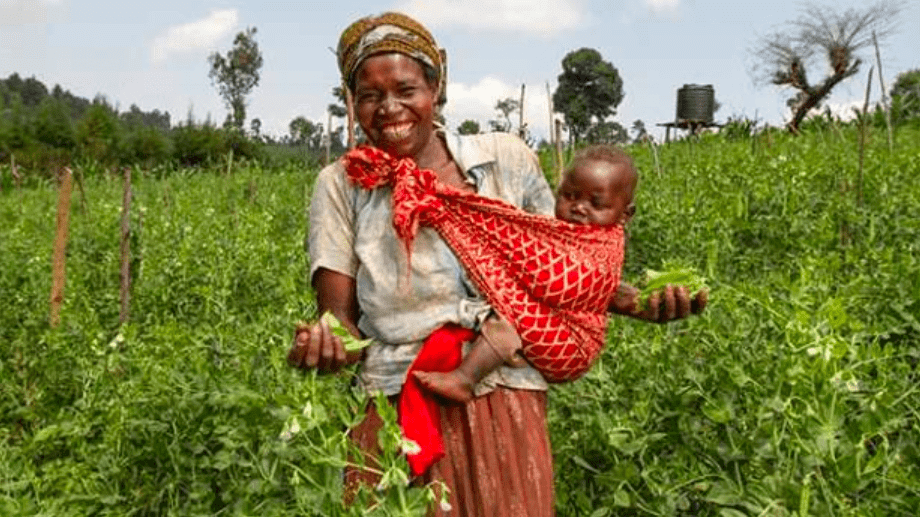
Following Parliament’s passage of the Biosafety Act 2011, the CSIR has been conducting field trials of some GMO seeds, as required by the regulatory process before they are introduced onto the market. The researchers have announced the GMO cowpea will be ready for commercialization next year following successful field trials. The trials have so far shown a drastic reduction in the use of pesticides, which the scientists say will help ensure environmental safety once farmers adopt it.
The strategy of engineering patients’ own T cells for cancer therapy got two major endorsements in late August, one financial and one regulatory. First, Gilead Sciences of Foster City, California, announced plans on August 28 to dole out $11.9 billion to acquire Santa Monica, California–based Kite Pharma, one of the leading developers of chimeric antigen receptor (CAR)-T cell immunotherapies. Then, two days later, the US Food and Drug Administration (FDA) granted approval to the country’s first CAR-T cell product.
…
“It really marks a huge milestone for the field—and for cancer therapy as a whole—that relatively large commercial players now are in this space and are interested in providing a new kind of therapy for patients,” says Marcela Maus, a CAR-T researcher at the Massachusetts General Hospital in Boston.
…
There are also many challenges in manufacturing scale-up to overcome, notes Bruce Levine, founding director of the University of Pennsylvania’s Clinical Cell and Vaccine Production Facility, part of the Novartis–Penn Center for Advanced Cellular Therapeutics opened last year. “The field is in the spotlight,” he says. “And to be able to have something that is sustainable and can be available to more patients—not only in hematologic malignancies, but also solid cancers—we’ve got to make progress in manufacturing sciences, analytics, logistics and infrastructure.”
Michigan State University scientists are proposing a new way to economically produce biodegradable plastics with sunlight and help from an ancient microorganism.
The team, led by Taylor Weiss, a postdoctoral researcher in the Ducat lab at the MSU-Department of Energy Plant Research Laboratory, took cyanobacteria, that use sunlight to naturally produce sugar, and genetically tweaked them to constantly leak that sugar into a surrounding saltwater medium.
They paired them with natural bioplastic-producing bacteria that fed on the leaked sugar. The pairing was prolific.
Processed biomass contained a near constant 30 percent bioplastic content, four times more than similar experimental systems, and production rates were over 20 times faster.
The approach avoids fossil fuels for production and aims to reduce plastic’s impact on the environment.
…
Scientists are looking to genetically alter cyanobacteria, tiny photosynthetic workhorses, also known as blue-green algae, to funnel their outputs into useful products.
Weiss said that scientists create gradually more efficient bio-production systems all the time, but a major twist is that his improves over time, without human meddling.
[Editor’s note: Read the full study (behind paywall)]
Researchers at UCSF have received a three-year, $1.6 million grant to advance their work using novel gene-editing technology to make human blood cells less susceptible to HIV infection.
The grant, from biopharmaceutical giant Gilead Sciences, a global leader in sales of HIV treatments, will fund a team of scientists working to modify the DNA of a type of white blood cell to make them immune to HIV infection.
…
“The tricky thing about HIV, and one reason it’s so hard to cure, is that it can hide in the DNA of the human cells,” said Joe Hiatt, a doctoral student of medicine and philosophy in Marson’s lab and a leader in the research initiative. “It becomes DNA and integrates into your DNA.”
The problem has perplexed researchers for years. But [lead researcher Alex] Marson and Hiatt see potential for using CRISPR to discover which genes control HIV latency. They hope to use the gene-editing tool to create latent HIV cells in test tubes, and then modify the DNA in those cells to see which edits may coax the HIV out of hiding and make it susceptible to drugs. This will be the most challenging and complicated part of the research. If done successfully, it could lead to the development of drugs that target latent HIV — and perhaps cure HIV permanently.
The GLP aggregated and excerpted this blog/article to reflect the diversity of news, opinion, and analysis. Read full, original post: How CRISPR gene-editing tech can fight HIV
University of Florida plant scientist Kevin Folta speaks with science journalist and author Mark Lynas. Mark has been a central figure in the discussion of biotechnology, particularly in regard to its role in ensuring food security in the Developing World. In the 1990s and early 2000s, you could find Mark destroying test plots of genetically engineered crops. Later he would reconsider his view, and support the technology, especially as it can be applied to help issues of food security. Mark discusses the situation on the ground in Africa, the various threats to production, the innovations that can address them, and the resistance toward adoption of new technology.
[Editor’s note: John Horgan directs the Center for Science Writings at the Stevens Institute of Technology.]
Homosexuality has been treated with lobotomies, chemical castration, electrical shocks and nausea-inducing drugs as well as psychotherapy. I then tell my students about a bizarre gay-conversion experiment carried out from the 1950s to 1970 by a leading brain-implant researcher, Dr. Robert G. Heath of Tulane University in New Orleans.
…
Heath implanted electrodes in patients, most of whom “came out of the dimly lit back wards of the state mental hospitals. With dental burrs, Heath and his co-workers drilled through the patients’ skulls, guided the electrodes into specific sites, and then left them there, at first for a few days, later for years at a time.”
…
Dr. Robert G. Heath
Heath was particularly interested in the septal region, which had been linked to pleasure. Heath claimed stimulation of the septal region “could make homicidal mania, suicide attempts, depressions or delusions go away—sometime for a long time.”
…
Heath contended that [a patient receiving this treatment] B-19 remained heterosexual after the experiment and had a 10-month affair with a married woman. But a recent review of his work casts doubt on that claim.
…
As The Guardian reported last year, groups around the world still practice gay-conversion therapies, including ones involving electric shocks.
To stay up to date on all the news in human and agricultural genetics, subscribe to our daily and weekly email newsletters in the top right corner of this page, and follow us on Facebook and Twitter.