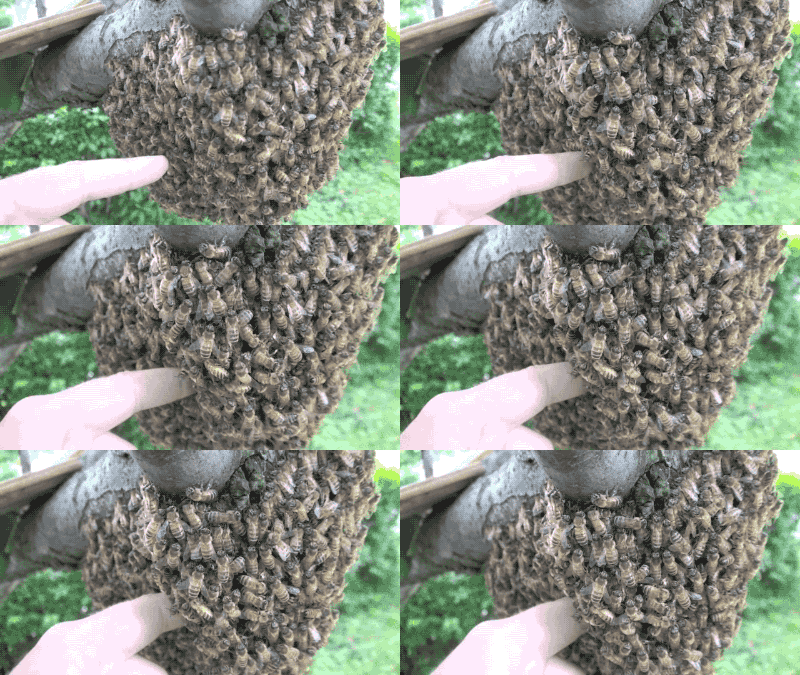
In 2006, large and mysterious losses of honey bee colonies led entomologists to classify a set of diagnostic symptoms as Colony Collapse Disorder (CCD) and spurred major efforts to measure, quantify, and understand pollinator loss. New data show that between 2007 and 2013, winter colony loss rates in the U.S. averaged 30 percent, which is approximately double the loss rate of 15 percent previously thought to be normal. Although average loss rates fell to 24 percent between 2014 and 2017 and CCD symptoms are less frequently associated with colony losses, colony health remains a concern.
…
Elevated winter colony losses, however, have not resulted in enduring declines in colony numbers. Instead, the number of honey bee colonies in the U.S. is either stable or growing depending on the dataset being considered.
…
Although beekeepers sometimes purchase colonies, their primary means of replacing losses is by regularly splitting their colonies in the spring. In this process, the beekeeper divides a parent colony into two or three colonies that each becomes functional for pollination services within 6 weeks.
…
The stability of colony numbers and pollination services fees, however, suggests that beekeepers have, in aggregate, adjusted to elevated rates of colony loss.
Artificial intelligence in space exploration is gathering momentum. Over the coming years, new missions look likely to be turbo-charged by AI as we voyage to comets, moons, and planets and explore the possibilities of mining asteroids.
…
An AI known as AEGIS is already on the red planet onboard NASA’s current rovers. The system can handle autonomous targeting of cameras and choose what to investigate. However, the next generation of AIs will be able to control vehicles, autonomously assist with study selection, and dynamically schedule and perform scientific tasks.
…
Mars is likely far from the final destination for AIs in space. Jupiter’s moons have long fascinated scientists. Especially Europa, which could house a subsurface ocean, buried beneath an approximately 10 km thick ice crust. It is one of the most likely candidates for finding life elsewhere in the solar system.
While that mission may be some time in the future, NASA is currently planning to launch the James Webb Space Telescope into an orbit of around 1.5 million kilometers from Earth in 2020. Part of the mission will involve AI-empowered autonomous systems overseeing the full deployment of the telescope’s 705-kilo mirror.
…
Further into the future, moonshots like terraforming Mars await. Without AI, these kinds of projects to adapt other planets to Earth-like conditions would be impossible.
Critical thinking is something I’ve prided myself on and something I discuss frequently when giving public speeches. Unfortunately, this can sometimes be a lost art in today’s society. When our generation was young, our only option was to get info from broadly accepted credible sources — like libraries, encyclopedias, or university professors.
…
[W]e should all have the ability to think critically and challenge our beliefs …. I’m not against organic agriculture whatsoever, but am against people who feel the need to slander an agricultural method or competitor. We should all be willing to stick to the facts with evidence and not use unnecessary fear, personal attacks, or misinformation to share our info. This comes in various forms from all directions in many industries of course. It breaks my heart… because at the end of the day we all care.
…
We also as a society shouldn’t be so quick to judge someone. Read a lot of articles. Watch a lot of their videos, try and get a more well-rounded view of their messaging. Just because someone doesn’t agree with one topic doesn’t mean they’re a narrow-minded extremist or aren’t open to new ideas …. It’s how we welcome discussion and move forward in a productive manner as a culture.
Suring the summer of 1989, Randy Ploetz was in his laboratory just south of Miami, when he received a package from Taiwan. Ploetz, who had earned his doctorate in plant pathology five years earlier, was collecting banana diseases and regularly received mysterious packages containing pathogens pulled out of the soil from far-flung plantations …. Ploetz realized …. was Tropical Race 4 (TR4) – a strain of the fungus Fusarium oxysporum cubense that lives in the soil, is impervious to pesticides, and kills banana plants by choking them of water and nutrients ….
TR4 only affects a particular type of banana called the Cavendish …. named after a British nobleman who grew the exotic fruit in his greenhouses …. [It] makes up almost the entire [banana] export market.
But the Cavendish has no defence against TR4 …. So far, Latin America, which grows almost all of the world’s export bananas – including those for the US and Europe – has escaped TR4. But, Ploetz says, it’s only a matter of time …. Faced with a crisis that could see the Cavendish gone forever, a handful of researchers are racing to use gene-editing to create a better banana and bring the world’s first TR4-resistant Cavendish to the market.
When my silent assassin emerged last autumn, I pressed my surgeon about the prognosis for a form of peritoneal cancer that strikes women in stealthy fashion.
“Do you really want to know?” he replied. “Your cancer is incurable.”
…
How were these paternalistic doctors so confident about their edicts for women? It gave me solace to challenge them with questions. After an eternity in the journalism business, it was all I knew how to do. What about alternative treatments at other hospitals? New medical techniques? Fresh hope? But clearly it annoyed my doctors.
…
[A]t last, a woman took command of my care as the leader of an ovarian cancer research project. This oncologist listened to my questions. She explained medical approaches. She promised me that her goal was a cure instead of surrender. And she was the very first to propose immunotherapy, which harnesses the patient’s own immune system to attack cancer.
…
With the addition of immunotherapy, over the weeks my CA125 count started plunging dramatically to a normal count of four.
…
Some days I gasp involuntarily for air, savoring this new hope. Today, 10 months after my symptoms first appeared, I am cancer free.
For centuries, gardeners have attempted to breed blue roses with no success. But now, thanks to modern biotechnology, the elusive blue rose may finally be attainable. Researchers have found a way to express pigment-producing enzymes from bacteria in the petals of a white rose, tinting the flowers blue. They report their results in ACS Synthetic Biology.
…
[T]he researchers chose two bacterial enzymes that together can convert L-glutamine, a common constituent of rose petals, into the blue pigment indigoidine. The team engineered a strain of Agrobacterium tumefaciens that contains the two pigment-producing genes, which originate from a different species of bacteria. A. tumefaciens is often used in plant biotechnology because the bacteria readily inserts foreign DNA into plant genomes. When the researchers injected the engineered bacteria into a white rose petal, the bacteria transferred the pigment-producing genes to the rose genome, and a blue color spread from the injection site.
[The biotech firm Calyxt] has completed the inaugural harvest of its high-fiber wheat product, the world’s first gene-edited, consumer-focused wheat product. The high-fiber wheat product is already the seventh Calyxt product that has been deemed non-regulated by the U.S. Department of Agriculture (USDA) ….
“The completion of these field trials for our high-fiber wheat is an important milestone as we continue to advance toward the finish line in commercializing our first-ever gene-edited wheat product for consumers,” said Jim Blome, CEO of Calyxt …. “Most adults only consume about half of the recommended amount of fiber in their diet but, with this latest advancement, we’re one step closer to developing a product with up to three times more dietary fiber than standard white flour, resulting in a healthier alternative for consumers.”
…
The high-fiber wheat product recently transitioned from Phase I to Phase II in Calyxt’s development process and is on track for commercialization as early as 2020 / 2021. In the next year, the Company is set to further confirm the product concept in field conditions and will complete food application studies. Primary applications for high-fiber wheat flour would include any food applications where hard wheat varieties are currently used, such as with all-purpose flours and bread flours. It is also a potential use for Chinese steamed bread and noodles.
The techniques that empower computers to make autonomous decisions have become vogue for modern tech companies in the last six years. Now cars are starting to drive themselves on public highways, and Facebook sees AI as the answer to all its scandals. But one critical piece of the advent of artificial intelligence is often overlooked: Cheeseburger generation.
Two years ago I alerted the world that it was now scientifically possible to generate an image of a cheeseburger. Today I have the pleasure of informing you yet again that this technique has been nearly perfected. Dear reader, the cheeseburger now looks good. It even appears to have a sprinkling of flour on top of the bun, indicative of freshly-baked gluten goodness:
This new cheeseburger generation comes from DeepMind, the Alphabet-owned AI company tasked with “solving intelligence.” Images of cheeseburgers are just the byproduct of a larger goal—to create an algorithm that can generate any kind of image when given a word. This could be useful for anything from product design to artwork.
…
The idea is relatively simple at its basest level: Have one algorithm try to generate and image, and another try to tell if that image is a real picture or fake. With the second algorithm acting as a guardrail, the first algorithm eventually learns what looks real and what doesn’t.
As anyone who has spent any amount of time on Twitter can tell you, the internet can bring out the worst in us. So it shouldn’t come as a surprise that scientists in Europe are now hoping to catalogue exactly how the online hellscape affects mental health and well-being.
…
“Just about everyone uses the Internet, but much information on problem use is still lacking,” Naomi Fineberg, a psychiatrist at the University of Hertfordshire in the UK and chair of the EU-PUI, said in a statement.
…
[P]otential areas of research will include figuring out if there are genetic or personality traits that can make us vulnerable to problematic internet use, or if there are markers that can help doctors identify someone at risk. These could be traditional biomarkers or could even include things such as the amount of time we spend on a particular website or internet activity. And as public health workers have done with other major problems like smoking, the researchers plan to hold a mirror up to bad actors.
…
The EU-PUI has been allocated €520,000 in funding from the EU so far, according to a press release by the European College of Neuropsychopharmacology. And the network has recruited more than 120 scientists from 38 countries.
On today’s episode, Kevin Folta answers some common questions about crop biotechnology from listeners. The term “GMO” appears in the headline of almost every news story about genetic engineering, but is “GMO” the proper scientific name for crops that have been improved with the tools of biotechnology? Additionally, why hasn’t Talking Biotech covered golden rice? These vitamin-fortified rice varieties are excellent examples of how engineered crops can benefit humanity, but Kevin hasn’t discussed them on the podcast. Is he avoiding the topic?
In the second half of the episode, University of Florida grad student Samantha Arroyo, who studies naturally-occurring flavor compounds in plants, joins Kevin to discuss the recent class action lawsuit against beverage maker LaCroix. The lawsuit alleges that the company’s popular sparkling water contains ingredients from insecticides designed to kill cockroaches. Should we be worried, or is this lawsuit just meant to scare consumers and squeeze a big settlement out of a drink company?
The Guardian published an article by Sam Levin and Carey Gillam [on October 7] about the “new era of cancer lawsuits that threaten Monsanto.” To readers who know little about the subject, the article might appear to make a convincing case that glyphosate, the active ingredient in the widely-used herbicide Roundup, is a known cause of cancer.
After all, they describe four different cases of the rare cancer NHL (non-Hodgkin’s lymphoma) in people who used Roundup, either on a farm, on the grounds of a school district, or in their gardens, and they detail the suffering and death from the cancer. Further, they refer to the recent verdict of a San Francisco court against Monsanto (the maker of Roundup) and in favor of the plaintiff. Finally, they refer in passing to science indicting glyphosate and cite the opinion of the International Agency for Research on Cancer (IARC) that glyphosate is a “probable carcinogen.”
Levin is a writer for the Guardian based in San Francisco, and Gillam is the “research director” for US Right to Know, a not-for-profit food industry research group. [Read GLP profile of USRTK] She is the author a book entitled Whitewash: The Story of a Weed Killer, Cancer and the Corruption of Science. In reality, Gillam is an extreme anti-pesticide, anti-GMO activist, who shows no interest or ability in evaluating what is known about the science bearing on this question. She portrays herself as a champion of the victims who have been exposed to a known carcinogen due to the deceit of a greedy, all-powerful corporation. Although the authors do not make this point, we would also have to assume that regulatory agencies around the world must also be responsible (either due to incompetence or corruption) for the failure to recognize the dangers of glyphosate and regulate its use appropriately.
For someone who actually knows something about the relevant facts and context, the piece by Levin and Gillam trades on fear and ignorance to raise the specter of an epidemic of cancer caused by glyphosate and to cash in on the tsunami of litigation involving patients who believe that exposure to Roundup caused their cancer.
Here are some key facts that they leave out, and that convey a very different picture.
Roundup has been in use since the 1970s and is the most widely-used herbicide worldwide. It is popular with farmers because it is environmentally benign and has low toxicity. The acute toxicity of glyphosate is lower than that of table salt. Furthermore, over the past forty years, farmers and regulators have learned a great deal about pesticides and their optimal use.
Both national and international health and regulatory agencies have evaluated glyphosate – in some cases repeatedly – and all but one (IARC) have found that the chemical does not cause cancer at the levels to which people are exposed in everyday life. These agencies include: the U.S. Environmental Protection Agency, the European Food Safety Authority, the Food and Agriculture Organization, Germany’s Federal Institute for Risk Assessment (BfR), Health Canada, Australia’s Pesticides and Veterinary Medicines Authority, and others.
IARC is an outlier among health/regulatory agencies. In March 2015, IARC concluded that glyphosate was a “probable carcinogen.” But, unlike the agencies mentioned above, IARC assesses “hazard,” rather than “risk.” Hazard refers to the possibility that an exposure might cause cancer under some possible condition, but ignores the degree of exposure in real-world situations. Furthermore, IARC made its determination based on the animal studies. However, most studies in rats and mice showed no evidence of carcinogenicity. IARC had to cherry-pick the results from two mouse studies in order to make its tortured case that the animal evidence supported a conclusion of carcinogenicity.
Importantly, it has come to light that the individual who urged IARC to assess glyphosate, the American statistician Chris Portier, became a litigation consultant to a law firm engaged in two lawsuits against Monsanto within several weeks following the IARC decision. This is just the tip of the iceberg. Tort litigation firms are flocking to take advantage of the huge bonanza from thousands of tort cases involving claims against Monsanto and Bayer, which recently acquired Monsanto.
Christopher Portier
Currently there are 8,700 cases and the number is certain to grow. And some scientists are only too willing to point to blips in the data that seem to indicate a risk, while ignoring the totality of the evidence and what are, by far, the strongest studies (see below). In this modern-day “gold rush,” the near unanimity of a large number of independent regulatory agencies that have found glyphosate to be safe should be taken seriously.
Finally, we now have the results of a large, well-executed prospective study of over 54,000 pesticide applicators in the U.S. conducted by the National Cancer Institute. Eighty-two percent of applicators used glyphosate. Participants were followed for nearly two decades, and over this period 5,779 cancers developed. Use of glyphosate was not linked to NHL, other lymphoid cancers, or any other type of cancer. Due to the size of this study and its careful methods, these results are by far the most informative about the risks of glyphosate. (These results were not published at the time of the IARC review.)
Follow the latest news and policy debates on sustainable agriculture, biomedicine, and other ‘disruptive’ innovations. Subscribe to our newsletter.
The high-stakes and highly emotional controversy surrounding glyphosate is emblematic of a more general phenomenon. Our life in advanced societies has become so safe that people are outraged at any hint of a theoretical risk. We have lost the ability to distinguish between substantial, known threats to our welfare (such as smoking, heavy alcohol intake, excessive sun exposure, and obesity) and much less certain and possibly trivial risks. In fact, due to a bizarre psychology, it is the latter category that gets by far the most attention. These theoretical risks get trumpeted by activists with their own powerful agendas (anti-pesticide, anti-GMO, pro-organic) and the media and become the stakes in high-profile court cases. Other examples involve cell phones, talc, BPA, and even coffee.
We seem to have forgotten that life inevitably involves risk. We need to begin to make basic distinctions and to pay attention to the degree of risk involved. Air travel involves a risk, but it has been reduced to a near-infinitesimal risk. Compared to air travel, driving a car involves a substantially higher risk. Nevertheless, most people willingly accept this level of risk in order to obtain the benefits of mobility.
Postscript: The Guardian did not respond to an email from me urging them to publish a corrective to the Levin-Gillam article.
Geoffrey Kabat, Ph.D., is a cancer epidemiologist and the author, most recently, of Getting Risk Right: Understanding the Science of Elusive Health Risks. Follow me at @GeoKabat
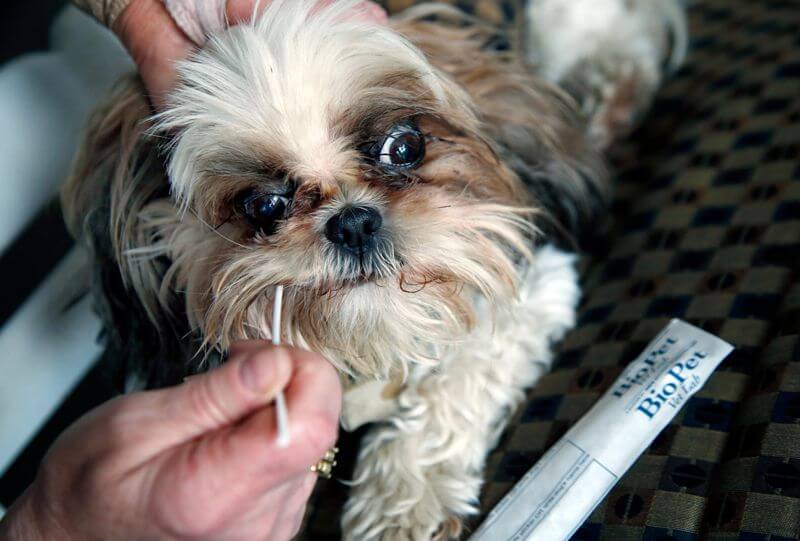
The promise of a sequenced genome is like a wrapped present, containing exactly what you always wanted but never knew you could get: predictions of all your future health problems and instructions for how to avoid them. Pet owners are the latest to fall prey to the myth of the “magic genome,” hoping that genetic testing will keep their animal companions alive and healthy for longer than ever before. The claims of many genetic testing companies encourage these unrealistic expectations.
The pet genetic testing industry has boomed in recent years as sequencing technology has improved and costs have plummeted. Several companies now tout direct-to-consumer tests that can screen companion animals, mostly dogs, for more than 150 genetic diseases including heart disease, kidney disease, and epilepsy. As a veterinarian and genomics researcher, I encounter dog owners who truly believe that genetic sequencing will save their animals’ lives.
What most pet genetic testing companies fail to make clear, though, is that genetic testing is riddled with uncertainty. Not all pets that test “clear” for a disease are truly safe from that condition. And pets who test “at risk” for a disease may never actually develop it. Even when uncertainties are properly conveyed, the tests often turn out to be based on immature science. Add to that the fact that the pet-testing industry is wholly unregulated, and you have a dangerous mix.
The direct-to-consumer (DTC) genetic testing industry has already wrestled with reliability issues in human tests. In 2013, the U.S. Food and Drug Administration ordered the company 23andMe to stop selling its genetic health tests, citing concerns that the tests hadn’t been validated. The company was later cleared to resume selling its product, but under increased regulatory scrutiny. Unlike genetic tests for humans, direct-to-consumer tests for pets are offered with no regulatory review.
That has allowed pet testing companies to make claims that simply don’t stand up to scientific scrutiny: that the tests will lead to longer lifespans and improved veterinary care, for instance, or that they can determine whether a dog is at a healthy weight. These marketing campaigns mislead consumers into expecting that a panel of genetic tests will help their veterinarian accurately predict which diseases their dog might develop throughout its life.
Those unrealistic expectations can have tragic consequences. Take the pug whose story was told under the pseudonym “Petunia” in a recent Nature commentary by veterinarian Lisa Moses and colleagues. (I work as a postdoctoral associate in the laboratory of one of the coauthors, Elinor Karlsson.) At age 13, Petunia began to have trouble walking and controlling her bowels — symptoms suggestive of a neurological disease. When her owners administered a DTC genetic test, Petunia tested positive for a mutation linked to a fatal neurodegenerative condition and was subsequently euthanized. It’s not clear whether the owners knew that as few as 1 in 100 dogs who test positive for the mutation go on to develop the neurodegenerative disease. And, as Moses and her coauthors point out, the pug’s symptoms could easily have been due to a different, treatable disease.
It would be unfair to blame Petunia’s death entirely on her owners. The strong emotional attachments many pet owners have with their pets makes for a consumer base that’s especially receptive to over-enthusiastic marketing claims. Owners who have lost previous companions to terminal diseases may be especially desperate for reassurance that their new puppy will live a long and healthy life. In the face of life’s many complexities, there’s comfort in simple yes and no answers.
Dog breeders, too, can fall into the trap of putting too much faith in testing companies’ marketing claims. Some breeders market their puppies as “clear” on certain disease biomarkers based on results of tests that haven’t been properly validated. Others may opt against breeding an otherwise healthy dog because it was deemed by a DTC test to be a carrier of a disease-related mutation. That’s especially troubling given the trend of declining genetic diversity in dog populations. Already, inbreeding of purebred dogs has increased risks of genetic diseases: Golden Retrievers now have an approximately 60 percent chance of developing cancer in their lifetime, and Australian Shepherd lifespans have declined 11 percent since the 1990s. Unnecessary shrinking of the gene pool only exacerbates the problem.
The trouble with pet genetic tests is that, unlike human genetic tests, which must be rigorously validated over multiple studies before being deployed commercially, pet tests aren’t subject to scientific standards. A single research study identifying a single-marker disease association in a single breed can become the basis for a test that’s applied to all breeds. As a result, it’s virtually impossible for a clinician to know how much stock to put into a given test’s results.
Take, for example, the typical genetic test for glaucoma. An extremely persistent consumer who traced the test back to its underlying scientific study would discover that the study applied only to Norwegian Elkhounds. A Labrador Retriever’s “clear” test would be meaningless.
Follow the latest news and policy debates on sustainable agriculture, biomedicine, and other ‘disruptive’ innovations. Subscribe to our newsletter.
Our persistent consumer would also find that the sample size in the study was tiny: It included just nine cases — that is, nine dogs with glaucoma — and eight healthy dogs as controls. The researchers did follow-up validation testing that identified the glaucoma marker in another seven dogs, still a small number by genetic testing standards. Also, two dogs who had glaucoma nevertheless tested negative for the genetic marker, and one healthy dog tested positive. Without a larger sample size or a study that follows dogs over time, it’s difficult to explain these discrepancies. The possibility remains that glaucoma risk can’t be explained by a single genetic marker. Other important caveats also commonly go overlooked: Positive test results may be associated with only a slightly above normal risk, and tests are sometimes performed with unproven technologies that differ from those used in the original study.
For what it’s worth, the Elkhound study was published in an open access journal; many papers are cordoned off from the public by paywalls. But even if a persistent consumer manages to get access to a paper, modern genetics articles are so densely packed with jargon that they can be all but unreadable to anyone without advanced training in biotechnology.
Pet genomic testing companies routinely advise customers to consult a veterinarian about their test results. But veterinarians have minimal training in genomic medicine, and most of them are ill-equipped to critically assess genomic tests. I should know. When I graduated veterinary school six years ago, I had no idea how to approach a modern genomics paper. I didn’t learn those skills until I embarked on a graduate degree in genomics. Even now, I have to scramble to keep up to date with industry advances, as do most genomics researchers. In this exploding field, new techniques seem to appear monthly.
In their Nature commentary, Lisa Moses and her colleagues advocate for considering government measures akin to the regulation that put limits on the human DTC genetic test industry in the wake of the 23andMe case (though the jury’s still out about how effective that regulation has been). Moses and her colleagues argue for improved access to genetic counseling for pet owners and, critically, for increased sharing of the data and study results used to develop genetic tests.
As the floodgates of genomic information open, society will often find itself grappling with the question of how to clearly and accurately present that information to the public. If we can’t provide adequate access to educational resources and expert advice, the public will continue to be vulnerable to misleading advertising practices.
Jessica Hekman is a postdoctoral associate at the Broad Institute of MIT and Harvard. Follow her on Twitter @dogzombieblog
World over and in various countries around the world there are laws to checkmate whatever one may think of. There are regulations which guide the practice of any sector.
These regulations are not put in place necessarily to stop that sector or practice from thriving but they are put in place as a check mechanism to ensure that the practice or that sector is not abused.
This is the same with the Biotechnology sector, not just in Nigeria but everywhere else in the world. Biosafety is put in place to ensure proper check of this sector and to ensure that it is not abused which will in turn have a negative effect on the health of the people and the environment.
…
World over there is no Biosafety Agency created with an aim to stop the practice of modern Biotechnology or GMOs but rather these Agencies are created to help it thrive in a positive way by harnessing their potentials for farmers and the Agricultural sector for economic growth and Nigeria should not be an exemption.
We all know how babies are made: sperm meets egg, molecular magic happens, and an entire human comes to life from a single cell.
But is that the only way?
For a decade, scientists have been in a heated race to redefine reproduction as we know it. Relying on a Nobel Prize-winning technique, these cellular reprogrammers are painstakingly uncovering the secret code that can turn a skin or blood cell into other cell types—including those that link one generation with the next.
If they succeed, the implications are mind-blowing: with a simple blood draw or cheek swab, scientists could erase those cells’ identities and transform them into bona fide sperm or egg cells. Infertility could be a thing of the past. Women could have children regardless of age.
…
[Recently,] a Japanese team reported a formula that transforms human blood cells into immature eggs. With the help of an artificial womb made from mouse ovary cells, the human cells underwent changes to their DNA that mimics those in a 10-week-old, normal human egg.
The resulting eggs are far from full-blown eggs, and they can’t yet be fertilized to create human embryos.
But “this cannot be denied as a spectacular next step,” said Dr. Eli Adashi at Brown University.
The fertile grasslands of Argentina produce food for hundreds of millions around the world, and they have the potential to feed even more. But increasingly extreme weather conditions threaten productivity.
…
In the city of Santa Fe, scientists are using a new transgenic technology which helps crops endure longer spells without water. Research into sunflower plants lead Raquel Chan and her team to develop a gene called HB4, which resists drought and can be transplanted and used in soy bean and wheat production.
“The drought last year was terrible,” chief investigator Raquel Chan said. “We did a small test here and with the transgenic plants we had almost double the productivity than wild plants with the same treatment.”
“This is something for very patient people,’ says the president of Bioceres, Federico Trucco. Bioceres says it hopes to bring transgenic soy into the marketplace soon, first in Argentina and then in other Latin American soy producing countries.
Genetic variants across the genome contribute to about 8 percent of the risk for certain developmental conditions — much more than previously thought, according to a study published [September 16] in Nature.
The study looked at nearly 7,000 people who have a condition of brain development, such as intellectual disability, developmental delay or autism. The participants are all severely affected, suggesting that their conditions are the result of rare mutations, some of which are spontaneous or noninherited.
The new study found that common variants — those present in more than 5 percent of the population — are also important, however.
Scanning the sequences from the participants, the researchers found that certain combinations of a subset of common variants increase risk of the conditions. These combinations affect the severity of an individual’s condition and yield a ‘polygenic risk score’ for that individual; this may explain why the same rare mutation can have diverse effects in different individuals.
…
The participants all have the hallmarks of conditions that arise from a rare, harmful mutation in an important gene. For example, most of them have additional complications, such as an inherited heart problem or bone defect.
…
[Jeffrey Barrett’s] team is trying to trace the pathways that their set of common variants affect. He says researchers may eventually be able to use an individual’s set of common variants to gauge her predisposition to specific conditions.
Oncology currently leads the way in precision medicine advancements, but its forward progress is slowed by inefficiencies such as clinical trials that never reach completion due to lack of patients. This type of inefficiency can’t be solved by scientific enterprise alone; it requires novel business solutions.
…
We co-chair the Kraft Precision Medicine Accelerator at Harvard Business School. It aims to expedite the development and delivery of cancer treatments by improving the business processes that make them possible, such as direct-to-patient outreach and the aggregation and analysis of data. To improve these business processes, we need to approach them from a different perspective.
The accelerator uses “collective impact” to do this. Collective impact is a framework based on the idea that our society can address complex issues like cancer only when multiple, diverse stakeholders work together towards a shared goal.
…
Take investors. They can be vital to securing the funding required to create and conduct the clinical trials needed to deliver promising new therapies for a wide range of diseases.
What if we could do away with words altogether? What if, rather than relying on an intermediary, we could directly transmit our thoughts through a digital, internet-like space into another mind?
Yes, I’m talking about telepathy. No, we are absolutely not there. But a curious team of neural engineers from the University of Washington is pushing the boundaries of what human brain-to-brain communication could look like—a system not mired in the intricacies of grammar or subject to the limitations of language translation. A true universal means of communication for humankind.
[September], in a study uploaded to the pre-print server arXiv, the team, led by Dr. Rajesh P.D. Rao, describes a system that lets three people collaboratively play a Tetris-like game. Dubbed “BrainNet,” the interface reads the brain activity of two people, the “senders,” and teases out relevant instructions on game play. These instructions are then used to stimulate the “receiver’s” brain, who then uses the information to perform a move in the game.
For now, the instructions are incredibly simple in that they’re binary. The system can’t transmit words or sentence-like thoughts from one person to another. But it is proof-of-concept that, on an incredibly rudimentary level, we are inching towards technology that could potentially one day take telepathy out of the realm of science fiction into the real world.
Is there any marketing scheme more dishonest than the promotion of an alcoholic beverage as non-GMO?
Smirnoff, which claims to be the “world’s No. 1 vodka,” launched a new campaign announcing that “Smirnoff No. 21 is now made with non-GMO [corn].” Helping Smirnoff promote such nonsense is actor, producer and longtime brand partner Ted Danson (Cheers) and actress and author Jenna Fischer (The Office).
Yes, it’s nonsense because alcohol is infinitely more dangerous to humans than GMOs. The International Agency for Research on Cancer (IARC) classifies alcohol as a Group 1 carcinogen, noting that 3.6% of all cancer cases and 3.5% of cancer deaths worldwide are due to the consumption of alcohol.
And GMOs? Well…after 22 years, we’re still looking for the first cases of a human adversely affected by consuming GMOs. But, Smirnoff, please don’t let that stop you from using scare tactics, misinformation and dishonesty to sell your firewater.
Read full, original article: Rest Easy. A Known Carcinogen Is Now GMO-Free