Neonicotinoid insecticides aren’t the problem for bees that activists have made them out to be. In fact, years of monitoring show proper use of neonicotinoids doesn’t harm bees. But a combination of issues do negatively impact bee health, according to experts.
In recent years, changes in colony health and fluctuations in bee numbers have caused concern. Multiple influences have challenged hive health and honeybee populations. These include: the parasitic varroa mite (largest contributor to bee loss); disease; loss of forage diversity; pesticides; adverse weather conditions; and bee nutrition.
Despite this, the number of bee colonies is growing, according to the Agriculture Department.
…
Researchers from the universities of Wageningen, Ghent and Amsterdam summarized 15 years of research on the hazards of neonicotinoids to bees. While many laboratory studies and other studies applying artificial exposure conditions described sub-lethal and other effects, no adverse effects to bee colonies were ever observed in field studies at field-realistic exposure conditions. Another recent causal analysis of U.S. researchers likewise concludes that neonicotinoids are unlikely to be a cause of honeybee colony losses.
…
Banning neonics represents serious consequences. If neonicotinoids were no longer available, we’d have major concerns in agriculture — older, more toxic insecticides would be used; operating costs would increase; crop yields would decline; and insect challenges and resistance would occur.
Chris Portier, Ph.D., an activist statistician who pushed to get the common herbicide ingredient glyphosate listed as a “hazard” for carcinogen labeling purposes while with the International Agency for Research on Cancer, only later revealed he was on the payroll of a … group that was targeting glyphosate at the time – Environmental Defense Fund.
A court deposition and the implicit threat of perjury should he lie forced Portier to disclose he was also being paid by a lawyer who wanted to sue over glyphosate once he helped get it declared a “probable” carcinogen. That left glaring questions: How did the law firm learn of the IARC decision weeks before the paper was released? Was it just coincidence they hired Portier to help them as an expert because he was at IARC when the decision came out?
It certainly looked suspicious. So suspicious that if anyone in the pro-agriculture arena did it, organic industry ally [reporter] Eric Lipton…would be writing a whole series at the New York Times about how evil scientists and corporations are. But about Portier…nothing.
…
If “journalists” had been journalists they’d have read his deposition and driven a stake into the evil heart of such hypocrisy.
On June 26th, the Supreme Court ruled in favor of crisis pregnancy centers that were challenging a California law, the Reproductive Fact Act, requiring clinic personnel to inform women of all family planning options — including abortion. The 5-to-4 vote put First Amendment rights of workers whose religion is against abortion above the rights of pregnant women to be told that California provides free or inexpensive family planning information, including abortion.
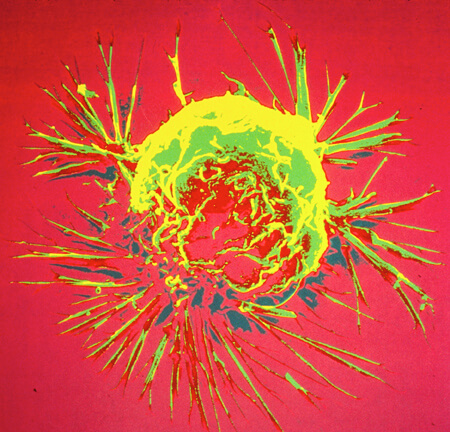
A breast cancer cell (NHGRI)
While critical information about abortion is omitted at many of the crisis pregnancy centers, misinformation is apparently readily dispensed. One popular mantra is that abortion causes breast cancer. It’s a claim likely to scare the daylights out of young, vulnerable women seeking help. But a deep-dive into studies published in the top medical journals shows it is untrue — but findings of those investigations tend not to be shared.
Perpetuating an alternate fact
In 2014, NARAL Pro-Choice sponsored a project by then-recent high-school graduate Dania Flores. She visited 43 crisis pregnancy centers in California, focusing on facilities in lower-income areas, and kept a diary of what she was told.
Flores told the LA Times that workers at all 43 clinics informed her that abortions cause breast cancer. “You’re 16 and they’re telling you you’re going to get breast cancer,” Flores said. “You don’t want to get breast cancer, so you don’t do it.”
Cancer fear is used as a deterrent. Flores’ work and that of others contributed to the passage of the 2015 law that the Supreme Court just overturned.
A look back at the medical literature reveals where the idea that abortion causes breast cancer may have arisen. It also shows data — yes, facts — that some pregnancy crisis clinic workers conveniently omit when counseling patients.
During pregnancy certain breast cells proliferate and then specialize and form the mammary glands and ducts.
Origin of the idea
Abortion as a risk factor for breast cancer does make a certain biological sense. During pregnancy, breast cells first divide rapidly and then differentiate (specialize) to elaborate the mammary glands. Breast cancer risk increases slightly during the early proliferative phase, but falls as the cells specialize. Observations in the 17th century that breast cancer is more prevalent among nuns lead to the idea that pregnancy is actually protective.
A study from 1980, “Susceptibility of the mammary gland to carcinogenesis. II. Pregnancy interruption as a risk factor in tumor incidence,” may have ignited the abortion-breast cancer link. In it, rats exposed to a carcinogen while pregnant or lactating were less likely to develop breast cancer than rats whose pregnancies were interrupted.
If an abortion, spontaneous or otherwise, halts the pregnancy, perhaps the hormone-guided proliferating cells are more likely to become cancerous because cancer-causing mutations happen as DNA replication errors when cells divide. But epidemiological evidence argues against this theoretical risk, and is more powerful than the emotional rhetoric that hurls slurs rather than presenting data. Consider “Study proves abortion causes breast cancer, so where’s the headlines?” from a 2013 article in Catholic Online:“Abortion isn’t safe, no matter what the militant left tells you. Their propaganda may be slick and refined, their tactics are honed, but they’re still wrong. These are the facts: life begins at conception, every abortion kills a baby (hardly the definition of safe), and mothers increase the risk to their life with each procedure.”
The Danish study
The lack of a link is crystal clear in the results of a 1997 study reported in The New England Journal of Medicine, “Induced abortion and the risk of breast cancer.” The peer-reviewed NEJM is hardly my idea of slick propaganda.
Tapping data from the National Registry of Induced Abortions and the Danish Cancer Registry, researchers assessed the histories of all 1,529,512 women born in Denmark between 1935 and 1978. Of the women, 280,965 had at least one abortion, and of these, 1,338 women developed breast cancer later. But of the 1,248,547 women who didn’t have an abortion, 8,908 developed breast cancer – a slightly higher rate than the women who’d had abortions. Adjusting for various factors makes the risk about equal. The investigators concluded:
The risk of breast cancer among women with a history of induced abortion was no different from that among women without such a history, nor did we find that the number of induced abortions increases the risk of breast cancer.
A trend emerged, however, when considering the risk of breast cancer by week of gestation when the pregnancy ended (age of the woman didn’t matter). Although the risk of breast cancer was actually lower for women who’d had abortions at seven weeks or earlier, for women who had abortions later than 12 weeks, the risk increased above that of pregnant women not having abortions. (Later abortions are more likely to be done because of a severe fetal anomaly.) But how many women faced this increased risk? Only 37, out of the 1,338 women who developed breast cancer of the 280,965 women who had abortions. Do the math.
“The fact that such an increase did not affect the overall result clearly indicates that it is based on small numbers and therefore requires cautious interpretation,” the researchers wrote.
In case these stats weren’t convincing, the NEJM ran an editorial, “Abortion, Breast Cancer, and Epidemiology,” by Patricia Hartge, ScD, from the National Cancer Institute. “In short, a woman need not worry about the risk of breast cancer when facing the difficult decision of whether to terminate a pregnancy,” she wrote. And subsequent large studies in other countries confirmed the findings of no link. Planned Parenthood describes these studies in detail here.
Focus on small, flawed investigations
The pregnancy crisis clinics dishing out misinformation, if they present data at all, rely on case-control studies obscured by small samples, recall bias, and women intentionally not divulging abortion history because the procedure was illegal when performed. For example, this meta analysis that purported to find a link combined results of several small studies that the Danish researchers argue are biased and the statistics flawed. Yet the Catholic Online article refers to these small studies, giving the appearance of scientific analysis.
Sometimes the deadly warnings from crisis centers don’t even bother with data. For example, buses in Philadelphia proclaimed a message from “Christ’s Bride Ministries” warning that ‘women who choose abortion suffer more and deadlier breast cancer.” That’s from 1999 – two years after the NEJM study appeared.
Investigations that go forward and track data, rather than relying on women recalling an upsetting event, tell a different story.
“Induced and Spontaneous Abortion and Incidence of Breast Cancer Among Young Women: A Prospective Cohort Study,” published in JAMA Internal Medicine, countered the findings of the oft-cited small retrospective studies. And the title of this 2004 article in The Lancet reveals it’s power: “Breast cancer and abortion: collaborative reanalysis of data from 53 epidemiological studies, including 83,000 women with breast cancer from 16 countries.” They found no link. The paper explains the widespread and fundamental bias of retrospective studies: women with breast cancer are more closely followed medically and therefore more likely to report having had an abortion.
(Caveat: Large numbers are more convincing, but breast cancer risk is also a personal matter. Genetics counts. I breastfed 3 children, which lowers my risk, but my mother had breast cancer and so do I. Any risk assessment must include family history and perhaps genetic testing.)
The official word: ACOG
It’s easy to find position statements that summarize and verify the medical literature, such as The American College of Obstetricians and Gynecologists’Committee Opinion, Induced Abortion and Breast Cancer Risk from August 2003 and reaffirmed several times with new data, including in 2018.
Because this statement is based on analysis of the peer-reviewed medical literature and dissects the sources of bias in smaller studies, it should be the gold standard for delivering information on the non-association of abortion and breast cancer. Yet Planned Parenthood offers abundant examples of attempts to present the abortion-breast cancer link as truth. Still.
The NEJM paper on the 1.5 million women clearly showing a lack of a link between abortion and breast cancer has been known now for 21 years. That study tracked an entire nation of women and was published in the most prominent medical journal.
So I can only conclude that the cherry-picking of flawed studies, or not providing valid scientific data at all when counseling women against abortion or not providing information on how to get one, isn’t an honest misunderstanding of or lack of awareness of the findings of the 1997 study. It is instead much more likely a deliberate attempt to mislead women to promote a religion-fueled, anti-abortion agenda.
Ricki Lewis is the GLP’s senior contributing writer focusing on gene therapy and gene editing. She has a PhD in genetics and is a genetic counselor, science writer and author of The Forever Fix: Gene Therapy and the Boy Who Saved It, the only popular book about gene therapy. BIO. Follow her at her website or Twitter @rickilewis.
[T]he remains of an unusually-large-for-its-time dinosaur found in Argentina provides new insight into the evolution of hugeness—and suggest that the way dinos like Brontosaurus got large wasn’t the only way to do it.
…
In Nature Ecology & Evolution, Universidad Nacional de San Juan paleontologist Cecilia Apaldetti of the Universidad Nacional de San Juan, [Diego] Abelín and colleagues named the animal Ingentia prima.
…
Assuming normal sauropodomorph proportions, Apaldetti estimates that the living animal would have been between 26 and 33 feet long and weigh around 10 tons, or as much as two or three African elephants. In Triassic terms, this is enormous. “Ingentia exceeds three times the size of the largest Triassic dinosaurs known to date,” Apaldetti says.
…
“The appearance of animals of slightly larger body size appearing much earlier is really interesting,” [paleontologist Jonah] Choiniere says—particularly because increasing dinosaur body size and different shapes occurred prior to the end-Triassic mass extinction that was thought to finally give dinosaurs a competitive edge. So now we know that sauropodomorphs grew to giant sizes at least twice.
…
For now, the discovery of Ingentia adds to the deep significance of the Triassic. This was not only the time of the first giant dinosaurs, dome-headed weirdos and vacuum-faced oddities, but also when the ancestors of animals alive today—birds, crocodiles, mammals—flourished.
Biotechnology applied to agriculture is beginning to yield all manner of products, including fruits and vegetables that are disease-resistant, more nutritious and able to grow with less chemicals. We may see an agricultural revolution in much of the world during the next decade. But not in Germany.
Burdened by both the European Union’s and national regulations, German researchers have found themselves in a regulatory stranglehold. They are hindered by required “case by case every case” governmental review, even of negligible-risk experiments; have low expectations that products ultimately will be approved for marketing; and are beleaguered by activists who manifest a degree of hostility not seen elsewhere. Consequently, many scientists and companies have left the country and some who remain are conducting field trials abroad.
[Editor’s note: This article by Henry Miller published 22 years ago, in 1996, eerily foreshadows the current situation in Germany, where anti-biotech activists are exploiting political ambivalence to undermine support for biotechnology advances in biomedicine and agriculture. In the 1990s, on the verge of emerging as a world leader in what turned out to be a technological revolution in agriculture, Germany sunk into indecision, ambivalence and eventually irrelevance in this fast-advacing field. In 2018, granted a second chance, on the cusp of the CRISPR gene editing and New Breeding Technique revolution, Germany is replicating its past failed policies, as German farmer Susanne Günther explicated in a recently-posted searing GLP analysis, How Anti-GMO Advocates Hijacked German science, Blocking Agricultural Innovation and Threatening the CRISPR Revolution: A Farmer’s Perspective.]
Of some 6,000 field trials world-wide of plants genetically engineered with the most precise recombinant DNA, or gene-splicing, techniques, only a few dozen have been performed in Germany. It is particularly disturbing that last year, all 15 of such small-scale field trials conducted by universities and research institutes in Germany were partially or completely destroyed by activists, even though most were studying the environmental safety of growing genetically manipulated plants in normal agricultural environments. One postdoctoral fellow was attacked with stones while trying to protect his virus-resistant sugar beets from vandals.
Those who ignore the mistakes of history are destined to repeat them. The current situation recalls Germany in the 1930’s when the Third Reich vilified and persecuted the practitioners of what the regime called Entartete Kunst, “degenerate art.” Accused by propaganda minister Joseph Goebbels of “insolent arrogance” and “snobbism,” they included such subversives as Emil Nolde, Max Beckmann, Marc Chagall, Vincent van Gogh, Henri Matisse, Edvard Munch and Pablo Picasso.
Now we have a kind of Entartete Forschung, degenerate research. The stridency and absolutism of the activists’ pronouncements — and their violent tendencies — are uncomfortably familiar. The German government is not culpable in the current situation, however, except indirectly by neglecting to protect the personal safety and property of plant scientists against assaults by anti- biotechnology activists.
But the vandals are abetted by governmental ambivalence and policies that equate innovation with risk. There is an obvious solution — one that has been purposefully ignored by policy makers in both the European Union (EU) and Germany: Simply apply scientific and risk-based regulatory policies to the testing of gene-spliced plants.
As the distinguished British journal Nature editorialized in 1992, a broad scientific consensus holds that “the same physical and biological laws govern the response of organisms modified by modern molecular and cellular methods and those produced by classical methods . . . [Therefore] no conceptual distinction exists between genetic modification of plants and microorganisms by classical methods or by molecular techniques that modify DNA and transfer genes.” Putting this another way, government regulation of field research with plants should focus on the traits that may be related to risk — invasiveness, weediness, toxicity, and so forth –rather than on whether one or another technique of genetic manipulation was used.
Flying in the face of the scientific consensus, current EU and German regulation casts a veil of suspicion over biotechnology by requiring case by case government environmental assessments for field testing with gene-spliced plants. By contrast, plants with similar or even identical traits that were created with less precise techniques, such as hybridization or mutagenesis, are subject to no government scrutiny or requirements (and no publicity) at all. And that applies even to the numerous new plant varieties that result from “wide crosses,” hybridizations which move genes from one species or genus to another –that is, across natural breeding boundaries.
If gene-spliced plants were treated appropriately — that is, like other new varieties — their testing would not need government review, special warning signs, or public announcements. There would be no way for the thugs to target and disrupt field research that they consider Entartete Forschung.
There is an important lesson here: The problem would have been avoided entirely, had public policy been crafted intelligently in the first place.
Prof Miller is the Robert Wesson Fellow of Scientific Philosophy and Public Policy at the Hoover Institution and a consulting professor at Stanford University’s Institute for International Studies. Follow him on Twitter @henryimiller.
Editor’s note: This article originally appeared in the Wall Street Journal in April 1996 as Biotechnology and the Brown Shirts and has been republished here with permission. This piece has been reproduced in full with the author’s permission.
You exit a cramped, hazy subway car with a throng of professionals. As you emerge blinking into Kendall Square in Cambridge, MA, the crowd descends on a nest of pharmaceutical offices huddled around the Charles River, overlooking downtown Boston. MIT, Harvard, bougie cafes and hotels, trendy co-working spaces filled with startups, and giants like Google are dispersed throughout the biotech colosseum. Last but not least, there are the Institutes – the Ragon, the Koch, the McGovern, the Picower, the Whitehead, and the Broad – all named after billionaire donors seeding a stake as a powerhouse in their respective fields. And more is on the way. The Gates Foundation is building a nonprofit research institute and China is moving to secure space in the area.
This is why biotechnology and life sciences are exceptionally strong in Boston. Almost everyone in biotech works in Boston, or works with somebody who does. It’s why they continue to bring new students from all over – and why I came here. The area is in a cycle of shared dominance with other epicenters like San Francisco, Research Triangle in North Carolina, the metropolitan New York area, and DC. But these zones represent a growing erosion of geographical diversity in America’s higher education system. These areas are raking in thousands of awards, worth billions, and are reinforced with billions of venture capital funding and huge amounts of new lab space. Even between two major centers, Boston and DC, Boston acquires151 percent more funding from the National Institutes of Health, 58 percent more patents, and 2,010 percent more venture capital investment. These are the gaps just at the top of the pyramid.
Coming from a public research university in a smaller city, Kendall Square was a stark change. I remember giving tours at my undergraduate university to prospective students, mentioning our benefactor, who donated eight figures to rename and boost our engineering school facilities. As I took the tour group into our workshops, I mentioned the innovation competitions on campus offering thousands of dollars for new, transformative ideas. Now, I work in a single building worth more than a third of my alma mater’s endowment, and work for an innovation program on campus that offers, collectively, millions every year for hundreds of teams.
Uber but for trees. Image credit: Viv Lynch / Flickr
It’s a remarkable environment, a place that undoubtedly everyone is thankful to be a part of. But it’s hard to ignore what makes this possible. Universities like Harvard, Stanford, and MIT are supported by progressive state governments, diverse student groups, and endowments totaling nearly $75 billion. These private universities do not experience the same stresses currently affecting public research universities, particularly in the Midwest. These schools have to lobby state governments to secure funding, like my alma mater did last fall, and manage state politics. Successful professors often depart to other universities, especially when a large pay gap exists, sometimes leaving undergraduates without their adviser. Per-student spending has dramatically fallen in states like Illinois, Iowa, and Michigan. And NIH funding underlines these trends. Half of all NIH funding is awarded to only 10 percent of states and 2 percent of funded organizations. These imbalances repeat through all the ways technology is commercialized: 20 percent of universities contribute to 60 percent of startups.
Beyond the attraction of top faculty and enormous endowments stand the donors, ready with hundreds of millions of dollars for the pursuit of groundbreaking advances in brain science, astrophysics, artificial intelligence, coral reefs, and other interests. If top researchers and universities didn’t collect enough government money, private donors make up the rest, accounting for 30 percent of all research money at top universities like Harvard, Stanford, and Johns Hopkins. And all money is not equal. Private donors offer independence and inspiration, free of government requirements and filled with curiosity and persistence to solve personal ambitions and altruistic pursuits.
Mis- and disinformation are distorting science and public policy. Subscribe to our Daily and Weekly Digests for incisive coverage of ‘disruptive’ innovations in AI, agricultural biotechnology, food, chemicals, nuclear energy, vaccines, and other disruptive innovations.
As if this weren’t enough, universities and nonprofits increasingly claim patents on research generated from federally funded projects. The debate surrounding the patents of the controversial gene editing technology, CRISPR-Cas9, is a perfect example: just one company with patent licenses has garnered millions in funding and deals worth hundreds of millions. University patents and licenses are of particular interest to these donors. Take the Chan Zuckerberg Biohub in San Francisco for example, where it has exclusive rights to commercialize research, regardless of whether it was funded by American taxpayers or not. The power to affect research, for better or worse, by “free-market philanthropy” raises yet more questions about the shifting future of American public research.
But on the flip-side, all these patents, venture capital, and startups mean that research, often dense and walled off in academia, is being translated to the public. It means that work performed in the lab – the new diagnostics, medicines, agricultural tools, biomanufacturing, sustainable products, ways to produce meat – will affect someone outside the lab, directly. This is exactly what university research is for.
Boston. Image credit: Mohit Singh / Unsplash
This is the inherent beauty about the spirit of public research. The collective pursuit of knowledge for the benefit of the greater good, paid for by the greater whole. While I believe this continues to be largely true, many – including Michael Eisen, the outspoken biologist and former California Senate candidate – have pointed out the changing landscape. A large influx of donor money with protected interests has spurred massive, publicly funded grants, incredible facilities to attract talent, and awe-inspiring ambitions and success. And despite many good intentions, these donors have contributed to powerhouse clusters of research – and more stratification of the research ladder system.
Science’s funding has always shifted, depending on what money is available and who is involved, with oversight in the modern era mostly through peer and grant reviews. But as I stop by my institute’s in-house barista, the rich get richer phenomenon is plain as the coffee in my hand. The trends point to growing inequality and declining diversity in our system of world-class universities charged with solving science and society’s biggest challenges.
In a system ripe with reputation-driven incentives, this pattern raises worrisome conflicts. How can we ensure and promote funding diversity while maximizing the practical, direct public impact of our work? Wayne Wahls, Professor at the University of Arkansas, proposes some clear, bold empirical steps, such as setting a lower and upper limit to the amount of funding a lab can receive.
I’m unbelievably thankful for the chance to study what I’m curious about, but these trends should make every young graduate student wonder: what will the environment to get a job, publish a paper, or find a fellowship look like in five years? In 10? As some argue, there are too many PhD students, employment after graduation continues to look bleak, and very few actually become professors, perhaps because 40 percent of the funding goes to 10 percent of professors.
In this era of billionaires and unequal funding, where is research going? And perhaps more importantly, how will our changing resources affect the training, success, and diversity of the scientists of our future?
Josh Peters is a PhD student in biological engineering at the Massachusetts Institute of Technology. Follow him on Twitter @joshpetepeters
Barley is an important grain, with prominent roles as the foundation of bread and beer. Dr. Sheila Adimargono shares the interesting stories around barley’s history, the traits that early domesticators found useful, and information about its modern production. The discussion covers everything from the evidence of barley’s origin to modern genomic analysis. Follow Sheila on Twitter @seminisa
When New York University psychologist Jonathan Haidt asked about a thousand attendees at the annual meeting of the Society for Personality and Social Psychology in 2011 to identify their political views with a show of hands, only three hands went up for “conservative or on the right.” Separately, a survey of more than 500 social and personality psychologists published in 2012 found that only 6 percent identified as conservative overall.
…
Psychologists, it appears, tend to fall on the liberal end of the political spectrum. Social psychology’s left tilt has been widelydiscussed, yet it has been difficult to measure how political leanings influence the work that the field produces. But a new study has tried to quantify just that, and it found that social psychologists assess conservatives differently than liberals.
…
[P]articipants [were asked] to rate whether a study’s findings were equally discussed in relation to liberals and conservatives, or instead were pinned on one group over the other. Sure enough, the abstracts more often explained their findings in terms of conservative ideas rather than liberal ones, and conservatives were described more negatively in the eyes of the raters.
…
The fact that researchers are engaging in self-reflection on this issue could be a reason for optimism. “Psychology as a field has problems, but it is not in denial. It is working on them,” Haidt said.
A high-level expert panel set up by the Indian Prime Minister’s Office (PMO) has found that nearly 15% [of the country’s cotton] was planted with illegally produced and unapproved herbicide tolerant (HT) seeds [last year].
[Editor’s note: India’s cotton crop is approximately 90% GMO; all of the genetically engineered cotton is an insect-resistant variety known as Bt. This controversy revolves around a HT variety trait variety legal in other countries, which allows farmers to cut back drastically on the use of highly toxic herbicides and substitute instead glyphosate, which is of low toxicity.]
…
Farmers are using “HT cotton for 1-2 years and are satisfied with the technology which is less labour intensive and hence is cost beneficial,” the report said pointing to the risks farmers are taking despite the possibility of facing prosecution or seeds turning out to be of poor quality.
…
“Some farmers companied about the lack of trait purity (or seed quality and effectiveness) but they could not do much as they do not have any bill to show as a proof of seed purchase,” the report said.
…
Using HT cotton seeds, farmers can spray herbicides like glyphosate which kills the weed but not the cotton plant which is genetically tolerant to chemical sprays. [Editor’s not:
Currently India allows glyphosate to be used only for tea plantations and non-agricultural use.
…
Based on its findings the FISEC panel recommended state governments to “destroy all confiscated HT cotton seeds”, enforce labelling requirements by GEAC such that only approved seeds are available in the market, and restrict use of glyphosate in farming.
Editor’s note: “Kharif” is the fall growing season in India, during which farmers plant and harvest cotton and other crops.
Lab-grown meat is getting all the attention, but it’s far from the only product that will run into these labeling questions…according to Christina Agapakis, a biologist who is the creative director at Ginkgo Bioworks. Gingko, a Boston-based synthetic biology company…genetically engineer[s] microbes to make perfume and food. The Verge spoke to Agapakis about the state of cultured meat, the link between synthetic biology and sustainability, and the future of food.
It seems like this discussion about labeling synthetic foods is going to have repercussions beyond lab-grown meat. What are some of the parallels that you see in the field of synthetic biology as a whole?
There’s certainly a greater debate…For example, genetically engineered microbes: are those natural or artificial? On the regulatory side, they are labeled as “natural” because they come from plants…Even though something produced from a genetically engineered microbe might be biological, it doesn’t feel like what most people think of as “natural…”
…
The thing is, the consumer cares about how things are made. There’s a reason to make things using synthetic biology. For a lot of products, you can make things in a way that’s more sustainable or ethically sourced than usual.
Archaeologist Ticia Verveer recently posted a thread on Twitter showing that customer complaints go way back. And I mean way back. Verveer referred to a letter inscribed on a 3,700-year-old Babylonian clay tablet. In the letter, Verveer writes, “The copper merchant Nanni details at length his anger at a sour deal, and his dissatisfaction with the quality assurance and service of Ea-nasir. Nanni complained that the wrong grade of copper ore has been delivered after a gulf voyage and that there was a misdirection and a delay of a further shipment.” Damn, some things never change.
…
Certain features of human behavior recur regardless of culture. Does that mean that we are in some sense fine-tuned by natural selection to be a particular kind of creature? Nope, says Ian Tattersall, a paleontologist.
…
The notion that evolutionary forces sculpted humans in a certain way is misleading. In fact, he says, it’s the biggest misapprehension about human origins. “We can basically blame evolution for our shortcomings and look upon ourselves as somewhat optimized, and therefore not have to change our behaviors,” he told Nautilus. “We are not the product of perfectionizing. We are, in many ways, totally accidental. That to me is the big lesson. If we’re accidental, then we have the responsibility to exploit our own abilities in the most responsible way.”
The National Biosafety Authority (NBA) has granted chain store Choppies Superstores a permit to import products that may contain Genetically Modified Organisms after the chain store made an application for the importation of products that are made from or may contain GMOS in May [2018]
…
In April this year, the NBA…pounced on [two] unsuspecting choppies superstores confiscating food products…which were brought in the country and placed on the market without obtaining approval from the authority.
…
The NBA Board, during their last meeting held on Friday July 6, 2018, approved the application for a permit to import products that may contain GMOS by choppies superstores following a recommendation from the Scientific Advisory Committee –SAC-.
The SAC, after conducting a risk assessment, found that the products that choppies superstores sought to import did not contain toxins and allergens that might cause harm to the humans, animals and the environment.
…
Meanwhile, the NBA has issued 23 permits since 2015 to various companies for the importation and or placing on the market of products that may contain GMOS.
[After news of the Golden State Killer arrest], The New York Times reported arrests in long-dormant cases in Washington State and Pennsylvania [when] authorities again turned to GEDmatch for help. The online DNA profile warehouse hosts genetic data from roughly one million users who voluntarily uploaded this intimate information in the hopes of identifying possible relatives also using the site.
Law enforcement officials’ ability to upload a profile and search for any matches—for little cost and usually without a warrant—has reignited hopes for closing a lot of stubborn cold cases. But that means site users may now find themselves unwittingly offering information to criminal investigations.
…
Someone familiar with these intricacies and working with law enforcement officials could upload into GEDmatch raw data obtained from analyzing a genetic sample at a crime scene.
…
If GEDmatch finds matches from a distant relative, investigators could potentially use that information as a starting point to triangulate a suspect’s identity—perhaps finding other possible relatives by using information from public records outside the Web site.
…
[Genetics professor Jim Evans] feels torn about using GEDmatch to investigate crimes. “I think privacy is increasingly becoming a thing of the past,” he says. “But I also think some awfully good things can come out of these big databases—for example, catching these horrible criminals.”
There is a burning debate in Europe about the future of GMO regulation. The [European Court of Justice] will announce a landmark ruling on July 25. If seed companies get their way, [new breeding techniques] such as CRISPR / Cas9 could be exempted from regulation.
…
To protect human health and the environment, the genetic engineering regulations prescribe preventive measures. They thus follow the so-called precautionary principle: Potential damage to the environment and health should be avoided in advance.
…
If the [new breeding techniques] are not regulated like genetic engineering, genetically modified plants will come onto the market without risk assessment and labeling. There are then:
no mandatory risk assessment for humans and the environment,
no labeling of genetically modified products,
no mandatory safety measures to prevent contamination of non-GMO products,
and no possibility to temporarily restrict or prohibit the use of the product in case of danger to health or the environment.
Editor’s note: This article was originally published in German. This English summary has been prepared with Google Translate and lightly edited for clarity.
Depending on who you listen to, medical cannabis is either a rising star in the world of therapeutics or an over-vaunted pariah that should never have exited the grubby world of the illicit street corner deal.
…
The science, however, is decidedly patchy, plagued by poor quality studies and the challenge of giving standard doses of a drug with over 400 chemical ingredients – 60 of which are the cannabinoids implicated in pain relief, and others having opposing effects.
…
Published in the journal Lancet Public Health, [a new study] examined cannabis use over four years in a nationwide cohort of 1514 Australian adults with chronic non-cancer pain. Most had back or neck pain, neuropathic pain, or arthritis.
…
At the four year mark, just under a quarter had used cannabis as a painkiller. Those who did, however, reported more severe pain and greater disruption to their daily lives. Users also clocked higher anxiety and were less likely to think they could carry on in spite of pain.
Further, the researchers found cannabis use bore no relation in time with changes in pain scores or level of functioning.
…
“Cannabis use was common in people with chronic non-cancer pain who had been prescribed opioids, but we found no evidence that cannabis use improved patient outcomes,” the authors concluded.
According to both the Government and farmers, the future of farming is one in which small robots will have a crucial role to play.
…
One company involved in developing agricultural robots is the Small Robot Company, a start-up focused on ‘revolutionising’ the way in which robots and artifical intelligence (AI) are being deployed and used.
…
[T]he work done by tractors in fields will be replaced with a series of highly accurate, smart, lightweight robots that will be able to use, for example, optical recognition for harvesting, ‘spot’ application of herbicides and weeding techniques using low-energy lasers.
…
“Precision farming and the use of robots to deliver that will mean crops will be healthier, the soil from which they are grown will be in a better condition, and yields will be significantly higher. Bills for fuel and chemicals will be reduced dramatically and farmers will no longer have to do basic farm work…”
…
As for the robots, they are called Tom, Dick and Harry.
“Tom autonomously monitors the crop and soil, and keeps an eye on weeds. It monitors on a plant-by-plant basis,” [head of the technical team at Small Robots Joe] Allnutt explains. ”Dick and Harry then take care of all the feeding, seeding, and weeding. When one of these robots is needed, it turns up and does its job. When it is finished, we can take it away – they are easy to transport.”
[Axolotl] salamanders stand out as the only vertebrates that can replace complex body parts that are lost at any age, which is why researchers seeking answers about regeneration have so often turned to them.
…
[However,] the axolotl’s enormous and repetitive genome stubbornly resisted sequencing. Then a European research team overcame the hurdles and finally published a full genetic sequence for the laboratory axolotl.
…
[T]he availability of the full axolotl genome sequence puts researchers in a much better position to answer major questions about how regeneration works in the animals. For example, does an axolotl regrow its limbs using unique genes? Or does it use genes that other animals (including humans) share, but does it control them differently? Those answers are still to come.
…
If regeneration is an ancient trait, mammals like humans could have some of the tools still kicking around in their genetic drawers. It may be that other healing processes we’ve evolved, such as scarring, get in the way and block regeneration from happening.
…
Based on her research, [Jessica] Whited thinks humans have more regenerative tools than we get credit for. If we could create the right environment in our bodies, we might be able to harness those tools. Someday, maybe, we could regrow limbs.
On the fourth day of a jury trial over whether Monsanto’s Roundup weed killer caused a Bay Area man’s deadly lymphoma, a cancer-risk expert and a lawyer for the agrichemical company sparred over the evaluation of scientific research on the herbicide’s potential carcinogenicity, with neither side emerging a clear winner.
The expert, Christopher Portier, testified for more than five hours in San Francisco County Superior Court about the ways he believed the research should have been evaluated by U.S. and European regulators to make conclusions about glyphosate’s carcinogenicity, and slammed them over their methods of analysis.
…
On [July 12], Portier testified that the European Food Safety Authority (EFSA) missed 15 tumors in a group of rodent studies done on glyphosate because it used the wrong method of analysis.
The agency called the tumors irrelevant and declined to change its finding of non-carcinogenicity for glyphosate.
…
Monsanto lawyer Kirby Griffis challenged Portier’s…assessment on cross-examination.
“It’s almost certain that the number of mouse and rat tumors you told the jury about are false-positives,” he said, referring to the 15 additional tumors.
Griffis, who is with Hollingsworth LLP, explained that animal carcinogenicity studies involve dosing large numbers of animals. The large number of resulting tests creates a number of false-positives by chance alone, he said.
Some cancers generate the seeds of their own destruction. Certain random mutations that accumulate in rapidly dividing tumor cells can spur the immune system to attack the cancer. Researchers are now learning that the extent of such mutations can predict whether a cancer will respond to new, powerful, immune-based therapies. A recently unveiled blood test for this so-called tumor mutational burden (TMB) could help make it a practical tool for guiding cancer treatment.
Cancer researchers can already gauge TMB by sequencing a panel of select genes in biopsied tissue, an approach that recently demonstrated strong predictive power in a large lung cancer trial. Some cancer physicians now use tissue TMB tests in select cases. But the less-invasive blood test, which analyzes tumor DNA shed into a person’s circulation, could reveal TMB in the many patients where tissue testing doesn’t work.
…
Tests that can predict whether immunotherapy will work in a patient are badly needed, especially for so-called checkpoint inhibitors, which release a brake on immune cells and enable them to attack tumors. Since the Food and Drug Administration (FDA) in 2014 approved the first antibody drug targeting the “checkpoint” protein called PD-1, these drugs have transformed cancer care.
…
In April, FDA designated the blood TMB test a “breakthrough device” that merits a priority review. But whether from blood or biopsies, it’s not clear TMB will give doctors and patients the outcomes or certainty they crave.