How extreme environmental changes spurred early human evolution

e px wm
Credit: Science Photo Library
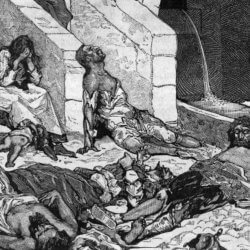
[A]fter hundreds of thousands of years of stability, dramatic shifts occurred [in the East African Rift Valley] beginning about 400,000 years ago—extreme swings occurred between wet and dry periods, lakes shrunk and new types of vegetation periodically replaced large grasslands. Geological evidence at Olorgesailie also shows how some 400,000 years ago earthshaking tectonic activity began to reshape the region—segmenting the landscape, raising hills and cliffs, and draining huge lakes—shifts that made the area more sensitive to changes like more variable rainfall.

Mis- and disinformation are distorting science and public policy. Subscribe to our Daily and Weekly Digests for incisive coverage of ‘disruptive’ innovations in AI, agricultural biotechnology, food, chemicals, nuclear energy, vaccines, and other disruptive innovations.

Without large plains to sustain them the large grazing relatives of zebras, giraffes and elephants were replaced with smaller specimens… And without the giant “lawnmowers of the Pleistocene” and their constant browsing, entirely different vegetation sprouted. This one-two punch meant that early humans had to learn new ways to gather foods, as well as ways to hunt different animals.

[Paleoanthropologist Chris] Stringer notes that early humans were completely attuned to their local environment and knew how to exploit its plant and animal resources on a daily basis. “So changes in the environment meant that they had to learn completely new patterns of behavior and that’s an obvious pressure on the human population to change,” he says. “If hunter gatherers don’t adapt to the environment, they die.”

Read the original post

Related Articles

Infographic: Global regulatory and health research agencies on whether glyphosate causes cancer

Infographic: Global regulatory and health research agencies on whether glyphosate causes cancer

Does glyphosate—the world's most heavily-used herbicide—pose serious harm to humans? Is it carcinogenic? Those issues are of both legal and ...

Most Popular

Bayer Crop Circle in Golden Wheat
Making fertilizer from thin air: Bayer’s gene-editing innovation could dramatically cut chemical fertilizer use in growing food
Picture1
Viewpoint: How badly is the U.S. food-safety net fraying? FDA’s bungled handling of the tainted lettuce crisis deepens concerns over cuts to disease tracking and response
Glossy Plastic Bag of Tokens and Labels
Viewpoint: How CNN got played by environmental activists pushing a plastics scare and litigation agenda
ChatGPT-Image-Mar-10-2026-01_39_01-PM
Viewpoint—“Miracle molecule” debunked: Why acemannan supplements don’t work
Screenshot-2026-10-30-at-10.55.54-AM
Longevity scandal: The huckster who validates the ‘oldest people in the world’ claims
Reaching Through the Woven Sky
Challenging genetic modification rejectionists: Our evolving food system has relied on science for thousands of years
Red and Green Embroidered Campaign Caps
Viewpoint: The fragile (and often bizarre) MAHA-MAGA-far left health-and-chemicals coalition is fracturing. Here’s why
Screenshot-2026-11-03-at-12.31.18-PM
Gene editing once viewed with suspicion by UK  farmers, upwards of 90% now open to their sustainability benefits
Screenshot-2026-10-28-at-3.00.44-PM
Viewpoint: Activist attacks on corporations increasingly depend on "attribution" science to target oil companies for global climate change
Screenshot 2026-07-29 at 10.40
The COVID vaccine turbo cancer scare is back. Science still proves it’s wrong.
Neon Genome_ Fetal Dreamscape
The race to genetically engineer babies
Smiling-Woman-Over-Teal-Abstract-Shapes
Viewpoint: RFK Jr.’s latest foray into junk science: Even Kennedy’s hand-picked NIH director balks at appointment of crackpot mental health director
glp menu logo outlined

Get news on human & agricultural genetics and biotechnology delivered to your inbox.