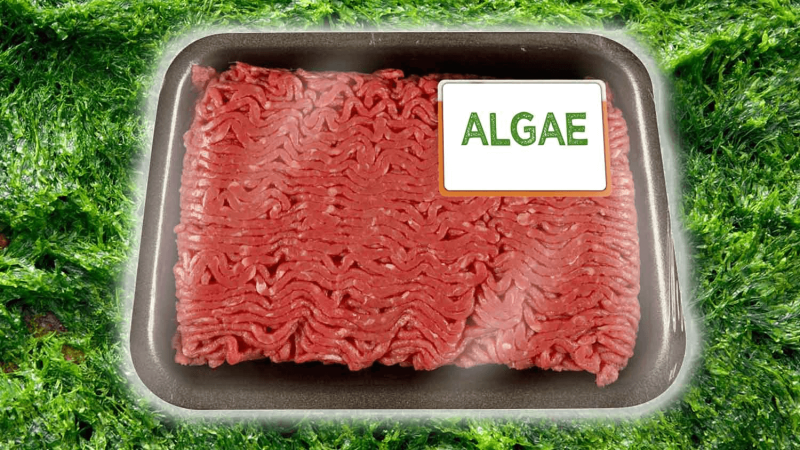
Harnessing algae opens a new frontier in sustainable meat-like protein

vegan algae ground beef livekindly
Credit: LiveKindly

Evidently, the need for alternatives to traditional meat and cheese has been a growing concern for health and the environment. Plant-based options have gained popularity as the vegetarian population grows.

However, achieving the desired texture has remained a challenge. Moreover, some plant-based proteins are less sustainable due to the large amount of resources used to process them.

Enter blue-green algae, specifically the non-toxic variety. Like their name suggests, cyanobacteria belong to the bacterial kingdom.

Mis- and disinformation are distorting science and public policy. Subscribe to our Daily and Weekly Digests for incisive coverage of ‘disruptive’ innovations in AI, agricultural biotechnology, food, chemicals, nuclear energy, vaccines, and other disruptive innovations.

The University of Copenhagen’s study, led by Professor Poul Erik Jensen, demonstrates how cyanobacteria can act as host organisms for a new protein. Markedly, the protein organizes itself into fibrous strands resembling meat fibers by inserting foreign genes into these bacteria.

This development opens doors for applications in plant-based meats, cheeses, and other foods requiring specific textures.


…

Jensen envisions establishing “microalgae factories” like dairy production, where cyanobacteria cells could be harvested daily and incorporated directly into foods with minimal processing.

While the realization of protein strands from cyanobacteria is still in the future, the study offers a promising glimpse into sustainable and texture-rich food options. With innovations like this, we are paving the way for a more environmentally conscious future.


This is an excerpt. Read the original post here

Related Articles

Infographic: Global regulatory and health research agencies on whether glyphosate causes cancer

Infographic: Global regulatory and health research agencies on whether glyphosate causes cancer

Does glyphosate—the world's most heavily-used herbicide—pose serious harm to humans? Is it carcinogenic? Those issues are of both legal and ...

Most Popular

ChatGPT-Image-Mar-10-2026-01_39_01-PM
Viewpoint—“Miracle molecule” debunked: Why acemannan supplements don’t work
ChatGPT-Image-Sep-2-2026-02_03_32-PM
How much of a problem is AI’s water use?
ChatGPT-Image-Aug-26-2026-12_46_16-PM
Viewpoint: The fake controversy over whether combining childhood vaccines is dangerous— a debate science resolved 25 years ago
ChatGPT-Image-Sep-22-2026-10_32_46-AM
There has been a slew of recent reports of food recalls and foodborne outbreaks. Do we face an escalating problem?
ChatGPT-Image-Sep-10-2026-01_44_53-PM
Viewpoint: Why medical and health nonsense spreads so casually on pop culture media
ChatGPT-Image-Sep-18-2026-01_38_09-PM
Microsoft exec: AI is a ‘doom loop’ scraping the ‘largest theft of labor in human history'
Screenshot-2026-09-17-at-12.00.30-PM
Investigative group ProPublica finds links between ectopic pregnancy deaths and abortion bans
ChatGPT-Image-Sep-21-2026-03_41_02-PM
Viewpoint: Does IQ really measure intelligence? BBC gets it wrong.
ChatGPT-Image-Sep-23-2026-11_47_32-AM
Facing pressure from Trump administration, fewer hospitals offer medical treatment for transgender minors
Screenshot-2026-09-16-at-3.14.20-PM
19%: Plunging support for Trump-RFK, Jr. measles vaccine safety oversight
ChatGPT-Image-Sep-17-2026-11_03_54-AM-2
AI sparks a bioweapons race
Screenshot-2026-09-16-at-2.26.42-PM
Viewpoint: How to ecologically damage America’s forests: Ban glyphosate
ChatGPT-Image-Sep-21-2026-02_35_25-PM
22-year frozen embryo: In one of the longest delayed births ever, middle-aged Greek couple gives birth to a daughter
glp menu logo outlined

Get news on human & agricultural genetics and biotechnology delivered to your inbox.