
Singapore has not been spared from the global resurgence of measles. As at end-July, Singapore had recorded 40 measles cases – the highest number in six years and already well above the total of 27 cases reported throughout 2025.
Most were linked to imported infections, a reminder that in one of the world’s busiest travel and business hubs, infectious diseases do not respect borders.
The encouraging news is that Singapore enters this period from a position of strength. Our measles, mumps and rubella (MMR) vaccination coverage remains above the 95 per cent threshold generally considered necessary to prevent sustained community transmission. Two doses provide excellent protection, and breakthrough infections remain uncommon.
Singapore has also taken a proactive approach. Measles is a legally notifiable disease under the Infectious Diseases Act, requiring doctors and laboratories to notify the Ministry of Health within 24 hours of diagnosis or laboratory confirmation.
Since February, confirmed cases must be isolated until they are no longer infectious; the authorities have also conducted contact tracing for all cases and imposed up to 21 days of quarantine on unvaccinated close contacts. Surveillance and outbreak management were further strengthened following the establishment of the Communicable Diseases Agency.
Measles is not like Covid-19. Unlike Covid-19 vaccines, two doses of the MMR vaccine provide long-lasting protection for the overwhelming majority of people. The likelihood of a breakthrough measles infection after full vaccination is very low.
Singapore is therefore unlikely to face the kind of widespread community transmission seen in countries with much lower vaccination coverage. What is more likely is a stream of sporadic imported cases, requiring rapid identification and containment.
This distinction matters because it reminds us that decades of successful vaccination have quietly built a layer of resilience we often take for granted.
But this resilience is not permanent, and depends on Singapore continuing to vaccinate children, which in turn depends on public confidence in vaccination. And this is where the world is entering more uncertain territory.
New debate over old vaccine
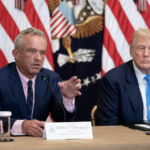
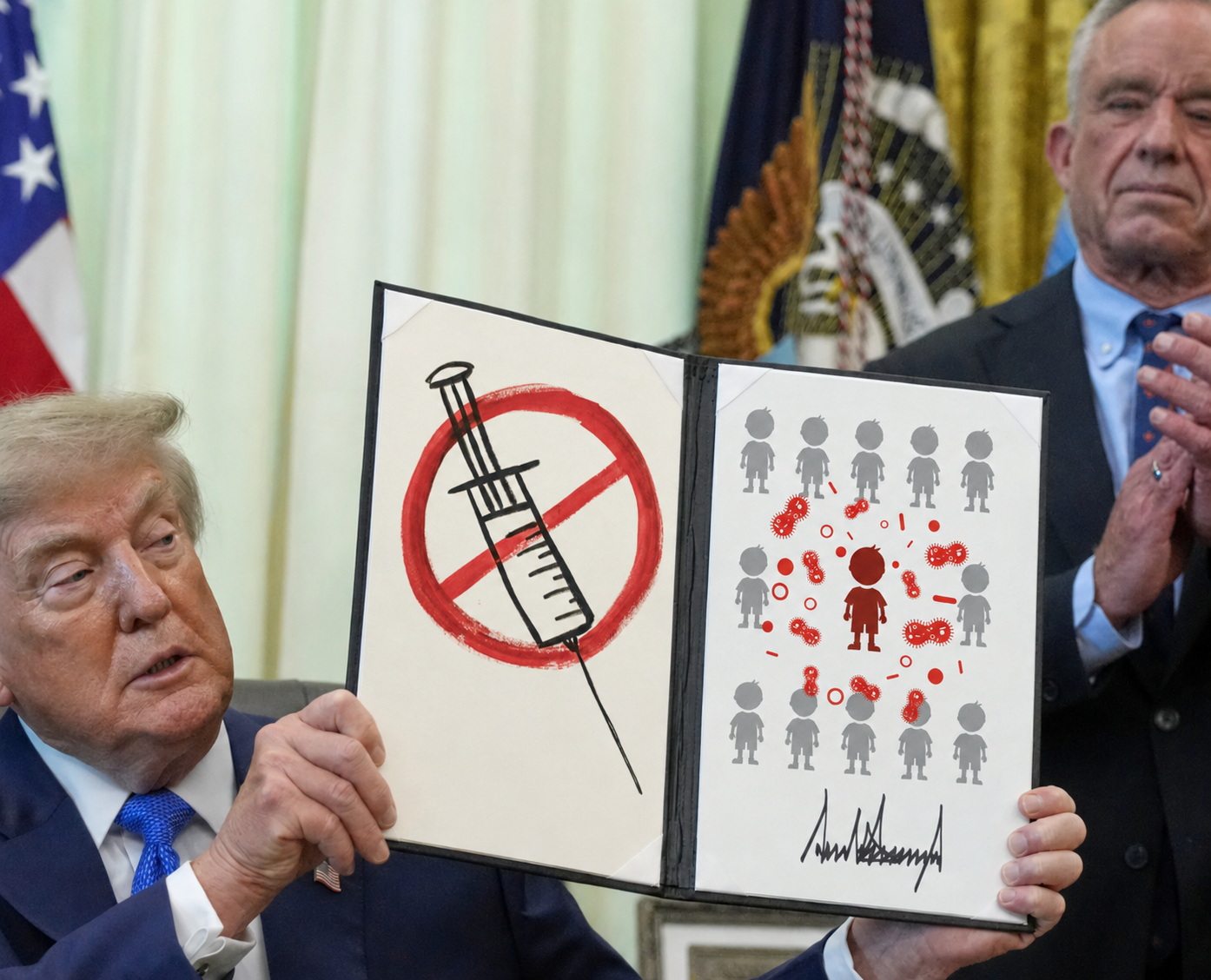
On Aug 10, President Donald Trump signed an executive order directing federal agencies to change the way childhood vaccines are recommended and administered in the US.
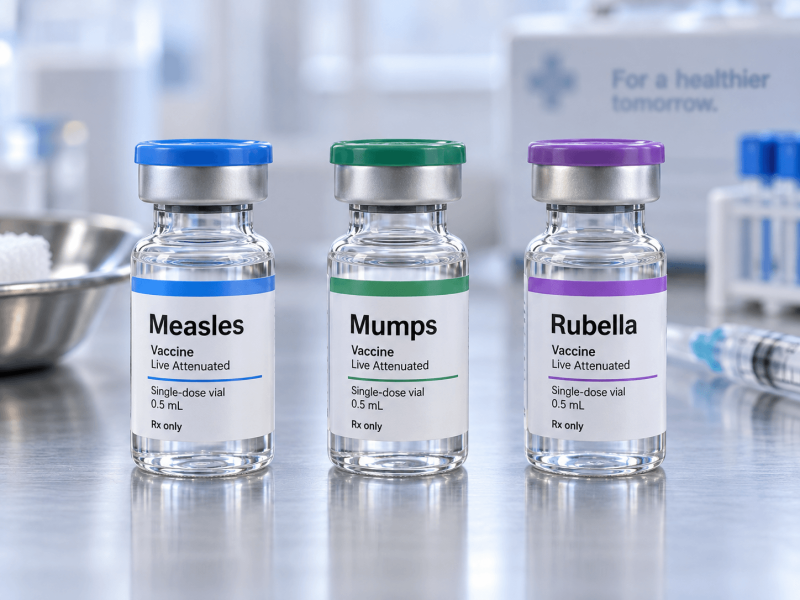
Among other measures, the order directs the US government to promote the use of standalone measles, mumps and rubella vaccines, with the combined MMR vaccine to be replaced by three separate single-disease shots. It also calls for these to be administered during separate medical visits.
The order recognises 11 vaccines as recommended for all children, compared with 18 diseases covered by the previous federal recommendation, while placing several other vaccines into categories for high-risk groups or shared clinical decision-making.
The combined MMR vaccine is still available. But the policy signals a significant shift from decades of established vaccination practice that raises two key questions: What does the scientific evidence actually tell us about the MMR vaccine? Has new evidence emerged that calls its safety into question? The answers are remarkably clear.
The science behind the combined MMR vaccine
Here, it is important to emphasise that there is no new science on the combined MMR vaccine. If anything, it has been among the most extensively studied medical interventions ever developed.
A Cochrane systematic review examined 138 studies involving more than 23 million children from Africa, Asia, Australia, Europe, and both North and South America. Its conclusion was clear: MMR vaccination is highly effective at preventing measles, mumps and rubella, while serious adverse events are rare. Most importantly, it found no evidence that the vaccine causes autism – a claim that underpins some of the US public sentiments driving Trump’s new executive order.
That conclusion is not Cochrane’s alone. It has been reached repeatedly by the World Health Organization (WHO), the European Medicines Agency, the US Centers for Disease Control and Prevention, and numerous national scientific academies. Studies involving millions of children across different countries, populations and research methods have consistently arrived at the same conclusion – that there is no causal link between MMR vaccination and autism.
The persistence of the claim is therefore not a reflection of scientific uncertainty. It is a reflection of how resilient misinformation can be, even in the face of overwhelming evidence.
The combined vaccine itself reflects decades of public health learning. Combination vaccines are not about sacrificing safety for convenience. Every combination vaccine must meet stringent standards for safety, quality and effectiveness before approval.
The reason for combining vaccines is that protection is only useful if children actually receive it. Every childhood vaccination schedule is designed around a simple question: How can children receive the earliest, safest and most complete protection during the years when they are most vulnerable?
The combined MMR vaccine reduces the number of injections and clinic visits required. That makes vaccination easier to deliver because every additional appointment creates another opportunity for children to miss or delay a vaccination. Singapore’s own National Childhood Immunisation Schedule uses combination vaccines, including the 5-in-1 and 6-in-1 vaccines, to protect children against multiple diseases with fewer injections.
Vaccination does not take place in a laboratory, but in real-world settings. Parents have work commitments, children fall sick, transport can be difficult and clinic appointments are missed. In many parts of the world, families may live far from healthcare facilities, healthcare workers are stretched and immunisation services operate with limited resources.
Public health institutions, like the WHO and UNICEF, have therefore long recognised that an effective vaccine is not merely one that works in a clinical trial, but also one that people can accept, access and complete. This is why they have long supported the use of combination vaccines which simplify delivery and reduce the logistic burden on families and health systems. Their benefit is not simply fewer injections, but also fewer barriers between a child and protection.
Dangers of vaccine misinformation
The consequences of vaccine misinformation extend well beyond an individual decision. The first and most direct is that when confidence in vaccination falls, vaccination rates decline and preventable infections return.
Measles illustrates this particularly well. It is so contagious that a single infected person can infect up to 18 others in an unprotected population. Even relatively small declines in vaccination coverage can therefore create pockets of vulnerability in which outbreaks become possible.
There are already worrying signs. The number of zero-dose children – those who receive no routine childhood vaccinations – rose sharply during the Covid-19 pandemic, while recovery has remained uneven. Measles outbreaks have also resurged across Europe, the Americas and parts of Asia, reversing years of progress.
The second harm falls on people who have no choice in whether they are protected. Measles requires exceptionally high vaccination coverage to maintain herd immunity. When coverage falls below about 95 per cent, those at risk include infants too young to be vaccinated, cancer patients undergoing chemotherapy and people whose immune systems cannot respond adequately to vaccines.
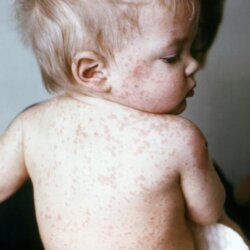
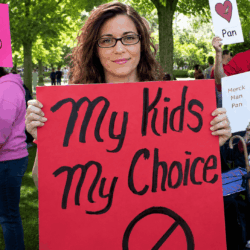

Vaccination has never been only an individual decision. It is part of the protection a community provides to its most vulnerable members.
The third harm is less visible but potentially more enduring: the erosion of trust in the very institutions designed to keep us safe. Vaccine misinformation rarely stays confined to vaccines, but gradually chips away at the confidence people have in doctors, nurses, public health agencies and science.
The Vaccine Confidence Project, a global initiative that has spent more than a decade tracking public trust in vaccines across the world, has documented how trust is shaped not only by scientific evidence, but also by political discourse, media narratives and social networks. Once that trust fractures, rebuilding it becomes significantly harder.
There is a fourth harm, which may be the least visible but, in a globalised world, among the most consequential.
Prashant Yadav, Senior Fellow for Global Health at the Council on Foreign Relations and a leading expert on pharmaceutical supply chains, has warned that the US policy shift could have effects far beyond the US.
This does not mean shortages of the combined MMR vaccine will necessarily occur. But vaccines cannot be manufactured overnight. Production capacity, regulatory approvals, procurement contracts and manufacturing expertise are interconnected.
If manufacturers invest more heavily in separate vaccines to meet US demand, and reallocate production capacity and investment, countries that depend on affordable combination vaccines could eventually face higher costs, reduced availability or longer delivery times.
The implications are particularly important for low- and middle-income countries, where combination vaccines can be especially valuable because they reduce the number of injections, simplify delivery and lessen the logistical burden on already stretched health systems.
A domestic policy decision in the US can therefore ripple across global immunisation programmes. In an interconnected pharmaceutical market, policy can unfortunately become contagious too.
The beginning of a different kind of solidarity
All this is why what happened after Trump’s executive order matters. Some of the world’s leading scientific and public health organisations came together to issue a joint statement reaffirming confidence in childhood vaccination.
The signatories included the World Health Summit Academic Alliance, the Prince Mahidol Award Conference, the Asia-Pacific Academic Consortium for Public Health and the Global Network for Academic Public Health.
They were joined by organisations whose work underpins the evidence itself, including the Vaccine Confidence Project and Cochrane, the global collaboration widely regarded as the gold standard for independent systematic reviews of medical evidence.
The issue is no longer simply one vaccine, one country or one policy decision. It is about what happens when established scientific evidence is challenged in ways that can affect confidence, vaccination coverage and ultimately public health far beyond national borders.
The statement was measured, scientific and deliberately non-political. Instead of engaging in a political argument, the world’s scientific community chose to defend something more fundamental: confidence in the evidence itself.
Misinformation is likely to remain a defining challenge of the coming decade. It will continue to be amplified by influential public figures who disregard established evidence.
Increasingly sophisticated artificial intelligence systems could make the problem harder still, generating and spreading falsehoods at a scale and speed that human institutions struggle to match.
Against this backdrop, the collective statement issued on Aug 21 could prove to be an important beginning.
|
Related on the SLP
White House ‘gold standard’ science? With RFK, Jr. at his side, Trump revives vaccine-autism myth, recommends splitting childhood shots
|
I should be clear: one statement will not change every mind. But it demonstrates something that may become increasingly important: that the world’s scientific and public health institutions can respond collectively when established evidence is being distorted.
This is not a movement against a political leader or against any particular country. Instead it is a movement for science, for evidence, and ultimately to protect against harmful falsehoods.
Trust has always been one of public health’s most valuable forms of infrastructure.
Perhaps we need to think about public health protection in a slightly different way. We have spent decades building herd immunity against infectious diseases.
Now we may also need to build societal immunity against dangerous misinformation. That will require scientists to communicate more clearly, governments to be more transparent, and the global scientific community to stand together when established evidence is being challenged.
Teo Yik Ying is vice-president for global health and dean of the Saw Swee Hock School of Public Health at the National University of Singapore.
A version of this article was originally posted at the National University of Singapore and is reposted here. Any reposting should credit both the GLP and original article. Find National University of Singapore on X @NUSingapore