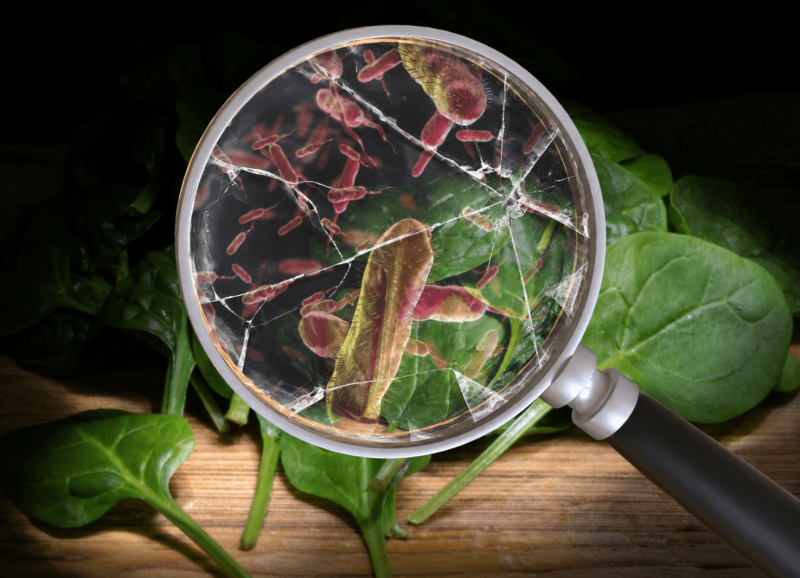

America’s food-safety infrastructure is being quietly hollowed out even as outbreaks grow more complex and harder to trace, journalist Eric Schlosser argues in a viewpoint for The Atlantic. The cyclosporiasis outbreak tied to contaminated iceberg lettuce has drawn the most attention lately, sickening people in 48 states with roughly 17,000 confirmed cases, but Schlosser notes it’s one of the milder foodborne threats compared with Salmonella, which sickens more than a million Americans annually and causes invasive, life-threatening illness in about 8 percent of confirmed cases.
Far more alarming, he writes, are two little-noticed botulism outbreaks in powdered infant formula. Formula from ByHeart sickened at least 48 infants in 17 states, and formula from Nara Organics sickened four infants in three states; both were traced to milk powder from a shared supplier funneled through a sprawling supply chain. A separate Bacillus cereus contamination, tied to an additive from a Wuhan supplier, sickened more than 100 infants worldwide in formula from Nestlé and Danone.
Schlosser traces this to Trump-administration cuts. The FDA’s respected human-foods chief, James Jones, resigned over the “indiscriminate” firing of 89 staffers, replaced by an attorney with no scientific training who’d once defended Abbott in a formula lawsuit it lost. The USDA has shed a fifth of its workforce, and the CDC’s FoodNet surveillance program is down 75 percent.



He contrasts this retreat with fixes that already work, like the “test and hold” rule that all but ended E. coli-tainted ground beef outbreaks. The administration recently blocked a similar Salmonella rule for poultry, even as Denmark’s stricter standards have all but eliminated the bacteria from its chicken supply. Abbott and Mead Johnson control more than 80 percent of the infant-formula market, yet Congress has refused to hold hearings on the outbreaks. “We are paying all we care to pay,” one food executive told Congress in 1906 — a line Schlosser says still sums up the industry’s response today.