



Ancestry & Evolution
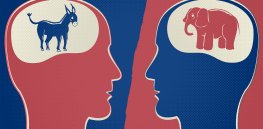
Do liberals and conservatives shopping at the supermarket think about food differently? Brain imaging suggests they do
This study examines if the political affiliation of adults who self-identify as Democrat or Republican differs based on brain activity ...

Cancer death rates continue their quarter century decline, but ethnic disparities remain
Progress has been made in reducing overall cancer mortality, largely driven by sustained declines in lung cancer. Cancer mortality declined ...

‘Super horses’: Newly engineered gene-edited equestrian racers are faster and more agile
[S]cientists are using the technology to improve traits in domestic animals. Argentina’s scientists have recently achieved a groundbreaking milestone in ...
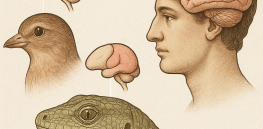
Convergent evolution: How complex brains developed independently in humans, birds and reptiles
Fernando García-Moreno is an evolutionary and developmental neurobiologist. He says for a long time there's been a debate about how ...

Humans may need to evolve faster than nature intended if civilization hopes to survive. What are our chances?
Throughout most of human history, evolution progressed slowly. Small genetic changes took thousands of years to permeate populations. Natural selection ...

12 far out theories of how the universe works
12. The Ekpyrotic Universe Theory Providing an alternative to the widely accepted Big Bang theory, the ekpyrotic universe theory suggests ...

99.7% sure says one scientist but others hedge: A distant watery planet possibly brimming with life
"These are the first hints we are seeing of an alien world that is possibly inhabited," [Nikku Madhusudhan of the ...

GLP podcast: NPR’s chemophobic hypocrisy; Could MAGA stifle mRNA vaccine progress? AI could shift human evolution
After years of flogging one chemical scare after another, NPR has abruptly changed its tune, defending Girl Scout cookies against ...
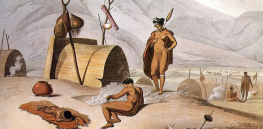
Where, when and how did humans develop the capacity for language?
[A]ccording to a new study, for a huge chunk of the time that our species has roamed the Earth, we ...

Marriage is bad for your health? The widowed, divorce and never-married have a 50% or lower risk of dementia
For the most part, science has found that marriage comes with health benefits—lower heart disease risk, longevity (especially for men), lower risk ...
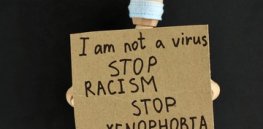
Tribalism and politics: America, a surge in xenophobia and a path forward
I wish that xenophobia were not a foundational characteristic of our evolved psychology, But it is (see Wilson, 2019). To the best ...

Music lover? It’s in your genes
A new twin study published in Nature Communications provides evidence that how much people enjoy music is partly influenced by genetic ...
’This kind of hype is toxic’: Dissecting exaggerated claims by Colossal Sciences that it resurrected a dire wolf and the bungled reporting that followed
The images of “de-extincted” fuzzy white dog-wolf pups festooning the media this week accompany reports that are so hyped that ...

Sahara Desert was once a lush oasis and home to a human mysterious lineage
The Sahara desert, once lush and green, during a time between 14,500 and 5,000 years ago, was also home to ...
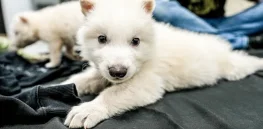
Resurrecting dead species—Despite the hype over the dire wolf and the wooly mammoth, chorongenetics poses immense challenges
Colossal Biosciences, the biotech company behind [these] woolly mice [says the] eventual goal is to modify elephants with enough mammoth ...

China’s Frankenstein? Controversial scientist He Jiankui who stirred a global debate by genetically modifying babies to prevent HIV disease now targets Alzheimer’s
International media has dubbed [He Jiankui] “China’s Frankenstein.” He has no academic affiliations. He declines to reveal where his funding ...
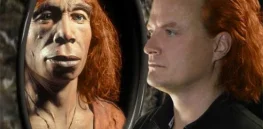
Face science: Here’s why human faces look so different from our extinct Neanderthal cousins and chimpanzees, or primate relatives
In a new study, researchers have uncovered a fundamental difference in how human faces grow compared to those of our ...

Viewpoint: Should we regulate or ban embryo selection based on IQ?
In mid-November 2024, the British organization Hope not Hate published its investigative research ‘Inside the Eugenics Revival’. In addition to ...
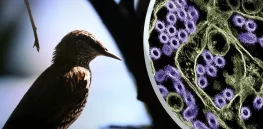
Human-to-human transmission of bird fu? It’s not far fetched
Disease forecasts are like weather forecasts: We cannot predict the finer details of a particular outbreak or a particular storm, ...
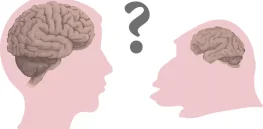
Mensa brain or monkey brain: What makes us different and how did that happen?
Scientists have long tried to understand the human brain by comparing it to other primates. Researchers are still trying to ...

Neanderthals and humans first mated 50,000 years ago and their DNA may have given us an evolutionary advantage
Far from triumphantly breezing out of Africa, modern humans went extinct many times before going on to populate the world, ...
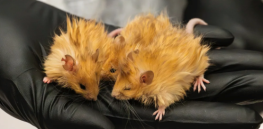
Wooly mice: A small step forward in the challenging effort to de-extinct the Pleistocene-era wooly mammoth
Scientists working to unlock the secrets of de-extinction recently announced what they say is a turning point for the movement: ...

GLP Spaces on X: Lab leak or wet market—How government officials and the media bungled the truth about the origins of SARS-CoV-2
More than five years after COVID-19 began its global rampage, the origins of the pandemic remain uncertain. An ongoing debate ...
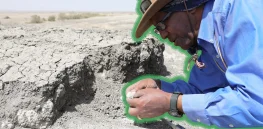
Viewpoint: Why more native Africans should be included in archaeological research projects across the continent
“A lot of the evidence that comes out of Africa informs us about our origins,” says [palaeoanthropologist Yohannes Haile-Selassie]. He ...

Silicon Freud: Can AI replace the couch?
Psychiatry was one of my early rotations as a third-year medical student just beginning clinical training. After years of exposure ...
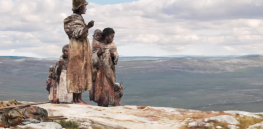
Here is an illustration of a face of the earliest modern humans to migrate from Africa to Europe
A new study published [December 12, 2024] in Nature analyzed the nuclear genomes of the thirteen specimens from Ranis [in ...

Viewpoint: Why you should read science headlines with caution
The strong correlation between flashiness and wrongness comes from several factors. First, much, if not most, scientific research is wrong. That’s why ...
