



Chemical Controversies

CRISPR roaches: Gene editing shown to work in insects, opening doors for advanced pest control
Researchers have developed a CRISPR-Cas9 approach to enable gene editing in cockroaches, according to a study published by Cell Press ...
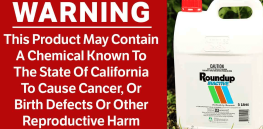
Farm groups claim US Solicitor General’s Supreme Court brief on glyphosate labeling puts it on the wrong side of science — and invites regulatory chaos
In a letter to President Biden, 54 agricultural groups expressed grave concern with a recent amicus brief submitted by the ...

‘No association between glyphosate and non-Hodgkin’s lymphoma’: Independent scientific panel review challenges activist cancer claims
In an independent critical scientific review of the existing meta-analyses of studies on the potential health hazards of exposure to ...

GLP Podcast: ‘Toxic 10’ chemicals in food; Gene editing treats heart disease? Dog-breed myths debunked
There's a "toxic 10" group of chemicals lurking in every single food you consume. Listen in to find out what ...
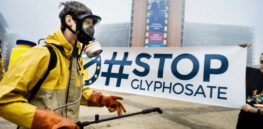
Fate of glyphosate approval in Europe? Contentious stakeholder feedback delays recommendations till mid 2023
Due to an unprecedented flood of stakeholder input, relevant EU agencies announced their risk assessment on glyphosate will only come ...

With the US honeybee population stable, what are the challenges going forward?
There is a common phrase that appears in the popular press, in grant proposals and as a fund raising theme ...

What’s next for glyphosate cases? Bayer’s hopes US Supreme Court would overturn Roundup liability verdicts dims as US Department of Justice asks SCOTUS to reject company’s cancer claims appeal
Bayer’s latest legal setback in its Roundup saga looks equally toxic to American justice. Shares in the German drugs-to-agrochemicals group ...

GMO cowpeas cut chemical spraying by 3/4 in Nigerian trials, but ‘environmentalist’ opponents lobby for ban
Research conducted by the Cornell University Alliance for Science, an independent nonprofit research institute, observed that Nigeria imports an estimated ...

Kenyan cows produce 1/10th as much milk as those in Britain — If adopted, gene editing could dramatically improve quality and safety of African livestock
East Coast Fever (ECF) is rampant [in African countries]. ECF, which is caused by protozoan parasites spread by ticks, kills ...

‘From 12 chemical applications to 2’: Ghanian scientists urge final approval of breakthrough pesticide-reducing GMO cowpea
More than 100 science activists have in a letter to the National Biosafety Authority, urged it to approve Ghana’s first ...

Viewpoint: Environmental Working Group’s scaremongering Dirty Dozen list of ‘pesticide coated’ fruits and veggies loses influence
The Environmental Working Group’s Dirty Dozen and Clean Fifteen shoppers guides to avoiding pesticide residue used to be a huge splash in ...
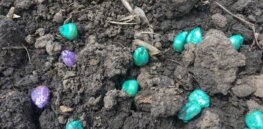
Viewpoint: Are American farmers overusing neonicotinoid-coated seeds and harming the environment?
Planting season for corn and soybeans across the U.S. will begin as soon as March in Southern states and then move north ...

How agriculture and climate change are shrinking the global insect population
The combination of climate change and heavy agriculture is having a profound impact on the abundance and diversity of insects, ...
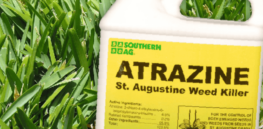
Viewpoint: If the EPA sharply curtails herbicide atrazine, what are the environmental and economic trade-off?
Atrazine is a triazine herbicide used by American farmers to control broadleaf and grassy weeds. It’s largely used by corn ...

Viewpoint: Why we should trust farmers when it comes to herbicide application
Weed-killers have come under fire by activist groups opposing the use of crop protection, accusing it of harming endangered species ...

Viewpoint: ‘Green’ anti-pesticide activists spread misinformation about more environmentally-friendly sulfoxaflor insecticides
Sulfoxaflor is a new class of insecticides effective against certain insects that are increasingly resistant to older pesticides. The EPA ...
GLP Podcast: ‘Science-backed’ case for organic food; Dirty Dozen debunked; Gene therapy treats deadly immune disorder
Is there a science-based case for organic farming? One professor says yes, but how compelling are his arguments? Environmental Working ...

Viewpoint: Sri Lankan families still paying price for government’s misguided green organic obsession
“Sri Lanka is a classic twin deficits economy,” an Asian Development Bank working paper said in 2019. “Twin deficits signal ...

Part 1: Does Europe-based Precautionary Principle protect consumers from reckless corporations or retard innovation and undermine public trust in science?
Proponents of the precautionary principle often claim that it is necessary to secure public trust in research and technology. Without ...

Viewpoint: George Washington University School of Public Health and anti-pesticide economist Charles Benbrook caught in ethics breach
A recent public release from a graduate student at George Washington University claimed insights from old data answers new questions in newly published research. These ...

GMO microbes that eat pollution? How biotechnology can sustainably cleanse our water
Limiting PFAS in wastewater will be a challenge. After all, these substances do not break down in the environment. At ...

Viewpoint: Let’s take a hard look at ‘popular wisdom’ that glyphosate poses health dangers
In 2017, [Davis, California city] council voted to eliminate the application of glyphosate by the end of 2020 in “high ...

Viewpoint: ‘Pesticide choice should be about what works and what doesn’t’ — Challenging claims that organics are superior because they use ‘natural’ chemicals
Witness organics. Despite little evidence of its supposed merits, devotees will steadfastly defend their “team.” It’s widely touted in marketing ...

What are acetogens? And how could synthetic biology turn oil, coal and other fossil fuels into green, carbon-negative chemicals?
When most people hear about oil, as in petroleum, they think of what gets refined to produce gasoline. But it’s ...

Part II: The Clean 18 — USDA finds almost no pesticide-related health concerns from fruits and vegetables grown on American farms, while data on organic food is lacking
The purpose of the following section is to explore commodity to commodity differences by a variety of measures and not ...

Viewpoint: A science-backed case in support of organic farming
Conventional or intensive farming and gardening is dominated by monocultures – fields of crop plants and nothing else. These are ...

Part I: The Clean 18 — Challenging Environmental Working Group’s Dirty Dozen scare survey of pesticide residues on conventional fruits and vegetables
The recent release of the “Dirty Dozen List” by the organic-industry-funded Environmental Working Group has stirred up its annual hornets’ ...
