



Daily Food & Ag Digest

Ghana farmers optimistic about GMO crops, survey finds
As Ghana considers approving its first genetically modified crop, a new report finds the country’s smallholder farmers are increasingly optimistic ...

How agriculture and climate change are shrinking the global insect population
The combination of climate change and heavy agriculture is having a profound impact on the abundance and diversity of insects, ...

The perfect wine? Biotechnology poised to upend ancient craft of winemaking
Winemakers have come to realize that there are many different strains of yeast (and even bacteria) at play that enhance ...

Saving forests: How genetic engineering can play key role
Emerald ash borer, sudden oak death, Dutch elm disease, oak wilt disease, walnut canker, hemlock woolly adelgid—in a globalizing world, ...

Creating self-fertilizing crops to help address climate change
Roughly a quarter of greenhouse gas (GHG) emissions in the United States are a product of agriculture. Fertilizer production and ...

‘It will be hard to find a farmer left’: Sri Lanka’s organic-only experiment collapses harvest and economy
There is barely a citizen of [Sri Lanka] who hasn’t felt the bite of catastrophic inflation and fuel, food and ...

Viewpoint: Politics and scientifically outdated anti-GMO sentiment undermines Europe’s regulatory lab-grown food embrace
The precision fermentation landscape is somewhat unbalanced. While the US and Europe both boast a growing number of start-ups working ...
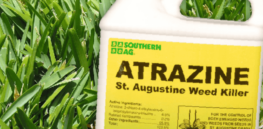
Viewpoint: If the EPA sharply curtails herbicide atrazine, what are the environmental and economic trade-off?
Atrazine is a triazine herbicide used by American farmers to control broadleaf and grassy weeds. It’s largely used by corn ...

Viewpoint: Why we should trust farmers when it comes to herbicide application
Weed-killers have come under fire by activist groups opposing the use of crop protection, accusing it of harming endangered species ...

Viewpoint: ‘Green’ anti-pesticide activists spread misinformation about more environmentally-friendly sulfoxaflor insecticides
Sulfoxaflor is a new class of insecticides effective against certain insects that are increasingly resistant to older pesticides. The EPA ...

New Zealand’s two-decade, scientifically-outdated GMO ban under criticism as global technology advances
There’s a hole in the wall keeping genetically modified organisms out of New Zealand and it’s shaped like an impossible ...

‘Eating is believing’: Nigerian public campaign promotes health benefits of pest-resistant GMO cowpea
The Open Forum on Agricultural Biotechnology (OFAB) through the National Biotechnology Development Agency (NABDA) has embarked on a mobile kitchen ...

Viewpoint: Sri Lankan families still paying price for government’s misguided green organic obsession
“Sri Lanka is a classic twin deficits economy,” an Asian Development Bank working paper said in 2019. “Twin deficits signal ...

Most humans eat three meals a day. Is that what’s best for our health?
Intermittent fasting, where you restrict your food intake to an eight-hour window, is becoming a huge area of research. Giving our ...

Why climate change is forcing a rethink on the benefits of genetically engineered crops
All our food systems like agriculture, forestry, fisheries and aquaculture, are under the stress because of rising temperatures leading to ...

How global disagreements over DNA data might undermine preserving genetic diversity of animals and plants
National leaders are scheduled to meet in China later this year to finalize a new strategic plan for the Convention ...
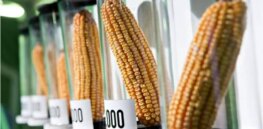
Nigeria begins national performance trials for GM maize
Nigeria is set to begin national performance trials (NPT) for genetically modified (GM) TELA maize as the West African nation ...

’Neophobia’: Consumers like what gene editing has to offer, but are still afraid of new technologies. Survey suggests why we need more biotech education
This article uses a consumer survey to gather perceptions regarding food safety, gene editing and willingness to consume for three ...

Less pesticides and more food? Pioneering Cuban biologist believes merging agroecology with genetic engineering could protect the environment and feed growing population
Achieving, as quickly as possible, food security and sovereignty and reducing the high volumes of imports in this vital sector ...

Viewpoint: ‘What was already problematic before the war in Ukraine has become catastrophic’—Europe’s Farm-to-Fork agriculture policy would exacerbate global food crisis
There is a nascent tsunami of food shortages, a wave whose devastating power is only just beginning to emerge. In ...

‘More food grown on less land with less water’: Why agricultural intensification is the key to sustainable farming
Rising food prices, gaps on shelves and requests from supermarket chains to be kind and try something else if a ...
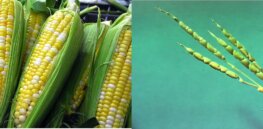
Modern crop improvement takes a historical approach
Sorghum, rice, wheat, maize and barley are hugely important in the human diet, with more than 50 percent of all ...

Varroa mites, not chemicals, are honeybees’ greatest threat. A new bee breed could protect them
A new breed of honey bee has been developed to resist its greatest parasite by removing infested larvae from its ...

Viewpoint: George Washington University School of Public Health and anti-pesticide economist Charles Benbrook caught in ethics breach
A recent public release from a graduate student at George Washington University claimed insights from old data answers new questions in newly published research. These ...

Oxitec expanding GMO mosquito trials in bid to control the spread of malaria
Oxitec Ltd. will soon begin field tests of its genetically modified self-limiting mosquitoes in Mesoamerica and the Horn of Africa in an ...
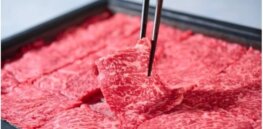
Climate-friendly synthetic meat and eggs on the menu in China’s 5-year food security independence plan
For the first time, China’s most recent Five-Year Plan for Agriculture, published in January, includes references to cultivated meat and other ...

Study: How do we reach ‘food security? Biotechnology is key
Global warming causes a range of negative impacts on plants especially due to rapid changes in temperatures, alterations of rainfall ...
