


Food & Ag Features
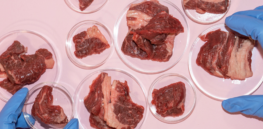
A meaty problem: How to make cell-grown protein taste like steak, chicken, and seafood
Lab-grown, or cultivated, meat options are already a reality in select restaurants worldwide. For example, the omakase restaurant Robin in ...
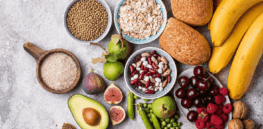
Fibermaxxing: Latest Instagram diet craze raises hope that a fiber-rich diet can improve health
This article was originally published at Knowable Magazine. In the world of dietary trends, proteinmaxxing is taking a back seat ...

From smart packaging to bio-based coatings, scientists find new ways to reduce food contamination
In today’s world, food hunger and insecurity are not due to lack of food. Right now, the world produces enough ...

Fact vs misinformation: An official EU guide to GMOs and gene-edited foods
The rules governing new gene editing techniques for plants – called "new genomic techniques" (NGTs) – are being changed at ...
AI-driven crop innovation gets a boost from the USDA
The U.S. Department of Agriculture (USDA) is taking steps to speed up progress in plant science by calling on universities ...

Viewpoint: Follow the money: How Bloomberg Philanthropies and the NGO Lighthouse Reports manufactured a Big Food safety scandal
What happens when you want to run a campaign, but you have very limited data and evidence? One strategy more ...

Viewpoint: Kennedy moves to close Big Food’s GRAS loophole—but will politically-protected Prevagen and Big Supplement slip through another?
With great fanfare, Secretary Kennedy announced the closing of the GRAS (“Generally Recognized As Safe”) loophole. But separating the rhetoric ...

What’s the political and health battle over GRAS–ingredients ‘Generally Recognized as Safe’
Behind every significant advance in US food safety lies a public health disaster that forced Congress to act. A regulatory ...

GMO food scares and organic myths stall Africa’s embrace of agricultural technology and food security
Across Africa, conversations about food are becoming increasingly intertwined with conversations about science as stakeholders across the value chain work ...
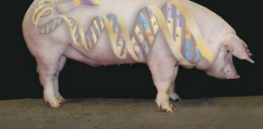
Gene editing’s next frontier: Farm animals
Agriculture has always evolved through better tools. From selective breeding and artificial insemination to precision nutrition and modern biosecurity, producers ...

Facts & Fallacies podcast: ‘Regenerative farming’? RFK Jr.’s federal push romanticizes the past and risks food security
An ambitious federal effort is pouring some $700 million into scaling “regenerative” agriculture, framed by Health and Human Services Secretary ...
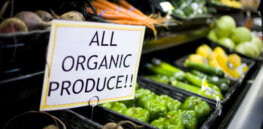
Viewpoint: Organic food costs more—but is it healthier, safer, and more nutritious? The latest science findings may surprise you.
Few symbols on food labels evoke such an immediate sense of health as the “organic seal.” Its promise of "natural" ...
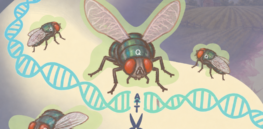
Trojan fly: Gene-edited living insecticides could help farmers spray less
On June 3, a three-week-old calf in Zavala County, Texas, was found with fly larvae feeding on a wound. While ...
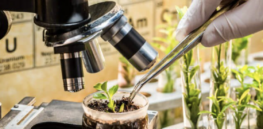
From breakthrough to business: The challenging work of scaling gene-edited food for the public
When CRISPR technology first hit the scene in 2012, many saw its promise in tackling stubborn genetic diseases in humans ...

Viewpoint: Cyclospora alert—explaining the devastating impact of Trump’s cuts to public health
The next foodborne illness outbreak could be much worse. That’s the concern of food safety leaders across the U.S. who ...

Europe’s embrace of sustainable gene-edited crops is accelerating
To reach the experimental maize field, visitors first pass through a locked gate tucked between a railway line, a motorway ...

41-state Cyclospora outbreak exposes widespread state-to-state communication failures
The response to the current large outbreak of food-related illnesses caused by a microscopic parasite is a communications failure, not ...

Viewpoint: How disease tracking and prevention has cratered under the Kennedy-Trump administration
Public health relies on data – whether it is tracking the effectiveness of a given year’s flu vaccine, monitoring blood ...
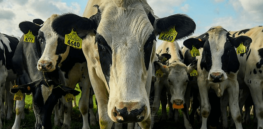
Consumer skepticism about gene-edited milk is neither fixed nor particularly high—and falls even more if it’s priced lower
As temperatures rise, New Zealand’s dairy farmers face a growing challenge: keeping cows cool enough to remain productive. Heat stress ...
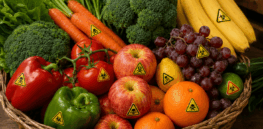
Viewpoint: What does it mean when critics of conventional agriculture say many fruits and vegetables are “linked” to pesticide poisoning?
“Our job here at Psy Ops is to panic the enemy, to blunt his will to fight. A Psy Operator ...

Facts & Fallacies podcast: Organic food myths make a comeback on Instagram, with Dr. Kevin Folta
Long-debunked myths about organic farming and food safety are surging again on social media, fueled by selective studies and fear-driven ...

Viewpoint: Are the U.S. and Europe headed towards a repudiation of agricultural biotechnology red tape?
2026 may well be remembered as the year global agriculture began to untangle itself from decades of precautionary red tape ...
Facts & Fallacies podcast: Organic food cuts pesticide exposure? A response to Dr. Rhonda Patrick
Even credentialed scientists are susceptible to the pressures of social media virality, sometimes venturing well beyond their expertise to promote ...

As the EU loosens restrictions on agricultural gene editing, it remains years behind the rest of the world on equally-safe GMO foods
The sante-eNews Newsletter from 2 June 2026 announced another GMO decision. The title claims that the European “Commission authorises use ...

Viewpoint: SCOTUS strikes a blow against junk science in Bayer glyphosate case. Will it deter mass tort litigators?
Mass tort litigation grows like weeds. Last week, the Supreme Court created the ultimate lawsuit-killer by rejecting state court claims ...

Viewpoint: Europe clears the way for gene-edited crops — but fear-driven restrictions still slow their full potential
On 17 June 2026, the European Parliament adopted new rules on plants obtained by certain new genomic techniques (NGTs), including the ...
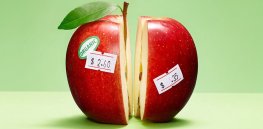
Viewpoint: In the science misinformed grifter game plan, the organic-food-is-healthier myth might be the worst.
Organic food marketing, vaccine denialism, cancer pseudoscience, climate denial, wellness culture, and conspiracy theories may look different, but they're all ...
