


Food & Ag Features

Ultra-processed food: The term UPF is less than 20 years old. Here’s its social justice origins
Ultra-processed foods now make up more than 50% of the American diet. They are also less expensive and better tasting ...
Viewpoint: The activist ‘harm reduction’ movement has hit a brick wall with its targeting of food
Activists are never wrong. When their policies miss, they just move the goalposts. When their jobs (and income) are based ...
Viewpoint — Glyphosate: Ecological villain or environmental scapegoat?
Glyphosate may just be the most polarizing chemical in modern agriculture, if not modern society. Since the World Health Organization’s ...

GLP podcast: Does industry funding corrupt science? The ‘shill gambit,’ debunked
It's a charge many scientists face: they post a factual tweet refuting common misinfo about vaccines, pesticides or some other ...

Viewpoint: International Association for Research on Cancer and U.S. tort industry extortion racket revs up after release of IARC’s misleading cancer hysteria claims
[A World Health Organization scientific body], the International Agency for Research on Cancer (IARC), published Monograph 140, releasing its initial ...

Don’t take over-the-counter fish oil supplements for your heart, joints or depression, science says
Fish oil, also known as omega-3, is among the most popular dietary supplements. It’s often promoted to protect the heart, boost ...

Iowa Republicans partnering with quack ‘Raja of World Peace’ Maharishi Flying Yoga cult “scientist” to study pesticide residues
State Representative Jeff Shipley (R-Van Buren), and his Committee for Peace and Prosperity, today announced a major collaborative research initiative ...
Viewpoint: What do organic, agroecology and regenerative agriculture have in common? They don’t work and aren’t sustainable
A farmer drastically reduces fertilizer applications, trusting soil biology to provide the needed nutrients. A crop consultant recommends a 10-species ...

Bamboo shoots are the next ‘superfood’? Don’t believe the hype, it’s not based on science
According to the New York Post, our research team has discovered a much-overlooked “superfood”: bamboo shoots. Before you rush out ...

GLP podcast: How the Green Revolution saved the world $83 trillion
Spearheaded by the Nobel Prize-winning scientist Norman Borlaug, the Green Revolution dramatically boosted food production in the middle of the ...

Viewpoint: Casey Means is poised to become next U.S. surgeon general. That could prove disastrous for farmers
President Trump entered his second term with the backing of the American farmer, but his administration’s agriculture and trade policies ...

Viewpoint: When it comes to chemicals in medicine and agriculture, ‘natural’ is often less safe than synthetic
Almost nothing in your life is natural. And that’s a good thing. Take a look around—your smartphone, your fridge, your ...
Viewpoint — Parts per billion, panic per bite: Healthy Florida First food hysteria and the war on modern agriculture
The Make America Healthy Again coalition is at it again. An increasingly organized alliance of anti-vaccine activists, environmental litigators, and ...

GLP spaces on X: Florida’s anti-glyphosate hysteria, dissected
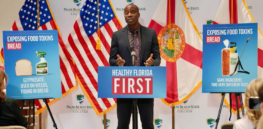
Panic erupted in Florida earlier this month after surgeon general Dr. Joseph Ladapo held a press conference launching the state's ...

Viewpoint: How increasingly politicized foundations use dark money contributions to bolster advocacy campaigns at odds with science
Western societies are creating billionaires at an unprecedented rate. But these newly minted accidental philanthropists are not like the Rockefellers, ...

GLP podcast: In defense of DDT—the pesticide that saved half a billion lives
The insecticide DDT has prevented roughly half a billion deaths. A relatively low-toxic chemistry widely used to control disease-vectoring mosquitoes ...

Viewpoint: Why has organic and sustainable farming veered so far away from the scientific evidence?
The Trump administration’s US$700 million Regenerative Pilot Program, announced in late 2025, is one of the most significant federal investments ...

Regenerative agriculture gets a star turn with “health guru” RFK, Jr. and the Trump Administration. What could go wrong? (Plenty)
Who would have thought the Trump administration would be championing “regenerative” farming — an approach long associated with progressive food ...
Viewpoint—It’s time to challenge the European Union’s data-less restrictions on genetically modified (GMO) crops
Curious about where the EU currently stands on regulating green biotechnology? For a comprehensive overview, dive into our exclusive three-way ...

Viewpoint: Lancet’s reputation as a leading science journal takes another hit in its capitulation to MAHA fearmongering over ultra-processed food
The new Lancet Series on ultra-processed foods (UPFs) draws on decades of global data, mechanistic evidence, and more than 100 ...

Gene editing opens the door in Indonesia to dramatic advances in sustainable farming but skeptics remain
Like other developing countries, Indonesia is facing a familiar dilemma: how to feed a growing population while protecting its extraordinary biodiversity ...

GLP podcast: Everybody’s wrong about RFK, Jr.’s dietary guidelines
Depending on whom you ask, the latest Dietary Guidelines for Americans represent a significant step forward for public health—or they're ...

2026 will decide the legal future of the herbicide glyphosate—and could alter the shape of global agriculture
2026 is set to be a pivotal year for the fate of glyphosate, the active ingredient in Roundup and other ...

Supreme Court agrees to review Bayer’s request to block lawsuits claiming federally-approved herbicide glyphosate causes cancer
The U.S. Supreme Court has agreed to review Monsanto’s appeal seeking immunity from lawsuits related to its popular herbicide, Roundup ...

Viewpoint — Lysenkoism 2.0: RFK, Jr. is more dangerous than the 1930s Soviet scientist Trofim Lysenko, whose crackpot views killed millions of people and set back Russian science for decades
We don’t need to look to dystopian authoritarian theocracies portrayed in science fiction novels and movies to know that it ...

Viewpoint: America’s upside-down, upside-down food pyramid is bad science
Health Warning: Like every other Food Pyramid released in the last two weeks, this article is satire. Although most of the ...

Disinformation Attacks on Food and Farming: Year in Review
Global farming and food policy is under intensive attack from an alliance of left-leaning environmental activists and the ideologically mushy ...
