


Food & Ag Features

Viewpoint: Environmentalists claim farmers can forego chemicals and genetically engineered crops and grow bumper crops with less environmental impact. If only farming was that easy
At the end of the 20th century, the United Nations (UN) launched the Millennium Development Goals (MDGs). The MDGs were a list of ...

Why scare stories about crop chemicals outlive the science
For years, glyphosate has been the world’s most litigated molecule. The herbicide, first brought to market in 1974 under the ...

Viewpoint: Frost season is nearing in Florida’s citrus-growing region. Here’s how backward science at the EPA has closed down a protective solution
“That morning I squeezed every orange and it felt like a wet sponge – I knew I lost the whole ...
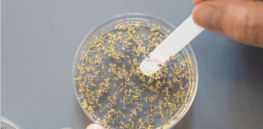
‘Deficient, Unreliable, Corrupted’: Independent EU food science watchdog agency eviscerates junk studies weaponized by NGO activists to manufacture microplastic crisis and litigation
Not a day goes by where some study isn’t published on some micro or nanoplastic found in the environment, humans ...

Viewpoint: Organic fantasies—Why rejecting industrial agriculture for regenerative farming would be a big mistake for food security and sustainability
Last year, Scientific American published a short but ominous article titled “Only 60 Years Left of Farming if Soil Degradation ...

Farming in poorer countries suffers from poor weather forecasting. AI is poised to change that
For farmers, every planting decision carries risks, and many of those risks are increasing with climate change. One of the ...

“It’s raining neonicotinoids in Japan!” How the French media, environmentalists, and activist scientists conspired to distort science and severely damage the farm economy
Based on only eleven rain collections, researchers from Tokyo and Hokkaido Universities detected five neonicotinoids in Japanese rainwater at sub-nanogram-per-liter ...
Understanding the recent boom in ‘regenerative’ food labels
Stroll through a grocery store and you’ll likely spy the word “regenerative” on everything from cocoa powder to hot dogs. ... But this seemingly ...

Viewpoint: Why de-extinction efforts should be redirected at classical habitat conservation or improving agricultural production
“In considering the risks of recombinant DNA, we shy at kittens and cuddle tigers.” Thus James Watson, co-discoverer with Francis ...

Viewpoint: MAHA’s chemophobic agriculture recommendations take a back seat to industry and science as Republican farm policy comes into focus
Robert F. Kennedy Jr. has courted controversy his whole life. Since becoming the Trump administration’s top health official, Kennedy’s outlandish ...

Viewpoint: Wall Street and private equity—The hidden money bankrolling class action tort cases, from glyphosate to talc to Zantac
Have you ever wondered how lawyers manage to bankroll mass toxic tort cases, which are notoriously expensive to finance? Spoiler ...

Misguided MAHA: Its vision of transforming American agriculture would increase food prices, habitat loss, and emissions
Earlier this spring, Robert F. Kennedy Jr. walked the rows of John Sawyer’s Texas farm, the young corn brushing against ...

Chestnuts, rats, and rhinos: Can biotechnology become a key tool in conservation?
What do the American Chestnut tree, the black rat, and the northern white rhinoceros have in common? They are all ...
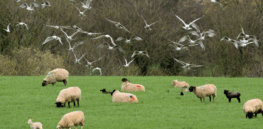
Viewpoint: Despite environmental activist claims, bird and insect populations are not crashing in Britain
The scientific evidence increasingly refutes the alarmist narrative that our farmland bird and insect populations are disappearing due to intensive ...
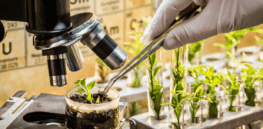
Mutant advantages: Constant change in plant breeding — random and now guided — has precisely crafted our global food system
A new review paper by researchers at Bayer Crop Science, titled Beautiful and delicious mutants: The origins, fates, and benefits of ...
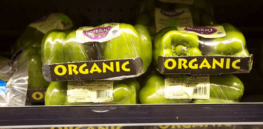
Viewpoint: The organic food industry is a $180 billion marketing fraud
As a biomedical scientist, it has never failed to annoy me that the term ‘organic’ has been co-opted to spread ...

Foodomics: Why you need to know what’s in ‘nutritional dark matter’
When scientists cracked the human genome in – sequencing the entire genetic code of a human being – many expected ...

Sugar-sweetened beverages: The health impact of soda, sweetened waters, fruit drinks, coffee and other SSBs
Sugar-sweetened beverages, the liquid delight promising a moment of joy and delivering a lifetime (?) of regret. Positioned as a ...

Can magic mushrooms slow aging?
A groundbreaking study in Nature’s npj Aging Journal (July 2025), just made waves by showing that psilocybin, the psychedelic compound ...
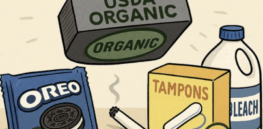
Viewpoint: The fastest growing delusion in America is chemophobia—and organic marketers are to blame
“Organic” might be the most abused word in the English language. Chemists, farmers, and marketers all use it—and none of ...

For food companies, GMO was a dirty word. Innovation in gene editing is soaring, changing the public discussion
The BBC reported that scientists at the University of Oxford, working in a collaboration with other international partners, have used ...

Personalized nutrition: Can AI design a healthy, allergen-free diet?
In just three months, ChatGPT will turn three, and it’s already reshaping the way we work, think, and even imagine ...

RFK, Jr.’s claim that food additives cause ADHD is more scare-mongering than science
Robert F. Kennedy Jr has spent years railing against food additives, framing them as part of a broader threat to public health ...

Did you hear the story about the GMO that nearly destroyed the world?
An old myth has resurfaced that a GMO almost destroyed all life on Earth — but what's the real story? ...

GLP podcast: Spread meat allergy with gene-edited ticks? Bioethicists pose vile ‘thought experiment’
How far are we willing to go to slow climate change? The list of proposed solutions runs the gamut from ...
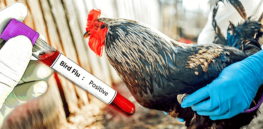
How gene editing of farm animals could help prevent a COVID-like bird flu epidemic
During a Westminster Hall debate in Parliament ..., former Defra Secretary Rt Hon Steve Barclay MP joined a growing list of political, ...

Viewpoint: Farmers take a hit—Trump agriculture and biotechnology budget cuts are hampering U.S. innovation
Imagine a world where crops thrive with less water and fewer pesticides, where livestock resist disease without antibiotics, and where ...
