


Food & Ag Features

Is tilapia a human-made freak that we should avoid — or an evolutionary rockstar?
Posts were appearing on my Facebook feed warning against the dangers of eating tilapia. So I decided to do a ...

GLP podcast: Can you trust ‘industry-funded’ science?
Popular science news is often shot through with the assumption that industry-funded research is inherently suspect because companies value profits ...

Genetically-modified poplar and chestnut trees: Contrasting organizations navigate regulatory maze in search of government and popular acceptance
When you think of GMOs, controversial products like Monsanto’s herbicide-tolerant RoundupReady corn might spring to mind. However, the world of ...
Viewpoint: The disinformation-promoting Non-GMO Project takes on synthetic biology on behalf of the consumer. Are they really on your side?
The Non-GMO Project is a pay-for-certification scheme masquerading as a 501(c)3 organization. It allows food manufacturers to decorate their packages ...
GLP podcast: About that lousy glyphosate-damages-sperm study; Social media can be good for teens? ‘Carnivore’ diet facts and myths
A recent study and subsequent news coverage alleged that the weedkiller glyphosate causes reproductive damage in men. As usual, there ...

Viewpoint: ‘Organic products are safer for consumers than conventional products?’— In Canada, 46% of organic produce tests positive for pesticide residue
Over and over, the term ‘organic’ is used as an umbrella for a variety of qualitative features in food. There ...

Bean farming revolution? Unique innovations could leverage lentils and chickpeas to lock in growth-promoting nitrogen in soil
From lentils to chickpeas, and even the humble baked bean, pulses are perhaps best known as an alternative, plant-based source ...

With the cell-based meat revolution lagging, snake meat offers an alternative to help lower our carbon footprint
Biotechnology has solved many problems, from recombinant DNA and monoclonal antibody-derived drugs, to gene therapy and stem cell transplants, to ...

Viewpoint: Chemophobia at the Wall Street Journal: Why did the WSJ assign a finance journalist to author a hit piece on a former EPA official-turned-consultant that misreports the science consensus on glyphosate and PFAS chemicals?
Every now and then an article is published that is so regrettably polarizing, so tilted to a “Good vs Evil” ...
GLP podcast: Mother Jones blasts AAP anti-GMO report; Animals mistreated on organic farms? Why did humans evolve to love music?
Once fiercely skeptical of "Big Ag," even adamantly progressive media outlets like Mother Jones are beginning to embrace the use ...

How the media portrayed a study: “High Levels of Glyphosate Found in Sperm” – What data actually show: Almost no chemical traces and no effect on sperm
The headlines explode in horror and the anti-glyphosate mobs spring to action. The headlines scream: Males may not be able ...

Viewpoint: Optimism fades that Europe will significantly reform its current near-ban on gene-edited crops
The genetic modification, or genetic engineering (GE), of plants and animals by selection and breeding has been practiced by humans for ...

Fat + sugar’s irresistible combination has a biological basis in the gut-brain connection
You know those moments when you’re faced with a gooey chocolate chip cookie or a crispy slice of bacon, and ...
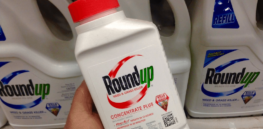
Viewpoint: After nearly two dozen Roundup trials, what have juries learned about the link between glyphosate and cancer?
A lawyer who claims his client, a government union employee, got cancer from using the common weedkiller Roundup, is whining that his ...

Viewpoint: ‘Environmentalists are wrong on opposing technological tweaks to agriculture’: How activists undermine society’s need for more climate-adaptive sustainable farming
Public concern about the environment has not always been part of the social conscience in North America. After all, European ...

Viewpoint: As the worm turns — Don’t get your science from the guy who says a tapeworm ate his brain
Robert F. Kennedy, Jr. (RFK Jr.) isn’t known for subtlety. As the ringleader of America’s anti-vaccine movement, the rogue presidential ...

Viewpoint: Uncomfortable truth — ‘Organic farming takes too much land to have any chance to feed the world in a climate-changed environment’
Science for Sustainable Agriculture (SSA) was recently asked by the farming media to comment on a policy paper issued by the ...
GLP podcast: Exposing nutrition myths and fact-checking Instagram ‘biohacking bros’ with Dr. Andrea Love
Reporters, alt-health gurus and even some scientists warn consumers to avoid so-called "ultra-processed foods." These cheap, convenient products–loaded with sugar, ...

Want to buy the most sustainable foods? Here’s why most food labeling regulations mislead consumers
Bringing together researchers from the Universities of Oxford and Cambridge, and the University of São Paulo in Brazil, we evaluated ...

Viewpoint: Aftershocks from American Academy of Pediatrics attack on glyphosate—‘Misinformation about the genetic engineering of crops hinders the development of sustainable agriculture technologies’
Repetition creates belief. And claims about the harms of glyphosate have persisted for decades. Unfortunately, even medical organizations like the ...

Here’s how crop biotechnology is regulated in the United States
Biotechnology, including genetic engineering and gene editing technology like CRISPR, is enabling developers to improve the genetics of a growing ...

Viewpoint: The EPA’s current regulatory regime restricts farmers’ ability to fight pests and climate change
Plant pests and disease have a massive global impact, causing the loss of 20–40% of crop production and costing over USD 220 ...

TVA explained: How fatty acids in meat and dairy can help ward off cancer
Dietary nutrients play a crucial role in providing your body with energy, building blocks, and regulatory molecules. How all these ...

How prehistoric agriculture spread from the Fertile Crescent south through Africa
The Neolithic age – when agriculture and animal farming were adopted – has become one of the most widely studied ...
Viewpoint: Consumer Reports flunks Chemistry 101 — again — in scientifically illiterate, reckless, data-manipulated claim that conventional produce poses ‘serious pesticide risks’
Headlines about harmful pesticides in conventional foods are lying to you in order to create fear. Another day, another post ...
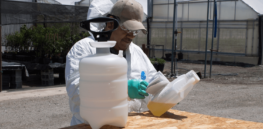
From 72 to 400: US announces expansion of number of agricultural chemicals it will monitor
For several years, biologist Nathan Donley has worried about the future of a pesticide database run by the U.S. Geological ...

Viewpoint: Debunking organic food myths again… and again
Over and over, the term ‘organic’ is used as an umbrella for a variety of qualitative features in food. There ...
