


Sustainability & Climate Change

Viewpoint: Regenerative agriculture—a marketing ‘buzzword’ for sustainable practices many farmers have used for decades
Canadian farmers [have been using sustainable farming practices] long before “regenerative” became a buzzword; indeed, long before wealthy people were ...

Viewpoint: Free speech vs science—Should colleges invite anti-GMO speakers they ‘know’ spread misinformation?
In the face of climate change, the expectation for evidence is doubled because of the dramatic implications ...
Cloned animals: A safe, sustainable source of food and medicine?
It's now possible to clone animals and use them to produce a wide variety of valuable products, including staple foods ...

Facing stiff GM crop restrictions, Mexican cotton farmers may import illegal biotech seeds
During 2020, cotton production fell [in Mexico, as only] one million bales were produced, 500 thousand less than in other ...

‘Green’ politics and consumer uncertainty keep GM crops outlawed in Europe. Will gene editing change the legal landscape?
Agronomy grad student Frederik Vilhelm Larsen, at the University of Copenhagen in Denmark, wants to explore all the science that ...

Europe’s ‘most cherished’ grape varieties threatened by deadly diseases. CRISPR can help save them
How the latest breeding techniques are saving the taste of our most cherished grape vine varieties. European Seed (ES): Could ...

Podcast: Sierra Club endorses biotech chestnut tree; GM salmon coming this April? Downside of genetic engineering
Historically a vocal opponent of genetically engineered crops, the Sierra Club has endorsed the release of a disease-resistant, genetically modified ...

Soils around the world are in trouble, threatening food production. Here’s how we can save the ground beneath our feet
Soil is critical for the food everyone eats. Healthy soils matter not just for producing 95% of global food supplies, ...

Climate change vs agriculture: Can one farming method—conventional, organic or agroecology—help slow global warming?
Climate change and agriculture appear joined at the hip. Agriculture—through methane, carbon dioxide, and land use—has had an impact on ...
Climate-proofing our food supply: Here’s how CRISPR will help us adapt to global warming
Biotechnologist Dr. Karen Massel from UQ's Centre for Crop Science has published a review of gene editing technologies such as ...

Kenyan farmers clamor for GMO maize seed after visiting demonstration site
Impressed by the high yields realized in open field trials, Kenyan farmers are urging their government to speed up the ...
GM plants with bigger roots could suck more carbon out of the atmosphere, mitigating climate change
[S]cientists like Wolfgang Busch, Salk Institute for Biological Studies professor, are trying to harness the carbon-sucking power of plants to ...
Gene gun: The tool that revolutionized plant breeding and brought GMOs into agriculture
A plywood-mounted transformer, a voltmeter-equipped wand and a pair of bulbous vacuum tubes might appear to be just a random ...

‘Bridging that gap between scientists and ordinary folks’: How storytelling combats anti-GMO advocacy
Many Africans still don’t understand scientists, or what they do. Scientists are widely seen as aloof and detached — a ...

Viewpoint: FDA’s burdensome animal gene-editing rules hinder innovation. USDA takeover could spur progress
Over the last two months, USDA made two revolutionary moves regarding the regulation of genetically engineered (GE) animals: to take ...

GMO-skeptical Sierra Club gives cautious endorsement to disease-resistant, biotech chestnut tree
By almost any metric, the American chestnut was a perfect tree. Massive, fast-growing, and rot-resistant, it was easy to mill ...
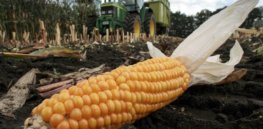
Video: ‘One more tool in our toolbox’: The case for crop biotechnology
Agriculture scientist Channapatna Prakash offers a crash course on agricultural biotechnology on this episode of the Nothing is Rocket Science ...
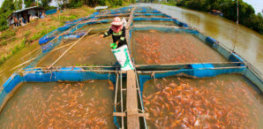
‘Clean’ seafood? The global struggle to make aquaculture a sustainable source of protein
Surprising to many, over half of the fish we eat comes from fish farms. But some farms, particularly from parts ...
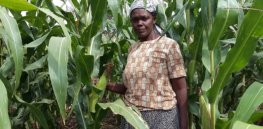
GM, insect-resistant, Bt corn could reach Kenyan farms in 2021 — and may help double crop yields
The TELA Bt maize variety if adopted can help [Kenyan] farmers double their yields. Speaking [February 22] during an open ...
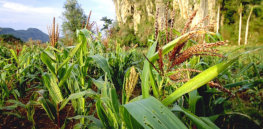
‘This seed is ours’: Cuba poised to grow locally developed, insect-resistant GM corn to mitigate effects of climate change
Between 2014 and 2018, Cuba imported 700,000 tons of corn per year, more than 1,500 million dollars in imported food, ...
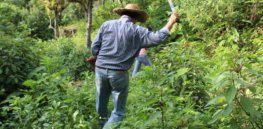
Machetes, not glyphosate: Mexican president tells farmers to manually remove weeds following herbicide restrictions
[Mexican] President Andrés Manuel López Obrador …. proposed the use of machetes to remove weeds from crops instead of using ...

Growing food in space may offer sustainability benefits beyond genetically engineering plants on Earth
Sending fancy French grapes into orbit might sound like an expensive PR stunt. There is, after all, a long history ...
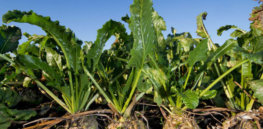
Gene editing could boost UK’s virus-plagued sugar beet industry, country’s agriculture minister says
[British farming and environment minister George] Eustice told the annual conference of the National Farmers Union [on February 23] that ...
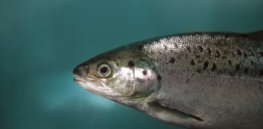
GMO salmon two months from introduction: AquaBounty fights anti-biotechnology misinformation as it gears up for April launch of fast-growing, sustainable AquAdvantage salmon
AquaBounty's genetically engineered, fast-growing salmon could be sold at US restaurants and grocery stores as soon as this April. The ...
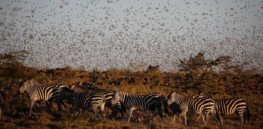
East Africa battles locust swarms by turning them into animal feed and organic fertilizer
Scientists say warmer seas are creating more rain, waking dormant eggs, and cyclones that disperse the swarms are getting stronger ...
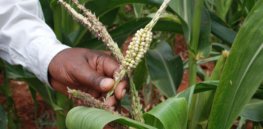
GM crops could support food security in Africa, new study suggests
Genetically modified (GM) maize has produced higher yields than conventional hybrid varieties in South Africa, highlighting the technology’s potential to ...
Viewpoint: Eco-hypocrisy—Mexico bans GM corn and glyphosate to promote sustainability while subsidizing fossil fuels
Imagine for a moment that the US government banned smart phones and tablets and forced everyone to use home telephones ...
