


Sustainability & Climate Change
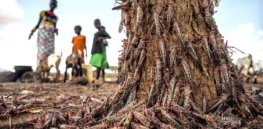
New crop-destroying locust swarms threaten east Africa, where 35 million people already face food shortages
A new generation of locust swarms is threatening to wipe out the livelihoods of farmers and herders across eastern Africa ...

Farming palm trees for oil destroys forests. Now there’s a GM synthetic version that might help preserve global biodiversity
[Many everyday products] are made with palm oil, which is responsible for the rapid deforestation of some of the world's ...
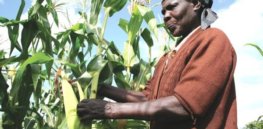
GM, insect-resistant, Bt maize offers Kenyan farmers chance to boost yields while cutting pesticide use, local soil scientist says
Wilhelm Mukhongo is a soil expert and works with the county government of Busia, [Kenya, in] the department of agriculture, ...

Viewpoint: Europe’s blanket opposition to gene editing, pesticides means higher food prices for world’s poorest people
By 2070 the world will be populated by approximately 10.5 billion people. This means that we will need to be ...
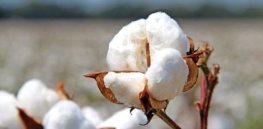
Tweaking two genes in cotton doubles crop yields—and may do the same in wheat, rice and corn
One group of Texas Tech University researchers has found a way to double fiber yield for cotton in semi-arid areas like that ...

GM banana could help Uganda’s farmers battle bacterial wilt, but the country needs a biosafety law first
My attention has been drawn to an article I recently read in the digital Genetic Literacy Project newsletter authored by ...

Viewpoint: Are GMOs safe? Yes, for people and the planet
[W]hen we hear or read “GMO” or “bioengineered food,” do we ever think of the terms “safety,” “regulation” or “sustainability”? ...

Engineered crops with shorter life cycles could thrive in salty soils caused by climate change
Together with the prolonged use of fertilizers in intensive agriculture, the increased evaporation of water from the soil caused by ...

Video: Some eggplants naturally repel insects. New software can monitor which ones, helping to cut pesticide use
The eggplant fruit and shoot borer (EFSB), Leucinodes orbonalis Guenee, is the most destructive insect pest of eggplant. The larva feeds on ...
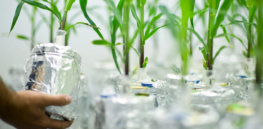
As the CRISPR revolution advances, here’s how gene editing will actually help farmers and consumers
2020 has been an eventful year for gene editing. The recent Nobel Prize in Chemistry was awarded to Emmanuelle Charpentier ...
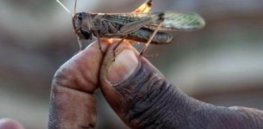
Decoded locust genome could help develop ‘intelligent pesticides’ that only kill crop-ravaging insects
The complete set of genetic information for the desert locust could have major international implications for countries in regions such ...

Climate change fuels rising arsenic levels in rice. GM crop varieties, new growing techniques could cut toxic exposure
Rice is particularly vulnerable to arsenic uptake because unlike most crops, it grows in flooded conditions with anoxic soil. Microbes ...

GMO ban in food-insecure Ghana would be ‘dangerous,’ deputy agriculture minister warns
[A December 7 Agriculture Manifesto Forum organized by the Peasant Farmers Association of Ghana] discussed the strategies in the 2020 ...
GM fish food deal brings sustainable salmon a step closer to commercialization
Rothamsted Research, a United Kingdom plant science research institute, has signed a collaboration agreement with a bioscience company that brings ...

Bangladesh could double crop production by 2030 with help of GM technology, experts say
USAID and International Food Policy Research Institute (IFPRI) hosted [a virtual] event to learn from stakeholders about challenges, prospects, and ...

Plant-based meat: Wholesome food, science experiment—or both?
Makers of plant-based meat deal with a constant balancing act between promoting their products as simple, wholesome food and also ...

Japan poised to approve first gene-edited food, tomato that fights high blood pressure
Current genome-editing technologies are more efficient than ever before, making it possible to modify genes as if editing sentences on ...
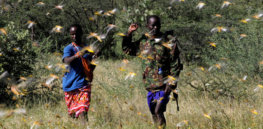
High-tech solutions emerge to help quell Africa’s catastrophic locust outbreak – the worst in decades
[Masters student Amoah Idun and his team] glue a 150mg tracking device to a chosen [locust’s] thorax, looking like a ...

Infographic: Crop biotech boosts farm productivity $225 billion, improving lives of millions globally
More than 25 years have passed since the first biotech crops were introduced. Since then, genetically modified crops using biotechnology ...

Gene-edited, pollen-free cedar tree could help allergy sufferers breathe easier in spring
It is said that 30% of people are suffering from pollinosis [hay fever]. Research on producing pollen-free Sugi [Japanese red cedar] ...
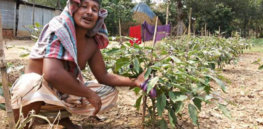
GM eggplant helps farmers reduce pesticide use and increase profits, study finds
Bangladeshi farmers significantly reduced pesticide use and increased their profits by growing genetically modified (GM) eggplant, a new study confirms ...

Cell-cultured ‘chicken bites’: Cruelty-free meat produced in a lab without slaughtering an animal approved for sale for first time, in Singapore
[C]ultured meat, produced in bioreactors without the slaughter of an animal, has been approved for sale by a regulatory authority ...

Sustainability gap on Farm to Fork: What are the global consequences of Europe’s embrace of ‘green political correctness’
European Union politicians call it a “protein transition” strategy—the continent’s sustainable farming blueprint embodied in the Green Deal, the heart ...

Molecular breeding accelerates disease-resistant crop production—needed more than ever in developing world
To adequately confront rapidly changing plant pests and diseases and safeguard food security for a growing population, breeders — in ...

Relying on agroecology will jeopardize Africa’s food security, farm official warns
An international push for Africa to adopt agroecology as its main agricultural production method threatens to jeopardize the continent’s food ...

‘People always have, and likely always will, fear new things’: Why we still can’t buy AquaBounty’s GM salmon
An ordinary salmon could take three years to grow, while AquaBounty’s fish grows to full size in just eighteen months. What ...

Gene editing could fight deadly diseases in fish, boosting sustainable aquaculture
Developing effective treatments – like vaccines – can be challenging, take many years and can be difficult to manufacture and ...
