


Science Controversies

CRISPR crops face regulatory and public acceptance obstacles
[Editor's note: Armin Scheben is a PhD student and David Edwards is a professor at the School of Biological Sciences ...

‘Three-parent babies’ may be born soon at first licensed UK fertility clinic
A fertility clinic in Newcastle was just granted permission to start performing what’s known as the ‘three-parent baby’ technique, a ...

Woman’s vision improved after first successful stem cell (iPS) treatment
A woman in her 80's has become the first person to be successfully treated with induced pluripotent stem (iPS) cells ...

Beta Israel reconsidered: Defending the Israelite ancestry of Ethiopian Jews
Ethiopian Jews are often portrayed in modern media and in some academic texts as having no true ancient ancestral connection ...
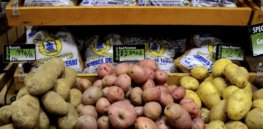
Which GM crops might be embraced by the organic movement — if sustainability matters
[Editor's note: Gerhart Ryffel is a professor at the Institute of Cell Biology, Essen University Hospital in Germany.] Several years ago, I ...

Environmental Working Group’s ‘dirty’ marketing serves ‘big organic’ donors, not consumers
Environmental Working Group's list of 'chemically soaked' fruits and vegetables is unscientific and promotes the false idea that conventional foods ...

Despite huge progress in gene sequencing, we still don’t fully understand how biology works
[B]iology has become a victim of its success. Today we can sequence genomes much faster than we can understand them ...

Should US spend more on agricultural R&D to make food cheaper, more sustainable?
[Editor's note: Margaret Zeigler is executive director of the Global Harvest Initiative, a private-sector voice for productivity growth throughout the agricultural ...

Farms are not like Eden: The case for aggressive human intervention in agriculture
Farming is controlling nature for our own purposes. There is no utopian state. We should stop trying to restore, recover, ...

Treatment for Alzheimer’s, heart disease may be hidden in genes of Icelandic people
Iceland is desolate, remote and isolated...Since the Vikings settled there more than 1,200 years ago, Iceland's population has remained relatively ...
Should US spend more on agricultural R&D to make food cheaper, more sustainable?
[Editor's note: Margaret Zeigler is executive director of the Global Harvest Initiative, a private-sector voice for productivity growth throughout the agricultural ...

European Union’s process-based GMO regulations ‘defy scientific, economic, and common sense’
[Editor's note: John Davison, now retired, was the research director at the Institut National de la Recherche Agronomique (INRA) in France. Klaus ...
Should US spend more on agricultural R&D to make food cheaper, more sustainable?
[Editor's note: Margaret Zeigler is executive director of the Global Harvest Initiative, a private-sector voice for productivity growth throughout the agricultural ...

DIY DNA: Free online course teaches you how to make your own GMOs
Have you found yourself sitting in your kitchen lately wondering how to make bread, cheese or yogurt? How about genetically ...
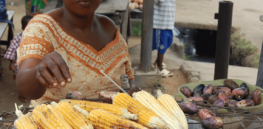
Talking Biotech: GM corn blocks carcinogenic aflatoxins, could eliminate ‘chronic health concern’ in developing world
Making corn safer: University of Arizona's Monica Schmidt on genetically engineering healthier food, arming plants with defenses to fight fungal ...

Palm reading: How genetic, epigenetic scans could boost palm oil yields, reduce environmental footprint
Palm oil is a commodity that generally evokes images of mass deforestation, human-rights violations and dying orangutans. In Indonesia and ...

Green fears: Why are pro-science liberals less embracing of GMO safety than conservatives?
[Editor’s note: Dan Kahan is a professor of psychology at Yale Law School. This is a follow-up to an earlier blog ...

Plants challenged to ‘breath’ because of climate change — This gene tweak could change that
New work from a joint team of plant biologists and ecologists from Carnegie and Stanford University has uncovered the factor ...

Can pigs solve our organ transplant shortage with help from CRISPR?
[B]iotechnology startup eGenesis [just] raised $38 million to fund a new effort to edit the DNA of pigs so they ...
Should US spend more on agricultural R&D to make food cheaper, more sustainable?
[Editor's note: Margaret Zeigler is executive director of the Global Harvest Initiative, a private-sector voice for productivity growth throughout the agricultural ...

Genetic Literacy Project’s Top 6 Stories for the Week, March 19, 2017
From this past week, here are the #GLPTop6 among many great stories on human and agriculture genetics around the world ...
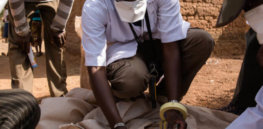
Fighting malaria: West African village could be world’s first release of gene-drive mosquito — if residents allow it
This small village of [Bana] in West Africa might seem the least likely place for an experiment at the frontier ...

Understanding innovation’s ‘enemies’: Calestous Juma explores how new technologies can overcome social opposition
[Editor's Note: The following is a review of the book, "Innovation and Its Enemies: Why People Resist New Technologies" by Harvard ...
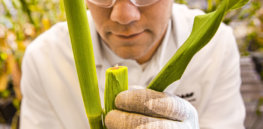
Trust the experts: Scientific scrutiny, government oversight show GMOs ‘at least as safe’ as traditional foods
[Editor's note: David Tribe is a senior lecturer in food biotechnology and microbiology, agriculture and food systems, at the University ...

Strategy shift: Stem cell research uses donor cells to cut tumor risks
Scientists can create [induced pluripotent stem (iPS) cells] from any cell in the body. [But while they]...can be “reprogrammed” to ...

Conservatives who trust science more likely to view GMOs as safe than liberal counterparts, survey finds
[Editor's note: Dan Kahan is a professor of psychology at Yale Law School.] [I]n 2010, the General Social Survey (GSS) asked ...

‘Industrial’ corn: GM variety makes ethanol more energy efficient
Farmers in [North Dakota] will grow an industrial-quality corn specifically designed for the ethanol industry this summer. Corn with the ...
