


Daily Human Digest

Viewpoint: We can’t afford to let ethical questions blunt the potential of CRISPR gene editing
With CRISPR, there is no doubt that there are multiple very concerning implications to the technology. Should humans actually alter ...

Rural-urban divide: Groundbreaking gene therapies could exacerbate inequality in cancer care
Two new cancer treatments have shown miraculous cures, but if you happen to live in Arkansas or Montana, or a ...
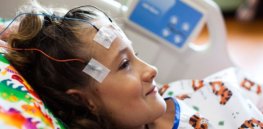
Depression and epilepsy may share same genetic roots
From the time of Hippocrates, physicians have suspected a link between epilepsy and depression. Now, for the first time, scientists ...

MERS treatment could come from genetically engineered cows
Human antibodies made in genetically engineered cows have proved safe in an early stage clinical trial...and could be developed into ...

Breast cancer and BRCA: Mutation doesn’t affect patient survival rate
Young breast cancer patients with faulty BRCA genes have the same survival chances as those without, a study has found ...

Mars in 15 years? Not without overcoming 3 big challenges
Editor's note: Zahaan Bharmal is the Head of Marketing Strategic Communications at Google and has a degree in Physics from ...

Why this winter’s flu is wreaking so much havoc
To put it flatly, H3N2 is the problem child of seasonal flu. It causes more deaths than the other influenza ...

Have ‘bio-citizens’ pushed us to a regulatory turning point?
[We are at the beginning of] an upstart revolution where citizens are deciding not to wait around for a cure ...

Neuroevolution: Artificial intelligence learns by adapting and evolving
[An] old idea—improving neural networks not through teaching, but through evolution—is revealing its potential. Five new papers from Uber in San Francisco, California, ...

Could nearby alien civilizations be more primitive, and therefore undetectable?
Editor's note: Abraham Loeb is chair of the astronomy department at Harvard University As we discover numerous habitable planets around other ...

Ethical questions surround deep brain stimulation therapy for Parkinson’s and other neurological diseases
[D]eep brain stimulation [is] a type of therapy in which one or more electrodes are inserted into your brain and ...

Lay off the ibuprofen? Painkiller may lower male testosterone
In recent decades, prompted by concerns that men's sperm quality is declining, researchers have looked at things they suspect of ...

CRISPR could be the answer to genetic engineering’s prayers
Since its introduction four decades ago, genetic engineering has been a source of high hopes for health, agriculture, and industry ...

Extending human life: What are the age limits?
How long do you want to live - to 85, 90, 100 or beyond? More important than how long we ...

Is speculation about alien life legitimate science? Or merely a distraction?
Speculation about extraterrestrials seems to be everywhere these days. [Recently] it was “Tabby’s Star” (more officially known as KIC 8462852), ...

We still don’t know how anesthesia works—but we’re one step closer to figuring it out
If you’re planning to have major surgery soon, you might not want to read this next sentence. Scientists don’t actually ...

450-year-old mummy found with oldest evidence of hepatitis B infection
Once, this boy mummy was thought to have died of smallpox, but a new analysis of his now 450-year-old DNA ...

‘Supersimilarity’: Identical twins are epigenetic twins as well
The sometimes-preternatural similarity of identical twins is more profound than previously thought. Identical twins, known to science as “monozygotic”, may ...

Could our microbiome offer diet advice? Edible sensors look inside our digestive system
Wouldn’t it be nice if our microbiomes could serve up diet advice—some science-based assurance that our food and medicines act ...

Google’s deep-learning Alpha Zero masters chess from scratch in 4 hours––then doesn’t lose
The architecture that beat humans at the notoriously CPU-impervious game Go, AlphaGo by Google Deep Mind, was converted to allow ...

In contrast with adults, children’s embrace of evolution likely hinges on scientific aptitude, not religious beliefs
In contrast to adults, acceptance of evolution in schoolchildren in the UK is linked to their scientific aptitude rather than ...

Can a genetic test tell you how to lose weight? 23andMe is trying to find out
23andMe is kicking off a massive study into the genetics of weight loss that the company says will involve 100,000 people crowdsourced ...

How our cells’ natural defenses to fight cancer can be unlocked by new immunotherapy
Natural killer (NK) cells are lymphocytes, immune cells which have a powerful arsenal of cytotoxic weaponry that they can use ...

Reversing aging in the elderly? Cells derived from skin of old mice show it may be possible
Researchers at Instituto de Medicina Molecular (iMM) João Lobo Antunes have found that manipulating a single RNA molecule is enough ...

Genetics may explain why some people outperform others even when deprived of sleep
When deprived of sleep, some people are able to cope and respond much better than others. Although scientists have identified genes ...

Obesity linked to brain cell ‘antenna,’ opening potential treatment pathway
The key to controlling hunger and fighting obesity is in brain cells that produce hormones, according to research. ... Scientists ...

Perfect workout: Could genetic tests identify your optimal training routine?
A new review examines the potential of genetic testing for creating personalized exercise regimens for physical training and for identifying ...
