


Daily Human Digest

Searching for alien life: Maybe we should start with extraterrestrial viruses
One possibility for what might be out there that’s, relatively speaking, one of the most plausible theories has so far ...

China poised to do gene therapy ‘better and cheaper’ than US
China wants to go big on biotech and already is marching into experimental gene therapy. … So far, CAR-T has ...

111-year old mystery solved: Egyptian mummies from 2000 BCE are half-brothers, DNA analysis shows
Two Egyptian mummies that rested next to each other for nearly 4,000 years are not full brothers, but rather half ...

Frankenstein story reminds us why fear is an ‘easy sell’ for science skeptics
On 1 August 1790, a precocious student named Victor Frankenstein submitted a radical proposal to an ethical panel at the ...

CRISPR patent dispute: Broad Institute has key rights revoked in Europe
A decision from the European Patent Office (EPO) has put the Broad Institute in Cambridge, Massachusetts, on shaky ground with its ...
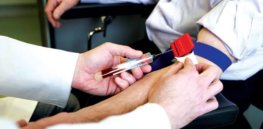
8 common cancers could be detected early with $500 blood test
A simple-to-take test that tells if you have a tumor lurking, and even where it is in your body, is ...

Some cases of autism may have epigenetic origins
Scientists have discovered a swathe of biochemical regions that look to be deeply involved with the risk factors behind autism spectrum ...

Solving a riddle: ‘Dark matter’ DNA shown to influence brain development
A puzzle posed by segments of 'dark matter' in genomes — long, winding strands of DNA with no obvious functions ...

‘Supercharged’ T-cells show promise against Hodgkin’s lymphoma
Cancer has been winning the arms race against the immune system for too long, but scientists are developing plenty of ...

Nation’s expanding waistline linked to increase in 13 types of cancer
It's common knowledge that as a country, we've been getting fatter for decades. In some states the prevalence of obesity ...

CRISPR first in US: Human cancer patients to be treated with gene-editing tool
The first human test in the U.S. involving the gene-editing tool CRISPR could begin at any time and will employ ...

Looming storage crisis: Where will we keep all of our DNA data?
Major advances in DNA-sequencing technology and its commercial development have driven down the time and cost of sequencing a human ...

Singing the praises of the stick’s role in human evolution
Sticks are probably where the story of craft begins—the point at which our very distant ancestors progressed from animalistic existences ...

Marijuana genome map promises to unlock potential of ‘magical’ plant
The fledgling cannabis industry is full of wide-eyed claims about what pot can do. Outperform your favorite energy drink? Maybe. Cure ...

Preventing pandemics and the quest for an influenza ‘super-shot’
A century after one of history’s most catastrophic disease outbreaks, scientists are rethinking how to guard against another super-flu like ...
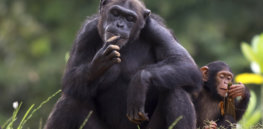
‘Animal uplift’: Could we—and should we—make animals smarter?
Advances in neural implants and genetic engineering suggest that in the not–too–distant future we may be able to boost human intelligence. If that’s ...

Killing cancer cells with the body’s own internal clock
Women who work night shifts have substantially higher risks of breast, digestive system, and skin cancers, a recent study found ...

Do you really own your own DNA?
Is DNA property? At first glance, the answer would appear to be yes. After all, why would surreptitiously swabbing someone’s DNA ...

Figuring out what a memory looks like in the brain
[Janice] Chen and her colleagues found something odd when they scanned viewers’ brains: as different people retold their own versions ...

Genetics may help us choose our friends
You may have more in common with your friends than you think, according to a new study published in Proceedings of the National ...

Should the FDA have a say in ‘do-it-yourself’ biohacking?
In the past few months, the possibility of do-it-yourself genetic engineering has exited the realm of the purely hypothetical. ...
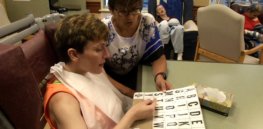
Hope for Huntington’s disease? New therapy shows promise in early trial
Huntington’s has no cure. Over decades biotech companies have poured billions of dollars into developing and testing pharmaceuticals for these ...
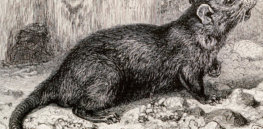
Stop blaming rats for the Black Death—humans may have spread the plague
Rats were not to blame for the spread of plague during the Black Death, according to a study. The rodents and ...

Are ‘incredible genes’ protecting President Trump’s health?
Unless someone swipes one of President Trump’s used forks from the Mar-a-Lago dining room and sends it to 23andMe for ...

Viewpoint: It’s time to take a harder look at sugar’s connection to the diabetes epidemic
Discussions about the global epidemics of obesity and type 2 diabetes tend to assume that these are new phenomena...In the ...

Video: Kansas state lawmaker Steve Alford makes racially charged genetics comments, will not resign
A white Kansas lawmaker who suggested at a public forum that blacks were predisposed to abusing drugs resigned from two legislative committee ...

Mystery ‘cocoliztli’ epidemic that wiped out the Aztecs may have been caused by salmonella
In the 16th century, an epidemic known as "cocoliztli" that caused bleeding and vomiting swept through large areas of Guatemala, ...
