


Daily Human Digest

Typing directly from your brain, and other neuroscience technologies to watch in 2018
Here are three fast-moving areas of neuroscience we’ll be watching in 2018: … [S]cientists at Brown University are developing salt-grain-sized ...

Halitosis: The genetic basis of bad breath
Most people would tell you that bad breath is brought on by a combination of bad luck and garlic. According ...

Nanofabrication: Technology to manufacture almost anything
James Burke has a vision for the future. He believes that by the middle of this century, perhaps as early as ...

‘Müllerian mimicry’: Gut microbes ‘speak the language’ of your immune system
Müllerian mimicry is a well-studied phenomenon, particularly in butterflies, in which completely unrelated species come to display the same patterns ...
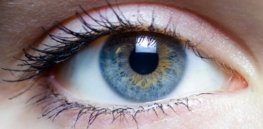
Luxturna gene therapy approved for vision loss
The first two novel gene therapies for cancer treatment passed through FDA approval earlier this year, first B-cell acute lymphoblastic leukemia (ALL) followed quickly ...

Exercise and weight loss: 23andMe study to explore how much genes matter
23andMe, following a banner Christmas season for sales of its personal DNA-testing kits, has just announced a large-scale study intended ...

Hearing loss linked to single mutation might be treatable with gene editing
When David Liu first heard about a strain of mouse from his colleague Zheng-Yi Chen, he got excited. The mice ...
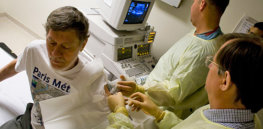
Should patients—not the FDA— have final say on risky gene therapy treatments?
Working with mice, researchers have used gene therapy to restore sight to the blind, reprogram the body’s own T cells ...

Looking back at 2017’s genetics breakthroughs
It was a big year for the building blocks of life. Here were the most significant breakthroughs in genetics research ...
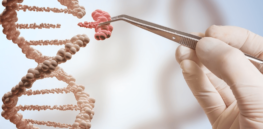
How CRISPR gene editing is revolutionizing the world–and why we need to cautious about it
Until recently, gene editing used to be relegated to science fiction novels and movies. The idea of being able to ...

Gender differences: Do females recover more slowly from concussions than males?
A recent study of middle- and high school athletes found that the female athletes took twice as long to be symptom-free ...

How ‘minor insults to the brain’ could fuel Alzheimer’s
When it comes to the perpetrator of Alzheimer’s disease (AD), the finger of blame has long pointed to hard deposits ...

Why 2018 might not be a banner year for CRISPR gene editing in humans
Ever since scientists first used CRISPR-Cas9 to edit living human cells in 2013, they’ve been saying that the possibilities for ...

Navigating the ‘promise and peril’ of bioengineering
We’re standing on the threshold of extraordinary capability in synthetic biology. CRISPR-Cas9, the genome editing technique discovered in 2014, is ...

Personalized piglets could offer insights into disease progression in children
To better understand [incurable inherited disease neurofibromatosis type 1, Charles] Konsitzke learned, you need a species that’s closer in both ...

5 things you should know before buying a consumer DNA test kit
Genetic testing kits you can do at home seem to be on many holiday wish lists this year; one even landed ...

How tricking mosquitos into thinking they’ve already mated could fight disease
If you thought the sex lives of humans were complicated, consider the case of the female Aedes aegypti mosquito, bringer of Zika, ...

FDA approves first gene therapy for a genetic disease—onetime cure for rare blindness
The first gene therapy to restore sight to individuals who suffer from a rare inherited genetic blindness was approved by ...

Scientists fight back against call for moratorium on gene-drive research
It sounds like the plot of a science fiction novel: Scientists discover how to eradicate an entire species. Environmentalists want to stop the ...

Free access to CRISPR gene editing? This startup wants to make it possible
CRISPR gene editing is widely regarded as one of the most significant advances in the life sciences in decades. The technology, ...

Self control a limited resource? Ego depletion theory gets a boost
For years, “ego depletion” has been a dominant theory in the study of self control. This is the intuitive idea ...

Why are children picky eaters? Genetics may play key role
Children who are picky eaters may have their genetics to blame, a study claims. Researchers from the University of Illinois in ...

Why we stutter
While the average American might not come across it on a daily basis, stuttering is a relatively common condition. So when ...

Yeast-grown synthetic spider silk could be the next luxury fabric
The elusive science behind crafting synthetic spider's silk is no longer elusive. In fact, it’s scalable enough that customers can ...

Tackling Alzheimer’s by boosting mitochondrial health
Alzheimer’s disease is the most common form of dementia and neurodegeneration worldwide. A major hallmark of the disease is the ...

Diabetes and anorexia might be treatable by inhibiting ‘hunger hormone’, mice study suggests
Scientists once had high hopes that inhibiting a hormone named ghrelin would be the key to preventing obesity. Ghrelin didn’t ...

Cancer treatment without chemotherapy? CAR T-cells could become the new standard
Although rare, it is not unheard-of for new treatments to achieve substantial early successes in one or two patients only ...
