


Daily Human Digest

Quest for a cure: Gene therapy offers hope for children with rare form of Charcot-Marie-Tooth disease
A couple strives to help their daughter, who was born with a rare form of Charcot-Marie-Tooth, a muscle-wasting disease that ...

Life on Earth’s roof: Ancient interspecies mating with Denisovans helps Tibetans thrive at high altitudes
[A]fter looking more closely at the EPAS1 gene from the Tibetan genomes, [Rasmus Nielsen from University of California in Berkeley] ...

Sickle cell gene therapy offers hope to afflicted families in Africa, where proper care is sparse
[Editor's note: This article is an interview with Sia Evelyn Nyandemo who runs a campaign group to support sickle cell ...
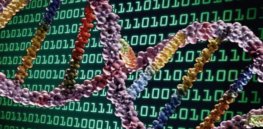
Nature’s hard drive: All of the world’s data could be stored in DNA–in one room
Humanity has a data storage problem: More data were created in the past 2 years than in all of preceding history ...

Is attention deficit hyperactivity disorder (ADHD) a legitimate diagnosis?
Is attention deficit hyperactivity disorder (ADHD) a legitimate diagnosis or is it mostly a fraud? The answer has important implications ...
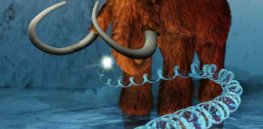
Return of the woolly mammoth and 3 other ways CRISPR could change the world
The woolly mammoth has been extinct for more than 4000 years. Now scientists are talking about bringing it back with ...

Why do so many people with hereditary cancer risks avoid genetic testing?
Once a person is found to have a hereditary colorectal cancer syndrome, usually after a diagnosis of colorectal cancer, all ...

DIY home gene editing is all the rage: Here are the promises and pitfalls
Kian Sadeghi has postponed homework assignments, sports practice and all the other demands of being a 17-year-old high-school junior...On a ...
Is it possible to know too much about your genes?
Would you want to know if you were at a higher risk of getting dementia later in life? Would you ...

Deep dive into dolphin genome may uncover drugs that protect human hearts, kidneys from damage
"Dolphins and humans are very, very similar creatures," said NIST's Ben Neely, a member of the Marine Biochemical Sciences Group ...

Skin cells of schizophrenia patients reveal faulty genetic pathway that began in womb
The skin cells of four adults with schizophrenia have provided an unprecedented "window" into how the disease began while they ...
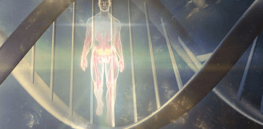
Decoding death: Craig Venter’s quest to uncover secret to immortality in our DNA
Craig Venter, the man in the late 1990s who, frustrated by the slow progress of the government-funded Human Genome Project, ...

One third of lymphoma patients cancer free after 6 months in CAR-T gene therapy study
An experimental gene therapy that turns a patient's own blood cells into cancer killers worked in a major study, with ...

Epigenetics Around the Web: Oprah Magazine fumbles ‘inherited trauma’ story, and more
This week’s features: Writer for Oprah Magazine falls for classic epigenetics pitfalls; life insurance company is using methylation data to ...

Genetics lab payed doctors up to $144,000 annually to push unnecessary tests, employees claim
For doctors, the brochure from a California medical laboratory sounded like easy money: $30 for every person enrolled in a ...

Injured MLB pitchers opt for unproven stem cell injections over Tommy John surgery
[Editor's note: Tommy John surgery is a surgical procedure in which the ulnar collateral ligament in the elbow is replaced with ...
DNA forensics is not an infallible tool — but not because of science
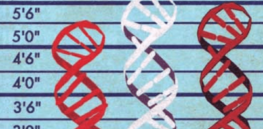
DNA has revolutionized how crimes are solved. But blunders by investigators have thrown a cloud over the use of genetic ...

Designer dogs? In pursuit of the perfect, healthy canine companion
Centuries of inbreeding have left many dog breeds with a severely limited gene pool, and this lack of genetic diversity ...
Human Genome Project 2: Should scientists synthesize entire human genetic code from scratch?
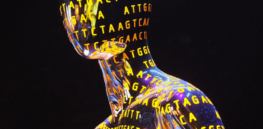
In May 2016, scientists, lawyers and government representatives converged at Harvard to discuss the Human Genome Project-Write (HGP-Write), a plan ...

Getting Risk Right: Geoffrey Kabat’s book asks, “are we afraid of the wrong things?”
[Editor's note: Geoffrey Kabat is a cancer researcher and an epidemiologist at the Albert Einstein College of Medicine.] Why do things that ...

Evolutionary tradeoffs: Genes linked to autism may persist because they make us smarter
Autism genes may have been conserved during human evolution because they make us smarter, say scientists. More inherited genetic variants ...
‘Superbugs’ could be killed with ‘genetic chainsaw’ version of gene editor CRISPR
When folks talk about the gene-editing tool CRISPR, they’re usually talking about CRISPR-Cas9, a combination of DNA and enzymes that ...

Loud noises kill cells vital for hearing, but gut stem cells may help regrow them
Humans are born with around 15,000 hair cells — think tiny, sound-sensing fibers — in each ear. The cells can’t ...
Human rights and CRIPSR: Will gene editing be monopolized by the rich?
We are all subject to the genetic lottery. That’s how it’s always been, and for a while, we thought that was ...

Newest ally in fight against cancer, Alzheimer’s? Immune systems of plants
A natural defense that helps plants ward off insect predators, discovered at Washington State University, could lead to better crops ...
Human brain could evolve to require very little sleep, study of tiny Mexican cavefish suggests
Neuroscientists at Florida Atlantic University have been studying Mexican cavefish to provide insight into the evolutionary mechanisms regulating sleep loss ...
For precision medicine to work, physicians must incorporate holistic health factors, like belief
[Editor's note: Dr. Sharon Bergquist is a clinician in the division of general medicine and geriatrics at Emory University. She also ...
