


Genetic Literacy Project

Shill gambit: Are geneticists who work for corporations less ethical than university researchers?
Scientists who work for corporations, particularly in the agricultural or pharmaceutical industries, often face accusations that they are "shills," and ...

Human muscles from stem cells: Advance could aid research into muscular dystrophy, other diseases
Muscle created with stem cells is not quite as strong as the researchers would like. But they think these new ...

Lessons learned from the 2017 Monsanto dicamba herbicide fiasco
Farmers, university scientists, the EPA and ag companies are working together to figure out what went wrong and how to ...

Plagued by pest, African farmers may soon have access to insect-resistant GMO cowpeas—for free
US government funding and royalty-free Bt technology from Monsanto will enable West African countries to provide farmers with free cowpea ...
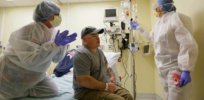
Viewpoint: Headline-grabbing attempt to edit living human’s DNA needs reality check
For the first time, doctors have attempted to edit faulty genes inside the body of a human patient — a ...

Viewpoint: 6 ways IARC Director Christopher Wild lied to Congress about cancer agency’s glyphosate debacle
While the outgoing head of the embattled agency refused to testify before the US House Science Committee, he did send ...

Genetic Literacy Project’s Top 6 Stories for the Week – Jan. 22, 2018
Viewpoint: It’s unreasonable to think Big Ag controls pro-GMO scientists | Cameron English I was diagnosed with breast cancer. How genetic ...

Myth busting: Do farmers ‘drench, douse or slather’ crops in pesticides?
One common belief about modern farming is that farmers use pesticides in excess on their crops. A plant scientist explains ...

Finding meaning in the music of our genes
There is a musical pattern to our DNA, and it may help us understand how genes work and pinpoint diseases ...

Learning what Alzheimer’s does to the brain could lead to personalized treatments
Researchers are learning more about the causes and progression of the disease. This leads them to suggest that new treatment ...

IARC cancer agency mounts PR effort as probe of possible corruption grows
The agency was heavily criticized for the methodology used in declaring the herbicide glyphosate a "probable carcinogen." Now IARC is ...

Sex and genetics: We’re looking for someone who isn’t an exact match of ourselves
We know that both men and woman are attracted to each other's shapes. But human sexual desire, and partner preference, ...

Tackling bees’ greatest threat: Lithium chloride could kill Varroa destructor mites without harming bees
A new study suggests that tiny doses of lithium chloride could be an easy and effective treatment for Varroa mites, ...

Deepening the nature v. nurture debate: How hormones impact development in the womb is often most key
Hormones released into an expectant mother's bloodstream may affect the child's intelligence, mental health and susceptibility to stress, among other ...

I was diagnosed with breast cancer. How genetic testing guided what to do next.
Genetics counselor and writer Ricki Lewis explains how a breast cancer diagnosis led her to genetic testing—and why she decided ...

In Uganda, anti-GMO scare tactics even taint conventional hybrid crops
Uganda is moving closer to allowing cultivation of GMO crops. But there is considerable confusion among the Ugandan public over ...

Talking Biotech: 91-year-old geneticist Maxine Thompson aims to expand fruit diversity with new berry breeds
Oregon State fruit breeder Maxine Thompson: A trailblazer in plant science, now retired from academia, she continues to work on ...
Genetic Literacy Project’s Top 6 Stories for the Week – Jan. 15, 2018
Rethinking the pesticides–neonicotinoids–bee health crisis narrative: Why the media get it wrong | Jon Entine Viewpoint: Oprah for president? Junk science ...

Talking Biotech: Bayer geneticist Ray Shillito on communicating with the public about agricultural biotechnology, and more
Bayer plant scientist Ray Shillito: Educating the next generation of scientists about how to communicate with the public will help ...

We produce enough food on this planet to feed everyone: So why do we need GMOs?
A new "planetary boundaries" study says agriculture can be more sustainable to save the planet. Others say the numbers don't ...

Does the shape of your face affect your odds of success or failure in life?
The science of facial structures has advanced tremendously in recent years, leading to a number of applications and a deeper ...

Viewpoint: African farmers blocked from using life-saving GMO bananas by European activists
Anti-biotech groups funded by Western activists campaign against the commercialization of GMO crops in Africa, such as a new disease-resistant ...

Viewpoint: Oprah for president? Junk science enabler?
Oprah Winfrey’s recent speech at the Golden Globes captured the imagination of countless people with rumors spreading that it could ...

Talking Biotech’s best biotechnology science stories from 2017—and what to expect in 2018
Talking Biotech hosts Kevin Folta and Paul Vincelli talk about their favorite stories from 2017, and what to look for ...

Artificial intelligence: How can we regulate without stifling innovation?
There is disagreement among some of the top minds in technology when it comes to the subject of regulating artificial ...
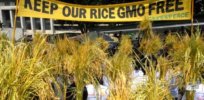
Viewpoint: Misguided activism imperils potential of golden rice
Golden rice has the potential to solve a significant health problem in developing nations, where hundreds of thousands of children ...

Treating the concussion epidemic: Could spit tests identify those most likely to recover slowly?
A study found that microRNA in the saliva may offer early warning signs about a person's likelihood of recovering quickly ...
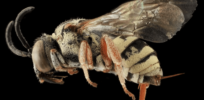
Rethinking the pesticides–neonicotinoids–bee health crisis narrative: Why the media get it wrong
Are bees endangered because of the use of insecticides, and in particular the class of chemicals known as neonicotinoids, which ...
