


Science
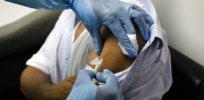
Viewpoint: Here’s why I dropped out of a COVID vaccine trial midway through
I’ve been wrestling with a dilemma the past few weeks: Do I stay in the COVID-19 vaccine trial I’ve been ...

In Brexit unwind, England will break this month from restrictive EU gene-edited crop rules, clearing pathway for CRISPR produce and livestock
When Boris Johnson became prime minister of the United Kingdom in 2019, he pledged to “liberate the U.K.’s extraordinary bioscience ...

20 year anniversary of the mapping of the human genome: What does the future hold?
The coalescence of bioinformatics and computational biology around algorithms has... given rise to new institutional forms and new markets for ...

On the 150th anniversary of Darwin’s The Descent of Man, scientists break down his theories on race and sex
To mark the 150th anniversary of The Descent of Man, paleoanthropologist Jeremy DeSilva has gathered a team of experts, mostly ...

Human behavioral ecology: The tight ‘evolutionary embrace’ of culture and genes
[Research by Toman Barsbai and colleagues shows] that adaptation to local ecological conditions is an important determinant of variation in human ...

400 children worldwide are born each year with ‘fast-aging disease’ – Hutchinson-Gilford progeria syndrome. Now CRISPR offers hope
[R]esults from a new study have inspired hope for treating children born with progeria, a rare, fatal, genetic disease that ...

Could the world be dealing with COVID-19 in all its mutations for decades to come?
We are currently faced with the question of how the CoV-2 severity may change in the years ahead. Our analysis ...

Dogs and humans migrated together across the ancient world, DNA evidence shows
Dogs are one of the biggest enigmas of domestication. Despite decades of study, scientists still haven’t figured out when or where ...

With studies showing questionable efficacy, why did Gilead’s remdesivir become the first FDA-approved COVID treatment?
On 8 October, [Gilead] inked an agreement to supply the European Union with its drug remdesivir as a treatment for ...

The 5-minute COVID-19 test is here
Researchers have used CRISPR gene-editing technology to come up with a test that detects the pandemic coronavirus in just 5 ...
1 in 7 COVID patients have genetic flaws that dramatically increase their vulnerability
[S]cientists baffled by [COVID-19’s] ferocity have wondered whether the body’s vanguard virus fighter, a molecular messenger called type I interferon, ...

Drought, cropland expansion push Great Plains toward ‘Dust Bowl 2.0,’ climate scientists say
Earlier [in October], a storm front swept across the Great Plains of the United States, plowing up a wall of ...

German measles likely jumped from bats to humans, much like COVID, raising concerns about future virus outbreaks
An estimated 100,000 newborns are affected by the [rubella virus] annually, mostly in Africa, the western Pacific, and the eastern ...

Flood-proof crops? Plants engineered to grow taller may survive unstable environments
Stature matters to plants. Short crops can carry more grain without bending under their own weight—a key trait that helped ...

‘It’s not premature to plan’: Deciding who gets the coronavirus vaccine first
The new coronavirus’ disproportionate toll on the elderly could put them at the front of the line [for a vaccine] ...

Another pandemic? New swine flu identified in China could jump to humans
[A] new finding that pigs in China are more and more frequently becoming infected with a strain of influenza that ...
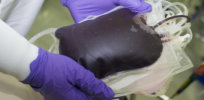
How widespread is the pandemic? Proposed global blood bank could provide missing answers
Michael Mina is out for blood—millions of samples, which a nascent effort dubbed the Global Immunological Observatory (GIO), would monitor ...

Polio vaccines are inexpensive, easily available, already approved—and they might work wonders against COVID-19
Recent reports indicate that COVID-19 may result in suppressed innate immune responses. Therefore, stimulation by live attenuated vaccines [such as ...

‘It’s been so chaotic’: US government ‘Operation Warp Speed’ may not be focusing on developing the most promising COVID-19 vaccines
When the news broke [June 3] that Operation Warp Speed had selected five experimental COVID-19 vaccines to fast-track through testing ...

Coronavirus antibodies from GMO cows set for summer clinical trials
The latest recruits in the fight against COVID-19 are munching hay in a South Dakota barn. A biotech company has ...

Cells that fight pathogens might also speed up human ‘inflammaging’
Our T cells let us down as we age, becoming weaker pathogen fighters. This decline helps explain why elderly people ...

USDA’s relaxed biotech crop rules could speed plant development, but are regulations still too strict?
A major change to U.S. regulation of biotech will exempt some gene-edited plants from government oversight. The new policy ...

‘Psychobiotics’: Can we control the way we think by altering gut bacteria?
The allure is simple: Drug development for neuropsychiatric disorders has lagged for decades, and many existing drugs don’t work for ...

Artificial photosynthesis: Synthetic chloroplasts as solar-powered drug factories
There’s a new way to eat carbon dioxide. Researchers have built an artificial version of a chloroplast, the photosynthetic structures ...
‘Operation warp speed’ hopes to turbocharge US quest for a coronavirus vaccine
Conventional wisdom is that a vaccine for COVID-19 is at least 1 year away, but the organizers of a U.S ...

Engineering plants to rapidly repair heat damage could preserve crop yields as climate changes
As plants convert sunlight into sugar, their cells are playing with fire. Photosynthesis generates chemical byproducts that can damage the ...

Bugpocalypse? New research challenges widely publicized claims of impending catastrophic insect declines
Drastic declines in insect biomass, abundance, and diversity reported in the literature have raised concerns among scientists and the public ...
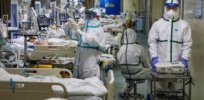
Scouring coronavirus patient genes to answer a question: Why do some people get deathly sick, when others don’t?
COVID-19, caused by the new pandemic coronavirus, is strangely—and tragically—selective. Only some infected people get sick, and although most of ...
