GM oilseed turns poor quality farmland into rich source of industrial biofuel

The GLP aggregated and excerpted this blog/article to reflect the diversity of news, opinion, and analysis.

A Kansas State University biochemistry professor has reached a milestone in building a better biofuel: producing high levels of lipids with modified properties in oil seeds.

Timothy Durrett, assistant professor of biochemistry and molecular biophysics, and collaborators at Michigan State University and the University of Nebraska, Lincoln, have modified Camelina sativa—a nonfood oilseed crop—and produced the highest levels of modified seed lipids to date. The oil has reduced viscosity and improved cold temperature characteristics.

The goal of the research is to alter oilseeds to produce large amounts of modified oil that can be used as improved biofuels or even industrial and food-related applications.

Camelina can grow on poorer quality farmland, needs little irrigation or fertilizer and produces seeds that can provide gallons of oil, Durrett said. It also can be rotated with wheat and could become a biofuel crop for semi-arid regions, including western Kansas and Colorado.
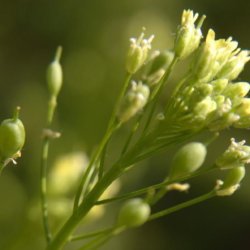

“The basic problem is that most of our oilseed crops—such as canola or soybean—produce just a few fatty acids because we use them for nutritional needs,” Durrett said. “That’s great for a source of food, but makes doing any sort of chemistry more complicated.”

The researchers think that camelina oil is a renewable resource with potential industrial uses, including plasticizers, biodegradable lubricants and food emulsifiers.

Read full, original post: From the lab to the field: Biochemist studies oilseed plants for biofuel, industrial development

Related Articles

Infographic: Global regulatory and health research agencies on whether glyphosate causes cancer

Infographic: Global regulatory and health research agencies on whether glyphosate causes cancer

Does glyphosate—the world's most heavily-used herbicide—pose serious harm to humans? Is it carcinogenic? Those issues are of both legal and ...

Most Popular

ChatGPT-Image-Mar-10-2026-01_39_01-PM
Viewpoint—“Miracle molecule” debunked: Why acemannan supplements don’t work
ChatGPT-Image-Sep-2-2026-02_03_32-PM
How much of a problem is AI’s water use?
ChatGPT-Image-Sep-10-2026-01_44_53-PM
Viewpoint: Why medical and health nonsense spreads so casually on pop culture media
Screenshot-2026-09-16-at-3.14.20-PM
19%: Plunging support for Trump-RFK, Jr. measles vaccine safety oversight
ChatGPT-Image-Sep-17-2026-12_28_43-PM
Vitamin D, omega-3 fish oil and glucosamine supplements could cause brain damage 
Screenshot-2026-09-16-at-2.26.42-PM
Viewpoint: How to ecologically damage America’s forests: Ban glyphosate
ChatGPT-Image-Sep-16-2026-11_28_54-AM
Viewpoint: Study links childhood vaccination to autism!!! Here’s how anti-vaxxers twist evidence to corrupt science
ChatGPT-Image-Sep-21-2026-10_55_04-AM
Viewpoint: America’s food-safety system is being methodically dismantled by the Trump administration.
ChatGPT-Image-Sep-17-2026-11_03_54-AM-2
AI sparks a bioweapons race
ChatGPT-Image-Sep-21-2026-02_35_25-PM
22-year frozen embryo: In one of the longest delayed births ever, middle-aged Greek couple gives birth to a daughter
Screenshot-2026-09-10-at-12.20.19-PM
'Jet fuel didn't melt the steel': 9/11 conspiracy theories debunked
glp menu logo outlined

Get news on human & agricultural genetics and biotechnology delivered to your inbox.