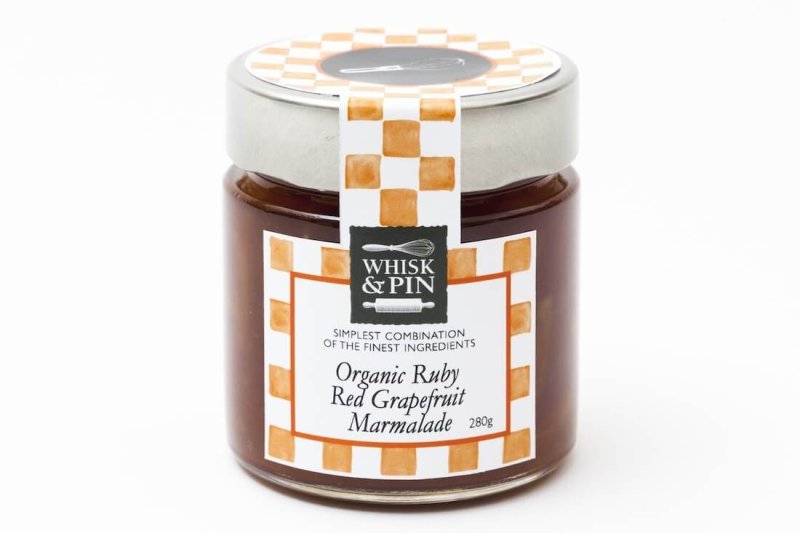
Visit the website of Wasatch Organics and you can find one of many people’s favorite fruits: scrumptious looking Ruby Red grapefruits, plump and juicy. Or sidle over to Australia’s Whisk and Pin gourmet food emporium and pick up some organic Ruby Red grapefruit marmalade.
Just as nature intended!
Or not.
To the foodie, what could be better than “natural” ripe Ruby Red grapefruit? Free from the alleged dangers of pesticides or genetic modification, organic Ruby Reds should represent one of the last havens of natural food, completely unaltered by man.
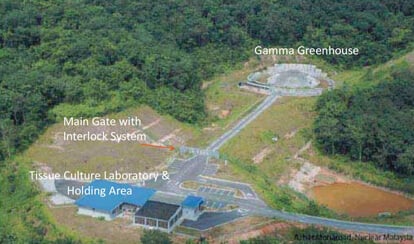 Think again. Ruby Red grapefruits, along with 3,000 other crop varieties consumed by millions every day, were actually created through mutation breeding, also known as mutagenesis. Plants were exposed to atomic radiation, thousands of genes scrambled in laboratory experiments that took years.
In the last 60 years, mutation breeding has produced a sizable fraction of the world’s crops. Varieties of wheat, including almost all of the most popular varieties used to make top-grade Italian pasta, vegetables, fruit, rice, herbs and cotton have been altered or enhanced with gamma rays, and often separately or additionally soaked in toxic chemicals, in the hopes of producing new desirable, traits. Now these varieties are marketed as conventional and organic foods, and are unlabelled.
Mutations, or physical changes in an organisms DNA, are the basis for all biological variation throughout evolutionary time. DNA changes are caused by mistakes during replication, damage from cosmic or terrestrial radiation, or other natural forces, and they can manifest in new traits, like changes in appearance or taste. Mutations can then be selected by nature or by humans to create a new plant species or a new variation on an existing one.
One of the biggest obstacles to creating crop varieties is that conventional plant breeders can only develop new traits from traits that appear naturally. How can they create the new colors, flavors or disease resistance that makes a crop a commercial success if they can’t just “breed it in” from another species?
In the late 1940s, plant breeders addressed this problem by using one of the newest tools of the day: atomic radiation. In an effort to find peaceful uses for atomic energy, scientists discovered that exposing plants to different types of radiation damages the plant’s DNA and causes new mutations. The radiation allows them to generate random mutations at a faster rate, which means a higher likelihood of finding a new useful trait.
According to the federal government’s Mutant Variety Database, thousands of new varieties have been created through mutation breeding, either by radiation like gamma rays, thermal neutrons, X-rays or by exposure to certain chemicals.
When grapefruits were first grown in the U.S., they were not used for agriculture or even considered a commodity. One American gardening journal from the late 1800s even referred to the fruit as “thick-skinned and worthless.”



In the case of our Ruby Red grapefruit, mutation breeding, honed in years of laboratory experimentation, helped recover a fading trait that once made the grapefruit a commercial success. The fleshy inside of grapefruit only appeared white or slightly pink until 1929, when farmers in Texas discovered a pink grapefruit tree that produced a fruit with ruby red flesh.
After years of breeding new plants from this tree, the fruit it produced lost its bright red fruit color, 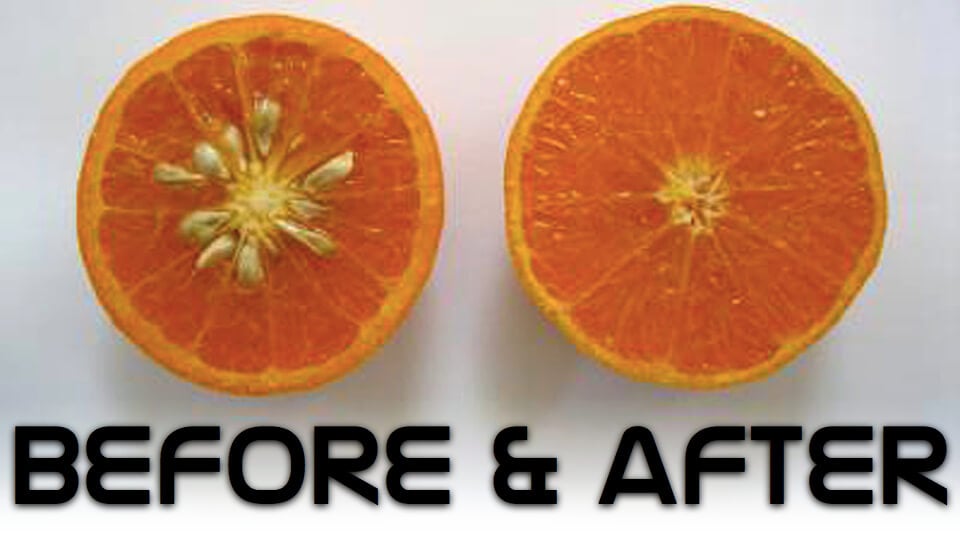 and faded back to the original pink. Scientists irradiated the tree with thermal neutrons and eventually created a mutation that produced a darker, more vibrant fruit color with almost no seeds. The “Star Ruby” and the “Rio Red” were introduced in 1971 and 1985 respectively, and these two mutant varieties now make up 75 percent of Texas’s grapefruit crop.
Mutation breeding has also been used to combat destructive plant diseases. The leading variety of Japanese pears, known as “Nijisseiki,” would have been lost decades ago without mutation breeding techniques. This variety, which made up 28 percent of Japan’s pear crop in 1990, is extremely susceptible to black spot disease. In 1962, rows of Nijisseiki were exposed to gamma rays in the hopes that a mutation would produce a cultivar that still had Nijisseki’s high-quality traits, only with enhanced disease resistance. In 1981, after almost 20 years of irradiation, a plant finally appeared without symptoms even after being exposed to the disease. The new variety, “Gold Nijisseiki”, was released in 1991 and is considered a monumental achievement of mutagenesis.
Crops produced through mutation breeding have been sold in supermarkets for decades with no label or widespread common knowledge about their genetic alterations. These varieties can even be labeled organic as long as they are grown meeting other production requirements. They are not required to undergo any testing, and mutation breeding may still require years of continued crossing to separate preferred traits from undesirable ones
Although it is considered old technology, mutation breeding is experiencing a re-emergence in popularity thanks to new techniques known as “tilling,” which allow researchers to rapidly identify mutations in specific genes. Many food scientists are also frustrated at the restrictions imposed on a far more precise method of breeding—using genetic engineering—in part because of outcries from organic activists who readily embrace the random impact of radiation and chemical mutagenesis. Mutagenesis is now being used widely as an alternative because a gene can still be disrupted with mutation, but new varieties developed through this process have no regulatory barriers. The arduous approval process for transgenic crops in the EU has left crop improvement companies returning to mutation breeding and tilling to find mutations in desired genes.
Today the genetic improvement of crop plants has been steeped in controversy and misinformation. But surprisingly, mutation breeding, which is arguably the most radical and least understood form of genetic improvement, has safely produced new plant varieties that offer new traits to consumers for over half a century.
Amanda Kastrinos is an undergraduate student at the University of Florida studying soil and water science. She writes on genetic applications in agriculture. Follow her on twitter @MandiLKastrinos.
Additional resources:
- Atomic Gardening: The Ultimate Frankenfoods, Science 2.0
- Useful Mutants, Bred with Radiation, New York Times
- GMOs vs. mutagenesis vs. conventional breeding: Which wins? Genetic Literacy Project
- Mutant Crops Drive BASF Sales Where Monsanto Denied: Commodities, Bloomberg