Agriculture secretary front-runner Ted McKinney seen likely to promote crop biotechnology

US DeptOfAgriculture

Ted McKinney, [former] director of global corporate affairs for Elanco Animal Health, a division of pharma giant Eli Lilly; [former] executive on the government affairs team for seed/pesticide giant Dow AgroSciences; [and]… recently reappointed as director of Indiana’s agriculture department, has emerged as the latest in a long line of contenders du jour for the [secretary of the US Department of Agriculture], Politico reports.

Tom Vilsack, the outgoing USDA chief, abruptly quit Friday, informing employees in an email he had served his final day, Associated Press reports. Vilsack added some damning commentary on Trump’s delay in choosing his successor: “When that individual is named, he or she will be at a tremendous disadvantage, in terms of getting up to speed on all this department does,” Vilsack said in a statement, according to AP.

In addition to having worked for Dow for nearly two decades, Mckinney was a co-founder and served as interim executive director for the Council for Biotechnology Information, a group funded by BASF, Bayer, Dow AgroSciences, DuPont, Monsanto, and Syngenta to promote agriculture biotech. These companies need USDA approval to move novel genetically modified seeds from lab to market.

The GLP aggregated and excerpted this blog/article to reflect the diversity of news, opinion, and analysis. Read full, original post: Trump Eyes Ex-Agrochemical Exec to Fill HIs Cabinet Post

Stem cells restore sight in lab mice with end-stage retinal degeneration

Vision Changes to Watch Out for as You Grow Older

The number of individuals who lose their sight due to end-stage retinal degeneration is steadily rising and currently, it cannot be reversed. However, groundbreaking research using stem cell technology offers a light at the end of the tunnel.

The researchers [from the RIKEN Center for Developmental Biology in Japan] transplanted stem cell-derived retinal tissues into animals with end-stage retinal degeneration. They found that this tissue could be coerced into forming structured outer nuclear layers that included mature photoreceptors.

Going beyond expectations, the procedure managed to restore sight in almost half of the mice with end-stage retinal degeneration. Such significant success was due to the researchers’ choice of cells. Previous work has used retinal cells rather than the differential retinal tissue used in this study.

There is still much work to be done, as [RIKEN scientist Masayo Takahashi] is well aware: “It is still a developing-stage therapy, and one cannot expect to restore practical vision at the moment. We will start from the stage of seeing a light or large figure, but hope to restore more substantial vision in the future.”

The GLP aggregated and excerpted this blog/article to reflect the diversity of news, opinion, and analysis. Read full, original post: Stem cell research offers new hope of restoring sight

Consumer groups push Japanese officials to impose stricter GMO labeling laws

GMO Labels

Reports from Japan suggest officials are weighing up imposing stricter rules for the mandatory labelling of food items containing genetically modified foods.

At present, eight GM crops are regulated while 33 food items are required to state on pack if they contain GM ingredients.

Japan’s current GM rules have been criticized by some consumer groups for not going far enough, and some are demanding mandatory labelling for all items containing any GMOs.

At present, Japan allows a 5% tolerance for GM content in foods approved by regulators in the country.

Those that fall below this percentage can use the labels “Non-GM product segregated” or “Not genetically modified.”

Products that exceed the tolerance, the item must be labelled “GM Ingredients Used” or “GM ingredient Not Segregated.”

Imported food items containing GM DNA or protein between 1% and 5% should be labelled “may contain GM ingredients.” Those that fall below 1% do not need to label the product.

The consumer groups leading the charge for tighter rules argue the present system doesn’t adequately inform shoppers of what they are buying.

The GLP aggregated and excerpted this blog/article to reflect the diversity of news, opinion, and analysis. Read full, original post: Japanese officials considering imposing stricter GM labelling laws

Trump administration’s three FDA commissioner picks all from venture capitalist sector

Screen Shot at PM e

Something huge is going to be happening soon at the U.S. Food and Drug Administration (FDA) … it is all anticipation about the transition of government.

That’s because the only prospective candidates for FDA Commissioner are from the world of venture capital,  a sector that plays a big role in drug development. Trump is said to be looking for new thinking to change government from Silicon Valley billionaire Peter Thiel.

Thiel owns Mithril Capital Management, where Jim O’Neill is managing director and an apparent candidate for FDA Commissioner.

Another is Balaji Srinivasan, a partner in the venture capital firm Andreessen Horowitz. Both met with Trump as recently as last week. A third possibility is former FDA deputy commissioner Dr. Scott Gottlieb, now a resident fellow at the American Enterprise Institute.

There are several steps that must occur … First, the Senate will have to complete action on  Rep. Tom Price’s confirmation as Secretary of Health and Human Services. Next, Trump will have to nominate the next FDA Commissioner, who will then be subjected to the kind of examination that the cabinet appointments have gone through. How the Senators feel about quicker approvals is certain to be tested. Are they going to be faster approvals…or are they going to remain in the comfort of Big Pharma’s pocket?  

The GLP aggregated and excerpted this blog/article to reflect the diversity of news, opinion, and analysis. Read full, original post: Letter From The Editor: Huge Change for FDA

Western Australian Labor party officials scrap plans to try to block GMO crops

Screen Shot at PM

The Barnett Government changed regulations to allow the growth of GM canola in 2010, and hundreds of thousands of hectares of it are now grown in [Western Australia] each year.

The Government then passed laws last year which reduced the state’s control over the growth of GM crops, removing the Agriculture Minister’s power to ban the use of the technology in WA.

Labor at first claimed that legislative change would not affect its policy, but Opposition Agriculture spokesman Mick Murray said he now acknowledged the growth of GM in WA could not be stopped.

“There is not much we can do about it,” Mr Murray said. “We understand very clearly that GM is in the ground and very hard to remove.”

The Pastoralists and Graziers Association (PGA), which has strongly advocated for GM crops over many years, said farmers would be extremely relieved by Labor backing away from its ban policy.

“It is wonderful news for WA grain growers that that certainty and security will now be there and the whole matter about the use of this can be put to rest,” the PGA’s Gary McGill said.

The GLP aggregated and excerpted this blog/article to reflect the diversity of news, opinion, and analysis. Read full, original post: GM crops: WA labor backflips on policy, will permit them to be grown

Hidden code regulates harmful mutations of our genome, aiding evolution

image ody h

On the one hand, mutations are needed for biological innovation, and on the other hand they cause diseases. How does nature resolve this conflict? Recent research by me and my colleagues suggests that one answer could lie in a genetic code that allows evolution to innovate while minimizing the disruption this can create.

This code is hidden within a part of our genome…known as repetitive genetic elements…[I]nstead of building a protein, some RNA molecules convert back into DNA and insert themselves at new locations in our genome.

In this way, the repetitive elements can continually create new copies of themselves. As a result, the human genome contains thousands of repetitive elements that are not present in any other species because they have copied themselves since humans evolved.

To put it another way, the balanced forces buy the time needed for mutations to make beneficial changes, rather than disruptive ones, to a species. And this is why evolution proceeds in such small steps – it only works if the two forces remain balanced by complementary mutations, which takes time. Eventually, important new molecular functions can emerge from randomness.

The GLP aggregated and excerpted this blog/article to reflect the diversity of news, opinion, and analysis. Read full, original post: A hidden code in our DNA explains how new pieces of genes are made

Free genealogy website has lots of ‘private’ information about you

cb c d e b fa fcc sexsting

There are many “people search” sites and data brokers out there, like Spokeo, or Intelius, that also know a lot about you. This is not news, at least for the Internet-literate. And the information on FamilyTreeNow comes largely from the public records and other legally accessible sources that those other data brokers use. What makes FamilyTreeNow stand out on the creepy scale, though, is how easy the site makes it for anyone to access that information all at once, and free.Screen Shot at AM

Profiles on FamilyTreeNow include the age, birth month, family members, addresses and phone numbers for individuals in their system, if they have them. It also guesses at their “possible associates,” all on a publicly accessible, permalink-able page.

Sure, a free database aggregating thousands of U.S. public records could be beloved by genealogy hobbyists across the country. But the site is also extremely useful to those who might want to harass or physically harm someone else….

The GLP aggregated and excerpted this blog/article to reflect the diversity of news, opinion, and analysis. Read full, original post: You’ve probably never heard of this creepy genealogy site. But it knows a lot about you.

How bacteria inspired the birth of CRISPR gene editing

CRISPR

Within a few years, the study of CRISPR had moved beyond fundamental research into a full-fledged gene-editing revolution that enabled scientists to fashion novel plants and animals with thrilling—and sometimes troubling—ease.

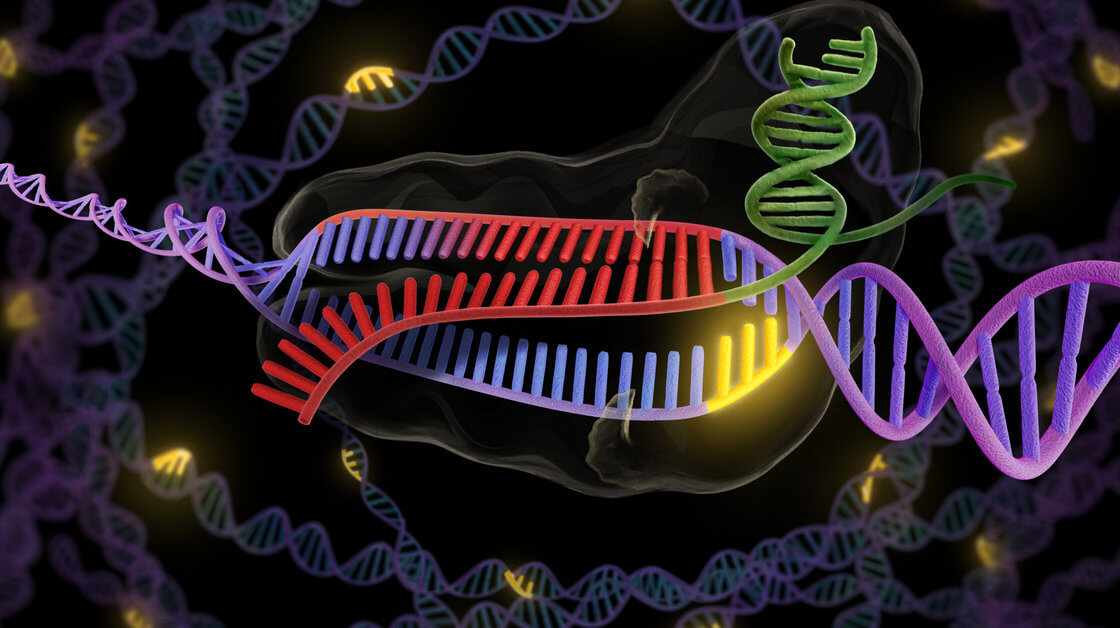
Humans learned these gene-editing techniques from bacterial species that used CRISPR to fight off their viral attackers…Whenever such a bacterial cell kills off a virus, it inserts a fragment of the viral DNA into its own genome, which allows it to identify that virus easier in the future. To make that genomic self-edit, bacteria cut their own DNA using two CRISPR-associated proteins (Cas1 and Cas2), insert the virus’s genetic signature, and stitch the DNA back together with DNA-repairing enzymes.

Gene editing also quickly raised a gamut of medical, legal, and ethical questions. The steady stream of studies in which scientists used CRISPR to change over a dozen plant and animal genomes, brought up an uncomfortable question: Are humans next? Would it be ethical and beneficial to apply gene-editing techniques to ourselves?

The GLP aggregated and excerpted this blog/article to reflect the diversity of news, opinion, and analysis. Read full, original post: How Bacteria Taught Us to Edit Genes

Genetics say your perfect mate is someone just like you

x

If your genes can’t have you all to themselves, they’ll seek out the next best thing: A recent study on assortative mating has uncovered statistical evidence that you’re more likely to lock things down with someone just like, well, you.

By analyzing three studies with publicly available genetics data on more than 24,000 heterosexual couples of European ethnicity, the researchers discovered that most couples were highly likely to date someone of a similar height, body mass index (BMI), and even blood pressure.

The researchers also tested correlations between other metrics of desirability, such as education level. [As a result, they found that two] PhDs are more likely to date each other than they are someone without a college education. While you could easily chalk this up to a matter of life choices or socioeconomic effects, the researchers found that genes associated with pursuing more education…were more often than not shared between mates.

The new research represents a continuation of the growing field of science that studies assortative mating—basically, how we choose our partners—in human beings.

The GLP aggregated and excerpted this blog/article to reflect the diversity of news, opinion, and analysis. Read full, original post: Your Genes Influence Who You Settle Down With

Wine with no hangover? CRISPR gene-edited yeast could make that happen

Screen Shot at AM
[R]esearchers working at the University of Illinois College of Agricultural, Consumer, and Environmental Services (ACES) claim to have produced a yeast that could vastly increase the quality of wine while also reducing its hangover-inducing properties.

…researchers developed what they call a “genome knife,” which allowed them to slice across multiple copies of a target gene until all the copies were cut, thereby making it impossible for any remaining genomes to correct any altered ones.

After being completely cut, the enzyme RNA-guided Cas9 nuclease was then employed to carry out precise metabolic engineering on strains of polyploid Saccharomyces cerevisiae, a species of common yeast instrumental in winemaking, bread baking, and beer brewing.

This newly-modified strain, the team believes, is a breakthrough of “staggering” proportions. The applications of this compound possibly range in the thousands, given the ubiquity of the species of yeast and its use in a myriad different industries.

if winemakers were to clone this new enzyme, then they could use it to improve malolactic fermentation (the conversion of bitter malic acid, naturally present in freshly pressed grapes, into softer-tasting lactic acid) to produce a consistently smoother wine while also removing the toxic byproducts that can cause hangovers.

The results of this research was recently published in the journal Applied and Environmental Microbiology.

The GLP aggregated and excerpted this blog/article to reflect the diversity of news, opinion, and analysis. Read full, original post: New innovations in biotechnology mean good news for wine drinkers

Talking Biotech: How plants can be tweaked to ‘naturally’ fight disease

image x

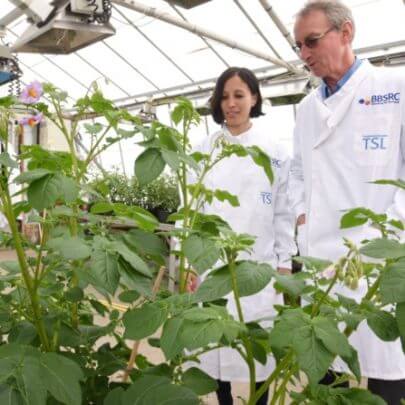
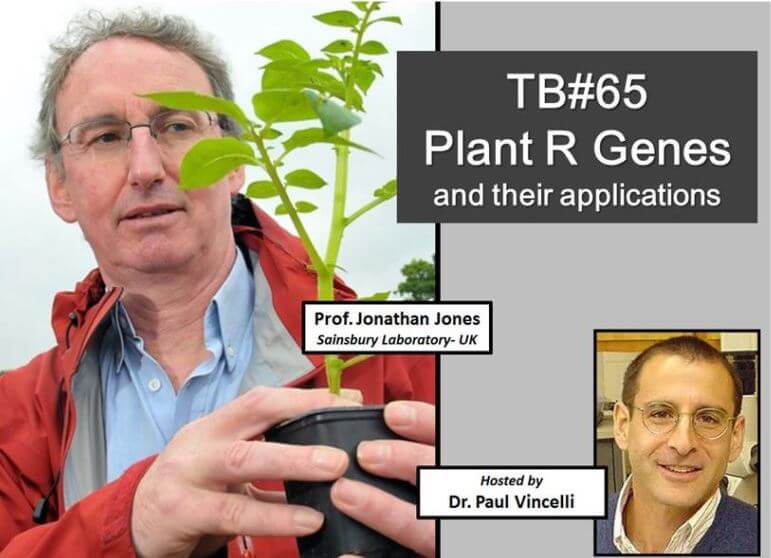
Plants contain a family of genes called “R genes” that play important roles in resistance to disease. Plants and pathogens exist in an evolutionary arms race, each developing new means to attack or defend against the other. Professor Jonathan Jones, a senior scientist at the Sainsbury Laboratory and a professor at the University of East Anglia, has been at the forefront of R gene biology for decades. How do plants use these specialized molecules to detect a pathogen? How do pathogens evade detection? How can these genes be mixed and matched between plants to create new varieties resistant to disease?

Hosted by Paul Vincelli.

Follow Jonathan Jones on Twitter.

Follow Paul Vincelli on Twitter.

Follow Kevin Folta on Twitter @kevinfolta | Facebook: Facebook.com/kmfolta/ | Lab website: Arabidopsisthaliana.com | All funding: Kevinfolta.com/transparency

Stitcher | iTunes | Player FM | TuneIn

Visit Kevin Folta’s Talking Biotech

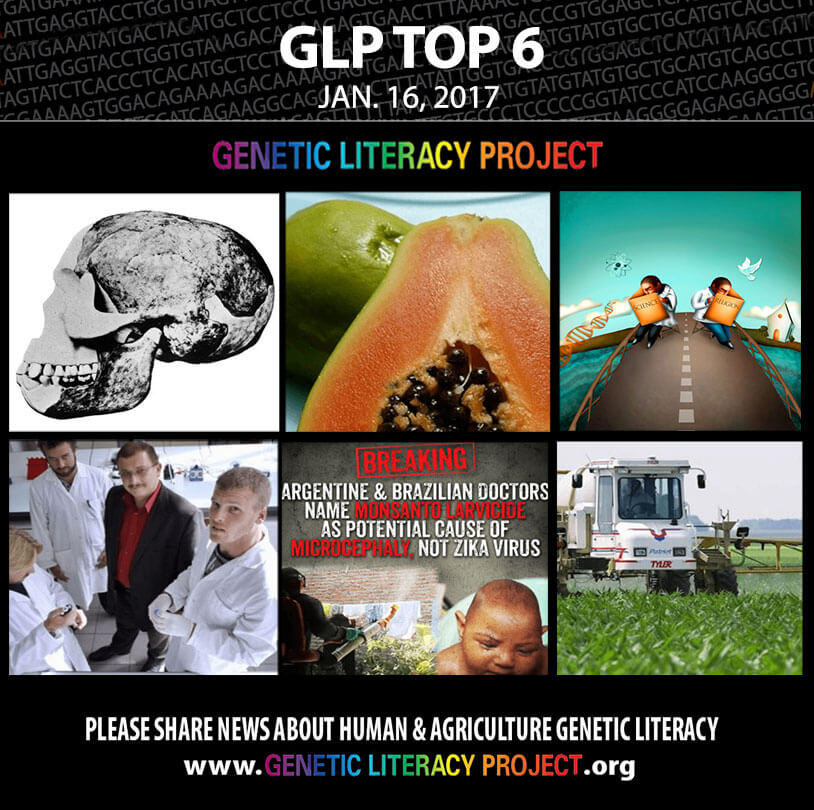
Genetic Literacy Project’s Top 6 Stories for the Week, January 16, 2017

t web

From this past week, here are the #GLPTop6 among many great stories on human and agriculture genetics around the world. Please share and help spread the news!

  1. Piltdown Man evolution hoax reminds us about danger of confirmation bias by David Warmflash
  2. Video GMO story: The near death and rescue of the Hawaiian papaya by Joan Conrow
  3. Cloning, stem cells and GMOs: How religious beliefs shape our thinking by David Warmflash
  4. UC Davis’ Alison Van Eenennaam’s deep dive into latest Séralini GMOs-are-dangerous paper by Alison Van Eenennaam
  5. Top 5 ‘post-truth’ anti-GMO headlines: Biologist critiques outrageous 2016 claims by Carol Lynn Curchoe
  6. Myth busting: Is agricultural pesticide use in the US, and its impact, going down or up? by Andrew Porterfield

All this and more! Be sure to sign up for the newsletters and follow us on Social Media. We are on FacebookGoogle+TwitterPinterest! Please feel free to share all the news about human and agricultural genetic literacy!

Moderate drinking improves heart health? Genes say ‘not so fast’

drink to your health pg full

An alcoholic beverage a day, especially wine, is widely believed to help keep heart disease risk low, but research from the University of Gothenburg shows that only about 15 percent of the human population — those with a specific the form of the cholesteryl ester transfer protein (CETP) gene — actually gain this benefit from moderate alcohol consumption.

What the study shows, beyond the fact that our understanding of alcohol’s health benefits needs to be more subtly shaded, is that genetics may play an underrated role in many health factors. We talk about health in absolutes, but how many of the “rules” we follow (e.g. don’t eat red meat) are in fact conditional on our particular genetic makeup?

The Gothenburg study, published in the journal Alcohol, re-examined the effects of moderate alcohol consumption on 618 patients of both genders, under the age of 75. The researchers collected blood samples from all participants and included over 3,000 types of heart-healthy control subjects. In addition, all participants were measured for parameters such as height and weight.

First, researchers singled-out patients with a genotype (CETB TaqIB) known to reduce the risk of heart disease. Within these patients, they found two distinct groups with based on whether they had the B1 or B2 version of the CETB gene.

Results revealed that people with the B2 allele exhibited a lower risk of coronary heart disease, and the result was more significant on people who enjoyed moderate alcohol consumption. However, in their testing group, only 19 percent of their patients had the B2 allele. People who already have an innate resistance allele mutation to heart disease had their resistance boosted further by moderate alcohol consumption.

Professor Lauren Lissner, head of the Public Health Epidemiology Unit at Gothenburg and an author of the study, stress that a common attitude toward alcohol focuses on the idea that “moderate drinking has health benefits for everyone.” Unfortunately, evidence suggests that this advice may be untrue for a large portion of the population.

Now consider other health advice in the context of these findings.

When my mother was pregnant with me, her obstetrician told her to drink a small glass of red wine each day to benefit her heart and my fetal development. Some doctors recommend that you completely avoid alcohol when you’re expecting; others still say that occasional light drinking is unlikely to harm your baby.

A 2009 study published in the Journal of Sexual Medicine found that the chances of erectile dysfunction were reduced by 25 to 30 percent among alcohol drinkers. The lead researcher, Kew-Kim Chew, an epidemiologist at the University of West Australia, conducted the study with 1,770 Australian men. However, even Chew himself said that more research was needed to accurately complete the connection between male performance and alcohol.

It seems likely as more studies like that at Gothenberg take place, we’ll come to understand that our health recommendations cannot be issued as absolutes, whether they’re about alcohol or exercise or disease. Instead, genetic analysis will allow us to follow increasingly customized guidelines based on our own unique genetics. Until then, perhaps we should take sweeping medical recommendations with a grain of salt.

Emily Sutherlin is a science journalist focusing on education and communication issues surrounding crop and animal biotechnology. Follow her @kimberlyvmonet.

Additional Resources:

Top 5 ‘post-truth’ anti-GMO headlines: Biologist critiques outrageous 2016 claims

Screen Shot at AM

2016 will go into the history books as the year that claimed the lives of many of our long-time idols. The world witnessed terror attacks, Brexit, an American election hacked by Russia and the proliferation of fake news sites.

We seem to find ourselves an era of “post-truth”—what the Oxford Dictionaries chose as its international ‘word of the year.’ It’s defined as “relating to or denoting circumstances in which objective facts are less influential in shaping public opinion than appeals to emotion and personal belief.”

It’s a word all too familiar to researchers and scientists in the genetics and agriculture fields. We’ve seen this train wreck coming for years: For each myth, scientists, journalists and educators put to rest, ten more spring to life.

With that in mind, here’s one scientist’s view of the five most outrageous GMO-related “post-truth” headlined stories from last year:

#5Shocking Research Confirms Vaccines Are Contaminated With Monsanto’s Herbicide” (March Against Monsanto)

glyphosateThe herbicide glyphosate—a weedkiller developed originally by Mosanto and sold under the trade name Roundup, may be the most reviled chemical on the planet (produced by the most reviled company, if anti-GMO sentiment matters). No agricultural chemical (including some that are organic and more toxic) generates more negativity in the media.

Activist groups like Food Democracy Now and Moms Across America generated glyphosate-focused “news stories” that were repeated thousands of times across the Internet. Most focused on their self-funded tests showing that small traces of glyphosate–measured in parts-per-billion – can be found pretty much everywhere — including in kids cereals and honey, childhood vaccines, wine, and even breastmilk and urine.

Finding micro-trace amounts of glyphosate in various substances may or may not be accurate, but it’s not something to be concerned about. How much is 1 part per billion? One second in the first 32 years of your life.

These claims about the dangers of traces of glyphosate have been examined and dismissed by scientists and independent oversight organizations time and again – here and here, for example. The GLP has a summary review here of the concerns about glyphosate and the findings of mainstream scientists.

#4 The People Take on Monsanto for Crimes Against Humanity in International Tribunal” (EcoWatch)

tribunalThirty “witnesses” and “legal experts” “testified” before five international judges at the Monsanto Tribunal, a symbolic trial held by anti-GMO activists in The Hague, Netherlands. The tribunal was sponsored by elements of the organic industry and donations from people like Dr. Joseph Mercola—who runs one of the world’s most profitable alternative medicine and natural product websites. The trial was, of course, nothing more than a publicity stunt with no legal standing or scientific merit. It was aimed at stoking anti-GMO fears.

#3ANALYSIS: Chipotle is a victim of corporate sabotage… biotech industry food terrorists are planting e.coli in retaliation for restaurant’s anti-GMO menu” (NaturalNews.com)

This story by Michael Adams, head of the quack Natural News website, claims that pro-GMO bioterrorists sabotaged Chipotle’s supply chain with E. coli as retaliation for the company’s rejection of GMOs. How else (the thought goes) do you explain the chain’s E.coli problems, since everyone knows you can’t get sick eating organic and non-GMO ingredients? Of course, that’s entirely untrue. A study published in the Journal of Food Protection shows that while consumers think organic foods are safer than conventionally grown or produced foods, the standards applied to those products do not directly address microbial or chemical safety issues. There have been at least 18 food poisoning outbreaks linked to organic foods from 1992 to 2014.

#2Horrible GMO labeling law allows food producers to hide GMOs (Natural Health365)

obamaOpponents of the new GMO labeling law say big food companies are trying to hide the dirty details about GMOs by hiding their presence in QR codes, instead of plain-English labels. But the truth is that a “Made with Genetic Engineering” label wouldn’t actually tell you anything. You don’t know what ingredients it might refer to or how they were modified. Making things even murkier is the fact that there’s no clear definition of what constitutes a genetic modification. Do corn crops that naturally tolerate atrazine count? What about radiation or chemically-mutagenized wheat varieties that are non-transgenic, yet glyphosate tolerant? What if a gene has simply been deactivated by CRISPR technology with no ‘foreign genes’ added? What if RNAi has been used?  

#1 “It’s Not the Zika Virus” — Doctors Expose Monsanto Linked Pesticide As Cause of Birth Defects (Free Thought Project)

There were lots of bizarre stories surrounding the horrible Zika virus, including claims that the virus was caused by exposure to a larvicide needed to help control mosquito outbreaks. The fake news story was created by a group called Physicians in the Crop Sprayed Towns. It ‘connected the dots’ to come up with the bizarre claim that Monsanto was to blame for producing a chemical, known as SumiLarv, that the group tried to link—falsely—to health issues.

The company that shall not be named makes an easy target for anti-GMO types. And it certainly produces a lot of chemicals. SumiLarv, however, is not one of them.

Now, I’d like to hear your picks for the most outrageous “post truth” science conspiracies of 2016.

Carol Lynn Curchoe is a reproductive biologist specializing in molecular and cellular biology and biotechnology. She has a Ph.D. in physiology of reproduction from the University of Connecticut, and writes often about clean energy, genetics and health issues. Her Twitter handle is: @32ATPs.

Sustainability activists fear agrochemical, seed company monopolies will damage food security

Screen Shot at PM

In the global agriculture sector, there have long been seven international manufacturers of pesticides and seeds, the report says. But that’s changing.

Once German chemicals company Bayer completes its planned takeover of seed company Monsanto, that will make it the world’s biggest agrochemical producer.

Meanwhile, US giants DuPont and Dow Chemicals are also planning a merger, and ChemChina wants to buy Swiss agrochemical and seed company Syngenta.

“Soon, we won’t be dealing with an oligopoly, but three huge monopolies,” Barbara Unmüßig of the Heinrich-Böll foundation told DW.

Fewer varieties of crops can also threaten food security. Normally, if one variety is wiped out by disease, others may survive. But farmers around the world are increasingly planting the same industrially produced seeds.

“In order to insure food security, you need high agro-diversity so that climate change, floods and other weather impacts don’t have such a strong effect on the farming system,”Kathrin Wenz, agriculture policy expert at Friends of the Earth Germany, said.

Despite food industry claims of fighting world hunger by increasing production, the current trend in farming practices tends to actually promote depletion of agricultural land in the long term.

“We are destroying the fertility of the soil with the overuse of chemical fertilizers and monocultures,” explains Unmüßig. “We lose 24 billion tons of fertile soil every year, which could be used to build up food security.”

The GLP aggregated and excerpted this blog/article to reflect the diversity of news, opinion, and analysis. Read full, original post: Who controls our food?

Can gene-edited plants reduce impact of climate change?

Screen Shot at PM

If there’s even a smidgen of hope in the climate change story, it’s that ultimately, humans will find a way to pull enough carbon dioxide out of the air to reset the planet to something akin to “normal.”

That’s the only long-term solution, says Martin Bunzl, a professor at Rutgers University…. “Some kind of negative emissions program is inevitably going to be in our future….”

. . . .

Here’s something that might just work, though: Using the techniques of modern genetic engineering, including CRISPR, to modify global plants so they take up carbon dioxide from the air more efficiently. “…you get a self-replicating system which will continue once the changes propagate through living organisms to improve carbon dioxide uptake,” says Bunzl.

Biological systems are already many times more efficient than chemical systems at scrubbing CO2 from air, and there’s reason to believe they could get even better. A team of biochemists in Germany recently developed a new molecular transformation chain that, at least in the lab, is about 25 percent more efficient than … photosynthesis. A living system genetically engineered to use this pathway might metabolize carbon dioxide two or three times as fast as it otherwise would, the researchers predict….

The GLP aggregated and excerpted this blog/article to reflect the diversity of news, opinion and analysis. Read full, original post: Will Genetically Modified Plants Save Us From Climate Change?

Viruses in our genome may have influenced brain development, neurological diseases

x

Over millions of years, retroviruses have been incorporated into our human DNA, where they today make up almost 10 per cent of the total genome. A research group at Lund University in Sweden has now discovered a mechanism through which these retroviruses may have an impact on gene expression. This means that they may have played a significant role in the development of the human brain as well as in various neurological diseases.

Retroviruses are a special group of viruses [that]…can be found in a part of DNA that was previously considered unimportant, so called junk-DNA….

“[R]etroviruses account for 8-10 per cent of the total genome. If it turns out that they are able to influence the production of proteins, this will provide us with a huge new source of information about the human brain,” says Johan Jakobsson [from Lund University]. And this is precisely what the researchers discovered.

The differences between mice and humans are particularly important in this context. Many of the retroviruses that have been built into the human DNA do not exist in species other than humans and our closest relatives….

The GLP aggregated and excerpted this blog/article to reflect the diversity of news, opinion, and analysis. Read full, original post: Viruses in genome important for our brain

What can Iranian scientists teach the West about stem cell research?

web
[In the past 14 years, Iran has] made great strides in stem cell research. And now that Iran is losing its pariah-state status after sanctions were lifted, there are opportunities for collaborations with non-Iranian scientists….

Iran didn’t view stem cell research as problematic because under Islamic law life is defined not at conception, but when one can distinguish a heartbeat…While the world scrutinized Iranian nuclear advances, the country’s stem cell embryonic research had risen to the scientific forefront.

Partnering with Iranian colleagues offers many advantages, said [Ali Brivanlou, who leads the Stem Cell Biology and Molecular Embryology lab at The Rockefeller University]…Their technologies can help countries neighboring Iran, which face similar medical and environmental challenges but aren’t as advanced.

Richard Stone, who oversees international coverage at the journal Science, said that because Iranian scientists had to play by tougher rules, they learned to think about every little detail of a study or experiment.

Joining forces in research would unlock the untapped potential the Iranian stem cell scientists hold, Brivanlou said. It would also allow Western and Iranian scientists to share and exchange research materials, allowing for greater genetic diversity in experiments.

The GLP aggregated and excerpted this blog/article to reflect the diversity of news, opinion, and analysis. Read full, original post: What Iran May Be Able to Teach Us About Stem Cells

Fruit fly study finds eating too much sugar alters gene expression, shortens life span. Human implications?

Sugar Genetics ILL DQ homepage
[According to new research into fruit flies, a] high-sugar diet actually reprogrammed how genes function — genes that are closely related to those that help determine the human life span.

If that’s the case, then it doesn’t really matter if the body repairs itself or the fruit fly switches to a healthier diet. Even if everything else about the fly gets back to a healthier baseline, those genetic changes means the fly’s body can no longer properly respond to or process what “normal” is.

Of course, we’re talking a truly heroic amount of sugar here, as the flies consumed about eight times the healthy daily amount….

Since almost nobody is consuming that much sugar, it’s not clear how applicable these results are to humans. But the researchers point out that the gene, dubbed FOXO, affected by the flies’ high-sugar diet has a direct evolutionary counterpart in humans, and our FOXO gene is important in determining longevity. While genetic effects of too much sugar likely aren’t shaving an entire half-decade off people’s lives, they could still be shortening how long people live.

The GLP aggregated and excerpted this blog/article to reflect the diversity of news, opinion, and analysis. Read full, original post: Too Much Sugar Could Be Changing Our Genes, Shortening Life Span