Wheat is a notoriously difficult crop to improve. CRISPR could change that

wheatharvestback

One challenge to improving wheat genetically has been due to the complex genetic mechanisms that go on with wheat DNA. A wheat cell has six copies of its seven chromosomes (42 chromosomes total).

Not only in the amount of DNA daunting, but the multiple copies of one gene make genetic manipulation very tricky.

CRISPR-Cas9, the DNA editing technology that is changing the face of genetic engineering, can alleviate this issue. How? Because it has what is called multiplex genome editing capacity. This means that many genes can be altered simultaneously and beneficial modifications in multiple genes can be made at the same time.

In a new study, mutations in all three copies of the gene TaGW2 resulted in an increase in thousand grain weight, grain area, grain width, and grain length.

The group went on to show that these mutations are heritable and were edited by CRISPR- Cas9 in the future generations of wheat by crossing the wheat plants with the gene targeting materials with wheat lines expressing the CRISPR-Cas9 materials.

This is an exciting demonstration of gene editing activity in wheat that is passed down from one generation to the next and may provide a useful tool for improving wheat in the future.

Editor’s note: Read the full study

Read full, original post: Super CRISPR Wheat

Cost of pet cloning is dropping: Should you do it?

cloning

After photographer Monni Must’s 28-year-old daughter Miya committed suicide…the grieving mother adopted Miya’s spunky black Labrador, Billy Bean.

Last year, as the 10th anniversary of her daughter’s death approached, the dog was nearing 13 and becoming increasingly frail.

So she decided to clone her.

She paid more than $50,000 for what is essentially an identical twin of Billy, born at a later date.

Companies that clone animals are “preying on grieving pet owners, giving them a false promise that they are going to replicate their beloved pet,” [Humane Society program manager Viki Katrinak] told AFP. “Pet cloning doesn’t replicate a pet’s personality,” she said.

[T]he veterinarian takes a tissue biopsy, a chunk of skin and muscle about the size of a pencil eraser. The next step is to take an egg cell from a donor dog, remove the egg’s nucleus, and insert DNA from the pet to be cloned. When an embryo develops, it is transplanted in the womb of a surrogate dog.

Traits that will carry over can include temperament, physical characteristics and genetic flaws. Coat patterns may differ, and the cloned animal will have no awareness of the life its predecessor lived.

According to Must, the puppy that was cloned from Billy is playful and fearless, like her. They also share the same petite frame, shiny coat and big paws.

Read full, original post: Pet cloning is not just for celebrities anymore

Cryogenics logistics: Delivering CAR-T treatments at minus 240 degrees to save lives

nitrogen

Last year, the FDA approved the first CAR T-cell treatments—a new class of promising therapies that train the body’s immune cells to seek and destroy cancers in the blood. To work, cells have to be extracted from a patient and shipped to a pharma lab to be modified before being shipped back to the hospital for infusion through an IV. And every one of those treatments makes its cross-country journey inside liquid nitrogen-cooled containers with “Cryoport” stamped on the side.

Refrigerated trucks and shipping containers work just fine for South American produce and farm-raised frozen seafood from Asia. But cells require a more specialized solution. They’ve got to be kept cold enough to suspend all metabolic processes. We’re talking cryogenically cold; -240 degrees Fahrenheit.

With the arrival of gene and cell-based medicines, cryogenics logistics is becoming big business. And no one is a bigger player than Cryoport.

[T]he company’s engineers are working on new ways to design around human error completely. They recently patented a completely spherical dewar that uses gravity to constantly orient itself correctly inside a protective, crate-like matrix. Someday, these floating, frozen orbs carrying cancer cures could be riding right alongside your weekly Blue Apron order.

Read full, original post: Inside the company delivering the next generation of cancer therapies

Facing potato blight crisis, Bangladesh partners with American universities, Simplot to develop disease-resistant GE variety

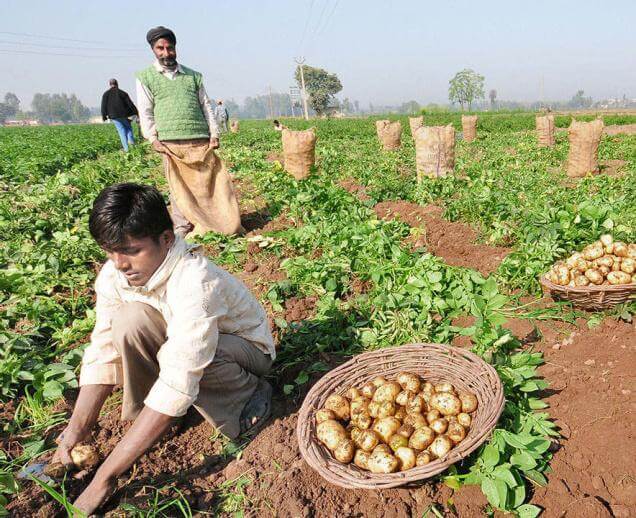
Potato farms

Bangladesh’s agriculture sector is mainly comprised of smallholder farmers … who farm on plots smaller than 1.5 acres. Managing harvest loss is crucial for these farmers, and late blight is a serious contributor to their losses. The disease, responsible for the historic Irish potato famine, is a problem for potato growers across the globe. Currently, their only line of defense against the disease is heavy fungicide use.

[A Feed the Future partnership that recently launched in the Bangladeshi capital of Dhaka] aims to battle late blight head-on through the introduction of a disease-resistant potato. It is a collaborative effort between Michigan State University, the University of Minnesota, the University of Idaho, the Bangladesh Agricultural Research Institute and the J.R. Simplot Company, an American industry leader in food technologies based in Boise, Idaho.

For farmers across Bangladesh … the resistant potato variety cannot come fast enough. They’ve seen firsthand how BT eggplant, a pest-resistant variety introduced in Bangladesh two years ago, has improved the lives of their neighbors. A late blight resistant potato could mean a 25 percent savings in fungicide costs alone, making a dramatic impact in the daily life of farmers’ families – and achieving the partnership’s goal.

Editor’s note: Feed the Future is the US Government’s global hunger and food security initiative

Read full, original post: Potato Partnership Helps Farmers Fight Late Blight

Viewpoint: Why we shouldn’t describe any autistic people as ‘high functioning’

HFA dating tips

My 10-year-old son can change from an adorable, quirky little dude to an aggressive screamer in a second. He sinks so far, so fast, that I forget about his strengths and drown in his weaknesses. I wish I could make it stop. There’s a diagnosis that explains it: autism.

Modifiers, such as “mild” or “high functioning,” and alternative labels, such as Asperger’s syndrome and Pervasive Developmental Disorder — Not Otherwise Specified, were meant to capture the higher end of the wide range of presentations and outcomes among people who qualified for an autism diagnosis, and to combat the stereotype of autism as a tragedy.

A child with an autism diagnosis, no matter how intelligent, charming, or funny, has challenges, and they aren’t mild. According to a recent article in The Economist, Britain’s National Autistic Society survey found that only 12 percent of so-called high-functioning people with autism in that country have full-time employment. As reported in Science, another study found that autistic adults without a learning disability were nine times more likely than control subjects to die by suicide.

With the publication of the Diagnostic and Statistical Manual of Mental Disorders-5th edition in 2013, professionals made the spectrum concept official. It’s now autism spectrum disorder for everyone who qualifies for a diagnosis. No more modifiers or alternative labels. And that’s as it should be.

Read full, original post: I stopped calling autistic people ‘high-functioning’ because of my son. Here’s why.

Genetically modified livestock in Africa: Kenya hopes to become animal biotech research leader

tnc preview

Kenya is on its way to start using genetically modified (GM) animals in research, an official said….

Dorington Ogoyi, Acting Chief Executive Officer of the National Biosafety Authority (NBA), said the organization is currently finalizing the development of a draft guideline on contained use of transgenic animals.

“We are leading the way in preparing the ground for regulating biotech animals,” he said during a workshop on regulation of GM animals in Kenya.

Ogoyi noted that NBA is fast-tracking laws that support advancements in animal biotechnology and other areas.

“We have previously over-focused on transgenic crops but this is likely to change with the introduction of GM animal research,” he added.

Ogoyi said that by adapting the technology, Kenya’s is setting the pace for the rest of African countries.

“We are learning from the best practices in the world and drawing useful lessons from countries with GM animal applications,” he said.

Read full, original post: Kenya plans using genetically modified animals in research

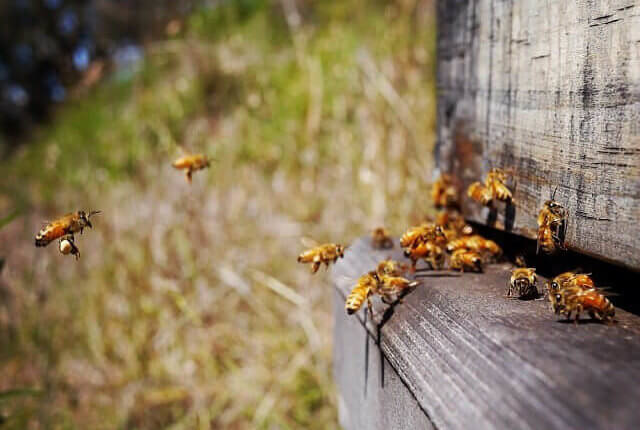
Will Australia ban neonicotinoid insecticides despite no evidence of bee declines on the continent?

bd ec f b ee ff a d e

European farmers are facing a total ban on a common group of pesticides after a report confirms they harm bees, putting pressure on Australia to follow.

The Australian Pesticides and Veterinary Medicines Authority (APVMA), which regulates the use of neonicotinoids … told the ABC in a statement there was no evidence of bee population declines in Australia.

All neonicotinoids registered for use in Australia have been through the APVMA’s robust chemical risk assessment process and are safe and effective — provided products are used as per the label instructions. Australia has strong surveillance measures in place to monitor chemicals used nationally.

David Severino, a commercial bee keeper from Phillip Island, said he wanted a ban on neonicotinoids in Australia.

“Australia does have healthy bees here because we don’t have other diseases that we have worldwide, however we do know the chemicals are having adverse reactions on our bees,” he said.

Mr Severino said it was difficult for a small industry like beekeeping to stand up to big chemical companies.

Associate Professor Carrie Hauxwell from the Queensland University of Technology said if neonicotinoids were banned, other chemicals would simply replace them.

Read full, original post: EU farmers face total ban on bee-harming pesticides putting pressure on Australia to follow

CRISPR update calms fears about off-target editing effects

crispr

The fear that CRISPR-based genome repair for preventing or treating genetic diseases will be derailed by “editing gone wild” has begun to abate, scientists who are developing the technique say.

study last year involving just three mice raised fears that CRISPR-Cas9, the classic version of the genome editor, might be a big, stupid bloodhound. Scientists at Stanford University reported they found hundreds of off-target effects, which they said was “of concern”: Messing with a tumor-suppressor gene could cause cancer, while other edits “could be detrimental to key cellular processes,” they wrote.

The stock prices of several CRISPR companies swooned, but CRISPR experts immediately pounced. In addition to using so few mice, the study, they said, didn’t account for the fact that DNA differences between the two CRISPR’d mice and the control mouse might simfply have reflected different ancestry.

Scientists led by Dr. Keith Joung of Massachusetts General Hospital, however, have discovered a way to drastically minimize that bystander effect. According to an unpublished paper…they tweaked the base editor to, in essence, change that C only if the letter before it is, say, a T. It’s akin to priming the bloodhound to find suspects wearing Nikes only if the aroma of Dockers is also around.

Read full, original post: CRISPR ‘gone wild’ has made stocks swoon, but studies show how to limit off-target editing

How injecting genes into pea plants could introduce disease resistance and improve nutrition

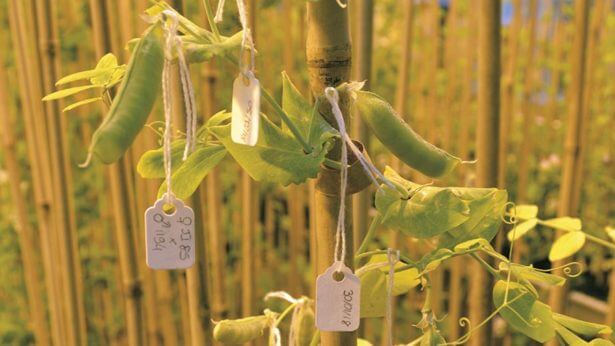
Breeding work in peas c no credit x

Scientists are injecting genes into pea plants to speed up introducing better disease resistance and improving the nutrition of this pulse crop within the next five years.

Adding valuable genes from wild pea varieties from Africa and Asia is set to bring improved resistance to the potentially devastating disease downy mildew, with fungicide control being limited to seed treatments.

Researchers are also well down the path of improving the nutrition of combine peas both for human consumption and for animal feed to potentially reduce expensive imports of soya.

Claire Domoney at the John Innes Centre says speedier breeding techniques mean these new beneficial traits can now be introduced more quickly into farm crops.

“By injecting genes into pea leaves we can get a quick response on what reaction the genes have on the pea crop,” she tells Farmers Weekly.

This method of gene injection is also helping researchers at the centre push for variety improvements quicker than with conventional breeding techniques, with the seed-to-seed production cycle down to just 37 days.

“Once we know which genes we need and follow up by introduce them into pea crops they could be with growers in five years,” says Prof Domoney.

Read full, original post: Gene injection set to bring big benefits to pea crops

23andMe adds 120 geographic regions to make genetic ancestry results more precise

hero jacquie tablet a b d d

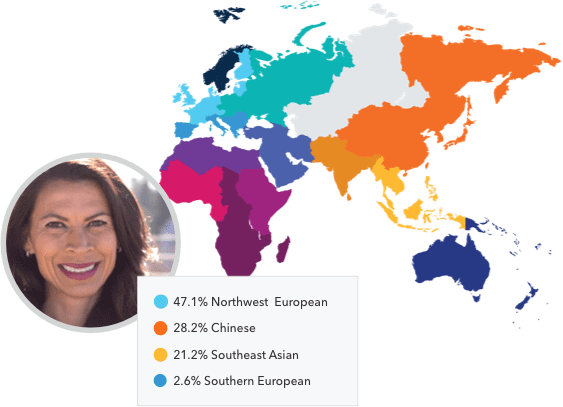
If you’ve ever taken an ancestry DNA test, you probably already know that the results aren’t exactly precise. Sometimes you wind up with completely different results than you expected.

On [February 28], though, 23andMe announced an update to its service that should give customers more specific insight into where they are from. Rather than telling a customer that they are, say, “Scandinavian,” that customer might find that they are specifically part Norwegian. All told, the company has added 120 new geographic regions to the results of its test.

When I took 23andMe’s test last year, as part of a story I did on the accuracy of ancestry tests, the test was surprising because it told me I was only 3 percent Scandinavian and 5.5 percent Middle Eastern, even though I expected numbers much higher in those areas based on my family history.

With the update, the picture 23andMe painted of my ancestry was closer to the one painted by family genealogy. It was also more specific. It was able to tell me not just that I was Scandinavian and Middle Eastern, but that I’m Norwegian and Syrian.

The update to 23andMe’s test is a good example of how rapidly genetic technology is improving, and how with technological advances and larger data sets, consumer DNA testing stands to get a lot more precise.

Read full, original post: 23andMe’s Ancestry DNA Test Just Got a Lot More Precise

Are humans genetically loaded for extinction?

DNA breakage Constantin Ciprian shutterstock resized
We humans have come a long way in the past 100,000 years. We’ve developed more complex societies, vastly increased our populations, literally taken over the world (and may have mated with a few Neanderthals along the way). Our genomes also have changed a lot over that time. Does that mean, evolutionarily, we’re in for big trouble?

Some scientists think so.

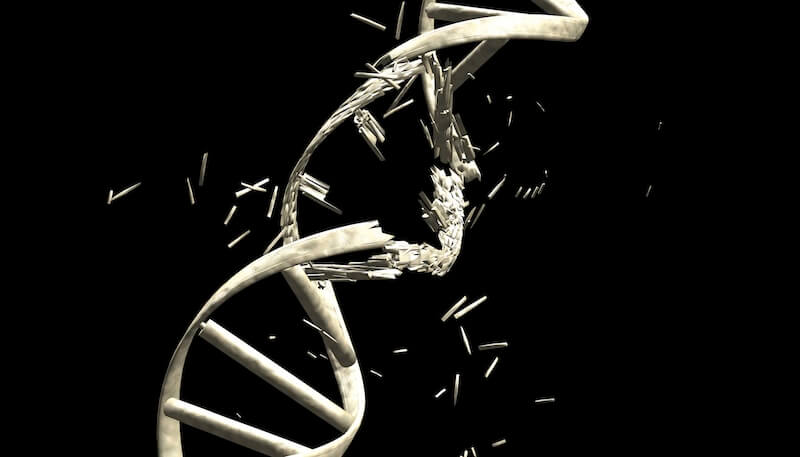
An idea called “genetic load” was developed in the 1930s by famed biologist J.B.S. Haldane, referring to any genome that had increasing numbers of deleterious mutations. The more mutations in a population, the more likely that members of that population couldn’t survive, ultimately threatening the fitness of that population. With enough mutations, a group couldn’t adapt as well to environments, and members would die off. Thus, there’s a limit to natural selection.

mutation 3 8 18 3Now, for some evolutionary biologists, the concept of genetic load has resurfaced as a genuine concern. Michael Lynch, a biologist at Indiana University, wrote that humans have uniquely been able to manipulate our environment, and that new innovations, such as gene-changing personalized (aka precision) medicine, have further detached us from our environment, and allows us to change our genotypic traits:

The long-term consequence of such effects is an expected genetic deterioration in the baseline human condition, potentially measurable on the timescale of a few generations in westernized societies, and because the brain is a particularly large mutational target, this is of particular concern.

But how many mutations are enough to trigger such a catastrophe? And is there really such a thing as a genetic load, and does it work like this?

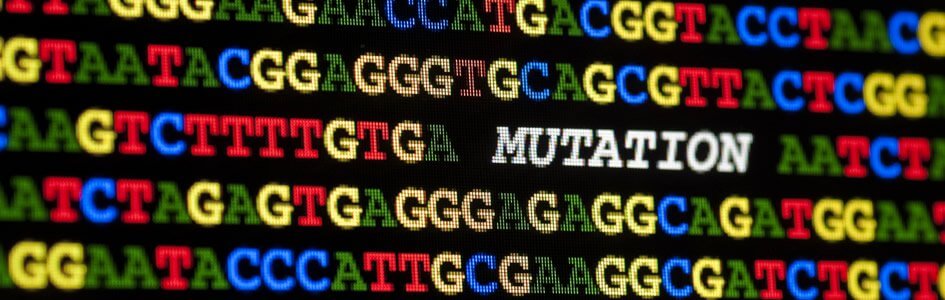
Mutations happen. It’s estimated that every newborn baby has 100 new mutations that his/her parents didn’t have. Also, as a population, we’ve developed at least one million genetic variants in the last 5,000 years. Between 5,000 and 10,000 years ago, “73 percent of all protein-coding SNVs (single nucleotide variations) and approximately 86 percent of SNVs predicted to be deleterious arose,” a group of scientists studying this trend wrote. Today, the average person carries about 250 to 300 mutations that impair some function. We also carry several more hundred variants that are neutral or cause minor problems. And this doesn’t include variations at sites of non-coding DNA.

We’ve also more than tripled in size as a group during that time. And all these issues are important in determining if, on an evolutionary scale, we’re in deep doo-doo.

Minnesota biologist PZ Myers doesn’t think it’s so bad. He points out that the number of genes an organism has is also important for determining genetic load. Which makes sense: several hundred mutations in a genome of 100,000 are far less than the same number in a genome of 20,000. And, according to his calculations, our genome (of about 20,000) is at the upper end of genes we can possibly carry with us. “We can’t have significantly more, or the likelihood of genes breaking down with our current mutation rate would mean that most of our children would be born dead of lethal genetic errors, or the burden of a swarm of small deficits to their fitness,” he wrote.
mutation 3 8 18 2One problem is that modern sequencing has produced much more data, and shown us so many more ways that genes can vary (and be manipulated), and we need to get a better idea of what we’re looking at. Phenotypes can be neutral, and a vast amount of evolution is because of drift (earlobes, nose shape, and slight variations in eye color). And many variations are not conserved.

Aneil Agrawal and Michael Whitlock, two Canadian biologists, wrote that “mutation load can be lessened…causing more mutations to be removed…such as inbreeding, synergistic epistasis, population structure or harsh environments.” They also point out that certain events, like sexual selection, reproductive compensation (replacing offspring lost to genetic disorders, or caring more for children with disorders) and competition within a species, all can reduce effects of genetic loads. It’s thus not clear which mutations cause the most damage, and what can make them disappear. “We do not even know whether mutation rate affects fitness in the manner Haldane predicted 70 years ago.”

Andrew Porterfield is a writer and editor, and has worked with numerous academic institutions, companies and non-profits in the life sciences. BIO. Follow him on Twitter @AMPorterfield.

From GMO hater to biotechnology advocate: One person’s Facebook journey

Screen Shot at AM

How could I have been so misled about so much for so many years?

I’ve been obsessed with good health and nutrition since I was a teenager. As a young mom, I did everything possible to ensure my kids’ good health. Organic, natural foods, natural remedies, pesticides and cleansing agents — only the best. My guidebooks were the myriad of materials provided by health gurus, celebrities and yoga instructors.

Then I discovered Facebook, joined some health groups, and learned about evil corporations like Monsanto and its dangerous pesticides and genetically modified organisms (GMOs).

My mission was clear: I needed to inform the world of these terrible things.

I was well into this commitment when one new member in an anti-Monsanto group suddenly chose me as his mentor, asking for all I knew.

He questioned endlessly, I answered. He questioned my answers. He forced me to search for ever more information.

facebook 3 8 18It got tiresome and I started throwing in links without even reading them. I just knew that they were good links; the headlines all matched my views. He read them all — and questioned me sentence by sentence. That meant I had to actually read everything I shared — and found to my surprise that half of the links that I had provided went against everything I believed.

I started asking a lot of questions on my favorite forums, seeking evidence for claims that, days before, I had merely ingested as facts.

I soon found out any challenge to a claim on anti-GMO sites had me being called a shill for Monsanto and permanently removed. I realized that by stifling all challenges and silencing dissent, group members forced others to fall in line, mindlessly and unquestioning. I was shocked that my months as a ‘good member’ meant nothing to people who now turned against me, merely for asking for evidence of their claims.

Fortunately, I found Facebook forums where I wasn’t yelled at whenever I questioned someone’s post on the subject of food and GMOs. I even joined sites that weren’t anti-GMO, wanting to know how they could believe in this terrible unnatural technology.

I’ve learned to respect the views of people who are educated on subjects about which I was concerned — for example, farmers, biotechnologists and, yes, even those who work for Monsanto. I recognized that some celebrity actor knows no more about science than I do — and shouldn’t have as much influence on public opinion as a university-educated professional.

I even found organic farmers who support GMOs for a sustainable future.

I have come to realize that biotechnologists and farmers are not evil, paid-off or misguided. They kiss their babies before leaving for work and strive to make a better world like the rest of us.

farming 3 8 18I’ve realized the harm that comes from being uncritical. That those who aren’t speaking from a position of knowledge or education can hurt my family — by not vaccinating children, by controlling what’s taught in schools and by lobbying governments into making wrong decisions.

To pay it forward, I now run several fact-based Facebook sites. I try to help others who are confused and fearful about agricultural practices, as well as other controversial topics like vaccines, pesticides, chemicals and the often-misinformed portrayal of scientific research.

I’m every bit as committed to good health as I was as a teenager and young mom, but I’ve learned so much about what really constitutes truth and what represents distorted propaganda for other agendas.

A version of this article was originally published in the Waterloo Region Record as “How Facebook led me to the truth about GMOs” and has been republished here with permission.

Julie Mellor-Trupp is a science and agriculture writer who lives live with her husband and two kids near Toronto, Canada. Follow her on Twitter @JulieM_273.

‘One-time CRISPR vaccination’? Researchers target disorder linked to heart disease

heart

Some people have a naturally occurring mutation in a gene called ANGPTL3, which plays a role in the regulation of fats in our blood called triglycerides. Having too many triglycerides increases our risk of developing heart disease, so doctors usually recommend patients change their diets or take medications to lower these levels.

However, the ANGPTL3 mutation seems to lower the person’s risk of developing cardiovascular disease without causing any harmful side effects. Now, researchers from the University of Pennsylvania have tested a gene-editing technique inspired by these people who lucked out in the genetic lottery.

[T]he researchers set out to determine if their treatment could help patients with a rare inherited disorder called homozygous familial hypercholesterolemia. These patients have very few effective options for treatments and carry a severe risk of heart disease as a result. If doctors could forcibly lower their triglyceride levels by “turning off” a gene, it could be life-saving.

[R]esearchers have only tested the treatment in mice, but these initial results are encouraging. If researchers can find a way to make it work in humans, the technique could potentially help patients whose triglyceride levels aren’t responding to lifestyle changes and medication.

According to a press release statement by the study’s lead author, Kiran Musunuru, patients with homozygous familial hypercholesterolemia could be just five years away from “a one-time CRISPR ‘vaccination’.”

Read full, original post: Susceptible to Heart Disease? Gene Editing Could Change That

‘Major breakthrough’: Genetic modification of single gene could reduce crops’ water use by 25 percent

Irrigating fields SW of Killerton Estate NT geograph org uk

Researchers on Tuesday [March 6] unveiled a genetic modification that enables plants to use a quarter less water with scant reduction in yield.

By altering a single gene, scientists coaxed tobacco plants — a model crop often used in experiments — to grow to near normal size with only 75 percent of the water they usually require.

If major food crops respond the same way, they said, the first-of-its-kind genetic “hack” could help feed the growing population of an increasingly water-starved world.

“This is a major breakthrough,” said senior author Stephen Long, a professor at the Institute of plant biology at the University of Illinois.

“When water is limited, these modified plants will grow faster and yield more.”

Long and his team tweaked the gene that codes a protein — known as PsbS — crucial to photosynthesis, the process by which plants convert light into nutrients.

PsbS plays a key role in relaying information about the quantity of daylight, which triggers the opening and closing of microscopic leaf pores called stomata.

In the genetically engineered plants, increased levels of PsbS caused the tiny leaf pores to close earlier than they normally would, allowing the plant to retain more precious liquid.

Editor’s note: Read the full study

Read full, original post: Genetic tweak makes plants use 25% less water

Ancestral gene resurrection: Re-creating evolution by engineering an ‘instant replay switch’

Betul Kacar

A team of scientists from the University of Arizona have engineered an instant replay switch for evolution. The technique, known as ancestral gene resurrection, inserts ancient genes into modern E. coli bacteria. It gives researchers the opportunity to watch evolution unfold again and again, providing insights into how life evolved on early Earth, and what it might potentially look like on other planets.

“Organisms can function just fine even when they’ve been engineered with an essential gene that is over 700 million years old,” [says] the study’s lead author Betül Kaçar, an astrobiologist at the University of Arizona.

If you could rewind time and let evolution happen all over again, would the end result resemble life on Earth as we know it?

Kaçar worked with her postdoctoral advisor Eric Gaucher at Georgia Tech on a NASA-funded project to replay evolution again and again with the laboratory workhorse bacterium E. coli. Kaçar wouldn’t be evolving E. coli from scratch, but rather rewinding the evolution of a specific key protein that the bacteria needed to survive.

The importance of this work, Kaçar says, isn’t just relevant to life on this planet. Knowing how life is or isn’t constrained by its starting materials could tell scientists a lot about what life might look like on other planets.

Editor’s note: Read the full study

Read full, original post: What happens when you put evolution on replay?

Gene-edited pigs could eliminate need for castration

Pigs Patarapong iStock

Castrating pigs is not a favorite chore for pork producers, but it’s necessary for meat quality and barn management. Now, scientists at the gene-editing company Recombinetics have developed a precision breeding method resulting in male piglets that remain in a prepubertal state, thus ending the need for castration. Recombinetics has partnered with Nebraska-based swine genetics supplier DNA Genetics to evaluate, develop, and commercialize the castration-free (CF) swine trait. Research is being led by Tad Sonstegard.

Successful Farming: What is the timeline for this project?

Tad Sonstegard: The basis of the knowledge for the castration-free trait came from research in human infertility and mouse physiology. Now work is progressing to develop castration-free pigs. We optimize everything in the lab first before we make the initial animals to ensure we can safely bring this to the marketplace. Within a year, we will move from development into breeding animals for evaluation of health and safety. We anticipate that the development and evaluation period will be completed within the next two to three years.

SF: Will farmers accept and use this technology?

TS: Oh, absolutely. If it makes life easier, why not? In one recent survey of farmers, they were asked if they would support research to replace the horned gene with the polled gene using precision breeding technology. Four out of five farmers said yes.

Read full, original post: Gene-editing research could end pig castration

MIT’s Timothy Lu’s gene therapy innovation: Programming cells to fight infection

ciruit

In high school and college, Timothy Lu spent a lot of time programming computers. But as his college graduation approached, he turned his attention toward programming biological systems. The field of synthetic biology was just beginning to emerge, and he wanted to be part of it.

Since that time, Lu has devoted his career to coming up with novel ways to engineer cells, both bacterial and human, to perform new functions. Using this approach, he hopes to develop new therapies for a range of diseases, from cancer to drug-resistant infections.

In a recent study, Lu and his colleagues developed a synthetic gene circuit that triggers the body’s immune system to attack cancers when it detects signs of the disease. They are also working on designing more control elements to help them turn such circuits on and off, and developing ways to help circuits change their output in response to different disease biomarkers.

Lu’s lab also continues to pursue novel antimicrobial treatments, including engineered bacteriophages as well as new types of antimicrobial peptides. By modifying these naturally occurring proteins, Lu hopes to make them more efficient at killing microbes, and potentially to develop them for use against infection in humans.

Such research has become increasingly important, Lu says, as more strains of bacteria become resistant to existing drugs.

Read full, original post: Timothy Lu seeks to combat disease by reprogramming biological systems

DNA dating pseudoscience: Why you can’t find true love based on genetic compatibility

x

Described by Wired as “a sort of 23andMe meets Tinder meets monogamists,” Pheramor’s secret to success is your DNA. That’s right—for a low-rate of $19.99 plus a $10 monthly membership fee, the Houston-based online dating startup promises to match local singles who are compatible not only socially but genetically.

The app’s matching algorithm analyzes 11 special “attraction genes” supposedly linked to our pheromones—olfactory signals that some believe trigger attraction. The pheromone profile is sequenced from a cheek swab kit required of every Pheramor user, which is then combined with information mined from your social media activity.

Despite Pheramor’s vaguely eugenicist vibe and creepily literal take on the concept of “chemistry,” it has still managed to attract some hype. By the time the platform formally launched…in Houston, the test kits had sold out.

Dating platforms have always made their bones off of scientifically dubious claims of having the secret to matchmaking, but the concept of pheromones is some of the shakiest science out there.

[T]here has to be a better way to escape the “dating apocalypse” than withdrawing into a Gattaca simulacrum predicated on pseudoscience. While we’re looking for it, let’s all swab left on Pheramor and its ilk.

Read full, original post: Why DNA-based Apps Betray the Open Promise of Online Dating

India likely to cut Monsanto’s royalty for GMO insect-resistant Bt cotton seeds

Bollgard II seed Pack x

In an attempt to offer some respite to cotton farmers battered by repeated pest attacks and crop losses, the centre is likely to slash the price of genetically modified Bt cotton seeds as well as trait fees payable by domestic seed companies to technology developers.

The maximum sale price of a Bt cotton (Bollgard II) seed packet weighing 450g is likely to be reduced from Rs800 to Rs740, said a person familiar with the development, requesting anonymity.

The person added that the trait or royalty fee included in the sale price (which domestic seed companies pay to the technology developers) is likely to be reduced from Rs49 per packet to Rs39 per packet.

The committee has unanimously recommended that the government slash seed prices to Rs740 per packet and the agriculture ministry is expected to take a final call soon, said a member of the price control committee, who did not want to be named.

While the move will benefit nearly 8 million cotton growers in India, domestic seed companies will see their earnings fall by at least Rs50 per packet. Technology developer Monsanto Mahyco Biotech (India) Ltd will earn Rs10 less for each packet of cotton seeds sold in India.

Read full, original post: Govt likely to slash Bt Cotton seed price to Rs740 per packet