[Many] non-native animals — known as invasive species — have been preying on the native birds, some of which don’t fly. New Zealand’s leaders want to get rid of the invaders. And a new technology could help.
…
They’re considering use of a type of gene-editing tool known as a gene drive. It can copy and paste itself into the genome of an organism. (A genome is the complete set of genetic instructions in an organism.) Once the gene drive is inside the genome, it could change the genes of some invasive species in a way that would make that species die off at sites where it doesn’t belong.
That may sound like a good thing. Indeed, many scientists hope it will be. Still, they have concerns. After all, if a gene drive “escapes,” it could kill that targeted species even in places where it does belong.
…
No one has clear answers on what is the right thing to do. Nor is it clear who should have the right to make the final call, [environmental scientist Todd] Kuiken says. Yet that doesn’t mean the technology shouldn’t be used at all, he adds. Indeed, he noted, if people wait too long, it may be too late to save an endangered species.
In his speech at the recent American Farm Bureau convention, President Trump said his administration was “streamlining regulations that have blocked cutting-edge biotechnology.”
Why is this necessary? Paraphrasing New York Times columnist Paul Krugman’s words on economic policy, it’s because we’re still living with “zombie” biotech regulatory policies that “should have been killed by the evidence … but keep shambling along nonetheless.” The time to end this “reign of error” is now.
Why now? Because the evidence is in: Biotechnology methods are safe. And because new, precise gene-editing approaches are poised to revolutionize agriculture. But for that to happen, we have to start regulating from common sense instead of fear.
For the past 30 years, every organism improved using modern biotechnology methods, no matter how innocuous, has been regulated as if it were potentially hazardous. The price of compliance with such fear-based regulation has been huge – more than $100 million for a single biotech crop. And it can take years to obtain regulatory approval.
Nina Fedoroff
The result? We have no agricultural animals improved using biotechnology on the market and we have just a handful of commercial biotech crops. Most are commodity crops with big enough markets to allow recovery of hundred million dollar expenditures on development and deregulation. Is it any surprise that they were developed by big companies with deep pockets? Few small companies or academic scientists have been able to get into the game.
American farmers were quick to adopt biotech crops. They’ve been growing biotech corn, soybeans and cotton for more than 20 years. Trillions of meals with biotech ingredients have been consumed with no ill effects. Biotech crops have added billions to our national wealth and made farming kinder to the environment.
And yet we’re still regulating as if biotech methods were dangerous. Today, scientists around the world are overwhelmingly convinced by the evidence that biotech methods are safe. Biotech approaches are much less disruptive to the genetic machinery than the chemical and radiation mutagenesis used for crop improvement – with no regulation at all – for most of the last century. And they’re much more exact than cross-breeding.
New gene-editing tools are even more precise than the older methods. They can be used to make predictable changes in a selected gene and leave behind no extraneous genetic material. Such changes are just like the natural variants that underlie the domestication of agricultural plants and animals. And they’re the same as genetic changes introduced by the mutagenic methods used to produce most of today’s high-yielding grain varieties and such favorites as Rio Red grapefruit.
This means that many of the organisms produced using today’s high-precision gene editing will be indistinguishable at the molecular level from those produced by nature and by previous generations of breeders. This presents a conundrum for our current regulatory approach.
Alison Van Eenennaam
Fortunately, the solution is in plain sight: Confine regulatory scrutiny to the novel properties of improved organisms. That is, regulate the product, not the process, as the U.S. National Academies of Science and Engineering have long recommended.
Regulators must identify the (handful of) novel properties of improved organisms that present unreasonable risks to people, animals, agriculture or the environment and they must restrict regulatory scrutiny to such organisms.
The rest present hazards no different from those posed by plants and animals improved by long familiar plant breeding techniques and require no regulation. To move quickly in a highly competitive international environment, developers need the certainty that they will not face burdensome bureaucratic barriers if they use gene editing to develop products whose properties are no different from those that can be derived by conventional breeding methods. Australia has already begun to move in this direction.
Dispelling the suffocating cloud of fear-based biotechnology regulation is a must if the U.S. is to maintain global leadership in biotechnology. Bringing common sense to regulation by recognizing that modern biotech methods are just the next step in our 10,000-year history of agricultural innovation will unleash investment in small biotech start-ups, a heavy lift today because of the regulatory costs. And perhaps most important, it will free agricultural scientists to use the very best biological methods to do their critical work of helping farmers and ranchers provide us with healthful, sustainably grown food.
Nina Fedoroff is a molecular biologist and professor emeritus at Penn State University. She was awarded the National Medal of Science in 2007 and served as president of the American Association for the Advancement of Science (AAAS) from 2011 to 2012. She also served as a science adviser to the Secretary of State and to the administrator of USAID.
Alison Van Eenennaam, Ph.D. is an animal geneticist and Cooperative Extension specialist in the Department of Animal Science at the University of California, Davis. Follow her on Twitter @BioBeef
News that consumers will soon be able to purchase a genetic test for three BRCA mutations may seem like déjà vu. That’s because it is.
This is the second time that direct-to-consumer genetic-testing company 23andMe has offered screening for the mutations linked to breast cancer. The difference now from when it was yanked off the market in 2013? FDA approval.
That’s huge.
As a genetic counselor for many years I’ve evaluated patients for breast cancer risk, and I recently had testing for BRCA and dozens of other susceptibility genes. During my breast cancer journey, I encountered several health care professionals unfamiliar with the fact that many genes contribute to risk, or how to get tested.
Celebrities like Angelina Jolie have drawn attention to the BRCA genes, but not to the variants of dozens of other genes that raise cancer risk.
Even the BRCA genes, which make headlines regularly when they affect celebrities, are misunderstood. In Oregon a 36-year-old woman filed a $1.8 million lawsuit against a nurse practitioner and surgeon going ahead with her double mastectomy and hysterectomy despite the lab report stating that her gene variant was not known to be pathogenic. (The story is at Genome Web, behind a paywall.) Testing was accurate; interpretation, not.
Limited understanding of genetics, by health care practitioners, patients, and DTC test-takers, is my primary concern following the return of the BRCA test. While the 23andMe reports sent to consumers link to great technical resources like Genetics Home Reference and Gene Reviews (I’d add Online Mendelian Inheritance in Man), I worry that it isn’t enough, or that consumers simply won’t read the details. I’ve published 12 editions of a human genetics textbook, and from that experience I know that some concepts in genetics are just too complex to capture in even the most engaging screen shot.
BRCA basics
The DTC test covers the three mutations in BRCA1 and BRCA2 that are most prevalent among people of Ashkenazi Jewish descent. Those mutations are particularly devastating because they alter the triplet “reading frame” of the gene’s DNA sequence, a little like inserting or removing a letter or two from this sentence and reorganizing the words into gibberish.
The BRCA genes encode proteins that are linchpins in DNA repair. The three mutations shorten the protein or prevent it from forming, allowing mutations in other genes to go unrepaired, and eventually the cell cycle veers out of control. That’s cancer.
Most familial breast and ovarian cancers among Ashkenazim today are due to one of these mutations because we’ve tended to marry among ourselves. And the risks of either cancer are high: for women with either of the two mutations in BRCA1 it’s 60 percent by age 60 and 83 percent by age 80, and for the lone BRCA2 mutation 33 percent by age 60 and 76 percent by age 80. But only 2.17 percent of Ashkenazim have one of these mutations.
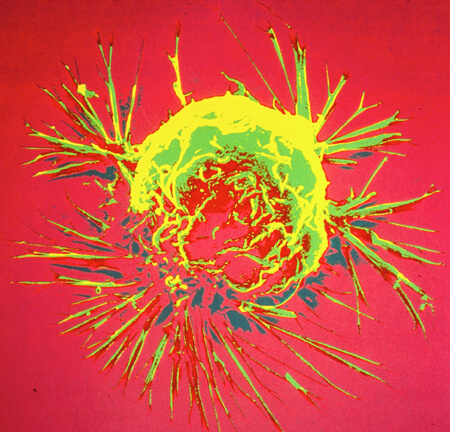
A breast cancer cell (NHGRI)
In different populations, the most prevalent mutations differ, as do how likely they are to cause cancer (a measure termed penetrance). For example, one study showed that among 1,022 women in Colombia who do not have a family history of breast cancer, 7 percent had a mutation in BRCA1 or BRCA2 — but the four mutations common for them differ from the Ashkenazi trio. Colombian women with any of the four mutations face a 14 percent risk of developing cancer by age 70, compared to 3 percent for the general Colombian population. So the mutations are different, their prevalence higher, but penetrance lower, compared to the Ashkenazim.
It’s complicated. That’s why 23andMe cautions: “The relevance of each report may vary based on ethnicity.”
Warnings aplenty
FDA and 23andme clearly spell out the caveats and limitations of the DTC test.
Said Anne Wojcicki, 23andMe CEO and co-founder, in a news release, “This authorization is incredibly valuable for those who might not be aware of their Ashkenazi Jewish descent or aren’t familiar with their family history of cancer. But it’s important to understand that the majority of cancer is not hereditary, our test does not account for all genetic variants that can cause a higher risk of cancer, and people should continue with their recommended cancer screenings.”
FDA took it farther: “Consumers and health care professionals should not use the test results to determine any treatments, including anti-hormone therapies and prophylactic removal of the breasts or ovaries. Such decisions require confirmatory testing and genetic counseling.”
Other companies that offer BRCA tests under a doctor’s supervision (possibly online or on the phone) are jumping aboard the publicity train with deals, like the $99 test offer from Color Genomics that keeps popping up on my Facebook feed. The uptick in clinical (not DTC) testing for BRCA followed the Supreme Court ruling that Myriad Genetics doesn’t own the genes, in June 2013.
Why FDA’s turnaround?
The test from 23andMe is a mouthful: the Personal Genome Service Genetic Health Risk Report for BRCA1/BRCA2 (Selected Variants). Spit in a tube and send in a sample, then await results. It’s not as simple as a color change on a home pregnancy kit, as some news coverage implied.
Back in 2013, FDA halted 23andMe’s marketing of BRCA1/2 testing, even though the assay was clinically validated — a truncating mutation is easy to spot. It’s the interpretation of natural genetic variation that’s at issue. Stated the agency’s warning letter:
“For instance, if the BRCA-related risk assessment for breast or ovarian cancer reports a false positive, it could lead a patient to undergo prophylactic surgery, chemoprevention, intensive screening, or other morbidity-inducing actions, while a false negative could result in a failure to recognize an actual risk that may exist.”
But “false positive” and “false negative” aren’t the correct terms — the tests report the mutations accurately. It’s the meaning of a particular gene variant in a particular population that’s crucial. And the tests were never intended to detect or diagnose cancer. Even in a clinical setting, they’re used to send patients for further tests, like mammography or ultrasound, and if those deliver suspicious findings, biopsy.
Still, since 2013, enough data have accumulated to convince FDA to greenlight the DTC test. Additional studies from 23andMe are claimed to have reconfirmed test accuracy and reproducibility, and shown that consumers understand what they’re ordering, how to interpret findings, and where to get more information. I don’t doubt that many consumers today are considerably more scientifically savvy than just a few years ago.
“We’ve come so far since 2013 and the FDA realizes that. Several trends allowed this to happen. First, people have become more proactive about managing their own health and want to find out more about it, often without involving intermediaries. Second, DNA testing has become more affordable and increasingly widespread and acceptable as a result. Third, the level of science behind these in-home DNA tests has improved dramatically,” Mehdi Maghsoodnia, CEO of Vitagene, told the Genetic Literacy Project.
Why more widespread testing?
Dr. Mary Claire King, a geneticist at the University of Washington, led the team that identified in 1990 what would be named the first breast cancer susceptibility gene,BRCA1, in families with multiple cases of early-onset cancers. But it was two of her papers from 2014 that seem to have impacted the FDA’s turnaround.
In the Proceedings of the National Academy of Sciences, King and colleagues found any of the three Ashkenazi mutations in 175 of more than 8,000 Ashkenazi men in Israel — about 2 percent of them. Half of the families that had BRCA mutations didn’t have a history of breast or ovarian cancer — typically families too small for it to statistically show up. So all Ashkenazi should be tested, “integrated into adult primary care,” the researchers concluded.
The second paper, a Viewpoint in the Journal of the American Medical Association, seems to have gone a step farther in suggesting that “every woman,” at about age 30, should have a BRCA test for the three mutations, deemed “actionable” because surgery can prevent cancer by removing the affected organs. But such testing should be done “in the course of routine medical care.”
“Integrated into adult primary care” and “routine medical care” do not sound to me like spitting into a tube and learning results online. I’ve asked King for clarification but haven’t heard back, and her comment for NPR on the recent FDA approval was as truncated as the genes under discussion.
The idea of broader BRCA testing isn’t new. Wrote James D. Fackenthal and Olufunmilayo I. Olopade in Nature ReviewsCancer in 2007, “The important conclusion for clinicians is that it is likely most BRCA1 and BRCA2 mutations occurring in a clinical setting will be present in individuals with no family history of breast cancer.”
So I agree. Population-wide testing for BRCA mutations makes sense.
A case In which testing helped
I met one of my closest friends thanks to 23andMe’s BRCA gene testing.
In late 2012, Lisa’s 20-something son Justin sent a DNA sample to 23andMe “for fun.” Included in the company’s genotyping panel were the BRCA Ashkenazi mutations, and he had one. A mutual friend suggested Lisa see me for an unofficial genetic counseling session.
The case seemed clear: Lisa was Ashkenazi, with relatives who had breast or ovarian cancer. Her daughter Maya, a few years older than Justin, was about to take the bar exam so was kept in the dark for a bit, but eventually, when 23andMe repeated the tests and Myriad Genetics helped too, all gratis, she was brought into the conversation. And it turned out that Lisa’s Irish Catholic husband, Eric, had passed along the worrisome mutation! (I’ve changed their names.)
A whirlwind of emotions engulfed the family. Lisa was petrified, Justin confused, Eric disbelieving, and Maya enraged (although she passed the bar and didn’t have the mutation)!
So now Eric and Justin are tested periodically for breast and prostate cancer, and Justin knows he can pass the mutation to a child. Maya and Lisa are relieved, although they understand that they can still develop cancer from mutations in other genes. Unfortunately the relatives they alerted dismissed the test results. But without the “just for fun” DTC testing, my friends likely would never have known about the increased cancer risk.
What’s the downside?
DTC BRCA testing can indeed lead to cancer diagnosis and treatment. But I see two downsides: a false sense of security and panic.
A false sense of security might arise if a consumer assumes that if she doesn’t have one of the three Ashkenazi mutations, she can’t develop breast or ovarian cancer. The mutations account for less than 0.1 percent of cases in other populations. And 23andme and FDA do warn about this repeatedly.
Panic may follow if a woman doesn’t realize that the three Ashkenazi mutations are associated with lower penetrance in other populations. Here’s where ancestry testing may be useful, something of which the testing companies are of course well aware.
Adding to the confusion is referring to a person with a BRCA mutation as a “carrier.” This word can denote a healthy person who transmits a communicable disease (typhoid Mary), an unaffected carrier of a single-gene recessive disease, or a person who inherits a cancer risk gene! “Carrier” in the cancer context is not as benign as in the others. We need a new term for folks who have BRCA mutations. For example, people who have a mutation that causes Huntington’s disease, but who don’t have symptoms yet, are called “pre-manifest.”
I’m glad that the FDA announcement advises consulting a genetic counselor about BRCA testing (See Find a Genetic Counselor). The 23andMe website, as far as I can tell, still only mentions genetic counseling in one brief paragraph following advice to consult a primary care physician, but the engaging client stories for other conditions mention seeking genetics expertise.
Considering how much there is to know about genetics, and the fact that health care professionals do not always have the training or knowledge to answer questions from informed consumers, without the input of a genetic counselor or medical geneticist, DTC genetic testing is caveat emptor. Let the buyer beware!
Ricki Lewis has a PhD in genetics and is a genetics counselor, science writer and author of The Forever Fix: Gene Therapy and the Boy Who Saved It, the only popular book about gene therapy . Follow her at her website or Twitter @rickilewis.
I came to First in Fly, a new book about fruit-fly research, with perhaps some special interest. In fact, a popular appreciation of fruit flies has seemed long overdue to me. No single animal has contributed as much to the field of genetics as the ordinary and ubiquitous Drosophila melanogaster.
These tiny, winged, exoskeleton-ed creatures—so different from us in appearance—have led to research illuminating a surprising amount about the human body: The genes that tell a fruit fly where to sprout its legs are quite similar to the ones that tell our bodies where to sprout limbs. As are the genes that form the pattern of fine hairs on a fly’s wing and the ones that orientate the tiny hairs in our ears. As are the genes that govern a fruit fly’s circadian rhythm and the ones that give us jet lag. And so on. Research into Drosophila has resulted in at least five Nobel Prizes.
First in Fly by Stephanie Elizabeth Mohr is a thorough chronicle of the contributions of these creatures to science over the past century.
…
In total, Drosophila melanogaster has 14,000 genes, 8,000 of which have human analogues. To read First in Fly is to appreciate the full scope of fruit-fly research and to understand the intimate connections in the DNA of every human cell and Drosophila cell.
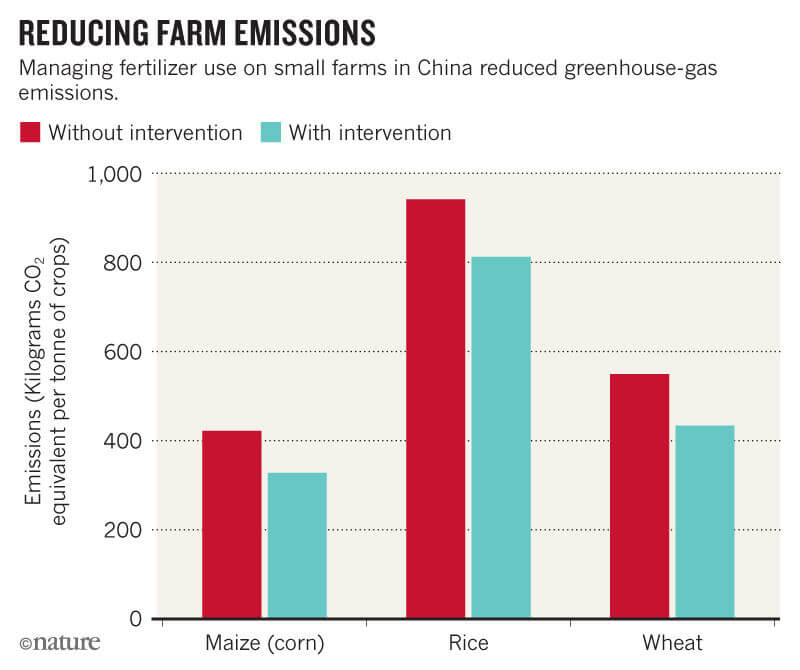
A landmark project to make agriculture more sustainable in China has significantly cut fertilizer use while boosting crop yields on millions of small farms across the country, researchers report in Nature.
As part of a decade-long study, scientists analysed vast amounts of agricultural data to develop improved practices, which they then passed on to smallholders. Through a national campaign, about 20.9 million farmers adopted the recommendations, which increased productivity and reduced environmental impacts. As a result of the intervention, farmers were together US$12.2 billion better off.
…
From 2005 to 2015, the project team conducted 13,123 field studies at maize (corn), rice and wheat farms across the country, from the subtropical south to the frigid north. The researchers tested how yields varied with different crop varieties, planting times, planting densities, fertilizer and water use.
…
Almost 21 million farmers adopted the group’s recommendations between 2006 and 2015. In that period, crop production for each grain increased by an average of around 11%. The study’s collaborators also recorded a surprising drop in fertilizer use — about 15% per crop — saving 1.2 million tonnes of nitrogen.
“The demonstration that reducing inputs can actually boost agricultural, environmental and economic performance at scale is very important,” says [Charles Godfray, a population biologist at the University of Oxford, UK].
Editor’s note: Read the full study (behind paywall)
A new generation of food-tech companies has appeared that, for just a few hundred pounds, will test your DNA and offer tailored nutritional advice based on the secrets locked within. Some offer specially formulated nutritional supplements designed to meet dietary requirements you never knew you had.
…
If this all seems a bit ahead of its time, that’s because it probably is.
…
DNA analysis might reveal you have a genetic marker that is slightly more common in coeliacs (people who have a strong allergy to gluten), but that doesn’t necessarily mean you have coeliac disease. The marker is a population-level risk factor, with absolutely no relevance to your individual health.
…
[F]or the most part, these genetic markers are exactly the sort of information that genetic testing companies sell, providing meaningless, generic advice based on conditions that you probably do not have.
…
[The US Government Accountability Office] found there was “no scientific basis” for claims that nutritional supplements can be customised to people’s DNA.
There is a chance that, in the future, accurate and useful nutritional information might be gleaned from a DNA test. But for now even leading geneticists can’t tell what colour your eyes are from your DNA, let alone suggest what food you should be eating. The best advice is to save your money and try to eat well.
More than 300 lawsuits have been filed on behalf of farmers and others who said that Monsanto’s popular weed killer, Roundup, gave them cancer.
…
All this was supposed to be evaluated back in December. But Laura Beene Freeman and her team changed those plans. She and her colleagues published a study in the Journal of the National Cancer Institute stating that among the 54,000 farmers studied, glyphosate did not appear to create an increased risk of almost any cancer.
Only one particular type of cancer, acute myeloid leukemia (AML), appeared to be linked to glyphosate. However, the link wasn’t considered “statistically significant.” David Spiegelhalter, a statistician at the University of Cambridge, noted in a statement given to the U.K.’s Science Media Centre that the link was “no more than one would expect by chance when looking at 22 different cancer types.”
…
The International Agency for Research on Cancer, part of the World Health Organization, said in 2015 that glyphosate probably could cause cancer in humans, though the evidence is still not conclusive. But a committee that included the World Health Organization said something a little different—specifically, that glyphosate on people’s foods probably doesn’t cause cancer.
…
While those assessments all relied on data and studies, few involved humans. “There are relatively few epidemiological studies of glyphosate and human cancer risk,” Beene Freeman said.
An Interview with Alison Van Eenennaam, Animal Biotechnology & Genomics Extension Specialist at the University of California-Davis:
From your perspective, should CRISPR & NBT edited products be regulated?
Regulation should be risk-based, i.e. based on any novel hazards that might exist in the product and exposure, and proportional, i.e. products with little risk should have little regulation, and those with high risk should be highly regulated.
If there are no novel hazards in the product then there is no rationale for regulation, and implementing an expensive process-triggered regulatory framework, as was done with genetic engineering, will essentially preclude the commercialization of products developed by the public sector and small companies.
…
What are the best practices to earn consumer trust in genome editing and its products?
Framing is important. Genetic improvement is a huge driver of sustainability. Precluding breeder access to improved breeding methods to introduce useful genetic variation like disease resistance into selection programs has substantial environmental opportunity costs.
Emphasizing the problems that can be addressed using gene editing, rather than the technical details of the method, is important along with a discussion on alternative methods for addressing the problem, e.g. developing disease resistant plants and animals using genetics reduces the need to use chemicals such as antibiotics or crop protection products to control disease.
Nature has a lot to teach us. As part of our special package, we explored how animals, plants, and bacteria use different resilience strategies when faced with scarce resources, predators, and other challenges.
…
[T]he axolotl—a large salamander also called the Mexican walking fish because it looks like a 20-centimeter eel with stumpy legs—can replace an entire missing limb or even its tail, which means regrowing the spinal cord, backbone, and muscles. About 30 research teams are probing how these salamanders do it. In the axolotl, they’ve found, various tissues work together to detect limb loss and coordinate regrowth.
…
Imagine a raging infection in the lungs of a hospitalized cancer patient. When a powerful antibiotic floods the patient’s system, the bacterium responsible seems to be doomed. But it can deploy a resilience strategy honed over billions of years: borrowing a gene from another cell that enables the pathogen to survive.
…
About 450 species [of fish] switch sexes over their lifetimes to maximize their number of offspring. The fish do so by undergoing hormonal changes that transform their organs from those of one sex to the other. Patterns of sex switching vary by species.
Increased crop productivity, including the use of genetically modified and other forms of biotechnology crops, leads to more affordable food through reduced production costs, less pesticide spraying, decreased soil damage, fuel use and carbon dioxide release through reduced ploughing. Farm income gains through the use of biotechnology crops for 1996-2014 reached $150 Bn globally. Environmental security can be enhanced by conserving biodiversity and maintaining forests through increasing productivity of the world’s 1.5 Bn ha of arable land. More efficient production will reduce the eco-footprint of agriculture.
…
As technology continues to advance, new ways of approaching issues of food and environmental security emerge. Spraying crops with synthetic RNAs to stimulate responses linked to e.g. drought stress is one such example, whilst such RNA spraying can also convey resistance to pests such as Colorado beetle in potato for several months.
…
Meta-analysis of 52 peer-reviewed articles since 2014 confirms use of CRISPR to increase yield, tolerance to biotic and abiotic stress and biofortification.
…
Initiatives such as these may be some years away from commercial reality, but emphasise that biotechnology is making considerable progress in addressing issues of food and environmental security, which remains one of the great global challenges.
Read full, original post: Contributions of biotechnology to meeting future food and environmental security needs
For most children, an infection with a virus like herpes simplex or influenza (the flu) will cause the typical symptoms and run its course. But, for about one out in every 10,000 people who are exposed to these common viruses, a potentially deadly disease, encephalitis, develops. Encephalitis, inflammation of the brain, is caused by the viruses ability to invade the brainstem. But, why does this happen to a small subset of otherwise healthy children?
…
[The Casanova lab] studied seven children from unrelated families who had been exposed to a common virus (herpes simplex virus 1, influenza virus, or norovirus) and developed a life-threatening or lethal infection of the brain stem. In doing so, they identified mutations in a single gene that may explain what goes wrong in cases of encephalitis of the brain stem. The gene that the patients had mutations in is called DBR1.
…
The researchers found that fibroblasts of these DBR1-mutated patients contain higher RNA lariat levels than control cells.
…
[T]he link between a basic RNA processing mechanism and immunity in the brain is a leap that is not normally made. Unexpected discoveries like this don’t come along every day. But, when they do, they remind us of why basic research is so important and, quite frankly, so incredibly cool.
[S]cientists have made headway in figuring out why HPV, the human papillomavirus, has this glaring gender bias. Men are four times more likely than women to be diagnosed with oral cancer.
…
[R]esearch increasingly shows the real problem is something men have practically no control over: their immune response.
…
In women, an HPV infection usually sets off the body’s defense mechanisms. The immune system makes antibodies that kill off the invader, then immune cells remain on guard, ready to attack if the virus reappears. But in men, something goes awry. The HIM study — for HPV in Men — documented this.
…
Among 384 men who developed infections during a 24-month period, only 8 percent produced antibodies. But this response rate varied depending on the site of infection; none of the small number of orally infected men produced antibodies.
Rather than putting the immune system on guard and protecting men from the virus, infection sharply increased the chance of getting infected again with the exact same HPV type. And many men who got reinfected were celibate at the time.
…
Anna R. Giuliano, the researcher at the Moffitt Cancer Center in Tampa, Fla., who led the HIM study, said recurring infections may be due to reactivation of dormant virus, or to auto-inoculation – the man spreads infection from one part of his body to another.
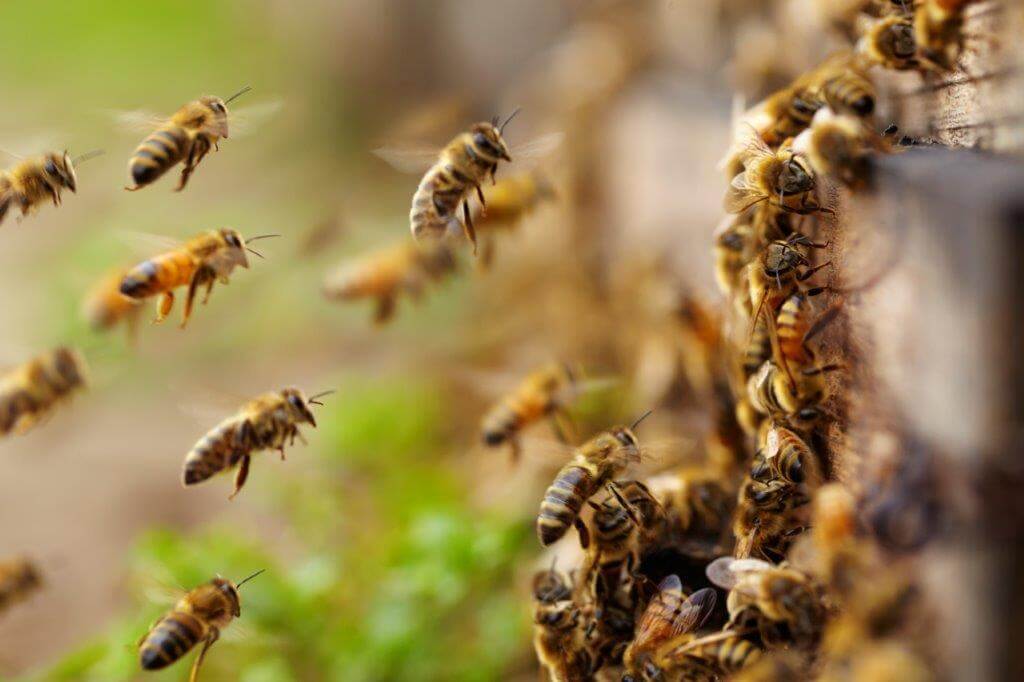
According to the European Union Food Safety Authority, most uses of neonicotinoids represent a risk to wild bees and honeybees. The report released [Feb. 28] comes out despite strong evidence that shows neonicotinoid pesticides are the least of concern when it comes to saving bees.
…
Researchers from the Universities of Wageningen, Ghent, and Amsterdam came to a different conclusion when they summarized 15 years of research on the hazards of neonicotinoids to bees for the first time. While many laboratory studies and other studies applying artificial exposure conditions described sublethal and other effects, no adverse effects to bee colonies were ever observed in field studies at field-realistic exposure conditions.
These findings are in line with many large-scale, multifactorial studies that were undertaken in the USA, Austria, Belgium, Canada, France, Germany, and other countries. The studies have shown poor bee health is more often correlated with the presence of the Varroa mites, viruses, and many other factors, but not with the use of insecticides.
In April 2016, the USDA gave the first approval to a CRISPR crop, clearing white-button mushroom that had been edited to not brown as quickly. In September, the U.S. Department of Agriculture gave the green light to a version of the plant Camelina sativa, an important oilseed crop that had been genetically engineered using CRISPR to produce enhanced omega-3 oil. What was interesting about this approval was that the USDA did not ask that the inventors of the plant endure the usual regulatory hoops required to sell biotech crops. The next month, a drought-tolerant soybean variety developed with CRISPR also got a quick pass from the USDA.
The reason? While these crops were gene-edited, they were not genetically “modified,” according to USDA regulations and did not add any foreign DNA to it. This, the USDA has now repeatedly found, means those CRISPR-edited plants fall outside of regulatory purview.
When Cancer Research … revealed that millennials are set to become the most overweight generation since records began, there was a key message – after smoking, obesity is the second biggest cause of cancer. It called for a ban on junk food advertising and urged people to eat healthier, more balanced diets. But not everyone appreciated the tone of the message.
The award-winning Danish comedian Sofie Hagen, who lives in London and has written for the BBC about her social anxiety, took to Twitter to criticise the campaign, which she said was “incredibly damaging”.
…
So is it wrong to be blunt about the dangers of being overweight?
…
While the health risks of obesity – such as increased risk of cancer and other diseases – are rarely disputed among most doctors, some experts and campaigners think the way weight is talked about should change.
Dr Stuart Flint, a senior research fellow in public health and obesity at Leeds Beckett University, said overweight people were routinely discriminated against and stigmatised – or “fat shamed” – in the media, school, the workplace and even by health professionals.
…
Prof Linda Bauld, Cancer Research UK’s prevention expert, added: “This is not about fat-shaming. It is based on scientific evidence and designed to give important information to the public.”
The East African cooking banana is one of the major food crops eaten by the people living in central Uganda.
In the recent years, the plant has been hit by a number of pests and diseases, including nematodes, black sigatoka and banana bacterial wilt. To combat these problems, scientists at the National Agricultural Research Laboratories (NARL) in Kawanda, near the capital city of Kampala, have been breeding new banana varieties, using modern biotechnology. They’ve also been developing a GM banana fortified with vitamin A and iron.
These genetically engineered bananas are in various stages of development. But the vitamin a version has reached the point where scientists are ready to taste it. This simple act, they say, is a key piece of the product development process. It’s where they make sure the new fruit is similar to ordinary bananas before it is rolled out to farmers, said Dr. Jerome Kubiriba, the head of the institute’s banana research program.
Kubiriba and his team are submitting an application to the National Biosafety Committee, governed by Uganda National Council for Science and Technology, asking for permission to cook and consume their GM banana.
In laboratory testing, these bananas have proven to contain half of the vitamin content needed by children and pregnant mothers, he said. The next step is to move the plants closer to farming communities to see how they grow in field trials at different geographic locations. But part of that evaluation process demands that someone cook and eat the bananas.
Kubiriba said the international scientific advisory committee responsible for overseeing scientific research procedures has given its assurances that the team in on the right track. The committee is comprised of professors from research institutions across the globe, who meet once a year to make assessments of products presented for scientific comments.
Committee members are often invited by scientists to observe what is going on during the research process. Communication is often handled by Skype to verify that researchers are following required standards in order to avoid rejection of the final product.
One potential roadblock is the uncertainty surrounding Uganda’s proposed Biosafety law, which is still under scrutiny and clarifications as requested by Uganda’s president. The new law will need to be in place if the bananas are ever going to make their way into farmers’ fields. Still, Kubiriba is optimistic that his team will be allowed to taste its new bananas.
The initial tasting will be done by a panel of scientists taking part in breeding two varieties of the banana, called Nakitembe and M9. Later, the testing would be expanded to include members of the public.
The process will involve cooking the GM variety side by side with a traditional variety. Test participants will eat both, without knowing which is which.
Dr. Priver Namanya Bwesigye is working with vitamin A-fortified bananas with Uganda’s National Agricultural Research Laboratories. Photo by Lominda Afedraru.
Breeding the banana
The program to breed the new bananas started in 2005. This was after scientists determined that a good number of children and pregnant mothers in rural areas are deficient in vitamin A, said Dr. Priva Namanya Bwesigye, head of the institute’s biotech labs.
Most of the processed food containing vitamin A is found in urban areas. So, it was deemed critical to figure out way to get the critical nutrient into the diets of rural communities. The team accessed genes with beta–carotene from non-edible banana varieties from Southeast Asia. These were isolated and introduced through genetic engineering to local cultivars, Nakitembe and M9.
There were initially 800 lines at the NARL confined field trials. The team selected two lines with traits similar to those of the conventional variety, but also with enhanced vitamin A properties. According to Bwesigye:
We have checked using molecular methods that the gene exists in the banana varieties, we have also confirmed from the banana bunches at the field trial site because the banana, if peeled, the color has changed to pinkish. We have also ensured that the banana plant grows true to the traditional type with the initial traits remaining intact, apart from introduction of Vitamin A gene.
Lominda Afedraru is a freelance science journalist in Uganda who specializes in agriculture, health, environment, climate change and marine science. Follow her on the Daily Monitor web sitewww.monitor.co.ug, Facebook or Twitter @lominda25.
We live in a fast-paced society, where there is no shortage of demands for our time and attention. So it’s not surprising that there are those among us seeking ways to “biohack” their brains in a quest to soup up cognitive abilities. Call it a kind of neurological transhumanism. These efforts come in a variety of flavors, from physical (think yoga) to pharmacological (microdosing LSD, for example). Next up, undoubtedly, will be genetic enhancements.
This isn’t the sort of thing that attracts large amounts of research dollars, considering that it falls outside of society’s primary interest in the treatment and prevention of diseases. So brain hackers often find themselves looking for ways to use technologies and advancements that were developed to treat a range of diseases and disorders.
Our world has no shortage of people touting the cognitive benefits of various products. But if you are looking for potential supercharging options backed by science, it’s best to start with some of the scientific developments designed to help people who suffer from dementia and related disorders. It is from this perspective that we’ll survey currently emerging strategies for enhancing memory and other cognitive functions.
‘Natural’ approaches
The mind is powerful, and so is the natural world that produced it. This is the basic premise for various enhancement tactics and it’s perfectly reasonable. But not every supposed mind-enhancing tactic has a foundation in scientific study. In our society, for example, yoga and meditation are extremely popular. They are well-marketed and people feel better when they participate. Proponents of meditation and Yoga are able to cite research studies suggesting these activities can improve concentration as well as produce measurable, beneficial physical effects, such as a reduction in blood pressure and heart rate. But these studies have been notoriously difficult to control.
Let’s use yoga to illustrate the problem. Anyone who has tried yoga — and you certain should try it if you are looking for a physical activity — knows it involves a lot of stretching, balance skill and deep breathing, along with the use of words and phrases taken from eastern philosophies and religions. Watching people sit on the floor, chanting ‘namaste’ and other phrases, to the scientifically inclined, yoga appears woo-y.
This observation gets to the heart of the problem, because — surprise, surprise — stretching systematically through all of your large muscle groups actually is good for you. But there are other ways to stretch and improve your balance apart from yoga. Yes, yoga masters typically have phenomenal balance and their flexibility is impressive, but one might hesitate to draw a similar conclusion about the average yoga class attendant. Gymnastics is less common but as the old saying goes, gymnasts do handstands all day long. yogis only do headstands. As for the chanting of phrases, the element that makes yoga different from stretching and doing balance moves, there is no evidence that they do anything. Stretching at home while watching television, or better yet while listening to relaxing music, you might achieve the same result as you would in yoga class. Does it enhance mental function? Well, it does relieve stress, and there is little controversy over the idea that relaxation helps one remember and concentrate better.
Pharmacological approach
We have built up a large pharmaceutical industry that plays a central role in clinical medicine. Modern medicine would not be possible without it, and, most importantly to the goal of mind enhancement, pharmaceuticals lend themselves well to clinical testing. Unlike meditation and yoga, it’s fairly straightforward to arrange experimental studies to control for at least what are thought to be potentially the most important confounding factors. You can give volunteer placebo pills, or placebo injections or placebo intravenous infusions, but it’s pretty hard to devise a kind of placebo meditation or yoga.
Now a handful of drug categories are approved for routine clinical use (or for clinical testing) as treatment for neurological disorders, or for the mental decline that comes with such disorders, but also have become popular as so-called “smart drugs.” Also known as “nootropics,” the idea is that the drugs are put to an off-label use, to enhance performance of people who do not have have the conditions for which use of the drugs is approve. For example, it has become common for people engaged in activities requiring exquisite fine motor control to take low doses of beta blockers. These are drugs that slow the heart — or prevent the heart from speeding up— but they also are approved for treatment of certain types of tremors. It turns out that, even for someone who does not have a tremor, taking such medication can stabilize the hand in a way that helps with golf, pool, or something of that nature.
When it comes to the mind, there are a host of drugs that have become popular in various settings as nootropics, from college campuses to high power startups in Silicon Valley. Of these, a few families of drugs have accumulated a collection of research studies suggesting that they could be utilized safety, and also produce a desired effect.
The first such category of such drugs that performance enhancement seekers often try are stimulants. Two common such drugs are methylphenidate and dexamphetamine, which are used routinely and safely to treat attention deficit hyperactivity disorder (ADHD) and narcolepsy. Despite their popularity for off-label use to boost concentration, however, these drugs are not really nootropics. They are actually quite dangerous if you don’t have ADHD or narcolepsy, or some other deficit, because tolerance builds up quickly, leading to dependence. Thus, while methylphenidate can keep you awake overnight or give you a boost in the morning, and possibly move you faster through a pile of non-creative work, they don’t really make you think better, and if you keep taking them you will be back to square one on performance, and with a drug dependence problem. You’d be better off with a strong cup of coffee.
Other types of memory and cognition enhancing medications have become available because they are being tested, or have shown promise, for improving memory or concentration, or for reducing apathy, in people with degenerative brain diseases. These drugs come in families, each with a flagship drug that we can use as an example here for discussion purposes.
One drug, called piracetam, appears to be useful in cases of dementia and depression and anxiety (possibly, it may also reduce incidence of seizures in such patients). It’s the flagship of a family of other drugs ending in racetam. High-power type workers have been using the various drugs of this family, some of which have better safety profiles than others in terms of the risk for damage to the liver, or for other dangerous consequences. Another category that is similarly popular is the modafinils. The flagship drug, modafinil, is approved for use to treat narcolepsy, and also appears to provide a benefit for some patients with dementia, namely that it reduces apathy, which can be helpful in the care for such patients. The military has been experimenting with modafinil to promote wakefulness in pilots and others who must remain not only awake but productive and alert. What is clear is that the side effects, such as nervousness, are substantially reduced compared with stimulants such as dexamphetamine that have been employed for the same purpose for many years. Modafinil itself is fairly expensive, so its use as a nootropic has been popular more for business people than for students. Nevertheless, variations on this drug that are even more expensive are becoming popular.
An even less orthodox approach to nootropics involves use of the hallucinogenic drug LSD, but in doses too tiny to produce hallucinations. The jury is out on whether this really can improve cognition, but interestingly LSD has been used with some modest success in people with neurological conditions ranging from depression and anxiety to post-traumatic stress disorder (PTSD).
Magnetic and electrical stimulation
As with the drugs, the idea for utilizing physics for mental enhancement comes from the use of devices on people with deficits. Transcranial magnetic stimulation has been available for some time. It works on the principle that brain pathways can be tuned up through application of a magnetic field. Its sister technology is direct current electrical stimulation through implanted electrodes, or onto the scalp. Electrical stimulation has been used and studied for decades in settings of depression and PTSD with some success. For the time being, an brain implants intended for transhumanist application will involve electrical stimulation rather than integration between the biological mind and computing.
David Warmflash is an astrobiologist, physician and science writer. BIO. Follow him on Twitter @CosmicEvolution.
Before the Industrial Revolution in the United States, Canada and Europe, you might have ended up married to a fourth cousin…Then, in the late 19th century, something changed, and people stopped marrying their cousins.
…
[S]hifts in social norms [might have] played a bigger role than geographic mobility in getting people to wed outside their bloodline. It’s also just one example of the insights that can be gleaned from the world’s largest, scientifically-vetted family tree, presented in a study published on [March 1] in Science.
Compiling and validating 86 million public profiles from Geni.com, a genealogy-driven social media site, the authors generated 5 million family trees. The largest tree consisted of 13 million people.
…
The researchers then used this data set to test several genetic and historical hypotheses, showing “you can harness the hard work of so many people around the globe just documenting their own family history, and learn something about humanity,” said Yaniv Erlich, the chief science officer of MyHeritage, the parent company of Geni.com, and senior author of the paper.
…
Biomedical research that marries family trees with genetic and health information could lead to new discoveries about heritable disease risk. In social sciences, genealogies merged with census and tax records could yield findings on things like inequality.
The outcome of … parliamentary elections in Italy was a stunning victory for populist and nationalist parties, and a clear warning to Italy’s political establishment and the European Union. But some in Italy worry that the results may also have a negative impact on science.
There were two big winners: the populist, web-based Five Star Movement (M5S) and the hard-right, anti-immigrant League…. Both have come under fire for taking antiscientific positions on issues such as vaccination and animal testing.
…
M5S’s program includes some environmental positions, including economic “degrowth,” a focus on renewable energy, and a complete ban on the cultivation of genetically modified organisms (GMOs).
…
M5S senators have … clashed on several occasions with Elena Cattaneo, a stem cell scientist at the University of Milan in Italy and senator for life who often acts as a spokesperson for the scientific community in the Senate. Cattaneo compiled a 1500-page dossier for all parliamentarians on GMO research and used it in a number of debates to fight unsubstantiated claims by M5S about the risk posed by transgenic crops. She has also investigated the work of Federico Infascelli, an animal nutritionist who’s close to M5S, after he claimed in a parliamentary hearing that GMOs are dangerous to human health. (Cattaneo’s investigation eventually led to the retraction of one of Infascelli’s papers.)