In a sense, our eyes are sophisticated cameras; the brain’s visual cortex runs the software that tells us what we’re seeing.
…
What about the reverse? If you directly program a scene into the visual cortex by electrically stimulating its neurons, are our biological cameras even necessary?
In a preliminary study presented at the Society for Neuroscience conference [November 5], a team developed a visual prosthetic that does just that. Here, the team used an implanted array of electrodes in the visual cortex to directly input visual information into the brain—bypassing eyes that have been damaged by age or disease.
By systematically “drawing” letter-like shapes through sequentially activating the electrodes, the team showed that blind patients could discern simple shapes.
…
An analogy is tracing letters on your hand. For example, if someone simultaneously touches multiple points on your palm that collectively make up the letter z, it’s close to impossible to decipher the letter based on touch alone.
This is what previous generations of visual cortical prosthetics tried to do, and patients just see amorphous light blobs.
…
In contrast, dynamically drawing the same shape in a trajectory that matches “z” makes it easy to figure out the letter.
“What we’ve done is essentially the same idea…instead of tracing the letter on a patient’s palm, we traced it directly on their brain using electrical currents,” said [researcher Michael] Beauchamp.
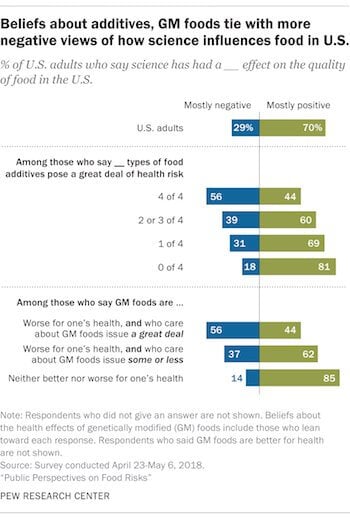
A new Pew Research Center report shows an American public that is closely divided over [food] additives, and genetically modified (GM) crops …. What’s more, a closer look at these public divides tell a larger story about how Americans assess science.
About half of the public (51 percent) believes the average person faces a serious health risk over the long term from eating foods with additives …. Similarly …. about half (49 percent) consider [GM] foods to be worse for one’s health than foods with no GM ingredients, while 44 percent say GM foods are neither better nor worse than non-GM foods ….
These beliefs do not exist in isolation from one another …. those who see more health risk from food additives also tend to see GM foods as worse for one’s health than non-GM foods ….
[P]eople have their own set of beliefs about these issues [which] are consequential when it comes to their assessments of science. For example, among those who say that all four types of food additives considered in the survey pose a great deal of health risk, 56 percent believe the effect of science on the quality of food has been mostly negative …. By contrast, 81 percent of those who say none of the four types of food additives pose a great deal of health risk believe that science has had a positive effect on food quality in the U.S.
Dr. Thomas Zinnen has worked with the University of Wisconsin Cooperative Extension Service for almost three decades. His principal job has been sharing information about technology with the state through creative programs and activities. He shares his thoughts on communication with the public, along with some excellent examples of how to get non-scientists to implement scientific reasoning.
The crops we rely on today have been bred over thousands of years to enhance certain characteristics. For example, sweetcorn started life as a wild grass called teosinte.
But every time we select for a trait through breeding – such as repeatedly crossing selected plants to produce bigger fruits – we lose genetic diversity which is the essential variation for other traits like disease resistance. This leaves our crops vulnerable to pests and disease.
Precise gene editing technologies could offer a solution.
As a society we need to work out how such technology and plants will be regulated to ensure safety and acceptability.
The new domestication
The new approach, termed “de novo domestication” or “new domestication”, allows the genetic diversity of the wild plant to feature in a new crop. These new tomato lines retain all of the diversity of their ancestors, providing protection against disease.
This was possible thanks to years of painstaking research into the genes that underpin the essential traits related to domestication. Without this, scientists wouldn’t know which genes to target and edit.
Some of the genes were identified by crossing plants with different traits (like large versus small fruits). Others were discovered by comparing wild relatives with domesticated plants.
Could we do this with other wild species?
We currently rely on very few plant species for the majority of the world’s food production. More than half of our plant-derived energy intake comes from just three grasses (wheat, rice and corn). Gene editing could provide a way to expand this.
Showing the broader value of the tomato approach described above, another research group applied the same method to an orphan crop Physalis pruinosa (known as the ground cherry). Orphan crops are those that have been neglected and escaped modern agriculture for various reasons. They receive little investment, research or breeding effort.
The researchers hope the ground cherry will one day find its place alongside the strawberry, blueberry, blackberry and raspberry in large-scale agriculture.
Ground cherry could be a new berry crop. Image Credit: Pixabay/Alexas_fotos
Gene sequencing getting cheaper
To create new crops, we need good working knowledge of the gene targets, and the genome sequence (which contains the complete code of all genes inside each cell) of the plant species that we want to domesticate.
Genome sequencing used to cost many millions of dollars and require massive research teams. It’s now increasingly cheap and routine.
Our understanding of the target genes comes largely from studies of major agricultural crops. Some domestication genes will only work in species that are closely related to the crop in which they were discovered.
Versions of the domestication genes targeted in the tomato studies are found in many plant species, so the approach might well work in more distantly related species too.
How should we regulate this?
We should be fostering this kind of innovation, but we need to do it safely.
Worldwide, policymakers have wrestled with the implications of the new genetic tools. Debate has sprung up around how to regulate genome editing, compared with existing genetic modification methods.
Editing genes in a crop is different to traditional genetic modification, or transgenics – in which a gene from a different species is inserted into a plant.
In contrast to both of these approaches, classic crop breeding has relied on random processes like irradiation to induce new genetic diversity. CRISPR editing is similar but more efficient and precise, because it targets a specific desired mutation.
In July, European courts ruled that edited plants fall under the same regulation as transgenics. This places them under very strict regulations that create significant hurdles to enter the market, potentially driving talent and funding out of Europe.
In contrast, the US Department of Agriculture (USDA) said it would not regulate genome-edited crops.
Follow the latest news and policy debates on sustainable agriculture, biomedicine, and other ‘disruptive’ innovations. Subscribe to our newsletter.
A reasonable balance between these two regulatory approaches is probably the most sensible way forward. Genome editing shouldn’t completely escape regulation.
If it can be demonstrated that the edited plant doesn’t contain any new genes (including CRISPR machinery) then the regulation should be much less stringent than for transgenics, because the changes are so similar to conventional plant breeding. Sequencing the genome of the edited crop is a good way to provide evidence of this.
In Australia, genetically modified organisms are regulated by the Office of the Gene Technology Regulator (OGTR). The current legislation defines genetic modification very broadly, but is under review. South Australia is an exception to this, with a ban on genetically modified crops.
Ideally, regulation should focus more on questions around the types of genetic modifications that we should allow in our crops than the way that they were introduced and where they came from.
But edited organisms shouldn’t be completely excluded from regulation. Evidence should be requested, and provided, that new crops are functionally equivalent to the products of conventional breeding and the subsequent approval process should reflect this.
The primary priority for policymakers and regulators is to ensure crop safety. Maintaining an open and transparent dialogue will be crucial so that the public can trust the decisions.
James Hereward is a Research fellow at The University of Queensland. Twitter @HerewardJames
Caitlin Curtis is a Research fellow in the Centre for Policy Futures (Genomics) at the University of Queensland. Twitter @DrCaitlinCurtis
Is Europe, home of the Enlightenment, turning its back on reason and science? Recent decisions by Europe’s regulators, judges, and politicians suggest that the answer is ‘Yes.’
From the Court of Justice of the European Union’s “precautionary” ruling on gene edited plants to continuing bans on GMOs, to draconian regulations on crop protection products that could make it impossible to farm productively, science has taken a back-seat and innovations are routinely discarded in the name of a pre-modern past.
Recently, some 75 European plant and life sciences research centres, including the UK’s John Innes Centre, issued a call to European policymakers to reverse the Court’s effective ban on new gene edited plants. The result of this ban will be to kill innovation and bring the most promising breakthroughs in plant development in decades to a halt, they said.
…
New techniques like CRISPR are miracles of modern science. They allow researchers to alter very specific stretches of DNA to evoke desirable traits or to suppress less desirable ones. They create mushrooms that don’t brown, rice that is healthier for diabetics and oils with more omega 3 fatty acids. Potentially, they could remove the allergens from peanuts or make wheat safe for people with gluten intolerant Celiac’s disease.
In contemporary media, portrayals of autistic people are typically stereotyped and conventional: heterosexual, cisgender and, more often than not, naïve. Lesbian, gay, bisexual, transgender, questioning/queer and similar (LGBTQ+) autistic identities, unfortunately, remain taboo.
However, emerging evidence suggests that autistic people are more likely to identify outside of conventional genders and sexualities than the general population is.
…
So what does it mean to be autistic and gender-diverse? To find out, we followed 22 autistic gender-diverse adolescents for nearly two years5.
Most of the autistic adolescents recalled having gender-diverse inclinations in early childhood. However, many were reluctant to express their gender identity because they worried about bias and harassment. And yet it seemed urgent to most of them to address their gender needs.
…
[O]ne-third of the participants said other people had questioned their gender diversity because they are autistic. For example, they said people had told them that their gender diversity is an obsession rather than a ‘real’ experience, or that the experience is a feature of autism itself. They found these assumptions distressing.
…
We know that one of the most protective factors for youth in a gender or sexual-orientation minority is understanding and support from important people in their lives. This is likely to be even more true for those on the autism spectrum.
That’s right: it’s almost time for the jolly old fat man to visit homes around the world to deliver presents and delight! But only for good girls and boys. The others end up with a nice lump of coal. Luckily, Santa has asked me to help him figure out who has been naughty this year ….
…
Friends of the Earth
This activist organization was already trending towards the naughty list, especially after it took aim at yours truly in a “report” a few years ago. But then it went and celebrated the announcement that Tanzania has banned all GMOs. Yes, because prohibiting farmers in an African country from having highly-productive, drought-resistant crops is something to celebrate. How are they that dense?
…
Dewayne Johnson’s legal team
…. The Monsanto-glyphosate case was probably the scariest thing that happened to modern agriculture this year. And the effects could be far reaching. Johnson sued Monsanto claiming, despite all the evidence to the contrary, that his terminal cancer was caused by exposure to Round-Up. A jury awarded him a multi-million dollar award. Again, the lawyers did a nice job of proving their case, especially because the evidence was dubious. But there are 5,000 other lawsuits still pending on this same issue. And it could spur a new legal trend well beyond glyphosate and Round-Up. Good news for Johnson, bad news for the rest of us.
Lawyers are bringing a case against a London hospital trust that could trigger major changes to the rules governing patient confidentiality. The case involves a woman who is suing doctors because they failed to tell her about her father’s fatal hereditary disease before she had her own child.
The woman discovered – after giving birth – that her father carried the gene for Huntington’s disease, a degenerative, incurable brain condition. Later she found out she had inherited the gene and that her own daughter, now eight, has a 50% chance of having it.
The woman – who cannot be named for legal reasons – says she would have had an abortion had she known about her father’s condition, and is suing the doctors who failed to tell her about the risks she and her child faced.
…
“The outcome is potentially very important,” said a spokesman for Fieldfisher, the London law firm representing the woman. “Should clinicians be legally obliged to consider the interests of anyone they are reasonably aware of who could be affected by genetic information – or is the protection afforded by current professional guidance enough?”
…
[T]he case of Patient ABC versus St George’s Healthcare Trust was set for trial in November next year.
We have planted millions of acres of genetically-engineered (GE) crops, a vast majority of which are resistant to herbicides. In the U.S., we’ve collected lots of herbicide sales and usage data …. So we should be able to simply look at the herbicide data before and after GE crops were developed, and infer an answer. Right?
A few years ago, Charles Benbrook did just that and published his results in a paper that summarized pesticide data between 1996-2011 …. However, Graham Brookes looked at similar data spanning almost the exact same time period and also published his results in a paper.
…
How [could] two scientists could look at almost the same data, but come to such drastically different conclusions? How could the same simple question lead one person to conclude that herbicide use increased by 239 million kg, while another person concludes that herbicide use was reduced by 225 million kg?
…
I don’t think it is possible to say for sure what the impact of GE crops has been. My personal opinion …. is that we’ve probably seen a net benefit with respect to both toxicity and the evolution of ‘superweeds.’ And one could even make an argument that adoption of GE crops has slowed the increase in herbicide use. But …. getting an answer to this question is anything but simple.
[Neurosurgeon Ashesh Mehta] was operating on [an] epilepsy patient to determine the source of seizures. But the patient agreed to something more: to be part of an audacious experiment whose ultimate goal is to translate thoughts into speech.
While he was in there, Mehta carefully placed a flat array of microelectrodes on the left side of the brain’s surface, over areas involved in both listening to and formulating speech. By eavesdropping on the electrical impulses that crackle through the gray matter when a person hears in the “mind’s ear” what words he intends to articulate (often so quickly it’s barely conscious), then transmitting those signals wirelessly to a computer that decodes them, the electrodes and the rest of the system hold the promise of being the first “brain-computer interface” to go beyond movement and sensation.
If all goes well, it will conquer the field’s Everest: developing a brain-computer interface that could enable people with a spinal cord injury, locked-in syndrome, ALS, or other paralyzing condition to talk again.
…
“We think we’re getting enough of an understanding of the brain signals that encode silent speech that we could soon make something practical,” said Brian Pasley of the University of California, Berkeley. “Even something modest could be meaningful to patients. I’m convinced it’s possible.”
[Delaney Van Riper] was born with a rare genetic disease called Charcot-Marie-Tooth, or CMT, which is slowly eroding her nerve cells’ ability to ping messages back and forth between her brain and her muscles. Doing things with her hands and feet, like walking and holding a pencil, has been growing progressively harder. But last year she became one of a handful of patients whose cells are undergoing experimental Crispr procedures.
…
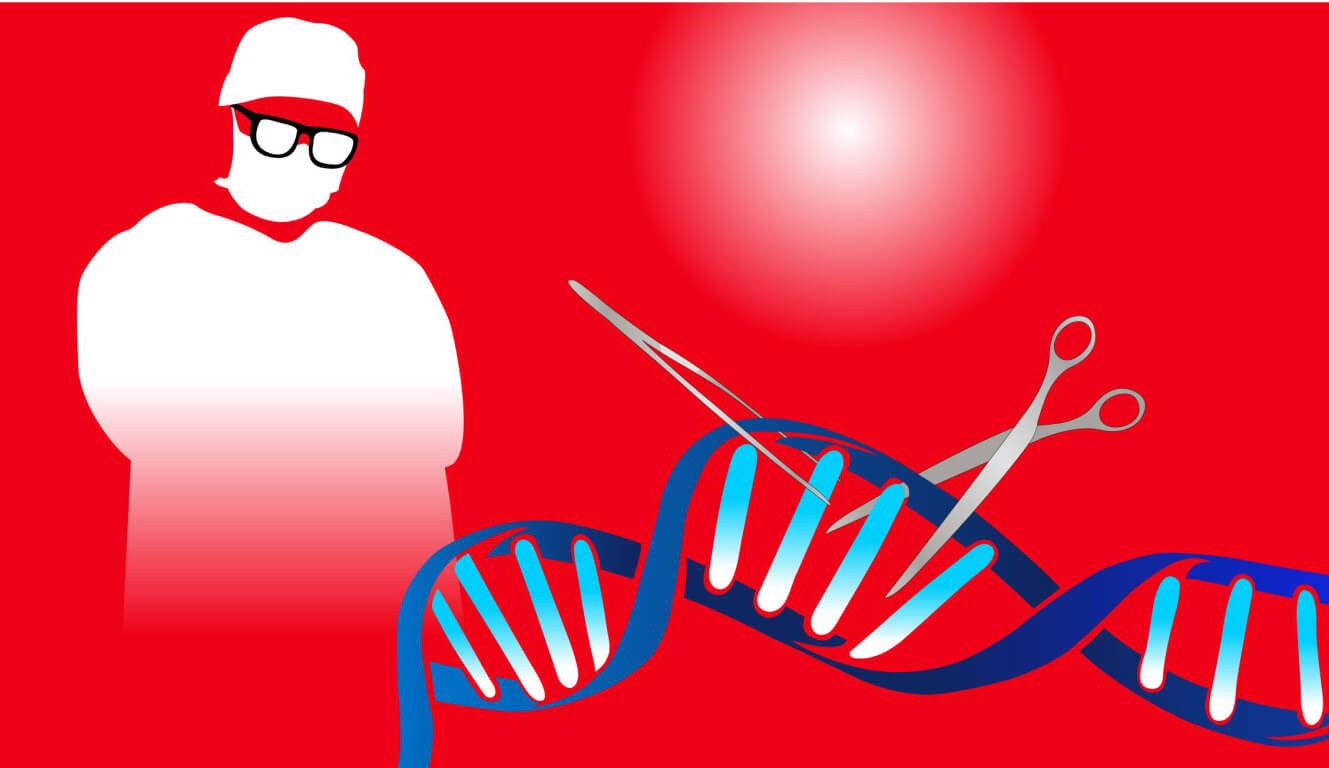
In September, UC Berkeley biochemist and Crispr pioneer Jennifer Doudna announced she was opening up a lab across the Bay to establish the epicenter of a whole new field of medicine: genome surgery.
…
What she envisions is the development of procedures closer to how surgeons slice out malignant tumor tissues with scalpels today. Except tomorrow’s genome surgeons will use Crispr’s molecular scissor function to remove or replace faulty genes.
…
What’s the right dose? What’s the right way to calculate risks and benefits for patients? What data do you have to collect to know it’s safe and effective? Doudna and her collaborators at the Gladstone hope to answer these big questions over the next five to ten years. Their efforts are perhaps the most concentrated push in a national effort to create the tools and rules necessary for doctors to widely adopt genome editing as part of standard care.
An Indian scientist in the UK is working on a way to grow crops in arsenic contaminated soil, a study which is likely to have wide ranging impact for farmers in north-eastern India.
Dr Mohan TC, from Dr Alex Jones Laboratory at the School of Life Sciences at the University of Warwick, conducted a pilot study in transgenic Barley and is now looking at doing it in rice plants ….
…
Arsenate is the most abundant form of arsenic and is structurally similar to phosphate. Therefore, it is easily incorporated in to plant cells through …. the process of the roots absorbing nutrients.
However, when a plant absorbs arsenic it can translocate it up to the edible part of the plant [and] ultimately arsenic enters food chain. Plants have an inherent capacity to cope with arsenic stress by producing metal-chelating peptides called phyochelatins (PCs).
PCs detoxify the arsenic and restrict the movement of arsenic in the roots, which in turn helps to reduce the root-to-shoot translocation of arsenic …. Scientists …. wanted to make plants [that] stop any of the arsenic escaping and travelling up the shoot to the edible part of the plant.
[T]his is being done by making transgenic plants with reduced cytokinin hormone in the roots, which …. can detoxify and hold more arsenic in the root.
New research has disputed a longstanding view that early humans helped wipe out many of the large mammals that once roamed Africa.
Today, Africa broadly has five species of massive, plant-eating mammal; but millions of years ago there were many more types of giant herbivore. Why so many types vanished is not known, but many experts have blamed our tool-using, meat-eating ancestors.
Now, researchers say the mammal decline began long before humans appeared.
Writing in the journal Science, Tyler Faith, from the Natural History Museum of Utah, and colleagues argue that long-term environmental change drove the extinctions.
…
The results of the analysis showed that over the last seven million years, some 28 lineages of large mammal went extinct in Africa.
Furthermore, the onset of the herbivore decline began roughly 4.6 million years ago, and the rate of decline did not change following the appearance of Homo erectus, one of the earliest human ancestors that could have contributed to the extinctions.
“This extinction process kicks in over a million years before the very earliest evidence for human ancestors making tools or butchering animal carcasses and well before the appearance of any hominin species realistically capable of hunting them, like Homo erectus,” said Dr Faith.
CBC News has learned AquaBounty’s genetically modified salmon is going through a new federal risk assessment.
Environment and Climate Change Canada says the risk assessment comes after the company notified Ottawa in July about its plans to build a new egg production and grow-out facility in Rollo Bay West, [Prince Edward Island] P.E.I. Previously the company was producing a limited number of eggs in its facility in Bay Fortune, P.E.I.
AquaBounty Technologies now wants to produce 250 metric tonnes of its AquAdvantage salmon for commercial sale in Canada and export. The company’s salmon grow twice as quickly as conventionally reared Atlantic farmed salmon.
Initially, in May 2017, Environment Canada told CBC News the new project would not require an additional federal environmental assessment, but by July 2017, that position had changed. “Should AquaBounty wish to manufacture or grow out the AquAdvantage salmon at this site, a new notification will be required,” Minister Catherine McKenna wrote.
…
According to Environment and Climate Change Canada, AquaBounty volunteered to participate in a public engagement process as part of this latest risk assessment. That process accepts scientific input from stakeholders.
If the world hopes to make meaningful progress on climate change, it won’t be enough for cars and factories to get cleaner. Our cows and wheat fields will have to become radically more efficient, too.
Based on current trends, the authors calculated, the world would need to produce 56 percent more calories in 2050 than it did in 2010. If farmers and ranchers met that demand by clearing away more forests and other ecosystems for cropland and pasture, as they have often done in the past, they would end up transforming an area twice the size of India.
…
The report notes that producing 56 percent more calories without expanding agricultural land could prove even more difficult if, as expected, rising temperatures reduce crop yields. But …. many of the recommendations in the report, such as breeding new, higher-yielding crop varieties or preventing soil erosion, could also help farmers adapt to climate change.
…
…. The report’s authors call for large increases in research funding to look at ideas like …. genetic editing techniques that might produce higher-yielding crops. They also urge new regulations that would encourage private industry to develop sustainable agricultural technologies.
The Internet is loaded with claims about allergies being caused by GMO technology or the pesticide residue found in foods grown from genetically engineered seeds. This propaganda piece circulated by Farm Fairy Crafts, an organic promoting commercial site that has become a global hub for scaring consumers about modern technology is typical:
…there is a distinct possibility that a SEGMENT OF A DUST MITE ALLERGEN MIGHT HAVE BEEN SPLICED INTO ROUNDUP READY GMOFOODS!!!
The “article” goes on to pass off as science a questionable analysis of the allergenic threats from GMO foods.
These stories are usually accompanied by claims about organic foods being free of pesticides and genetic manipulation, supposedly making them a better alternative for those hoping to avoid allergies. Both have been proven to be myths.
Why does it appear that allergies are increasing or being diagnosed more aggressively?
There is evidence suggesting parental over-protection may contribute to the development of food allergies in children. The argument, presented by the hygiene hypothesis, is based on the tendency of higher income parents to engage in a behavior that might best be described an overuse of anti-bacterial gels and other products aimed at protecting kids from all manner of threats. Many of these high-income parents also share a tendency to purchase organic and non-GMO food — or at least to shop in stores focused on those products.
So it is, indeed, possible that there is relationship of sorts between food allergies and GMO foods. But if so, it’s the opposite of what critics claim. It’s not the GMOs, but rather one of the behaviors of those who seek to avoid GMOs.
Myths about GMOs, pesticides and allergies
Misinformation on the web about the supposed GMO-allergy link comes not just from alarmists, who do little more than spread misinformation they’ve found through Google searches, but also from the organic industry and large corporations who have thrived on food fears.
Consider this NaturalHealth365 blog, which promotes fringe alternative health products, discussing the case of a girl who suffered an allergic reaction after consuming conventional blueberry pie. It appears to be a true story, but one that confuses readers with respect to pesticides. Consider this simple sentence: “Most consumers know the majority of non-organic fruits and vegetables are loaded with pesticides.”
There are two problems with that claim. First, the pesticide debate concerns trace amounts of insecticides and herbicides, so to say that a food is “loaded with pesticides” is hyperbole. Second, organic food has pesticides too, but often we don’t know the amounts in organic food because they are naturally occurring chemicals like copper sulfate and rotenone, so the regulation is not as strict. Later the author reveals what actually happened. The girl reacted to an antibiotic, streptomycin, in the berries — the first such case to be documented. This should bother us, and indeed antibiotics are not something you should want in your food, but the article goes on to say:
The girl’s reaction was traced not to any of the ingredients used to make the blueberry pie, but to the antibiotics that the fruit was exposed to as part of efforts utilizing pesticides to slow damage to the berries by bacteria…Most would also think of pesticides in terms of insecticides and herbicides only, and would be surprised to learn that in addition to these chemicals, antibiotics are used routinely to stop bacterial growth in fruit, such as blueberries.
Follow the latest news and policy debates on sustainable agriculture, biomedicine, and other ‘disruptive’ innovations. Subscribe to our newsletter.
The author is right that pesticides consist of insecticides and herbicides, but antibiotics are in their own category. Plenty of consumers seek to avoid foods with subclinical levels of antibiotics, but that doesn’t mean they ought to be worried about trace amounts of herbicides, such as the much demonized glyphosate.
Still, critics continue to sound warnings about the potential allergy dangers of GMO foods. Consider this article by the Organic Consumers Association, which says:
There is concern that GM foods pose an allergy risk. Currently the list of GM food products intersect with the eight most common food allergens: eggs, milk, fish, peanuts, shellfish, soy, tree nuts, and wheat. Most of the foreign proteins being gene-spliced into foods have never been eaten by humans before or tested for their safety.
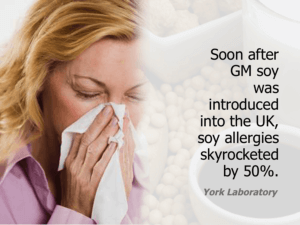
But GM crops actually go through vigorous testing for many years before they are approved for the human food supply. Regarding the apparent dramatic increase in food allergies in recent years, the science does not actually support a causative role for any factor that is particular to any high tech genetic modification process. Most food allergies (roughly 90 percent) involve a small number of foods, such as peanuts, tree nuts, eggs, shellfish, and soy. Of these, only soy is produced through techniques commonly considered to be “GMO”.
While the incidence of peanut allergy diagnoses has increased, the condition did not come out of nowhere. There always have been kids with peanut allergies. The reason is not GMOs and the answer to the problem will not come from restricting food producers from employing new technologies. On the contrary, biotechnology, particularly the use of CRISPR genome editing, may eventually lead to a marketable hypoallergenic peanut, even if initial optimism was hyped.
The hygiene hypothesis
Then there is the matter of what causes food allergies. Certainly, there are multiple etiologies and exacerbating factors, but it’s significant that peanut allergies are linked with socioeconomic status. This association has been recognized for about the past six years and adds weight to the hygiene hypothesis, which suggests that allergies and other immune system disorders result from a reduced exposure of very young children to infectious agents, such as parasites and symbiotic microorganisms. This can result from overzealous cleansing of the children and everything that comes into contact with them. Which parents have the time and wherewithal to act like this? Those with money. In other words, the same category of people who can afford to buy their groceries at upscale stores like Whole Foods.
But merely having the money to engage in two expensive endeavors — in this case, buying organic and non-GMO and rubbing copious amounts of anti-bacterial gel onto a toddler’s skin — does not mean that one must do both. But there’s a connection that’s more subtle, namely the tendency of the sensitizers and anti-GMO crusaders to see toxins everywhere. As expressed so eloquently by obstetrician gynecologist Amy Tuteur on her blog The Skeptical OB: “Only the privileged have the leisure time and financial resources to indulge in internet fantasies of being poisoned by toxins.”
A version of this article originally appeared on the GLP on March 29, 2017.
David Warmflash is an astrobiologist, physician and science writer. BIO. Follow him on Twitter @CosmicEvolution
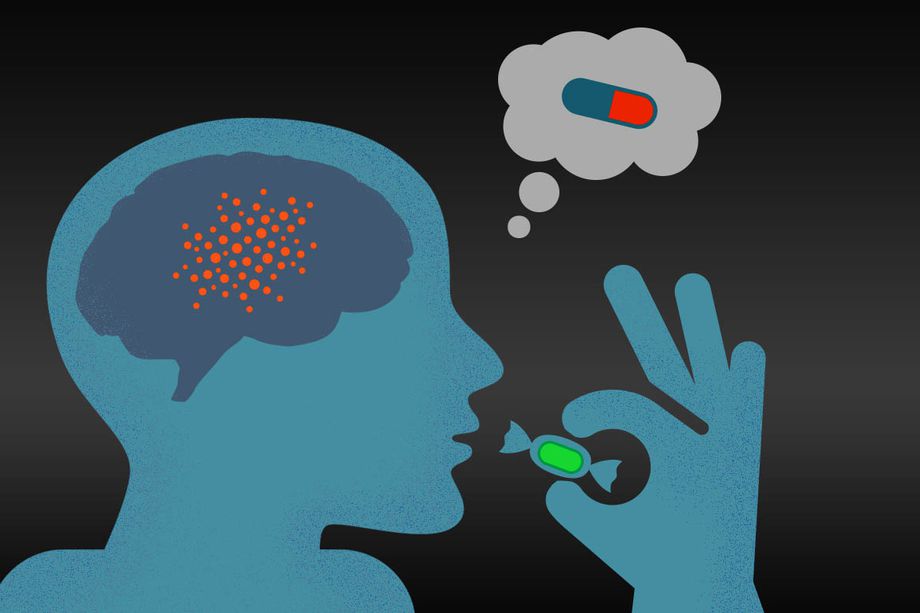
Sugar pills might just be the most used medication in medical research. They’re necessary so scientists can measure the effect of the treatment they’re studying against any of the other, inadvertent aspects of the situation that could have an effect. It may be, for example, that a doctor’s soothing voice and excellent bedside manner put patients at ease and improve conditions. So when she gives a patient a pill, they feel better whether it contained medication or was just a dummy.
But there’s a problem. Patients have been responding better to placebos, at least in the US, according to Jo Marchant writing at Nature. And this is a problem for researchers who are trying to develop new antidepressants, antipsychotics and pain drugs:
This effect would explain why drug companies have trouble getting new painkillers through trials, notes neuroscientist Fabrizio Benedetti, who studies placebo responses at the University of Turin, Italy. Over the past ten years, he says, more than 90% of potential drugs for treatment of neuropathic and cancer pain have failed at advanced phases of clinical trials.
When a placebo effect is increased, it’s harder to prove that the study drug works. And when you can’t prove a drug works better than a sugar pill, the FDA won’t approve a therapy. On one hand, this is further evidence that pharmaceutical companies need to be developing more drugs and better ones. On the other hand, it’s important to know if some change in the American population is causing the effect.
In May 2015, researchers from Harvard Medical School described a set of variants in 11 genes that they say are linked to the placebo effect and called it the ‘placebome.’ Scientists have known for quite some time that some people are more prone to experiencing the effect than others. And early investigations implicated the body’s natural pain control systems, including the opioid-like chemicals made and released in our own brains.
The placebome study compared the genetics of people who had been in clinical trials. They found that high-responders share genetic variation in the metabolic pathways for the pleasure-inducing neurotransmitter dopamine, serotonin and opiods and edocannabinoids. Those correspond to our bodies’ own pain management and mood regulation systems. The variants change the pathway in different manners. A person with two copies of the rare variant of COMT has increased dopamine in the pre-frontal cortex of their brain. That gene combination is also correlated to high placebo responders. Alcoholics with a different dopamine-promoting variant of the DBH gene implicated in the study did better staying sober when they took a placebo than when taking the anti-craving drug naltrexone.
Follow the latest news and policy debates on sustainable agriculture, biomedicine, and other ‘disruptive’ innovations. Subscribe to our newsletter.
But these genes couldn’t explain all of the people who had a large placebo effect. And all these gene variants don’t necessarily come together as a package. High responders often differed in which systems their variants affected. You might have a high-response variant in either your dopamine or your serotonin system or both, the scientists wrote:
Consider, for instance, an individual who is dopaminergic dominant and tends to be more responsive to placebo in pain studies: their placebo response in a depression trial might differ significantly depending on whether they were serotonergic dominant or recessive.
This distinction is important because it could determine which clinical trials these high responders would be more likely to throw off. But this begs a larger question: Now that we know there may be some underlying genetic determination of placebo responders, should we eliminate them from trials? That may allow for more efficient, effective and cheaper clinical trials, the study authors note. Although eliminating whole swaths of patients before trials because you expect a bad result is a controversial idea, it’s done all the time. Often, for example, patients with well-controlled chronic diseases like diabetes are too healthy to join new drug studies because their response to medication may not be large enough.
And what about the potential benefit for a patient? If a physician knew a patient was a high responder, could she decide to prescribe a smaller dose of medication or a placebo to reduce cost and chance of side effects? Likely not now writes Cari Romm reporting for the Atlantic:
Another issue is who should own that information in the first place. Out of necessity, a doctor—as the one to facilitate the genetic testing—would be the knowledge gatekeeper when it came to a patient’s placebo sensitivity. Bioethical standards, though, dictate that if doctors use placebos on their patients, then the patients have to be fully informed every step of the way—even if it might lessen the effects.
The healthcare industry has largely and loudly embraced the move towards precision medicine. If we can maximize research and offer patients safer, cheaper therapies based on their placebome, shouldn’t we?
A version of this article originally appeared on October 10, 2016.
Meredith Knight is a freelance science and health writer in Austin, Texas. Follow her on Twitter @meremereknight
Researchers from [the French Agricultural Research Centre CIRAD] recently showed that inactivating a gene, RECQ4, leads to a three-fold increase in recombination in crops such as rice, pea and tomato …. This discovery, published in the journal Nature Plants could speed up plant breeding and development of varieties better suited to specific environmental conditions (disease resistance, adaptation to climate change).
Recombination is a natural mechanism common to all organisms that reproduce sexually …. The chromosome mix determines the genetic diversity of species …. For instance, to obtain a new tomato variety that is both tasty and pest- or disease-resistant, breeders cross and breed …. plants that have the genes involved in taste and resistance. However, this is a lengthy process …. On average, there are just one to three genetic material crossover points between the chromosomes for every cross …. So what is it that limits the number of recombinations?
To find out, researchers …. studied the genes involved in controlling recombination in a model plant, Arabidopsis thaliana. They discovered that one gene, RECQ4, is particularly effective at preventing crossing-over …. inactivating it doubles to quadruples recombination frequency!
Read full, original article: Inactivating genes can boost crop genetic diversity
The human genome sequence, first published in 2001, has some important information missing. The latest version of it, called GRCh38, has a monstrous 3.1 gigabases of information—but that’s still not enough. A letter published in Nature Genetics [November 19] finds that the reference genome is missing a colossal 10 percent of the genetic information found in the genomes of hundreds of people with African ancestry—information that also appears in other human populations.
The “human genome” is in fact assembled from the genomes of just a handful of people, with the majority of GRCh38 coming from just one person.
…
[Author Rachel Sherman] set out to create a pan-genome for Africa, using DNA from 910 people of African descent.
…
Sherman and her colleagues looked for sequences more than 1,000 base pairs long that didn’t match the reference and found a lot of them: nearly 300 million base pairs, which is about 10 percent of the size of the entire reference genome.
That’s not to say this information is unique to African people: about 40 percent of this data matched either the Korean or Chinese genomes. This suggests that it’s important genetic material that’s present across a huge range of humans, but still not captured by the reference genome assembled from just a small number of people. There’s a lot going on with humans that isn’t reflected by the human reference genome.