CRISPR-edited wine grapes could cut pesticide use in Europe, but regulatory hurdles remain

c x

When you toast during the holidays …. think about [this]: grape vines occupy 3 percent of the land cultivated in Europe, but they employ as much as 65 percent of the fungicides used in agriculture.

…. If the use of the most advanced breeding technologies, such as CRISPR, were allowed, the wines we love would become resistant to [oidium and downy mildew] without losing any of their genetic identity.

[R]esearch has already yielded the first conventional fruits, with ten varieties registered in 2015 in the [Italian] National Catalog …. 2018 brought the first commercial harvest for three of these vines. For others, vinification is still in the pre-commercial phase.

Those who participated in the aperitif biotech organized on December 5 in Milan by Assobiotec could taste some of the vines in preview. “But soon the first four grape varieties of Pinot will also be registered, with multiple resistances,”  geneticist Michele Morgante said during the tasting ….

The hope of the experts, therefore, is that in [the] future regulators, producers and consumers will be convinced to explore the potential of techniques that, according to the European Court of Justice, fall under the GMO directive, although they don’t involve the transfer of DNA between different species.

[Editor’s note: This article was originally published in Italian. This summary was prepared with Google Translate and edited for clarity.]

Read full, original article: A biotech toast to the future of wine

Should law enforcement have a universal genetic forensic database?

a a f f a fb ee

The idea of the government having access to every citizen’s DNA might sound like an Orwellian nightmare, but recent events suggest we’re not far from this being the ground truth. In April, police charged a suspect in the Golden State Killer case after linking crime scene DNA samples to a distant relative via the public GEDmatch database.

This poses a number of problems. Firstly, databases held by law enforcement inevitably end up showing the same biases present in all facets of policing—young, male, non-white populations are significantly over-represented.

That’s prompted researchers from Vanderbilt University to advocate for a universal genetic forensic database in a recent paper in the journal Science. The core of their argument is that law enforcement already has piecemeal and unregulated access to our genetic profiles, so it’s probably better to formalize and proactively control that access.

Such a registry would remove the bias associated with current collection methods, they say, as well as preventing the exposure of sensitive genetic information not relevant to law enforcement.

Just because the authorities can probably already access our genetic information doesn’t mean we should make absolutely sure that they can. And just because the current system means they’re likely to ensnare certain populations more effectively doesn’t mean we should make everyone more vulnerable.

Read full, original post: Would a Universal Genetic Database Be a Crime-Solving Wonder, Or an Orwellian Nightmare?

GMO bacteria could help resolve Africa’s plastic pollution ‘menace’

ocean plastics x

African scientists are calling for investments in the application of biotechnology to deal with the world’s plastic pollution problem. They are concerned that Africa has not explored the potential of biotechnology to help resolve the menace of plastic pollution and say there is an urgent need for it to be pursued.

Plastic pollution remains a big problem all over the world and particularly in Africa. A lot of plastics are used to convey items from the supermarket, and much of the food packaging is not biodegradable. It’s usually impossible to permanently dispose of these materials after use so they remain in the environment …. often as litter.

“Genetically modified organisms (GMOs) could be engineered to eat up these unwanted plastic wastes,” said Dr. Nii Korley Kortei, acting head of the department of nutrition and dietetics at University of Health and Allied Sciences in Ghana. “At the Kyoto University, a bacterium (Ideonella sakaiensis), has been discovered to produce a never-seen-before enzyme that can degrade plastics in [a] few weeks.”

In a paper co-authored with Dr. Lydia Quansah of Ghana’s University of Development Studies and titled “Plastic waste management in Ghana,” the scientists noted: “This gene could be isolated and incorporated into fungi or bacteria of choice to salvage this menace through a comprehensive biotechnology programme. We strongly believe Ghanaian scientists can develop an antidote to this problem.”

Read full, original article: African scientists say GMOs could help solve plastic pollution problem

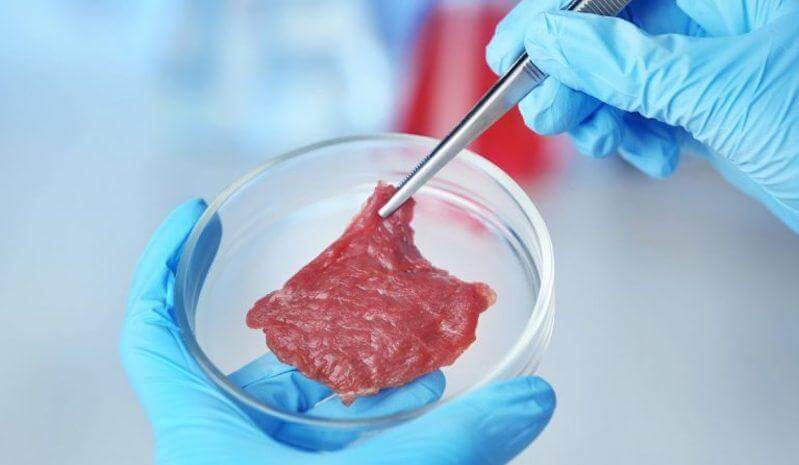
Lab-grown meat is coming soon—but will anyone eat it?

clean meat cropped and resized

As 2018 wraps up, the average American is poised to have eaten 222 pounds of beef over the course of the year. Accomplishing this dubious achievement meant that every American ate the equivalent of 2.4 quarter-pound burgers a day. So, we can safely say that Americans like their beef.

Lab-grown beef may very well be the path forward. In 2008, it was estimated that just half a pound of lab-grown beef would cost $1 million. Then, on August 5, 2013, the first lab-grown hamburger was eaten. It cost $325,000 and took two years to make. Just two years later, the same amount of lab-grown beef costs about $11 to make.

Lab-grown beef checks almost all of the boxes: it doesn’t require animal cruelty, and a study in Environmental Science and Technology showed that it could cut emissions from conventionally produced meat by up to 96 percent and cut down on the land use required for meat production by 99 percent.

The question is, will we eat it? …. [E]ven if lab-grown meat tastes like the real thing, there’s still an aversion to the concept. In [an] article for Engadgetone person said “Cultured meat just isn’t normal ….” Another said she wouldn’t eat lab-grown fish because, “It’s disgusting” …. Learning how the meat is actually produced may put some people’s mind at ease.

Read full, original article: Lab-grown meat’s steady march to your plate

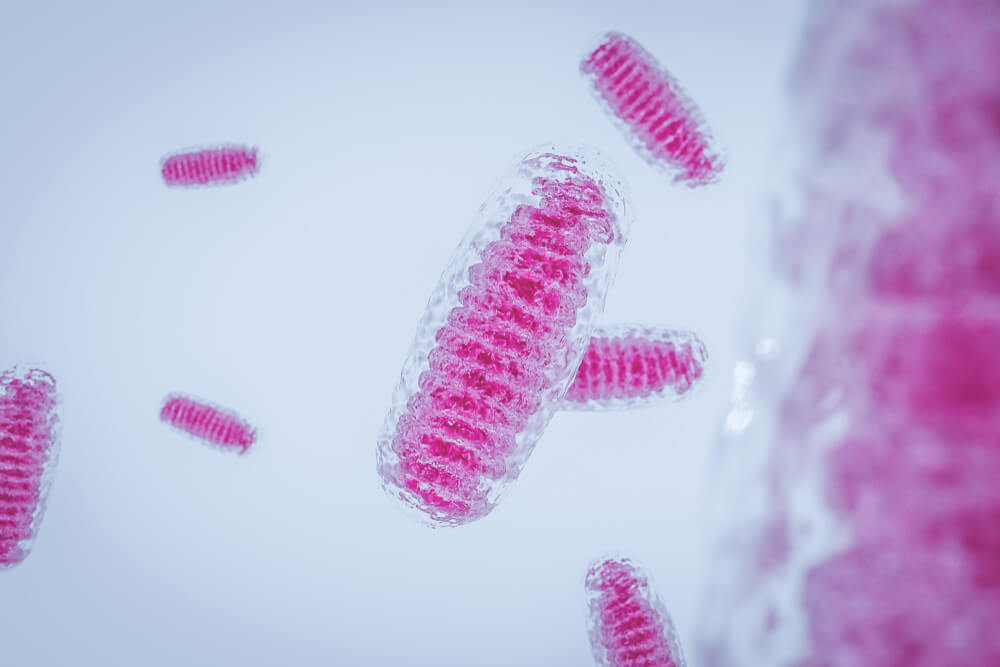
Mitochondrial DNA can be passed on from fathers, too

Mitochondria

You probably learned two things about mitochondria in high school biology. First, they’re the powerhouses of the cell. Second, you can only inherit them from your mother. But a new study seems to cloud that second point.

A team of researchers from the United States, China, and Taiwan identified three unrelated families with members whose mitochondria contained DNA from both parents. While this discovery could reignite debate about the nature of inheriting mitochondrial DNA, the researchers hope it will open up new ways to treat disease.

The story began when a four-year-old patient suffering from fatigue and muscle pain was referred to physician-scientist Taosheng Huang at the Cincinnati Children’s Hospital Medical Center. Others had suggested the boy was showing signs of a mitochondrial disorder, so Huang sequenced and analyzed the boy’s mitochondrial DNA—and found an abnormally high level of “heteroplasmy,” meaning different mitochondria seemed to contain different genes.

It appeared that the boy had, as expected, received his strange mitochondria from his mother, who shared the high level of heteroplasmy. But further analysis revealed that his mother, grandfather, and two of his great aunts had inherited mitochondrial DNA from both parents.

This study likely doesn’t have huge implications on evolutionary timescales where maternal inheritance remains “absolutely dominant,” the authors write—it’s an exception to a rule.

Read full, original post: DNA That Should Only Pass Down From Mothers Can Come From Fathers, Too

Viewpoint: Intensive agriculture is the only way to sustainably feed the world

organic
[In December], the World Resources Institute (WRI) released a comprehensive study embracing agricultural intensification as the only way to simultaneously close what it calls the food gap, the land use gap, and the greenhouse gas emissions gap.

Increased efficiency of natural resource use …. is the single most important step toward meeting both food production and environmental goals. This means increasing crop yields at higher than historical rates, and dramatically increasing output of milk and meat per hectare of pasture.

Raising agricultural productivity through technological innovation, substantially faster than the historic rate of recent decades, will be necessary, they conclude, even if human societies are able to achieve historically unprecedented reductions in food demand and waste. The authors even call explicitly for increased funding for gene editing research to increase crop productivity — biotechnology, in other words.

The new WRI report is as notable for what it rejects as what it embraces. “Frequent claims that the world already has an overabundance of food and could meet future needs without producing more food are based on an unrealistic, even if desirable, hypothetical ….”

The authors cast a skeptical eye toward so-called regenerative agriculture and soil carbon sequestration, which much of the environmental community [uses] to justify continuing fealty to low-productivity organic and agro-ecological farming systems ….

The various agricultural wholisms and naturalistic fallacies [offered] as alternatives to intensive agriculture simply obfuscate that reality. “We wanted to avoid relying on magic asterisks,” WRI’s Tim Searchinger, the lead author, told The New York Times.

Read full, original article: No Sustainability Without Intensification

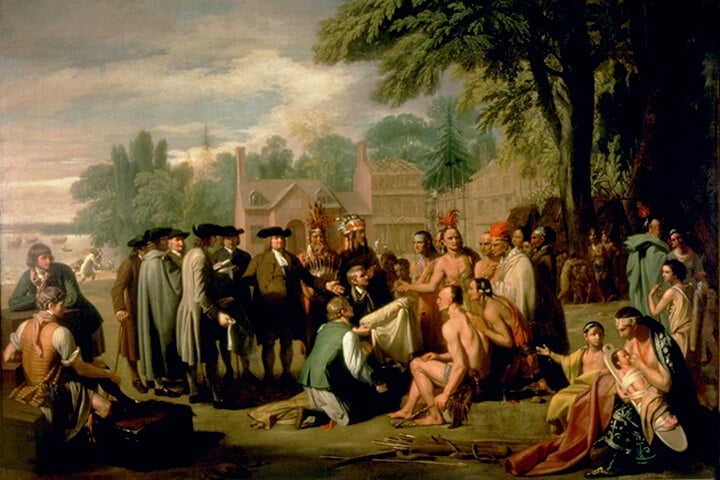
Colonial warfare: Were smallpox-infected blankets given to Native Americans?

blankets

North American colonists’ warfare against Native Americans often was horrifyingly brutal. But one method they appear to have used shocks even more than all the bloody slaughter: The gifting of blankets and linens contaminated with smallpox. The virus causes a disease that can inflict disfiguring scars, blindness and death. The tactic constitutes a crude form of biological warfare—but accounts of the colonists using it are actually few.

William Trent, a trader, land speculator and militia captain, wrote in his diary that on June 23, two Delaware emissaries had visited the fort, and asked to hold talks the next day. At that meeting, after the Native American diplomats had tried unsuccessfully to persuade the British to abandon Fort Pitt, they asked for provisions and liquor for their return. The British complied, and also gave them gifts—two blankets and a handkerchief which had come from the smallpox ward.

[Historian Paul Kelton] says the tactic, however callous and brutal, is only a small part of a larger story of brutality in the 1600s and 1700s. During this period British forces tried to drive out Native Americans by cutting down their corn and burning their homes, turning them into refugees. In Kelton’s view, that rendered them far more vulnerable to the ravages of disease than a pile of infected blankets.

Read full, original post: Did Colonists Give Infected Blankets to Native Americans as Biological Warfare?

Podcast: Jon Entine, Kevin Folta, Perry Hackett on how gene editing could dampen the partisan GMO divide

Scientists unveil wild wheat genome sequence boost food production wrbm large
We all know agriculture faces a massive challenge in the coming decades, which is usually summarized like this: The world’s population is exploding. By 2050, we have to dramatically increase the number of calories we produce today in order to feed 10 billion people—without destroying the environment in the process. Because of its ability to cut pesticide use and boost crop yields, biotechnology has an important role to play if we are to achieve this goal. As a 2014 study noted:

On average, GM technology adoption has reduced chemical pesticide use by 37% [and] increased crop yields by 22% ….

But before the agricultural community can drastically boost food production, it must earn the trust of many consumers, and see a softening of the opposition by old-guard environmentalists and organic food advocates. These groups remain wary of the multinational corporations that developed transgenic (GMO) crops beginning in the 1990s and still wield much influence over agricultural biotechnology today. So how do you win over people who view crop biotechnology and corporate influence as threats?

One answer may be gene editing, a burgeoning technology that could circumvent the most common objections to utilizing biotechnology on the farm. On this episode of the Innovation Forum (a British organization focusing on promoting sustainability) podcast, GLP executive director Jon Entine, University of Florida horticulturalist Kevin Folta and Recombinetics co-founder Perry Hackett join host Toby Webb to discuss how gene editing might help bring farmers, consumers, activists and industry together in pursuit of sustainable food production.

Screen Shot at PM

Jon Entine is the executive director of the Genetic Literacy Project. Twitter: @JonEntine. Kevin Folta is a professor in the Horticultural Sciences Department at the University of Florida. Twitter: @KevinFolta. Perry Hackett is the co-founder of the gene-editing company Recombinetics @recombinetics.

This podcast was originally released in June by the Innovation Forum as How and why genome editing can transform agriculture and has been republished here with permission.

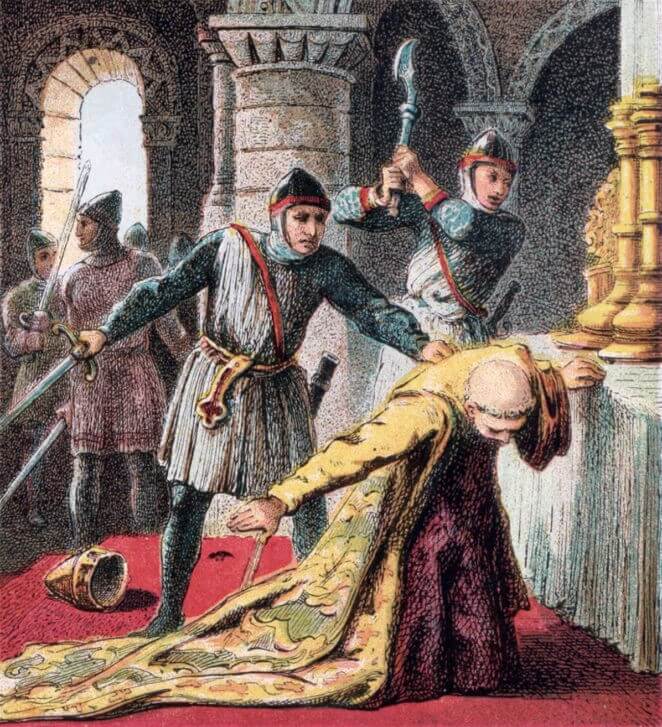
What martyred Thomas Becket and his holy lice can teach us about evolution

becket
It was a murder that shocked medieval Christendom — a man of God butchered at his altar, with the church floor left splattered with “blood turned white with brain [and] brain turned red with blood”. Yet what happened next was almost as stomach-churning: as the body grew cold, the lice infesting its clothing crawled out in such numbers “[that] the vermin boiled over like water in a simmering cauldron”.

The victim was Thomas Becket, Archbishop of Canterbury – and next year sees the 900th anniversary of his birth, with the following year marking the eight and a half centuries since his bloody martyrdom in Canterbury Cathedral in 1170. Venerated as a saint by Catholics and Anglicans alike, Becket (and his lice) might appear an odd focus for discussion of the promise and potential of modern genetic science – but trust me; it’s a telling tale, not just of blood, brains and vermin, but also of sex, celibacy and deviant behavior. And gorillas. Reader discretion is therefore advised.

First,a brief background on the life and death of this Anglo-Norman saint. A London-born cleric, Becket’s ambition and ability saw him become Archbishop of Canterbury the most senior position in the English Catholic Church by his early 40s. At much the same time, he became a pious and frugal ascetic, most famously adopting a sackcloth ‘hairshirt’ designed to irritate the skin as penance for his earlier high-spirited lifestyle. (He likely also deliberately infested himself with vermin for the same purpose).

This ‘born again’ Becket soon fell out with the English king, his erstwhile friend and benefactor Henry II. By 1170, their quarrel had escalated to the point where the incensed monarch is said to have demanded, “Who will rid me of this turbulent priest?” Interpretinging this as a royal command, four of his knights left immediately for Canterbury, with the result recorded above: the brutal slaying of Becket in that city’s cathedral. (Becket’s shrine later became one of the leading pilgrimage sites in Europe.)

But what has this to do with genetic biology? Here, I’ll come clean; because of the type of creature that we are, we cannot help but be drawn to tales of violence (and sex) like that with which this article began. Explaining why this is so, however, is something that evolutionary theory — increasingly premised on genetics — must convincingly address.

becket 12 4 18

In this case, then, St. Thomas stands as a particularly graphic proxy for many of the problems faced by any evolutionary explanation for human existence. For a start, any such account must adequately explain the physical evolution of human beings (for instance, how they came to be upright naked apes, able to make tools such as swords and hairshirts). And this is the easy part; any plausible scientific explanation of our species must also tackle the origins of human social structures – from historical knights and kings, priests and peasants, to the myriad cultures of the seven or so billion of us who now inhabit this planet. Harder still, it must also explain why we humans act as we do; from the banalities of everyday life to the extremes of behavior exemplified by the 12th century Archbishop of Canterbury. (Modern day examples of evolutionarily baffling behavior range from suicide bombers to those, in the words of psychologist Geoffrey Miller, who think it’s a great idea to buy “a Hummer H1 Alpha sport-utility vehicle for $139, 771”.)

Why, for instance, would any sentient being let alone the most intelligent one yet known intentionally torture itself, especially through exposure to disease-bearing parasites? And why would such a being join numerous others in abstaining from sexual reproduction, as members of the avowedly celibate Catholic priesthood willingly did? Surely human beings’ evolved ‘selfish genes’ — those directed solely at survival and replication — could never allow such aberrant activities? Furthermore, why on earth would the conspecifics of any such being encourage and revere such ‘unnatural’ behavior?

To begin, then, with our physical roots. Although Charles Darwin, in his Descent of Man (1871), had predicted an African origin for humankind, it took over a century for this to be confirmed by the newly-emerged field of molecular biology a science of which Darwin was entirely ignorant. In so doing, from the 1970s on, genetic research also revised the timings of human divergence from the our nearest primate relatives, from nearer 20 million years ago to well under 10 mya. (See, for example, the dramatic updates between Origins (1977) and Origins Reconsidered (1992) by anthropologist Richard Leakey.)

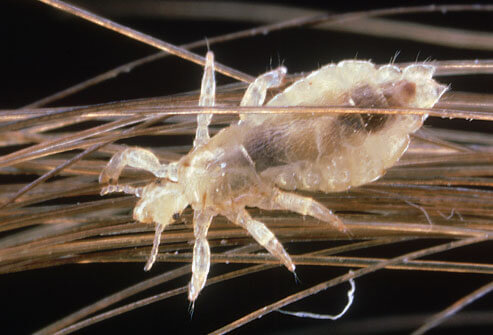
And — bringing us back to Becket — the DNA evidence of this human/primate split has been neatly confirmed by the genetics of human parasites; in this case, the various lineages of lice that make a bloody living on all great apes’ bodies, including ours. With us humans, the three related sub-species of these ‘vermin’- head lice, pubic lice and body lice each have tellingly different genetic histories. Briefly, human head lice are most closely related to chimpanzee lice, with the genetic differences between the two sets of parasite neatly tracking the genetic differences between their hosts (with both indicating species divergence around 5-8 mya). Similarly, the more subtle differences between human head lice and body lice —  marking a divergence roughly 80-150 kya – provides evidence of when our ancestors first adopted clothing.
lice 12 4 18Human pubic lice, however, are an embarrassing exception. Here, the genetic evidence suggests a more recent split from the ancestral primate parasite, one nearer 3 million years ago. But we got these lice, not from chimpanzees, but from gorillas (from whom we diverged much earlier). Quite how we caught these critters is open to debate; possibly we picked up our pubic lice from sleeping in abandoned gorilla nests, not with the nests’ original occupants. (Yeah, right! And we picked up Neanderthal genes by sleeping in their caves …)

Moving swiftly on. Bolstered tremendously by recent genetic research, the overwhelming evidence of human physical evolution is firmly established. Less accepted, though, are evolutionary explanations for cultural evolution, with speculation on the genetic basis of human behavior more problematic still. And given the odious political history of earlier evolutionary accounts of human society and behavior from Social Darwinism to eugenics to the horrors of Nazi racial biology this is hardly surprising.

And yet, again prompted by the modern revolution in molecular biology, there is growing appreciation of the role that genes play in individual and social behavior, and in cultural evolution. The classic example of the latter — of the interplay between genes and culture — is the ability to digest milk as adults, which originated in certain cattle-rearing populations in Eurasia and Africa within the last 5,000 years. This capacity – the result of simple gene mutation and selection – opened up a rich new supply of nutrition and energy, in turn providing a competitive advantage for some groups relative to others. Other examples of ‘gene-culture coevolution’ include disease resistance, such as the heightened immunity to malaria conferred by a genetic mutation that also causes sickle cell disease that helped the West African Bantu peoples expand through sub-Saharan Africa.

But if genetic changes could have influenced cultural behaviors, why not the psychological behavior of individuals within that culture? The psychological demands of living in large, sedentary societies after the advent of agriculture, for example, would have been very different from those in smaller, nomadic hunter-gatherer groups. (A useful analogy here is the behavioral changes in cattle brought about through domestication; did increasingly large and complex social organisation post-agriculture similarly tame human psychology?)

Follow the latest news and policy debates on sustainable agriculture, biomedicine, and other ‘disruptive’ innovations. Subscribe to our newsletter.

As yet, this remains a speculative area for enquiry and a controversial one; that is, it implies the possibility of evolved psychological and behavioral differences between individuals and groups as a result of different environmental and cultural histories. Pulitzer Prize winner Jared Diamond’s best-selling Guns, Germs and Steel (1997), for instance, is a well-known environmentalist account of the causes of modern inter-group inequality; yet while Diamond emphasizes the genetic basis of group differences in disease resistance, he also vehemently rejects the possibility of meaningful psychological differences between disparate human populations.

Be this as it may. At the individual level, at least, ever-increasing evidence — including the ‘big data’ from polygenic testing (which correlates the influence of thousands of genes from thousands of individual genomes) suggests a much greater role for genetics in the different life outcomes of human beings than has hitherto been acknowledged. Yet this, too, is an area of ongoing controversy and debate, touching as it does upon the politically sensitive issue of the determinants of human difference.

The genomic age, it seems, is not just one in which we are increasing able to understand (and perhaps even master) the underlying causes of human frailty and disease; it is one where we must face the similarly increasing social, political and ethical dilemmas raised by this knowledge.

Here, though, we can retreat swiftly back to the lice-infested saint with which we began. Genetically-based evolutionary theory has both corroborated and expanded the established facts about how human beings (and their parasites) came to be as they are. Increasingly, though, it could help us understand the range and limits of human social organization, from hunter-gatherer groups to Becket’s feudal society to today’s liberal democracies. And evolutionary-informed research is also increasingly able to probe human group psychology, examining the underlying basis, say, of the thinking that leads humans to venerate saints or indulge in the status-seeking of buying a Hummer.

Ideally, such understanding might one day inform the political decision-making needed to bring about a better, fairer world. At the very least, it could help us comprehend the oddities and absurdities of our behavior including why a little blood and sex can trick us into reading about the genes that may influence that behavior itself.

Patrick Whittle has a PhD in philosophy and is a freelance writer with a particular interest in the social and political implications of modern biological science. Follow him on his website patrickmichaelwhittle.com

Land sparing or land sharing: How do we feed the world while protecting the environment?

The Green Revolution

It is one of the biggest questions in conservation: Should we be sharing our landscapes with nature by reviving small woodlands and adopting small-scale eco-friendly farming? Or should we instead be sparing large tracts of land for nature’s exclusive use – by creating more national parks and industrializing agriculture on existing farmland?

The argument between “sparing” and “sharing” as a conservation tool has been raging since researchers first coined the terms more than a decade ago. Arguably it began almost half a century before when Norman Borlaug, the father of the Green Revolution of high-yielding crop varieties, declared that “by producing more food per unit of cultivated area, more land would be available for other uses, including recreation and wildlife.”

So where do things stand today? It begins to look as if the sparers are winning the narrow scientific argument by showing that locally, and in the short term, more species are usually saved by segregating conservation from agriculture and other human land uses. But critics say that begs more questions than it answers, overlooking the issue of the long-term sustainability of such islands of biodiversity and failing to address whether we actually need to grow more food.

Read full, original article: Sparing vs Sharing: The Great Debate Over How to Protect Nature

CRISPR treatment for rare genetic eye disorder gains FDA study approval

eye

Days after a Chinese researcher incensed the world of science with claims of editing the genomes of twin girls, an American company is plotting a CRISPR trial of its own. But in place of the secrecy and stagecraft that marked the Chinese experiment, Editas Medicine went the old-fashioned way: waiting for approval from the Food and Drug Administration.

The company, headquartered in Cambridge, Mass., got the FDA’s blessing to test a CRISPR-based therapy on patients with a rare genetic disorder that leads to blindness. Editas, which is partnered with Botox maker Allergan, said it plans to enroll between 10 and 20 patients in a study to test the treatment’s safety and efficacy.

The timing is entirely coincidental: Editas asked the FDA’s permission back in October, long before He Jiankui went public with his controversial experiment. And the two ideas, while both employing CRISPR, are vastly different: While He edited embryos, making genomic changes that would be passed down to future children, Editas is targeting cells in the eye that play no role in reproduction.

BIO, the industry’s lobbying group, issued a statement [November 28] calling the Chinese experiment “deeply troubling” and underlining the fact that none of its member companies are working on CRISPR projects that would result in heritable changes to anyone’s DNA.

Read full, original post: FDA signs off on Editas CRISPR study on patients with a rare genetic disorder

Japan’s ‘moderate’ regulation proposal could spur development of gene-edited crops

cfd e fca c d fc b a a e cf a be a b d tomaat genome editing bc c e x ccc x

A health ministry panel said [December 5] that most of the foods currently under development using genome editing can be marketed without safety screening by the state, a proposal that would accelerate the creation of such items as more nutritious tomatoes and more meaty red seabream in Japan.

The relatively moderate regulation would allow companies to sell gene-edited foods only by providing the government with information on specific genome engineering, or which DNA is snipped or tweaked in crops or animals.

Based on the panel’s report, the Health, Labor and Welfare Ministry plans to draw its own conclusion on the matter by the end of March.

Compared with traditional breed improvement techniques, which usually require a decade or more to create new crops through cross breeding or by applying chemicals and radiation to DNA, the gene-editing techniques can deliver results in a much shorter period of time.

Meanwhile, out of safety concerns, consumer groups have been calling for the implementation of mandatory safety assessment for gene-edited foods, but the panel determined those foods, with which specific genes are inactivated through gene-editing, cannot be distinguished from foods produced by conventional improvement techniques.

It also concluded that such inactivation of genes can occur naturally through mutations, among other things, and those gene-edited foods should be outside of current regulations for genetically modified foods.

Read full, original article: Japan may boost gene-edited foods development

Searching for the genetic links to ADHD risk

adhd Brad Wilson a f b b d ea d

If you have ADHD, chances are higher that your siblings do, too. Estimates differ as to how strong the connection is, but the arrows point in the same direction: genetics helps determine someone’s risk for ADHD. Beyond that, we still have myriad questions and not many answers.

Geneticist Ditte Demontis and her colleagues used data from more than 20,000 people with ADHD, comparing them to a control group of 35,000 people without an ADHD diagnosis. They found 304 points where tiny differences in DNA—like single letter swaps—were distributed across their two groups in a statistically telling way. If any of those variants were very close together, the researchers counted them as representing the same stretch of DNA, grouping them together into 12 important regions.

There were correlations between the genetic risk for ADHD and a range of other conditions, including depression and anorexia. That ties in with the idea that genetic variation might be important in a way that plays out system-wide. Some of the genes they identified are also known to be involved in other neurological conditions, including speech and learning disabilities, depression, and schizophrenia.

This research is light-years away from anything that will immediately affect people with ADHD—like a genetic test or a medication. But that doesn’t make it useless. It’s just creating routes for additional research, rather than practical application.

Read full, original post: Large genetic study finds first genes connected with ADHD

‘Overblown’ fear of biotech crops hinders scientific progress, Nobel laureates warn

gmo monsanto protest toronto

Winners of this year’s Nobel prize for chemistry say overblown fears about genetically modified foods risk preventing society benefiting from the technology. Prof Frances Arnold, from the US, and Sir Gregory Winter, from Britain, made the comments on [December 7] ….

“We’ve been modifying the biological world at the level of DNA for thousands of years,” Arnold said at a news conference …. “Somehow there is this new fear of what we already have been doing and that fear has limited our ability to provide real solutions” …. Winter said that current regulations on GM needed to be “loosened up.”

Arnold and Winter were awarded this year’s Nobel prize in chemistry, along with the American scientist George Smith …. Their work led to the development of new fuels and pharmaceuticals ….

Read full, original article: Nobel laureates dismiss fears about genetically modified foods

Are dogs really all that smart? This study says ‘no’

dogs

If you are convinced your dog is a genius, you may be disappointed in the conclusions of a study just published in the journal Learning and Behavior.The study finds that dogs are cognitively quite ordinary when compared to other carnivores, domestic animals, and social hunters. “There is no current case for canine exceptionalism,” the authors conclude.

[One] reason we may think our dogs are gifted stems from the way we view ourselves. When people are asked to rate themselves on traits such as intelligence, they tend to give above-average ratings.

[R]esearchers had 137 pet owners rate both their own pet and the average pet on a range of traits, including intelligence. The results revealed that the people rated their pets as above average on desirable traits and below average on undesirable traits.

Nevertheless, systematically reviewing the animal cognition literature, British psychologists Stephen Lea and Britta Osthaus found dogs to be unremarkable in their cognitive capabilities compared to wolves, cats, dolphins, chimpanzees, pigeons, and several other species. For example, dogs seem no better at learning associations—such as between a behavior and a reward—than other species. Similarly, dogs can spatially navigate within small spaces, but other species can, too. And while dogs have an excellent sense of smell, the “pig’s olfactory abilities are outstanding and might even be better than the dog’s.”

Read full, original post: Your Dog May Not Be a Genius, after All

Edible vaccine may protect honey bees from deadly microbial infections

Honey bee

A growing number of honey bees die each year due to pesticides, vanishing habitats, poor nutrition and climate change, with potentially disastrous consequences for agriculture and natural diversity. Now, scientists at the University of Helsinki have developed the first edible vaccine against microbial infections, hoping to save at least some of the pollinators.

[Editor’s note: See this GLP article for a detailed look at claims about honey bee deaths.]

The first vaccine inoculates bees against American foulbrood, a globally spread disease that can kill entire colonies and whose spores can remain viable for more than 50 years …. The vaccine is administered via an edible sugar patty that’s suspended in the hive for the queen to consume over seven to 10 days. After she ingests the pathogens, she is able to spark an immune response in her offspring, eventually generating an inoculated hive.

The vaccine still needs a lot of work before it can become commercially available. Scientists must ensure it’s safe for the environment, the bees themselves and humans who consume the honey ….

Read full, original article: World’s First Honey Bee Vaccine Seeks to Save Dying Pollinators

Transplanted uterus leads to successful birth of baby girl

newborn baby spit up gerd

A team of doctors in Brazil have announced a medical first that could someday help countless women unable to have children because of a damaged or absent uterus. In a case report published [December 4] in the Lancet, they claim to have successfully helped a woman give birth using a transplanted uterus from a deceased donor.

According to the report, the team performed the operation on an unnamed 32-year-old woman in a Brazilian hospital in September 2016. The woman had been born with a rare genetic condition that left her without a uterus, known as Mayer-Rokitansky-Küster-Hauser syndrome, but she was otherwise healthy. The donor was a 45-year-old woman who had suddenly died of stroke.

Four months prior to the transplant, the recipient woman had received in-vitro fertilization, which yielded eight viable embryos that were frozen. Following the 10-hour-long surgery, which connected the uterus and part of the donor’s vagina to the recipient’s vagina and circulatory system, the woman then took a regimen of immunosuppressant drugs that kept her body from rejecting the donor uterus. Seven months later, she had an embryo successfully implanted. And 35-and-a-half weeks after that, she gave birth to a seemingly healthy baby girl, delivered via cesarean section.

The feat is something that could make the procedure a much more appealing and realistic way for some women to conceive.

Read full, original post: In World First, Woman Gives Birth After Receiving Uterus Transplant from Dead Donor

GM cotton could revive Nigeria’s ‘comatose’ textile industry, government says

Africas cotton

Despite growing opposition against introduction of Genetically Modified Organisms (GMOs) in the country, the  Federal Ministry of Science and Technology (FMST) has named, registered and released into the Nigerian Seed Market, two transgenic cotton hybrid varieties through the National Varietal release Committee at the National Centre for Genetic Resources and Biotechnology (NACGRAB), National Biotechnology Development Agency (NABDA), and Moor Plantation, Ibadan, Oyo State.

Minister of Science and Technology, Dr. Ogbonnaya Onu, told journalists that the varieties were developed to contain Bacillus thuringiensis (Bt) agents that confer on them the ability to resist attack by bollworm, a devastating pest disease that has hampered cotton production with time and represents a nightmare to farmers.

He said the farmers’ perception in the field was very positive in terms of seed cotton yield and tolerance to insect pests especially bollworm complex. This great feat will enhance production and productivity of cotton in the country as well as revamp the textile industry, which used to be the second employer of labor in [the] 60’s -70’s.

Onu said that this is a landmark in the history of modern biotechnology in Nigeria as the newly improved varieties have the [potential to revamp] the comatose textile industry by boosting cotton production in Nigeria.

Read full, original article: Furore over introduction of GMO cotton

Human, Neanderthal mating was more than just a ‘one night stand’, study suggests

Neanderthal human interbreeding

Once upon a time, prehistoric humans and our ancient Neanderthal cousins met and procreated. Except, that ‘once upon a time’ meeting is now looking less like a one night stand and more like a protracted bonkfest, according to a new analysis of modern human ancestry.

Scattered throughout the genome of anyone with non-African heritage are chunks of Neanderthal DNA – the hallmarks of a prehistoric tryst between our closest hominin relatives.

The presence of these chunks, making up 2%, on average, of the genome of anyone with roots in Europe, Asia, Australia or the Americas, pointed to a single period of intermingling – probably 50,000 to 60,000 years ago – not long after Homo sapiens emerged from Africa.

But that simple story was complicated by the discovery that people in East Asia have up to 20% higher Neanderthal ancestry than present-day Europeans.

To find out which scenario – dilution or multiple matings – was more likely, [researcher Josh Schraiber] and his colleague Fernando Villanea first looked at European and Asian populations separately. They analysed the distribution of Neanderthal chunks across genomes in the 1000 Genomes Project, a large public database of human genetic variation.

In both Europe and Asia, the patterns of inheritance pointed to multiple periods of mating, rather than just one.

Read full, original post: Humans and Neanderthals were frequent lovers, genetics reveals