Ghana edges toward adopting pest resistant GMO cowpea

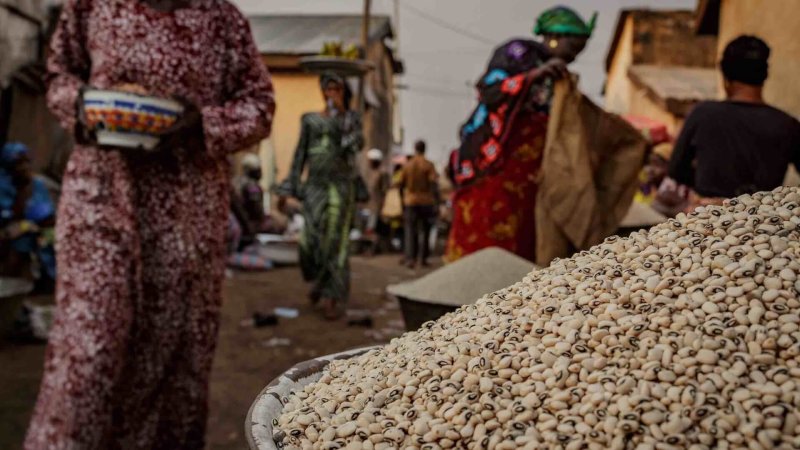
Credit: Ankur Paliwal/Undark

[The Ghanian] government says its decision on whether to approve Ghana’s first genetically modified crop will be based on science and not fear.

The National Biosafety Authority (NBA) and the Ministry of Science and Technology, which regulate GMOs, both say proven scientific knowledge and not misinformation will inform their decision.

Scientists at the state-owned Savannah Agricultural Research Institute (SARI) of the Council for Scientific and Industrial Research in Ghana have completed trials on the pest-resistant Bt cowpea (beans) and will soon apply for environmental/commercial release of the variety.

The GM crop is expected to help farmers dramatically reduce their use of pesticides on cowpea farms, while also enjoying better quality and higher yields of this important staple food.

Mis- and disinformation are distorting science and public policy. Subscribe to our Daily and Weekly Digests for incisive coverage of ‘disruptive’ innovations in AI, agricultural biotechnology, food, chemicals, nuclear energy, vaccines, and other disruptive innovations.

Besides the GM cowpea, field trials are also ongoing to produce Ghana’s first GM rice variety. The nitrogen- and water-use efficient and salt-tolerant (NEWEST) rice has been engineered to require less nitrogen fertilizer, tolerate drought conditions and grow in salty soils — and still give good yield.


This is an excerpt. Read the original post here.

Related Articles

Infographic: Global regulatory and health research agencies on whether glyphosate causes cancer

Infographic: Global regulatory and health research agencies on whether glyphosate causes cancer

Does glyphosate—the world's most heavily-used herbicide—pose serious harm to humans? Is it carcinogenic? Those issues are of both legal and ...

Most Popular

Screenshot-2026-09-16-at-2.26.42-PM
Viewpoint: How to ecologically damage America’s forests: Ban glyphosate
Screenshot-2026-09-20-at-9.03.54-AM
From Malaysia to the world: A pioneering science communicator reimagines global science communication for a digital age
ChatGPT-Image-Mar-10-2026-01_39_01-PM
Viewpoint—“Miracle molecule” debunked: Why acemannan supplements don’t work
ChatGPT-Image-Sep-17-2026-12_28_43-PM
Vitamin D, omega-3 fish oil and glucosamine supplements could cause brain damage 
Screenshot-2026-09-20-at-4.31.28-PM
White House drafting executive order to control what OMB Director Vought claims are “woke” NIH science grants
ChatGPT-Image-Sep-18-2026-10_49_24-AM
‘Symptom borrowing’: Young people are copying health problems they see on TikTok
ChatGPT-Image-Sep-2-2026-02_03_32-PM
AI data centers and water usage: It’s a genuine and growing problem
ChatGPT-Image-Sep-11-2026-01_53_42-PM
Should doctors engage in social media to counter misinformation?
Screenshot-2026-08-12-at-11.31.46-AM
AI is helping develop new vaccines
ChatGPT-Image-Sep-20-2026-04_22_32-PM
What’s Trump’s ‘AI Force’? Administration rushes to announce ill-defined watchdog agency and czar amid criticism of its resistance to curb AI acceleration
Screenshot-2026-09-10-at-12.20.19-PM
'Jet fuel didn't melt the steel': 9/11 conspiracy theories debunked
Screenshot-2026-08-19-at-6.19.42-PM
Facts & Fallacies podcast: 'Regenerative farming'? RFK Jr.’s federal push romanticizes the past and risks food security
ChatGPT-Image-Sep-20-2026-09_47_55-AM
Trump says he’ll require drugmakers to end multiple vaccine doses, reviving discredited autism claims
glp menu logo outlined

Get news on human & agricultural genetics and biotechnology delivered to your inbox.