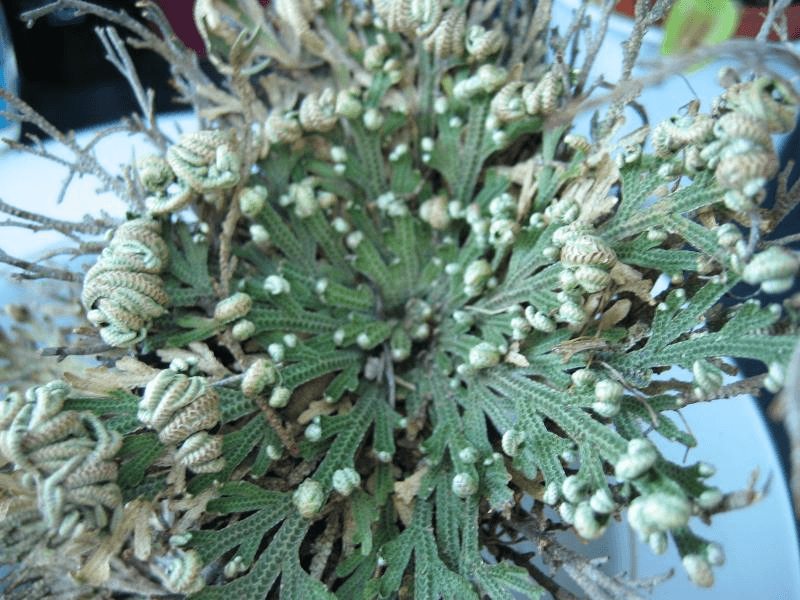

To protect crops from rising droughts, scientists are looking to the genes of a small group of plants that can survive months of drought then regreen within hours. … [T]he tactics used for this zombie-like trick [suggest an] ancestral toolkit can be retrieved from deep inside their DNA to deal with the problem of drought.
[A]ccording to some climate models, by 2100 much of the agricultural land in sub-Saharan Africa and South America will be unsuitable for food production, a large proportion made barren by drought.
…
[Jill Farrant’s recent studies suggest that creating drought resistant crops] might not require any new genes at all; by activating the same genetic toolkit found in their seeds, a mature plant might be made more resilient to drying out. As this would involve activating genes that have simply been silenced upon germination, rather than inserting foreign genes from other plants, it may not be as controversial as some other genetically-modified crops.
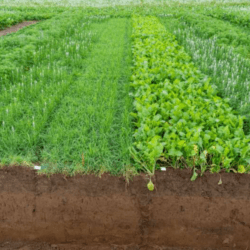 Breakthough Institute: Are cover crops the silver bullet to reduce agricultural carbon emissions as regenerative-farming enthusiasts claim? Time for a rethink
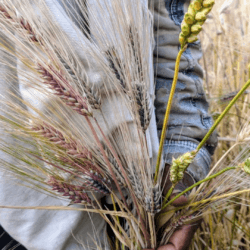 With climate change disruptions of farming and food escalating, scientists look to resilient ancient plant varieties as a possible safety net
Breakthough Institute: Are cover crops the silver bullet to reduce agricultural carbon emissions as regenerative-farming enthusiasts claim? Time for a rethink
With climate change disruptions of farming and food escalating, scientists look to resilient ancient plant varieties as a possible safety net