Skeletons of Africans enslaved in Mexico reveal extreme hardships of the Atlantic slave trade

liberation of slaves simon bol
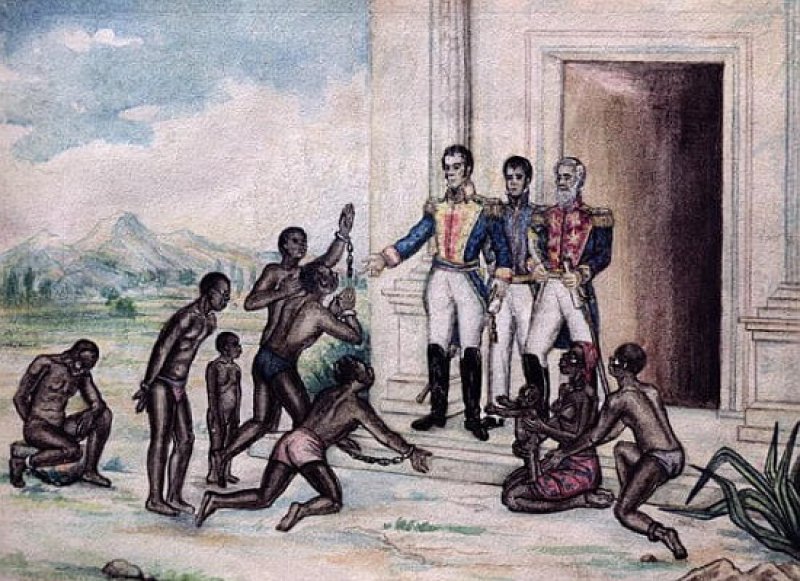
XIR203350 Liberation of Slaves by Simon Bolivar (1783-1830) (w/c on paper) by Cancino, Fernandez Luis (19th century); watercolour on paper; Casa-Museo 20 de Julio de 1810, Bogota, Colombia; Giraudon; South American, out of copyright

In a study published [April 30] in the journal Current Biology, scientists tell the stories of three 16th-century enslaved Africans identified from a mass burial site in Mexico City, according to analyses of their bones.

The three individuals — SJN001, SJN002 and SJN003 — lived from about 1436 to 1626 during the Colonial period in Mexico City, according to radiocarbon dating. Their genetics suggested they were of Southern or Western African origin.

Osteobiographies, stories told by a person’s bones, revealed lives of severe hardship.

“The osteobiography revealed non-specific markers of physiological stress, evidence of occupational stress and healed severe wounds,” according to the study.

Based on evidence of the bones, SJN001 was around 24 years old when he died.

SJN001 showed “abnormal skeletal changes” that “are often in response to conditions associated with diet such as anemia and malnutrition, as well as parasitic infections and blood loss,” stated the report.

“This kind of analysis is particularly informative when studying the life history of enslaved people, as much of what we know about their lives comes from records that were kept by their oppressors, which are often considered to be biased and lacking in details about the origins and day-to-day lives of enslaved individuals,” said [doctoral candidate] Éadaoin Harney.


Read the original post

Related Articles

Infographic: Global regulatory and health research agencies on whether glyphosate causes cancer

Infographic: Global regulatory and health research agencies on whether glyphosate causes cancer

Does glyphosate—the world's most heavily-used herbicide—pose serious harm to humans? Is it carcinogenic? Those issues are of both legal and ...

Most Popular

ChatGPT-Image-Sep-2-2026-02_03_32-PM
AI data centers and water usage: It’s a genuine and growing problem
ChatGPT-Image-Mar-10-2026-01_39_01-PM
Viewpoint—“Miracle molecule” debunked: Why acemannan supplements don’t work
Screenshot-2026-09-16-at-3.14.20-PM
19%: Plunging support for Trump-RFK, Jr. measles vaccine safety oversight
ChatGPT-Image-Sep-10-2026-01_44_53-PM
Viewpoint: Why medical and health nonsense spreads so casually on pop culture media
ChatGPT-Image-Sep-17-2026-12_28_43-PM
Vitamin D, omega-3 fish oil and glucosamine supplements could cause brain damage 
Screenshot-2026-09-16-at-2.26.42-PM
Viewpoint: How to ecologically damage America’s forests: Ban glyphosate
ChatGPT-Image-Sep-16-2026-11_28_54-AM
Viewpoint: Study links childhood vaccination to autism!!! Here’s how anti-vaxxers twist evidence to corrupt science
ChatGPT-Image-Sep-21-2026-10_18_59-AM-2
Viewpoint: Is corporate embrace of regenerative agriculture greenwashing?
ChatGPT-Image-Sep-21-2026-10_55_04-AM
Viewpoint: America’s food-safety system is being methodically dismantled by the Trump administration.
ChatGPT-Image-Sep-17-2026-11_03_54-AM-2
AI sparks a bioweapons race
ChatGPT-Image-Sep-21-2026-02_35_25-PM
22-year frozen embryo: In one of the longest delayed births ever, middle-aged Greek couple gives birth to a daughter
glp menu logo outlined

Get news on human & agricultural genetics and biotechnology delivered to your inbox.