



Ancestry & Evolution
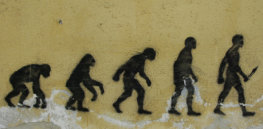
Can we teach evolutionary biology without making students ‘choose between their faith and evolution’?
Michael Reiss, a professor of science education at University College London and an Anglican Priest, suggests that “we need to ...

Why did sex evolve? It may protect against rare cancers, researchers suggest
In an essay published in the journal PLOS Biology, scientists presented a theory which they say could answer a 50-year ...
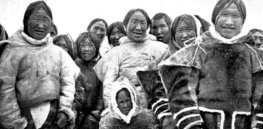
Studies of ancient DNA offer new insights into human migration between Siberia and North America
There is plenty of evidence to suggest that humans migrated to the North American continent via Beringia, a land mass ...
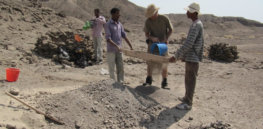
Were hominids making stone tools 2.6 million years ago? Controversy greets discovery
Discoveries in East Africa of what may be the oldest expertly sharpened stone implements suggest that early members of the ...
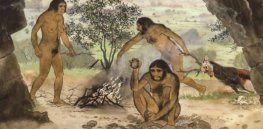
‘Evolution in action’: How ancient humans developed a mutation to protect against diabetes
An ancient mutation that spread through humans after the advent of cooking may protect people against high blood sugar and ...
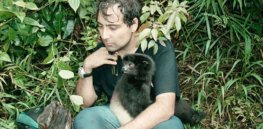
This tech start-up wants to ‘hack’ efforts to save endangered species, ecosystems
After an unorthodox career in science that has included setting up a national park in an active war zone in ...
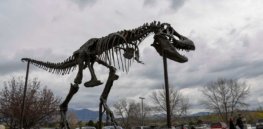
Dinosaur hike: How a Montana family found a ‘nearly complete’ T. rex
“It was right over there, just a bit of it sticking from the earth that caught my eye,” [Kathy] Wankel ...

Who’s your daddy (or mommy)? What’s the chance you inherited DNA from Caligula, Genghis Khan or Henry I?
Genealogy is the second most popular hobby in the United States ...
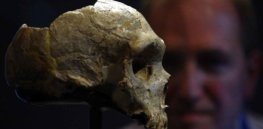
Inside the brains of Neanderthals: Were they capable of ‘symbolic and abstract thinking’?
We know from the archaeological record that much of Neanderthal hunting, foraging, and toolmaking behavior was quite similar to that ...
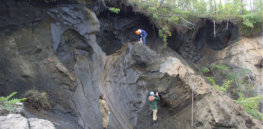
Environmental DNA offers glimpses of the ‘ancient world in a few grains of sand’
Somewhere in a remote cave in western Georgia, a few dozen miles east of the Black Sea shore, scientists on ...
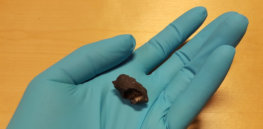
DNA found in 10,000-year-old ‘chewing gum’ sheds light on ancient Sweden
In the 1990s, archaeologists recovered a few chewed-up lumps of birch bark pitch, some of which still held fingerprints and ...
Searching for genetic answers: What makes monkeys different from humans?
Less than 50 of our 20,000 genes are unique to humans. What separates us from monkeys? ...
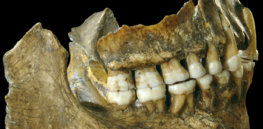
400,000-year-old teeth suggest Neanderthals and humans split much earlier than thought
Our distant cousins just got a little more distant. A new study suggests that modern humans and our closest relatives, the Neanderthals, ...
Why conservatives should embrace evolution ‘as a jewel’ of modern Western civilization
It is a crowning achievement of Western civilization and a rejoinder to the modern myths of the Left ...

How did this bird evolve into existence again after disappearing 136,000 years ago?
The Aldabra white-throated rail, a flightless bird that lives on its namesake atoll in the Indian Ocean, doesn’t look like ...

Video: Robot dinosaurs show us how flight evolved
Modern birds are believed to have evolved from certain types of dinosaurs, and the transitional species Archaeopteryx sits neatly in ...
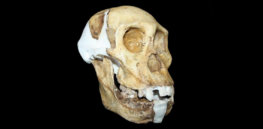
Have we finally identified humanity’s direct ancestor? Controversial claim challenged
Humans evolved from a group of ape-like hominins known as Australopithecine, but scientists aren’t [sure] which species is our direct ...
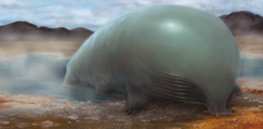
Life on Earth is carbon-based. But that doesn’t mean other planets have to use the same building block.
All life on Earth, and thus, all life we've ever observed in the universe, shares a few basic characteristics. Its ...

How culture shapes the evolution of our genes
The well worked out examples of the impact of human culture in re-shaping our own evolution are riveting, I think ...
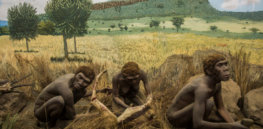
Was our brain growth kick-started by ancestors scavenging bone marrow from animal carcasses?
A new theory challenges assumptions about when and how our ancestors altered their behaviors to boost brainpower ...
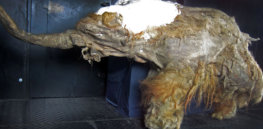
De-extinction? Why the woolly mammoth and other lost animals really are gone forever
This information undoubtedly will disappoint “Jurassic Park” fans, but it comes from an expert—Beth Shapiro, the UGA alumna and evolutionary biologist ...
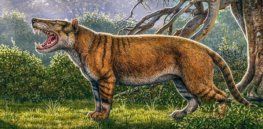
‘Ancient lion’: Meet the largest carnivore we’ve ever discovered
Twenty-three million years ago, a giant carnivore larger than any modern-day lion or polar bear stalked sub-Saharan Africa, according to ...
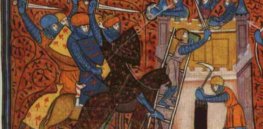
Medieval crusader armies had remarkable genetic diversity
Crusader armies were made up of people from remarkably genetically diverse backgrounds, hailing not just from western Europe but also much further ...
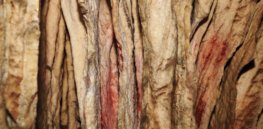
Redefining the Neanderthal: Were they more sophisticated than we thought?
A new body of research has emerged that’s transformed our image of Neanderthals. Through advances in archaeology, dating, genetics, biological ...
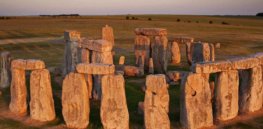
Stonehenge mystery solved! DNA analysis tells us where builders came from
The ancestors of the people who built Stonehenge travelled west across the Mediterranean before reaching Britain, a study has shown ...
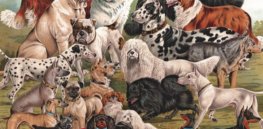
Purebred? How humans invented the modern concept of ‘dog breeds’
Modern purebred dog breeds were created in Victorian Britain ...

Were the Denisovans a collection of 3 different species?
A new study using genetic data is offering an intriguing new look into the history of the Denisovans, revealing them as a ...
