


Featured in Weekly Newsletter

Using genetics and social media to find answers for rare ‘undiagnosed’ diseases
Having a strange and little-known condition is increasingly becoming a regular part of life, bonding patients together with a common ...

Whispering down the ‘fake news’ lane targeting conventional farming: No, Lou Gehrig’s Disease not caused by pesticides spread by chemical-spraying airplanes
Is it sensationalism to get traffic, lazy reporting -- or intentional misrepresentation of facts? ...

How languages and genetics explain our origins and evolution
The twists and turns of both language and genetics offer stunning insights into human history ...
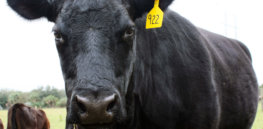
Animal gene editing breakthrough: Bringing Angus beef raised from US cattle to Brazil
The gene-edited heat-tolerant Angus cow could be a very big deal in Brazil ...
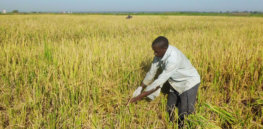
Quest for disease and pest-resistant rice: Ugandan researchers turn to hybrid, GMO breeding programs
Key crop researchers are pushing for the development and eventual commercialization of GMO varieties tailored to suit Uganda's needs ...

Research integrity, and why bad science in biomedicine and agriculture has become such a problem
Science depends on corroboration — that is, researchers verify others’ results, often making incremental advances as they do so. The ...

‘Suicide’ headaches? Magic mushrooms or LSD could offer relief
Hallucinogenic drugs, particularly lysergic acid diethylamide (LSD) and psilocybin, are classified as Schedule 1, but scientists and physicians believe they ...
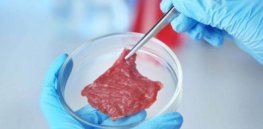
What should we call lab-grown meat? Our decision could help or hinder food innovation
The Dirt: We need protein as part of a healthy diet— and many of us turn to meat as a ...

Why human evolution is far from over—and may be speeding up
Global studies of human DNA show that natural selection continues to change who we are ...

‘Deadly dreams’? Modern genetics unravels mystery surrounding strange disease
Following decades of unexplained deaths, mostly among young men, modern genetics and epidemiological detective work helped to establish a link ...

Golden Rice is coming. Finally! Will it be the game-changer hinted at for almost 20 years?
Having a staple crop that delivers adequate nutrition is a necessary precondition to fixing poverty ...

What spider genetics can tell us about evolutionary relationships and cut-throat competition
What’s the most famous — or even the most infamous — spider in the world? The tarantula? The black widow? ...

Viewpoint: Like it or not, technology is what gives us the crops that we eat
The “natural narrative” on food packaging is a complete fiction ...

‘Creative misbehavior’: When ingenuity takes a dark turn
Misbehavior is a form of creative thinking ...

Predatort Part II: How predatory lawyers, activist scientists hijacked IARC—International Agency for Research on Cancer—for personal profit and ideological vanity
How the International Agency for Research on Cancer (IARC) has forsaken academic integrity and knowingly contributes to the Predatort litigation ...

What makes something funny? Genetics almost certainly plays a role
What we find funny can differ wildly from person to person. And scientists have found that genetics plays at least ...

Breaking down the ‘scientific and statistical sins’ behind reporting on marijuana science
A new book and New Yorker feature are filled with cherry-picked data, oversimplified studies, and scientific errors ...

Viewpoint: Controversy flares over activist ‘predatort lawyers’ who ‘massaged facts’ in the Monsanto-glyphosate case
Lawyers often use a certain breed of self-interested scientist to terrify a jury of vulnerable non-specialists ...
Building a better mini brain: How these tiny organoids can boost fight against Alzheimer’s, Parkinson’s
It’s your favorite organ, self-assembling, ready to go ...

How genetic engineering can help Africa cope with climate change by tweaking crops, animals
The impact of climate change on African crops could be mitigated by GE technologies ...

Newborns and genome sequencing: Do we sacrifice privacy in the name of health?
If history provides a lesson, routine newborn genomic sequencing won’t come without a fight ...

A tricky study about links between GMO rejectionism and education, and evidence the biotech debate may not be as ideologically polarized as most people think
Before we do an end-zone dance over this study, let's look at its limitations ...

Nigeria has its first GMO cowpea. The battle for public acceptance is just getting started
A war of words over a recently-released genetically modified cowpea has divided the Nigerian public and raised concerns about the ...

Gluten free diets are all the rage—here’s why that could be a bad thing
Gluten-free diets are all the rage, even though only a tiny fraction of us are susceptible to celiac-linked reactions. But ...

From a sustainability perspective, GMO AquaBounty salmon should be a ‘dream come true’. Why do environmentalists oppose it?
The flip-flop by Food and Water Watch and other advocacy groups rests not on environmental or science-based concerns but on ...
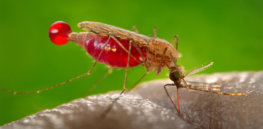
Gene drives: Why the best option for fighting mosquito-borne diseases is the ‘mosquito itself’
Gene drives are now a viable method of fighting mosquito-borne disease ...

Viewpoint: Pervert science at your peril—anti-GMO campaigners, vaccine deniers and ‘bee-pocalypse’ scaremongers find common ground in ‘evidence rejectionism’
Widespread misunderstanding of the nature of science and the confirmation bias spawned by social media and the internet can have ...
