



Food & Ag Features

Viewpoint: Why the retracted Monsanto glyphosate study doesn’t change the science—the world’s most popular herbicide is safe
In 2000, three researchers published a peer-reviewed paper concluding that, “under present and expected conditions of use,” Roundup, a formulation of ...

Viewpoint: ‘Safer for children?’ Stonyfield yogurt under fire for deceptive organic marketing
In the competitive food marketplace, fear-based marketing continues to be a go-to strategy for some food companies trying to differentiate ...

Viewpoint: Misinformation infodemic? Why assessing evidence is so challenging
When United States Health Secretary Robert F. Kennedy Jr. unveiled new dietary guidelines earlier this year to “Make America Healthy ...
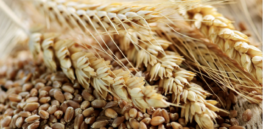
Viewpoint: What happens when whole grains meet modern food manufacturing? Labels don’t tell the whole story.
For decades, nutrition advice on carbohydrate-rich foods has offered a simple way to enjoy carbs guilt-free: no need to give ...

Viewpoint — Food-fear world: The latest activist scientists campaign: Cancer-causing additives
Here we go again. The rather tiresome Activist Playbook is being applied again, this time not to pesticides, plastics, fossil ...

The myths of “process”: What science says about the “dangers’ of synthetic products and ultra-processed foods
Two words used to scare people are impossible to avoid: synthetic and its younger cousin, ultra-processed. They’re everywhere—on supermarket shelves, ...

GLP podcast: What’s wrong with ‘doomsday’ environmentalism? It’s false.
Ever notice how the environmental movement’s doomsday predictions arrive like clockwork, each one as urgent as the last? Mass starvation, ...

Viewpoint: The herbicide glyphosate isn’t perfect. Banning it would be far worse.
For decades, farmers have relied on glyphosate — the active ingredient in Roundup and the most widely used herbicide in ...

Raw milk myth wake-up call
Once again, raw milk is everywhere: in Instagram reels, wellness podcasts, farmer-to-consumer marketplaces, and even policy debates. It’s being framed ...
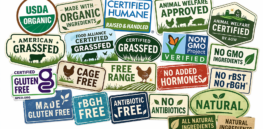
Food labels, decoded: What they really mean
Here I am at Costco, getting far too many things for my family of four. As I try to navigate ...
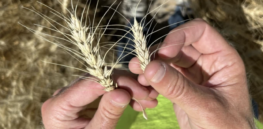
Anti-biotechnology activists smear hybrid wheat breakthrough that could surge yields in poorer countries
In biology, a hybrid is when two different genotypes within the same species crossbreed, and the first generation performs significantly ...

Viewpoint: Dirty Dozen deception: How Environmental Working Group turns trace pesticide residues into an annual food scare — and donations
Another year, another scary "don't eat this" list from the Environmental Working Group. If you believe this nonsense, you'll be ...

U.S.-Iranian War will inflate food costs even if fighting does not resume
This is one of those moments where geopolitics quietly reshapes what we pay at the grocery store. The conflict in ...

Trump administration’s gutting of USAID fuels a health and science crisis
In the rice-growing region of Nueva Ecija in the Philippines, smallholder farmers who supply local markets have long relied on ...

Here’s why some foods need to be ultra-processed—and how to make better food choices
If you’ve read nutrition headlines lately, you’ve probably seen “ultra-processed foods” thrown around with increasing urgency, most likely framed as ...

Viewpoint: How wrong was Paul Ehrlich about population’s negative impact on growth? Just look at India
In 1968, a little-known ecologist named Paul Ehrlich published The Population Bomb, which aimed to bring attention to the perceived ...

What are the consequences of agriculture misinformation—and how to fight back
Is organic farming better than non-organic farming? Should farmers feed antibiotics and steroids to their animals? Such debates about food ...

Why the herbicide glyphosate is key to sustainable agriculture
Here are some reasons why there could not be sustainable agriculture without herbicides like those containing glyphosate. Sustainable Farming: The ...

Ultra-processed food: The term UPF is less than 20 years old. Here’s its social justice origins
Ultra-processed foods now make up more than 50% of the American diet. They are also less expensive and better tasting ...

Viewpoint: The activist ‘harm reduction’ movement has hit a brick wall with its targeting of food
Activists are never wrong. When their policies miss, they just move the goalposts. When their jobs (and income) are based ...

Viewpoint — Glyphosate: Ecological villain or environmental scapegoat?
Glyphosate may just be the most polarizing chemical in modern agriculture, if not modern society. Since the World Health Organization’s ...

GLP podcast: Does industry funding corrupt science? The ‘shill gambit,’ debunked
It's a charge many scientists face: they post a factual tweet refuting common misinfo about vaccines, pesticides or some other ...

Viewpoint: International Association for Research on Cancer and U.S. tort industry extortion racket revs up after release of IARC’s misleading cancer hysteria claims
[A World Health Organization scientific body], the International Agency for Research on Cancer (IARC), published Monograph 140, releasing its initial ...

Don’t take over-the-counter fish oil supplements for your heart, joints or depression, science says
Fish oil, also known as omega-3, is among the most popular dietary supplements. It’s often promoted to protect the heart, boost ...

Iowa Republicans partnering with quack ‘Raja of World Peace’ Maharishi Flying Yoga cult “scientist” to study pesticide residues
State Representative Jeff Shipley (R-Van Buren), and his Committee for Peace and Prosperity, today announced a major collaborative research initiative ...
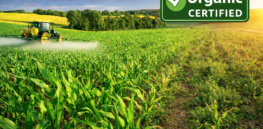
Viewpoint: What do organic, agroecology and regenerative agriculture have in common? They don’t work and aren’t sustainable
A farmer drastically reduces fertilizer applications, trusting soil biology to provide the needed nutrients. A crop consultant recommends a 10-species ...

Bamboo shoots are the next ‘superfood’? Don’t believe the hype, it’s not based on science
According to the New York Post, our research team has discovered a much-overlooked “superfood”: bamboo shoots. Before you rush out ...
