


Food & Ag Features

Latest ecological fake news scare: Like the ‘honeybee armageddon’ narrative, pesticide-driven ‘insect-pocalypse’ claim is collapsing
The 'bee-pocalypse' was an exaggerated fiction grounded in genuine concerns. The 'insect-pocalypse' is more of the same ...
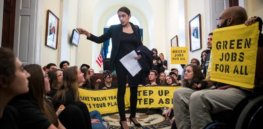
Viewpoint: Alexandria Ocasio-Cortez’s Green New Deal wants to make agriculture more sustainable—but farmers are beating her to it
The Green New Deal puts forth a lot of idealistic proposals without much specificity, strategic planning, or research ...

Pseudo-science alert: For $9,500, Politico provides disinformation about crop biotechnology, GMOs and pesticides
When Politico strays from politics into agricultural biotech, its naiveté and lack of science expertise shows through ...
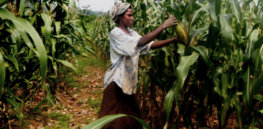
Viewpoint: Agroecology is a ‘dead end’ for African farmers trying to achieve food security
For the past 50 years, Daisy Namusoke has grown crops on her small plot of land in the Buikwe District ...
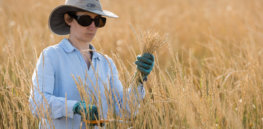
Using genetic engineering to turn annual crops into perennials could bolster global food production
One of the ways we could increase yields--and improve sustainability--would be to convert key grain crops into perennials, allowing them ...

How genetically engineered crops can boost Africa’s fight against malnutrition
Engineered crops can provide the long-sought breakthrough in food security for Africa ...
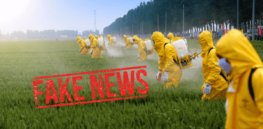
Whispering down the ‘fake news’ lane targeting conventional farming: No, Lou Gehrig’s Disease not caused by pesticides spread by chemical-spraying airplanes
Is it sensationalism to get traffic, lazy reporting -- or intentional misrepresentation of facts? ...
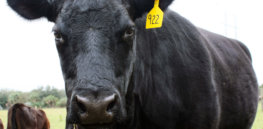
Animal gene editing breakthrough: Bringing Angus beef raised from US cattle to Brazil
The gene-edited heat-tolerant Angus cow could be a very big deal in Brazil ...
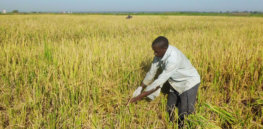
Quest for disease and pest-resistant rice: Ugandan researchers turn to hybrid, GMO breeding programs
Key crop researchers are pushing for the development and eventual commercialization of GMO varieties tailored to suit Uganda's needs ...

Viewpoint: Farmers’ crops are failing, and Europe’s precautionary assault on neonicotinoid insecticides is to blame
Farmers will never forget the last five years of incompetence from the European Commission ...
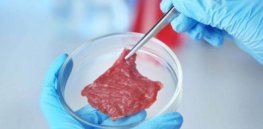
What should we call lab-grown meat? Our decision could help or hinder food innovation
The Dirt: We need protein as part of a healthy diet— and many of us turn to meat as a ...

Golden Rice is coming. Finally! Will it be the game-changer hinted at for almost 20 years?
Having a staple crop that delivers adequate nutrition is a necessary precondition to fixing poverty ...
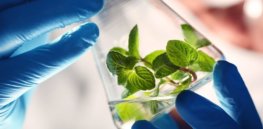
Viewpoint: Like it or not, technology is what gives us the crops that we eat
The “natural narrative” on food packaging is a complete fiction ...

Predatort Part II: How predatory lawyers, activist scientists hijacked IARC—International Agency for Research on Cancer—for personal profit and ideological vanity
How the International Agency for Research on Cancer (IARC) has forsaken academic integrity and knowingly contributes to the Predatort litigation ...

Viewpoint: Controversy flares over activist ‘predatort lawyers’ who ‘massaged facts’ in the Monsanto-glyphosate case
Lawyers often use a certain breed of self-interested scientist to terrify a jury of vulnerable non-specialists ...
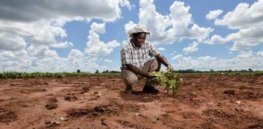
How genetic engineering can help Africa cope with climate change by tweaking crops, animals
The impact of climate change on African crops could be mitigated by GE technologies ...
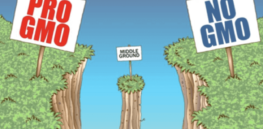
A tricky study about links between GMO rejectionism and education, and evidence the biotech debate may not be as ideologically polarized as most people think
Before we do an end-zone dance over this study, let's look at its limitations ...
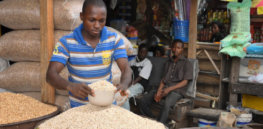
Nigeria has its first GMO cowpea. The battle for public acceptance is just getting started
A war of words over a recently-released genetically modified cowpea has divided the Nigerian public and raised concerns about the ...

Talking Biotech: Epidemiologist Geoffrey Kabat debunks flawed glyphosate-cancer meta-analysis. Were the mistakes deliberate?
A skeptical look at the latest glyphosate-cancer study reveals critical errors ...
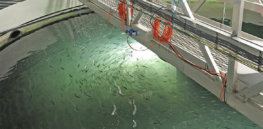
From a sustainability perspective, GMO AquaBounty salmon should be a ‘dream come true’. Why do environmentalists oppose it?
The flip-flop by Food and Water Watch and other advocacy groups rests not on environmental or science-based concerns but on ...

Viewpoint: Pervert science at your peril—anti-GMO campaigners, vaccine deniers and ‘bee-pocalypse’ scaremongers find common ground in ‘evidence rejectionism’
Widespread misunderstanding of the nature of science and the confirmation bias spawned by social media and the internet can have ...
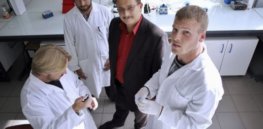
Séralini pseudoscience syndicate: Lessons learned from decade-long assault on biotechnology orchestrated by French geneticist
A look at Séralini's modus operandi can equip journalists and other interested observers to turn a critical eye on Séralini ...
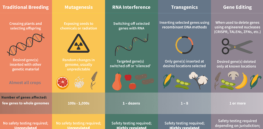
Infographic: Are genetically engineered crops less safe than classically-bred food?
Crops and foods today are not what they used to look like. Farmers and plant breeders have been modifying plant ...

41% glyphosate-cancer increase claim under fire: Did authors of new meta-study deliberately manipulate data or just botch their analysis?
Among other lapses, The Zhang paper does not mention the serious science and ethical questions raised pertaining to IARC’s assessment ...
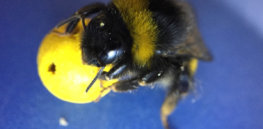
Why neonicotinoid pesticides don’t deserve a ‘deadly to bees’ label
While some activists blame the popular class of pesticides for bee deaths, research suggests there are many contributing factors. And ...

Viewpoint: Here’s why we don’t have to worry about a world without insects
Recent headlines about the coming collapse of the insect world are another case of extrapolation from inadequate data ...

Viewpoint: Why the USDA’s new ‘GMO label’ is meaningless
A meaningless label you want, a meaningless label you shall have ...
