


Sustainability & Climate Change
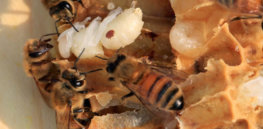
Urban ‘treatment-free’ beekeeping leads to explosion in killer Varroa mites
[Editor's note: Toni Burnham runs one of 10 hives at the National Arboretum in Washington, DC.] In this season of vitriol ...
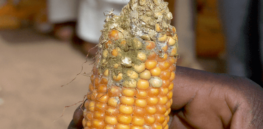
GMO corn that resists cancer-causing aflatoxin showcases biotech’s life-saving potential
The creation of GM corn that neutralizes a cancer-causing toxin is a game-changer for human health. The method could be ...

Rotten tomato: Senator Rand Paul misses mark targeting tastier tomatoes as wasteful research
[Editor’s note: Kevin Folta is a molecular biologist and chair of the horticultural sciences department at the University of Florida.] Senator [Rand] ...
Will organic community embrace gene editing if it restores ancient crops?
Precision genetic engineering techniques could bring back beneficial genes from wild relatives of crops without using foreign genes. The concept ...

Has Big Ag funding corrupted Canadian chemical and pesticide safety research?
A Fellow of the Academy of Toxicological Sciences, [Len] Ritter is one of Canada’s leading experts on the effects of ...

Tree vaccine: ‘Weaponized’ GM virus could save Florida citrus industry from greening disease
Florida’s citrus growers are running out of time. Since 2005, when a deadly disease called citrus greening first showed up ...

How Cargill flubbed its non-GMO labeling partnership, angering farmers and consumers
As soon as Cargill announced that an outside group had certified more than a dozen of its ingredients as non-GMO, ...

Biotech and non-GMO crops may need less separation than believed to prevent ‘contamination’
“Trying to figure out how far GM pollen will travel is really difficult,” says study co-author Rebecca Tyson, associate professor ...
Conventional (GMOs) vs organic farming: Which is better for animals and the environment?
[Editor's note: Iida Ruishalme is a writer and a science communicator from Sweden who holds a M.Sc. in Biology.] I ...

A crucial climate mystery is just under our feet
[F]armers could turn their fields into giant greenhouse gas sponges, potentially offsetting as much as 15 percent of global fossil ...

Hobbyist beekeeping practices and rejection of chemical treatments major driver of bee-killing Varroa mites and disease
Hobby beekeeping is very common. A European Bee Health Report found that in many countries, the majority of beekeepers pursue the activity ...

Hawaii documentary claims presence of Big Ag GMO test facilities forces islands to import food
Did you know that the state of Hawaii imports between 80 and 90 percent of its food? This is, among ...

Tomatoes resistant to fungus and blight developed by 94-year-old West Virginia scientist
Mannon Gallegly, West Virginia University professor emeritus of plant pathology, has made it his mission to develop a disease-free tomato ...
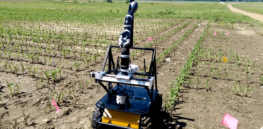
Autonomous robot cornfield scanner reveals how individual crops respond to climate change
Allow me to introduce you to Vinobot, the little rover on a mission to make sure crops weather global warming ...

Monsanto is changing the way people eat — Using traditional breeding to make better fruits and vegetables
Monsanto is no one-trick GMO pony. Founded in 1901, the agricultural biotech company has fueled innovations in herbicides, pesticides, and ...

Video: CRISPR-created seedless tomatoes could eliminate need for bee pollination
Don’t like the seeds in tomatoes? You might be pleased to know that seedless ones have been created by gene editing ...

Will CRISPR plant breeding be used for good — Or mostly to drive corporate profit?
This rapid-fire timing [of agribusiness mergers] may have been a coincidence, but it also may be a sign of what’s ...
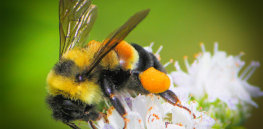
Will rusty patched bumble bee’s endangered listing become a legal weapon for anti-development activists?
[Editor's note: Paul Driessen is a policy adviser for the Committee For A Constructive Tomorrow.] Trump’s Interior Department opened a ...

Biodiversity on the farm: It’s more complicated than you might think
[Editor's note: William Price is a statistician in the College of Agricultural and Life Sciences at the University of Idaho ...

Should Trump scrap USDA’s National Organic Program?
Federal subsidizing of organics has health as well as economic consequences. Many consumers now believe that organic food is healthier, ...

How to address skeptical concerns about GMOs and ‘violating nature’
The main concern with GMOs seems to be rooted in a disgust for the artificial — “synthetic” has become synonymous ...

Agriculture’s Big Data revolution increases efficiency, reduces food waste from farm to table
[A]bout a third of food produced is lost or wasted every year. Globally, that’s a $940 billion economic hit. Inefficiencies ...

Agricultural biotechnology regulations are a mess — Here’s how Trump can unshackle innovation
For ideological or political reasons unsupported by data, and drawing on risk paradigms decades out of date, the US imposes ...
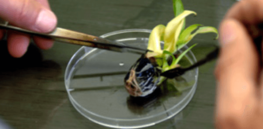
Infographic: The history of modern crop breeding — And how biotech seeds fit in
Biotech crops are an important milestone for agriculture as it continually improves to keep pace with the growing demand for ...

Herbicide use has increased more for non-GMO crops than genetically engineered varieties
[Editor's note: Andrew Kniss is a professor in the Department of Plant Sciences at the University of Wyoming.] Herbicide use is ...

After warning label victory, California activists push for a glyphosate herbicide ban
[A]fter a yearlong legal battle, California’s environmental health agency has announced that it will list it as a known carcinogen ...

How ‘human bees’, biotechnologists and Gates Foundation are rescuing the African cassava staple
Neither conventional breeding nor genetic engineering alone can solve the viruses threatening Africa's key crop. Add some Gates' funding and ...
