


Sustainability & Climate Change

Viewpoint: Can we adequately feed 10 billion people by 2050? Dutch scientists say yes, but the key is genetic engineering breakthroughs
The goal is to produce twice as much food using half the land and half the inputs. These changes are ...

Facing an uncertain, climate-altered future, here is how scientists are revamping crops
[A new wheat variety called] Kernza brings higher yields and can contain more seeds per stem than average wheat. And ...

‘No-kill meals’ made from lab-grown meat promise huge environmental and ethical benefits. What are the downsides?
We have pescatarians, vegans, flexitarians, locavores and of course vegetarians. But what’s the word for those of us who make ...

Viewpoint: Can agroecology cut European food imports and grow more on less land all while cutting greenhouse gas emissions? It would take a lot
Europe currently is heavily dependent on imports for food products as well as animal feed, particularly soy and corn. But ...

These genetically-modified poplars are easier to cut down — and can produce more bioethanol
Wood mainly consists of cellulose, hemicellulose, and lignin… In [genetically] modified poplars, one of the molecules involved in the production ...

Genome editing helps African researchers develop disease-resistant banana varieties
Though breeding programs using genome editing remain in their infancy on the African continent, public research institutions are leading the ...

Don’t believe the hype: Organic produce is not healthier than conventionally-grown fruit and vegetables
This year marks the 20th anniversary of the U.S. Department of Agriculture starting to implement its organic food rules. They allow ...

‘Protein transition’: Everything you need to know about the coming clean, cultured, alternative meat revolution
The cultured meat revolution is also sometimes called ‘the protein transition’ and its advocates are confident that this transition will ...

Viewpoint: Regenerative ranching – promoted by organic activists from Vandana Shiva to the Organic Consumers Association — has turned out to be a massive scam
While the regenerative potential of many agricultural techniques is widely accepted among ecologists, the inclusion of ranching is disputed. ...

How California is teaming up with conservation groups to rescue the western monarch butterfly from extinction
Monarch butterflies, known for their distinctive orange and black pattern, once flocked to California in the millions, spending the winter ...

Humanity has tipped the Earth’s nitrogen cycle out of balance. Here’s how we can reduce the use of synthetic fertilizer and address climate change dislocations
As nations and industries try to cut greenhouse gas emissions to tackle climate change, agricultural practices are in the spotlight ...

1/3 of 1%: Alternative protein sources such as Impossible Burger still represent a tiny share of consumer purchases — but polling shows consumers are open to switch
If you had three options in front of you: farm-raised beef, lab-grown meat and Impossible Foods protein — what would ...

Viewpoint: Can regenerative agriculture save the beleaguered coffee industry from climate change devastation?
[A]fter generations of cultivating coffee as a crop, irresponsible farming practices such as poor water management and dependency on harmful ...

Gene editing can prevent eucalyptus from becoming invasive
Gene editing can prevent eucalyptus — a tree highly valued in Kenya and elsewhere for its hardy timber, wood fuel ...

Viewpoint: Thinking about carbon as a crop
“The idea behind carbon farming is pretty simple — remove excess carbon from the atmosphere and store it in the ...
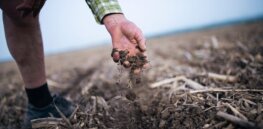
Viewpoint: Carbon negative farming? Cover crops, rotational grazing and no till agriculture could capture greenhouse gas emissions
Farmland to reduce greenhouse gas emissions? Everyone seems to agree this is a good idea. But how do we do ...

Colombian university develops next-generation oil-producing transgenic crops
In products as common as wine, beer, cotton, flowers and others from the food sector such as soybeans and corn, ...

Viewpoint: ‘A toxic soup of insecticides, herbicides and fungicides is wreaking havoc’ on soil in farms around the world
Like citizens of an underground city that never sleeps, tens of thousands of subterranean species of invertebrates, nematodes, bacteria and ...

Video: GLP’s Jon Entine at Aspen Institute conference — Why organic advocates should stop demonizing biotechnology and embrace a sustainability-focused ‘all tools in the agriculture toolbox’ philosophy
Advancing gene editing could be one tool to reduce chemical use in agriculture, but it faces the critical judgment of ...

Podcast: Will gene editing’s potential be realized in agriculture? GLP’s Jon Entine and Innovation Forum’s Toby Webb talk about the future of genetic modification
The Genetic Literacy Project’s Jon Entine and Innovation Forum’s Toby Webb talk about why gene editing has yet to make ...

‘They offer a magical vision of a better future but not in this world’: In Foreign Policy, social scientists opposed to conventional agriculture spark fierce organic vs intensive farming debate
A recent back and forth has stirred up controversy over at Foregin Policy. Are “Big Ag” and intensive farming destroying ...

Viewpoint: Is aquaculture good for the planet? Here’s a carbon footprint sustainability snapshot
Reliable figures on the carbon footprints of different aquaculture species are hard to find – not least due to the ...

Beer and sustainable farming: How brewing waste can disinfect soil and increase yields
Despite the simplicity, beer brewing generates substantial amounts of by-products, including large amounts of spent grain, which are difficult and ...

How climate change is disrupting animal ‘food webs’ and what it might mean for the future
It seems like each day scientists report more dire consequences of climate change on animals and plants worldwide. Birds that ...

Could the current fascination with ‘regenerative agriculture’ spur production of more sustainable eggs?
Over the past decade, producers have skillfully persuaded consumers to pay four times the price for a dozen eggs that ...

Space wine: How sending grapevines into orbit could protect the wine industry from devastating impacts of climate change
[A] group of scientists is cultivating the next generation of mutant grapes, which they hope will be resistant to shocks ...

Ditching disposable: How a circular food system — where waste becomes new products — could boost food security and the economy
Linear economies follow a “take-make-dispose” plan in which raw materials are collected, transformed into a product and used until discarded ...
