


Daily Human Digest

CAR-T therapy for leukemia patients may pave way to more personalized medicine
[Editor's note: Jim Greenwood is president and CEO of the Biotechnology Industry Organization.] [On July 19], experts at the U.S ...

Winning the fertility race: Does one ‘super gene’ control sperm size and shape?
The shape, size, and swimming speed of sperm all depend on one supergene, according to new research with zebra finches ...

‘Simple’ blood exome test analyzes 20,000 genes to identify rare diseases
In 2012, [10-month old] Calvin Lapidus became the first patient to undergo exome sequencing at UCLA. He was subsequently diagnosed ...

Ignore at your own peril: Race plays role in cancer and other health risks
It may be uncomfortable to discuss, but there are genetic and biological differences among races and genders. Ignoring these factors ...

Dog-human bonding: Genetic mutations for Williams syndrome may explain canine friendliness
Using clues from humans with a genetic disorder that makes them unusually friendly, [researchers Monique Udell and Bridgett vonHoldt] found ...

CRISPR red flag? Gene drives may not always work as advertised
A genetic-engineering tool designed to spread through a population like wildfire — eradicating disease and even whole invasive species — ...

Why identifying ‘autism genes’ is so elusive
Researchers are unlocking the mystery of autism's origin. Yes, it's mostly 'in the genes,' but what that means is one ...

GMOs being used to clean up heavy metal pollution
Environmental contamination with heavy metals is often the result of various types of industrial processes. Because heavy metals can be ...

Early onset menopause and type 2 diabetes may be genetically linked
The early onset of menopause has been shown to correlate with a higher risk of developing type 2 diabetes, according ...

Genes explain why some children don’t easily recover from common colds
Researchers funded by the Swiss National Science Foundation (SNSF) have discovered mutations that worsen respiratory infections among children. Their study ...

Bacteria-induced inflammation may contribute to Alzheimer’s
People with Alzheimer's disease may have higher levels of bacteria in their brains compared to people without the condition, a ...

Groundbreaking research on Jewish ancestry: Near Eastern on Ashkenazi male line while females primarily European
The origins of Ashkenazi Jews remain highly controversial. Like Judaism, mitochondrial DNA is passed along the maternal line. Its variation ...

Artificial intelligence meets precision medicine: IBM Watson computer 1000 times faster than humans
Researchers said Watson provided actionable insights within 10 minutes, compared to 160 hours of human analysis and curation typically required ...

Origins of man’s best friend: Dogs likely domesticated only once, likely in Asia
New data from ancient dogs indicates that dogs became distinct from wolves between 20,000 and 40,000 years ago, researchers report ...

Viewpoint: Racial IQ gap debate stirs mischief
Suppose it's true. Suppose that, at the end of the day, people of African descent have lower IQs on average ...
Junk collecting: As little as 8 percent of our DNA may have functional impact
The code that makes us is at least 75 percent rubbish, according to a study that suggests most of our ...
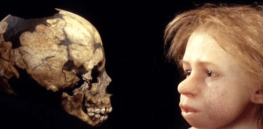
Middle East tryst: Hominins and Neanderthals may have mated 410,000+ years ago
[In a recent study, scientists examined the] Neanderthal mitochondrial genome from a femur that was excavated in 1937 from the Hohlenstein-Stadel ...

Two new genetic mutations linked to Alzheimer’s
New research moves us closer to understanding the genetic underpinnings of Alzheimer's disease, as scientists find two new genes that ...

Did life originate on Earth? It’s becoming more difficult to say ‘yes’
Discovery of Earth-sized planets and of microbial fossils as old as 4.5 billion years may shed light on the question ...

Why human-like robots are creepy
The robot revolution is on the horizon...One report says that they’ll be commonplace by 2025. In another case, a professor claims ...

Feeling tired? Easy cure? Unfortunately, ‘sleep science’ consumed by hype
Nutrition science is notoriously unreliable. The reason is because a substantial proportion of research in the field is conducted using ...

Are transfusions of ‘young blood’ the answer to longer, healthier lives?
The blood of young animals, it seems, may be able to ameliorate at least some of the effects of ageing ...

Gut feeling: Microbiota could aid fight against depression, high blood pressure and weight gain
The trillions of microorganisms in the gut affect our physical and mental state in myriad ways. Can we influence this ...

‘Mosquito factory’ churns out sterile males produced without genetic modification to fight Zika
100,000 live mosquitoes, all male, all incapable of producing offspring [are released daily in Fresno, California]. … Though counterintuitive, the ...

Surviving the cure: Stem cell transplant that saved a patient’s life now poses mortal threat
A few months before completing medical school in 2003, Lukas Wartman was diagnosed with acute lymphoblastic leukemia (ALL), a blood ...

Do your kids have ‘soccer genes’? The pseudoscience of many genetic tests
[A] growing number of scientists [are] pushing back against wild claims in the consumer genetics market, which is flush with tests promising ...

Muscle strength may be in the genes —16 of them
For the first time, scientists have discovered common genetic factors that influence muscle strength. The discovery offers new insights into ...
