


Science Literacy Project Daily Digest

Nearly half of US fruit growers want biotech crops, survey shows, but fear consumers won’t buy GMO products
And you thought growers could go on and on about problems with the weather, or their employees, or any of ...

CRISPR immunizes chickens against deadly virus, potentially boosting global egg and meat production
CRISPR genome editing has been used to make chickens resistant to a common virus. The approach could boost egg and ...
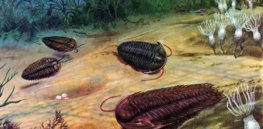
If we started again from scratch, would life on Earth evolve the same way?
Evolution is often seen as a mysterious process, but it’s actually predictable, and if life on Earth evolved again it ...

Have regulators failed to address agriculture’s fertilizer pollution problem?
Everywhere Randy Souder looked, he saw mud. On his soggy fields. In the mechanized crannies of his planter. Along the ...

Gene therapy for Alzheimer’s? Biotech startup suggests new approach, using dementia ‘off switch’
What if there were a single mechanism in the brain that, when faulty, leads to all kinds of dementias? And ...

Reforestation: Climate change solution or ‘ecosystem disservice’? Depends where you plant the trees
Reforestation is an important part of tackling climate change, but it seems we need to think carefully about where we ...

Rethinking the brain’s reward system—and what creates human intelligence
In a paper published in Nature ... DeepMind, Alphabet’s AI subsidiary, has once again used lessons from reinforcement learning to ...
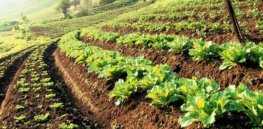
We can sustainably feed 3.4 billion people. Study shows 4 eco-friendly farming practices will help produce food for 10 billion
Global agriculture puts heavy pressure on planetary boundaries, posing the challenge to achieve future food security without compromising Earth system ...

Human hibernation eyed as solution for severe trauma, weight loss and deep-space travel
A small group of scientists is taking human hibernation extremely seriously. They are studying the basic mechanisms with an eye ...

Is China’s mysterious virus a ‘global health emergency’? 6 things to know about the outbreak
Just three weeks ago, China announced the outbreak of a mysterious new virus in the city of Wuhan involving a ...

Sperm test could predict odds of fathering child with autism
Some men who have an autistic child carry mutations linked to the condition only in their sperm, according to a ...

Can we use the brain’s ‘biochemical changes’ to predict—and prevent— suicide?
No field of scientific inquiry can single-handedly untangle a phenomenon as complex as suicide. But [Kees] van Heeringen and many ...
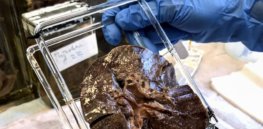
We’ve been dealing with measles for at least 2,000 years, genetic analysis suggests
In the 10th century, Persian physician Abu Bakr Muhammad ibn Zakariya al-Razi wrote about patients with fever, anxiety and full-body rashes — ...

Stepping in Goop: Gwyneth Paltrow’s Netflix series promotes ‘junk science, gibberish and unproven health claims’, says microbiologist
In the third episode of Goop's Netflix series, a female guest remarks that we women are seen as "very dangerous ...

Natural GMOs: Study shows that 12 popular foods were genetically modified by mother nature
Even though no one has found any evidence that genetically modified organisms (GMOs) are harmful, anti-GMO activists have campaigned against ...

Vertical farms, lab-grown meat: The sustainable future of food, or ‘wishful thinking’?
Farmers have grown food in roughly the same way for thousands of years .... Now, entrepreneurs say they have a ...

Brain building block glutamate could be key to treating Alzheimer’s, schizophrenia, depression
Glutamate is often called the “major excitatory neurotransmitter” within the brain. It is the brain’s “go” signal. [Neuroscientist David] Baker ...

Why we’re seeing more cases of autoimmune disorder PANDAS—if it even exists
In 1998, Susan Swedo, then a pediatrician at the U.S. National Institutes of Health (NIH), first proposed PANDAS to explain ...

Saving seafood: Lab-grown microalgae could help sustain the world’s overfished oceans
Oceans once teeming with life are being whittled away. Larger, predatory fish – salmon and tuna included – are now ...

Bizarre deep sea microbe could help explain origins of ‘animals, plants, fungi and humans’
Two billion years ago, simple cells gave rise to far more complex cells. Biologists have struggled for decades to learn ...
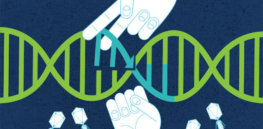
Developing a ‘kill switch’ to make CRISPR gene editing more precise—and safer
[Microbiologists] stumbled onto tools now known as anti-CRISPRs. These proteins serve as the rocks to CRISPR’s molecular scissors. And soon, ...

The psychology of risk: ‘Psychopathic traits regularly found in successful people’
One problem with research on psychopathy is that it largely only deals with criminals. [Psychiatrist Randi] Rosenqvist believes it would ...

Natural pest-control market could hit $10 billion by 2025, as farmers seek new tools to battle pesticide-tolerant bugs
For decades, Adam Baldwin’s family used chemicals with multisyllabic names to keep caterpillars such as earworms and podworms from chomping ...

‘Mini-computers’ found in our neurons could be key to developing more powerful AI networks
With just their input cables, human neurons can perform difficult logic calculations previously only seen in entire neural networks. To ...

Always late? Psychologist explains complex reasons behind a trait so annoying to others
Punctual people may believe that late people are passive-aggressive and that their time is more valuable than those who wait for ...

Teenager’s experimental gene therapy treatment could change the lives of millions of sickle cell patients worldwide
Meet Helen Obando, a shy 16-year-old who likes to dance when her body isn’t ravaged by the debilitating symptoms of ...

EPA to decide the future of dicamba, neonicotinoids and other controversial pesticides in 2020
The EPA this year will deliver important decisions to U.S. agriculture, including on chlorpyrifos, glyphosate, the neonicotinoids, pyrethroids, atrazine and ...
