


Science Literacy Project Daily Digest

Cross-country road trip gave AI a chance to write a novel—the result was a bit ‘surreal’
Last year, a novelist went on a road trip across the USA. The trip was an attempt to emulate Jack ...

‘Goodish’ news for climate change models: They don’t account for plants’ nocturnal behavior
Climate scientists have not been properly accounting for what plants do at night, and that, it turns out, is a ...

Viewpoint: Europe’s GMO process-based crop regulations are a great way to kill innovation
In 2002, Europe establishing a new regulatory agency, the European Food Safety Authority (EFSA) to resolve its regulation problems regarding ...

Inside a couple’s quest to pay for an experimental gene therapy to save their children
“We need your help, we really do,” Gary [Landsman] says, his voice breaking. The Landsmans’ two sons—Benny, then 18 months, ...

FDA launches initiative to support plant, animal biotechnology innovation
Today, [October 30] the U.S. Food and Drug Administration announced the Plant and Animal Biotechnology Innovation Action Plan to outline the key ...

Boltzmann brain: You may be living in your own simulated reality
The paradox of the Boltzmann Brain can really pull the rug from under you if you follow it to all ...

Human evolutionary theory challenged in global study by diversity of birth canals
The shape of a mother’s birth canal is a tug-of-war between two opposing evolutionary forces: It needs to be wide ...

We started eating chocolate 1,500 years earlier than previously thought, paper says
New archaeological evidence suggests humans were cultivating and consuming cacao—the crop from which chocolate is produced—as long as 5,300 years ...

Why the patent system could help shape the future of gene editing
A crucial part of the arsenal for shaping the future of gene editing is hiding in plain sight: the patent ...
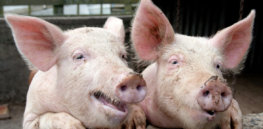
CRISPR gene editing could save pigs from devastating disease
As flu season rears its ugly head, humans aren’t the only ones on the virus’ warpath. Pigs are also vulnerable ...
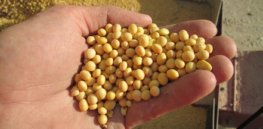
Healthier oil? US farmers poised for first harvest of gene-edited soybeans
Farmers in the United States are poised to harvest, for the first time, 6,500 hectares of genetically modified soybeans that ...

What makes human brain cells so powerful?
Spanish neuroscientist Santiago Ramón y Cajal revolutionized the study of the brain when he observed neurons for the first time ...

GM corn boosts yields as much as 58 percent in Tanzanian field trials
Tanzania's second year of confined field trials of genetic modified maize is bearing fruit, as the crop has significantly shown ...

6 things agroecology can do for farming and the environment
Agroecology has returned to the global spotlight, as one approach to bring farmers closer to meeting challenges [like rising food ...

Viewpoint: Stop using human intelligence to explain machine learning
It’s common to hear phrases like ‘machine learning’ and ‘artificial intelligence’ and believe that somehow, someone has managed to replicate ...

Video: Why many food companies won’t pick a side in the GMO debate
In this video, Know Ideas Media founder Nick Saik explains why farmers and agriculture companies have to get involved in ...

Grass genes could help scientists breed crops better adapted to drought, high temperatures
Researchers from Cornell and the United States Department of Agriculture will tap into genetic information found in more than 700 ...

Video: How ‘turning down’ gene expression in pests can help protect crops and bees
In this video, CropLife International scientist Greg Heck discusses how researchers are using RNA interference (RNAi) to turn off or ...

Beyond the binary: Science suggests there’s more than just male or female
Sex can be much more complicated than it at first seems. According to the simple scenario, the presence or absence ...

Recreating the chemical soup that may have sparked life on earth
In the molecular dance that gave birth to life on Earth, RNA appears to be a central player. But the ...

We don’t grow enough vegetables to feed everyone a healthy diet, study claims
If everyone on the planet wanted to eat a healthy diet, there wouldn't be enough fruit and vegetables to go ...

Speeding up drug research through ‘visionary’ cryptographic crowdsourcing
A new cryptographic system could allow pharmaceutical companies and academic labs to work together to develop new medications more quickly ...

Environmental Working Group or the EPA: Who should parents trust about glyphosate safety?
Remember a couple months back when an advocacy group found what it called “a hefty dose” of glyphosate, the active ingredient in weedkillers such ...
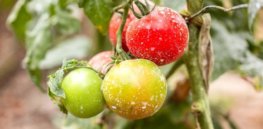
EU delays decision to re-approve ‘toxic’ copper compounds, widely used as pesticides in organic farming
EU countries have delayed a decision on whether or not to reauthorize the use of copper compounds — chemical substances ...
How synthetic biology can solve the problems we’ve created
Human activity has wreaked havoc on the environment. Many of the products we rely on for our daily lives are ...

‘There is no gay gene’: But study suggests genetics may play role in choosing same sex partner
In a large study of more than 490,000 men and women in the United States, United Kingdom and Sweden, researchers ...
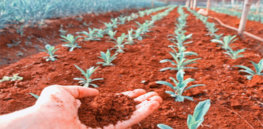
Food crops treated with synthetic plant hormone could grow in space, study suggests
With scarce nutrients and weak gravity, growing potatoes on the Moon or on other planets seems unimaginable. But the plant ...
