


Science Literacy Project Daily Digest

Biotech firm Calyxt strikes deal with non-GMO food processor to release gene-edited soybeans
Minnesota-based gene-editing firm Calyxt has found a market for its new, healthier type of soybean, announcing a deal with a soybean ...

Why are most human genes ignored by researchers?
There are around 20,000 human protein-coding genes, but recent studies have suggested scientists actively study only about 2,000 of them. New ...

Hybrid corn could eradicate harvest-destroying disease in Africa
A centralized maize lethal necrosis disease screening facility established in [Kenya] five years ago has released 15 disease-resistant hybrid maize ...

Documenting the rise and fall of populations through human poop
The city that vanished about 700 years ago presents a captivating question for archaeologists: What happened to the Mississippian people who built ...

Viewpoint: New glyphosate study suggesting danger to honeybee microbiota is detailed, sophisticated—and wrong
Erick Motta and colleagues at the University of Hawaii just published a paper in PNAS entitled "Glyphosate perturbs the gut microbiota of honey bees." ...

Puzzling out how the brain turns electrical pulses into ‘thoughts, actions and emotions’
Neuroscientists have tried for decades to observe the swift electrical signals that are a major component of the brain’s language ...

Climate change could accelerate demand for robot farmers
It’s harvest season in the Northern hemisphere, so farmers head into the fields to gather the fruit of their hard ...
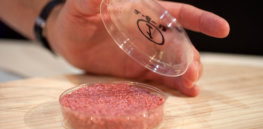
$5 lab-grown burger could be ready by 2021
Back in 2013, the emerging biotech field of lab-grown meat products held a tasting of a lab-grown burger which cost a staggering ...

Mysterious fossil could be oldest known animal—if scientists can agree it is one
An international team of researchers is claiming to have discovered traces of cholesterol on a fossil of Dickinsonia—a mysterious creature that ...

Monsanto ‘didn’t fully disclose’ involvement in 2016 glyphosate review, publisher says
Bayer AG’s defense of Roundup weed killer may take a hit after an academic journal [Critical Reviews in Toxicology] said ...

Toxic organic pesticides pose surprising challenge to pro-environment politicians
The European Food Safety Authority (EFSA) has released fresh data which re-confirms the toxicity of copper compounds, pesticides that are ...

Patenting the genes of marine life and what it means for medicine
[Marine animal] DNA is included among thousands of patents owned by BASF, which calls itself “the largest chemical producer in the ...

Do biotech crops boost yields for organic farmers?
Nutrition, the environment and worker’s wellbeing are the banners of the green crusade. But, with organics charging an average of 50% more ...

‘Risky decisions’ and why our brains make it so easy for us to gamble
A new study by a team from Johns Hopkins University appears to have identified a region of the brain that plays a ...

How do you make a lab-grown burger?
In July, [the alternative-meat] movement passed a new milestone: In a packed auditorium in suburban Maryland, the FDA convened the ...

Can a DNA test prove you are black? This man is suing the government to find out
In 2014, Ralph Taylor applied to have his insurance company in Washington State certified as a “disadvantaged business enterprise.” The DBE ...

India a testing ground for technologies that benefit farmers worldwide, Bayer says
On August 21, 2018, Bayer Crop Science .... kicked off a process to integrate the global seed behemoth Monsanto into ...

Depression ‘three times as common’ among adults with autism
Depression is more than three times as common among adults with autism as it is in the general population, according ...

‘Theory of mind’: Why artificial intelligence needs to understand how we think
What AI needs, [said Dr. Jun Wang at University College London] is a type of deep communication skill that stems from a critical human ...

Australia: ‘No grounds’ to ban Roundup, despite glyphosate-cancer controversy
The Australian Pesticides and Veterinary Medicines Authority (APVMA) is aware of the August 2018 decision in the Californian Superior Court ...

GMOs are ‘yucky’—the real reason consumers dislike biotech crops?
Twenty-two years after Monsanto introduced its Roundup-resistant soybeans, the debate over genetic modification is far from over .... in the U.S., ...

Record-high yields suggest climate change no threat to coffee production
For roughly the last two years, the media has been warning us that climate change is threatening the world's supply ...

Why people don’t trust artificial intelligence: It’s an ‘explainability’ problem
Despite its promise, the growing field of Artificial Intelligence (AI) is experiencing a variety of growing pains. In addition to ...

Is ‘factory farming’ an accurate description of modern agriculture?
I’ve lived in four states on the East Coast and Gulf, and I’ve never found myself wanting come harvest time ...

3 reasons ALS research struggles to find treatment answers
[T]he desire to give [ALS] patients hope has often outstripped good scientific sense. “Many drugs that have gone into ALS ...

Could green benefits of biotech crops win over ‘ideological’ environmentalists?
A new study in Nature Sustainability reports that “[e]xtensive field data suggest that impacts on wild populations would be greatly reduced through boosting yields ...

Do babies dream? If so, what do they dream about?
Technological advances are helping to shed more and more insight on, as the University of Washington professor of early-childhood learning ...
