


Science Literacy Project Daily Digest

What one boy’s ‘Lazarus-like’ recovery tells us about the future of bio drugs
Shortly after Cameron Harding’s one-month check-up, his mother, Alison, saw that her newborn seemed to stop moving. She’d unwrap him ...

Unreliable science? Scores of mice studies may be tainted because of standard handling practice
Scores of scientific studies based on mice are being called into question because their behaviour is affected by the way ...

‘Don’t bite the hand that feeds you’: Cargill’s partnership with Non-GMO Project irks farmers
[Editor's note: Read the GLP's profile of the Non-GMO Project here.] Careful what you tweet…especially if you’re a company kicking ...

Age of Alzheimer’s onset accurately predicted by test of 31 genetic markers, study finds
Scientists have developed a new genetic test for Alzheimer’s risk that can be used to predict the age at which ...

Evolutionary survival mechanism ‘gone-awry’ likely source of sleep walking
Recent research from Stanford University shows that up to 4 per cent of adults might have [walked in their sleep] ...

Injection with own stem cells alleviates chest pains, angina, study finds
A non-surgical treatment that uses a patient’s own bone marrow stem cells to treat chest pain or angina improved both ...
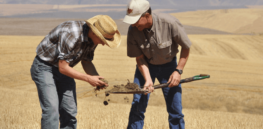
Why it’s time to end the ‘farmers versus environmentalists’ fight and work together
[Editor's note: Suzy Friedman is the senior director of agricultural sustainability at the Environmental Defense Fund.] On paper, I appear ...
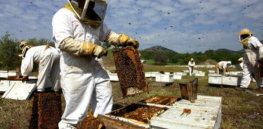
Canadian farmers, beekeepers: Neonicotinoid replacement ineffective, bad for bees
A proposed replacement for a key neonicotinoid pesticide is proving unpopular with everyone — including farmers and beekeepers. Farmers adopted ...

Medical school investigation finds ‘no evidence’ Monsanto ghostwrote paper on safety of herbicide glyphosate
After a quick investigation, officials at a medical school in New York State say they have found "no evidence" that ...

Should we worry about an era of ‘designer babies?’
[Editor's Note: Bonnie Rochman is a science journalist and the author of the new book, The Gene Machine: How Genetic Technologies ...

Ancestors’ climate shaped your nose — along with genetics
Though you undoubtedly inherited your distinctive nose from your parents, its shape was sculpted over time by adaptations to your ...

How does the body control stem cells? ‘It’s like a game of roulette’
Stem cells are unspecialized cells that can develop into any type of cell in the human body. So far, however, ...

Environmental Working Group must turn to sound science to address public fear created by ‘dirty dozen’ list
There are now two peer-reviewed studies from respected academic institutions (Johns Hopkins and Illinois Institute of Technology) with similar conclusions ...

Afraid of burnt toast? Food expert says it’s dangerous to fear modern food
Many foods contain acrylamide, so the chemical can't be avoided, [Joe] Schwarcz [of the Office for Science and Society at McGill University in Montreal] said ...

General Mills angers environmentalists over inclusion of invasive species in ‘save the bees’ seed mix
Environmentalists are buzzing about a new campaign started by General Mills to promote awareness surrounding the world's declining bee population ...

Video: Watch how plants grow in 3D with high-tech microscope, lasers
It’s hard to take a picture of something that’s always moving—just ask anyone who’s had to photograph a child. Now, ...

Royal disagreement: UK’s Princess Anne contradicts brother Charles, says ‘we have to accept’ GM crops
Princess Anne has said genetically-modified crops have important benefits for providing food and she would be open to growing them ...

We may soon resurrect extinct species with genetic engineering — but should we?
Scientists just might revive the woolly mammoth...by splicing genes from ancient mammoths into Asian elephant DNA...But here’s a sad irony ...

Half our brain’s neurons are in cerebellum but its region’s role in consciousness unclear
One of the best-known regions of the brain, the cerebellum accounts for just 10 percent of the organ's total volume, ...

Will toxin-blocking biotech corn help win over skeptics of genetic engineering?
Aflatoxin is a well-known global health threat. This poison, produced by the Aspergillus fungus, is common in corn, wheat, rice ...

2 young leukemia patients cured with T-cell immunotherapy using genetically engineered donor cells
Gene-edited immune cells cure two British babies with childhood leukemia. But instead of patient-specific cells, doctors used cheaper universal cells ...

Tracking Zika: New genetic tool maps how viruses spread around the world
We remain utterly unprepared to deal with epidemics at a global scale...The good news is that new inventions are continually ...

‘Live vaccines’: Recoding bacteria’s genome could lead to more effective immunizations
[G]eneticists used a new technique to recode 5 per cent of the Salmonella bacterium’s genome, introducing a record number of engineered ...

Canadian farmers poised to plant GM potatoes for first time
In 2016, no acres in Canada were seeded to J.R. Simplot Company’s genetically engineered first-generation Innate potato lines. But industry ...

How brain ages may depend on genetic variant linked to Alzheimer’s risk
Columbia University Medical Center (CUMC) researchers have discovered a common genetic variant that greatly impacts normal brain aging, starting at ...

Infographic: Explore the future of genetic engineering and food
The first genetically engineered apple, Arctic Apple, a modified variety of Golden Delicious, hit stores in test markets in the ...

Privacy perils: Impact of legislation that would strip genetic secrecy protections in US
Employers could force workers to divulge private genetic information under Republican-sponsored legislation making its way through Congress. It could have ...
