


Genetic Literacy Project

When genetic engineering came of age: World’s first GMO—GE insulin—approved 35 years ago
It has been 35 years since genetically engineered insulin was approved by the FDA in a process that was quick ...
Genetic Literacy Project’s Top 6 Stories for the Week – Oct. 30, 2017
Glyphosate-gate: Policy and science implications of IARC’s ‘predetermined’ cancer finding | Geoffrey Kabat If you lose any of these 7 organs, ...

Is organic farming sustainable? 5 carbon footprint challenges
Along with unsubstantiated claims of better nutrition and safety, supporters of organic farming often cite its lower carbon footprint as ...

Protecting against cancer: What can we learn from animals who live for centuries
There are an increasing number of genetic clues from animals that could provide hints to treating aging and age related ...

Viewpoint: Former US journalist Carey Gillam should stay out of Europe’s glyphosate debate
A former agricultural reporter at Reuters, Gillam now presents herself as "the Rachel Carson of the GMO debate." Belgian-based risk ...

Genetics brought to bear in fight against modern cholera outbreaks
Although cholera is a disease that is thought of as mostly extinct, it still persists today in underdeveloped areas. The ...
Jon Entine podcast: Corruption and secrecy behind IARC’s glyphosate cancer designation?
Glyphosate has been in the headlines for two weeks. Here's a background interview with the GLP's executive director explaining the ...

Time to stop treating men and women the same when it comes to drug treatments
Studies have shown that males and females metabolize drugs differently, suggesting we should be spending more time studying those differences ...

Glyphosate-gate: Policy and science implications of IARC’s ‘predetermined’ cancer finding
Where high-stakes issues involve powerful beliefs, financial reward and opportunities for advancement, neither individuals nor agencies can be assumed to ...

If you lose any of these 7 organs, you’ll probably be OK
The human body has dozens of organs, with some clearly more critical than others. But there are several you can ...
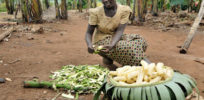
Talking Biotech: Uganda farmer-scientist on benefits of GMO disease resistant bananas
Kevin Folta in Uganda interviews scientists and farmers about bananas resistant to crop disease and the likelihood of commercialization ...

Glyphosate, IARC and politics: ‘We need a more honest debate’
Glyphosate is one of the most hotly-debated herbicides of the modern era. Many of the arguments against the popular weed-killer ...

Genetic Literacy Project’s Top 6 Stories for the Week – Oct. 23, 2017
Genetic engineering and gene silencing could fight deadly crop mycotoxins—if not blocked by activists | Andrew Porterfield When does life begin? Here ...

There’s ‘Big Ag’ and ‘Big Organic’—How much does ‘big’ matter when it comes to sustainability?
It's the way crops are farmed not the farm's size that matters when it comes to sustainability ...

When does life begin? Here are 17 points in time to consider
The US Department of Health and Human Services has taken the official position that life begins at conception. Here's a ...

‘GMO’ petunias: Ridiculousness exposed and explained
Italian researcher offers satirical look at the story of the GMO petunias that were ordered destroyed. How would you explain ...

Born to exercise? ‘Fitness’ genes may help lower breast cancer risk
A growing number of studies show that exercise offers protection against breast cancer. Research on mice suggests that some of ...

Searching for ET in our Solar System requires methodical approach
The quest to find life in our Solar System is focused on locating planets or moons with the right chemical ...

Genetic engineering and gene silencing could fight deadly crop mycotoxins—if not blocked by activists
Aflatoxins are responsible for hundreds of millions of dollars in crop losses annually. Farmers have struggled to control the troublesome ...

Viewpoint: Christopher Portier—well-paid activist scientist at center of the ban-glyphosate movement
Christopher Portier, special adviser to the World Health Organization's International Agency for Research on Cancer, is bringing down the reputation ...

Viewpoint: Should US be subsidizing organic farming when label seems increasingly meaningless?
Congress is considering tripling the budget for the USDA's organics program. Should we be asking for more answers from regulators ...

Cancers and other rare diseases in crosshairs of researchers using breakthrough DNA sequencing
The improvements and discoveries in DNA sequencing in recent years has had immediate clinical consequences, including the real possibility of ...
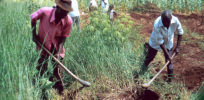
Talking Biotech: How Africa can move beyond subsistence farming
World Food Program's Bret Rierson: Inexpensive storage options could dramatically help developing world farmers manage, store and sell surplus crops, ...
Genetic Literacy Project’s Top 6 Stories for the Week – Oct. 16, 2017
Green technology: Disease-resistant GMO tomato that could eliminate need for copper pesticides, double yields–blocked by public fears | Paul McDivitt Sensory ...
How do you know if your mutation will lead to a genetic disease?
Sonia Vallabh, a scientist, carries a rare mutation that normally causes a neurodegenerative disease. How likely is it she will ...

10 truths about GMOs, organics and modern farming
As the debate over GMOs has gone viral, city-dwellers often position themselves as experts on farming. But there's often a ...

Humans are still evolving–the evidence is in how we age and who survives
Although human evolution is seen as in the distant past, every minute biological decision results in ongoing human natural selection ...

Predicting Alzheimer’s: 31-gene test may offer strongest risk assessment
The APOE4 e4 gene has long been associated with an elevated risk for alzheimer's. But a new test panel involving ...
